
The first day always feels slightly… off. You leave the salon with an ultra-smooth, immaculately shaped haircut, politely agreeing with the mirror and telling your reflection, “Yeah, this is nice.” Yet underneath, you cannot tell whether you genuinely like it or are simply being courteous about your own hair. The ends seem overly crisp, the volume lands somewhere unfamiliar, and your fringe has not quite worked out your face. On the journey home, every shop window turns into a test: do I recognise myself, or is that someone else wearing my jacket?
Then a few weeks go by.
All at once, the very same cut that seemed “too much” feels effortlessly right. That is when the real mystery begins.
Why your haircut always needs a few weeks to “settle”
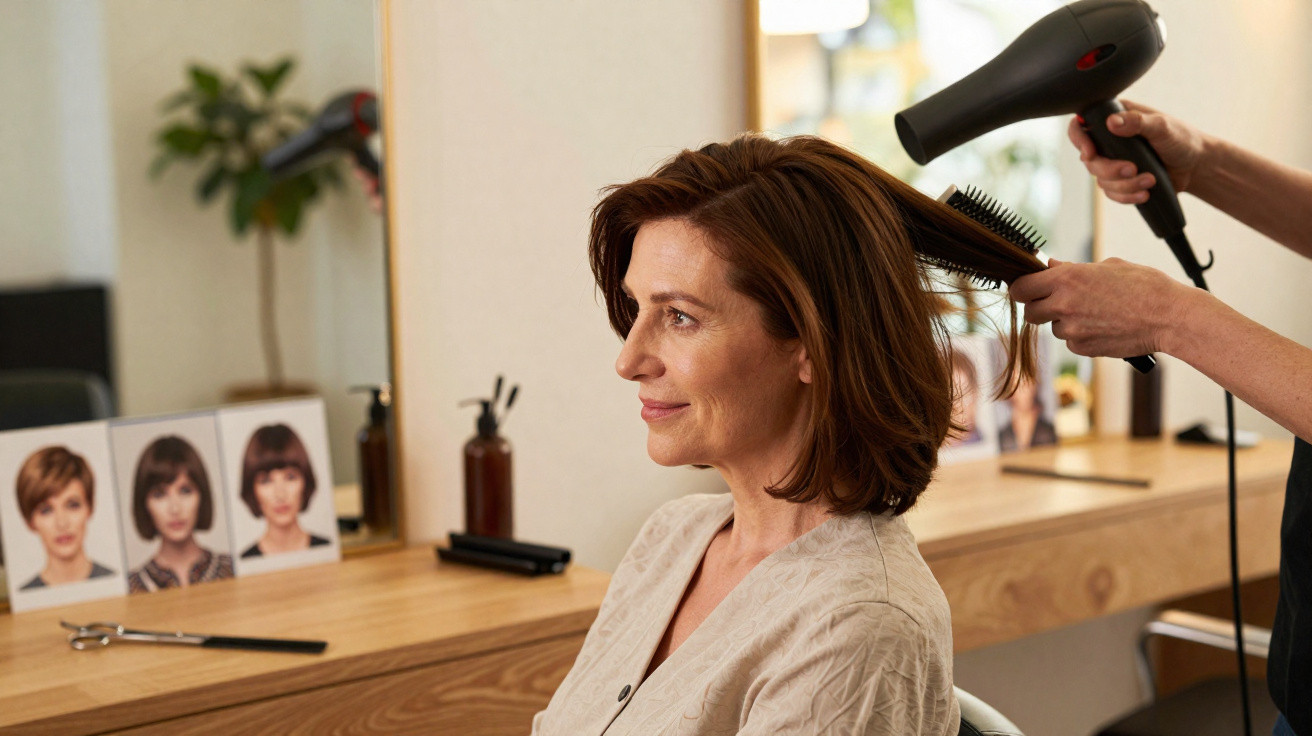
On the day of your appointment, your hair is technically flawless: freshly washed, free of product and blow-dried with a round brush your bathroom has never encountered. Each strand is placed precisely where your hairdresser directed it. It may look crisp and exact in photographs, but in the mirror there can be an odd rigidity, as though you are wearing a new jacket that has not yet shaped itself to your shoulders.
That is because your hair is still obeying the salon’s rules rather than your own. It has not spent a night against your pillow, caught in your scarf or made it through a chaotic Monday morning. It looks beautiful, but it has not been lived in.
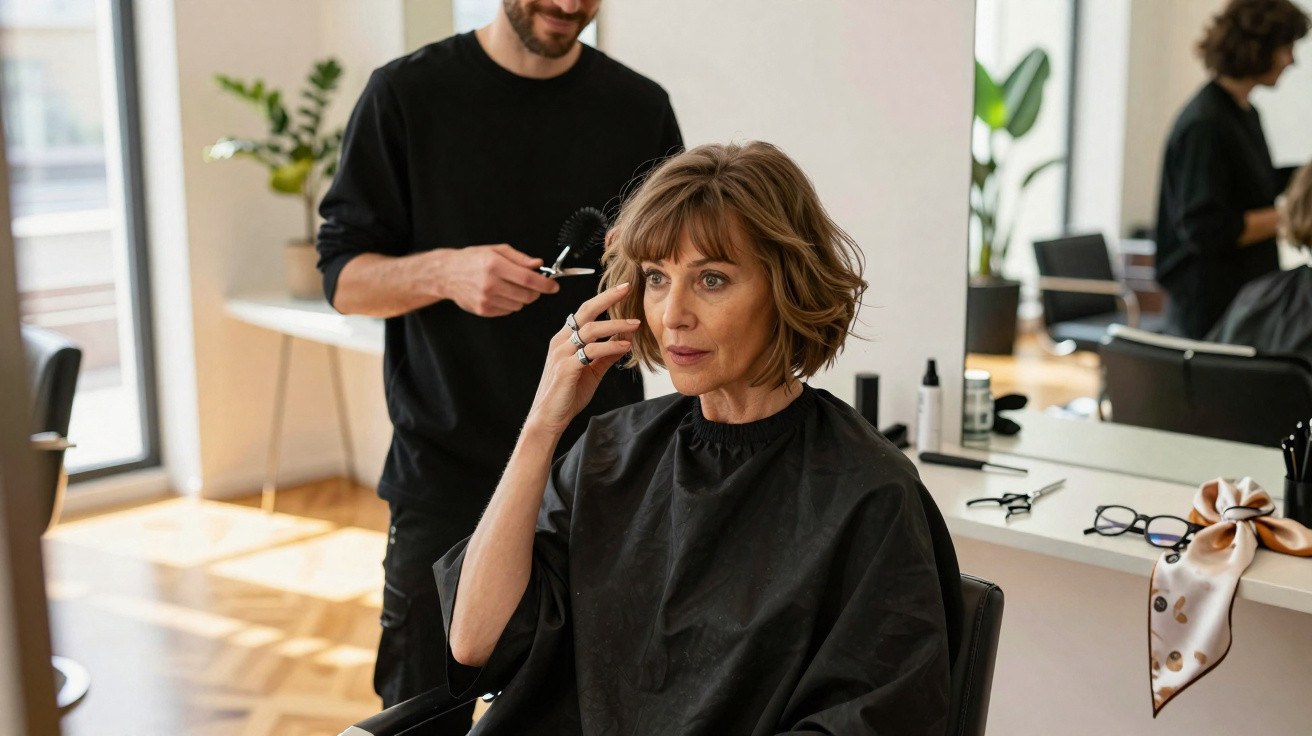
Think back to the last time you had a bob or fresh fringe. On day one, your hairdresser brushes the fringe forwards and gives it a tidy little curve, while you nod with only half-conviction. Two weeks later, you are running late, casually rake your fingers through it, and it suddenly settles into a soft, slightly undone shape that frames your eyes perfectly.
The same applies to a layered cut that appeared too light and bouncy at the salon. After three weeks, the roots have grown half a centimetre, the layers have fallen slightly, and the overall result looks more relaxed and less “just-cut”. The compliments arrive not on day one, but on day seventeen beneath unflattering office lights.
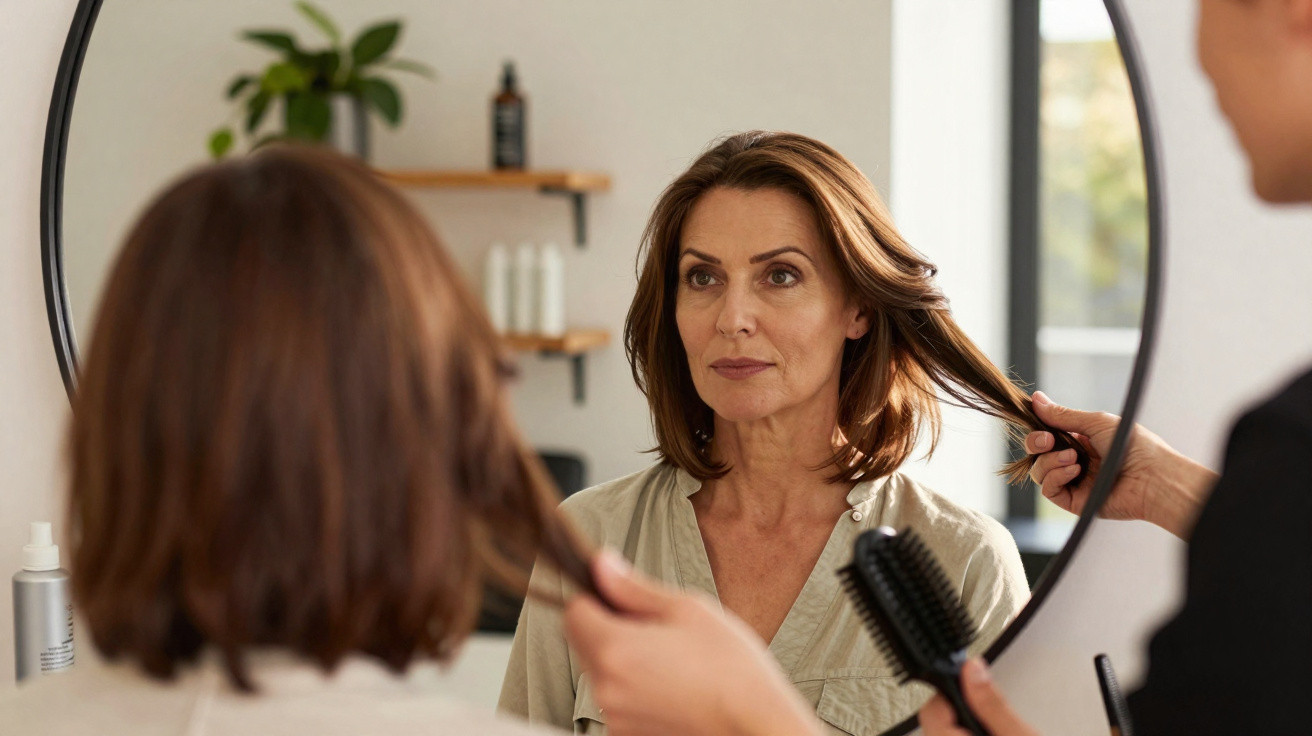
The explanation is fairly straightforward: your hair is renegotiating the agreement. Once it has been cut, each strand needs time to recover its natural weight, texture and direction. In the first few days, the ends are exceptionally fresh and almost too defined, making the shape seem severe. As it grows a little, the lines become gentler, the volume sits lower and your own styling routine replaces the salon blow-dry.
Your scalp also begins producing its usual oils again. They lightly coat the hair, altering both the way it catches the light and the way it moves. That small amount of “lived-in” texture makes the whole look softer, easier and more recognisably you. Your cut stops looking like a demo and starts looking like your life.
How to help your haircut reach its peak a few weeks later
In those first days, one small move can make a real difference: loosen the cut up a little. Once you are home from the salon, tip your head forwards, work your fingers through the roots and disrupt that overly perfect brushing pattern. Sleep on it without trying to preserve the blow-dry, then in the morning fix only the parts that genuinely bother you.
Choose light styling over armour. A texturising spray, a little mousse scrunched through the ends or cream warmed between your hands and pressed into the mid-lengths can encourage the cut to sit more naturally. Aim for “air-dry with a nudge”, not a “helmet of hairspray”.
The main pitfall is judging it too soon. You get home, look in the mirror and immediately think, “This was a mistake.” Then comes the over-styling, re-washing, straightening and curling, as though one afternoon could rush you past the awkward stage. This is usually when frustration is at its strongest, because the more you battle the cut, the more artificial it appears.
Allow it a few grace days: two washes, a proper night’s sleep and your normal products rather than the salon’s. We’ve all been there, that moment when you almost call your hairdresser in tears after day two, only to discover on day ten that the cut was genuinely good and merely needed some breathing space.
Sometimes the best thing you can do for a new haircut is simply let it live with you for a while.
- Wait 10–15 days before judging the cut
This is the period when the shape softens, the roots grow a few millimetres and the style begins to suit both your face and daily routine. - Use minimal, repeatable styling
Settle on an easy two-step routine you can realistically maintain, such as towel-drying followed by texturising spray. Let’s be honest: nobody really does this every single day. - Talk to your hairdresser about the “week-three” effect
Explain that you tend to prefer your hair after a few weeks. They can cut with that later stage in mind, retaining strategic length or weight where it will look best over time.
Learning to love the “in-between” hair days
The most compelling stage is neither day one nor month three, but the middle period when the cut is quietly finding its balance. These are the mornings when one side flicks out while the other curls under, your fringe cannot decide whether to sit side-swept or straight, and one hairpin unexpectedly changes everything. This is where your personality begins to enter the cut.
When you notice these gradual changes rather than concentrating on “perfect hair”, you start to view your haircut as something living rather than fixed. Oddly, that is also when your style appears most natural, most self-assured and most like you.
| Key point | Detail | Value for the reader |
|---|---|---|
| Haircuts peak a few weeks in | Lines soften, roots grow slightly, texture and oils return | Reduces panic about day-one hair and sets realistic expectations |
| Styling should “loosen” the salon finish | Finger-tousling, light products, simple habits | Makes the cut look more natural and easier to wear daily |
| Communication with your hairdresser matters | Ask for a cut designed to look best in weeks 2–4 | Leads to shapes that age well instead of only looking good on salon day |














Comments
No comments yet. Be the first to comment!
Leave a Comment