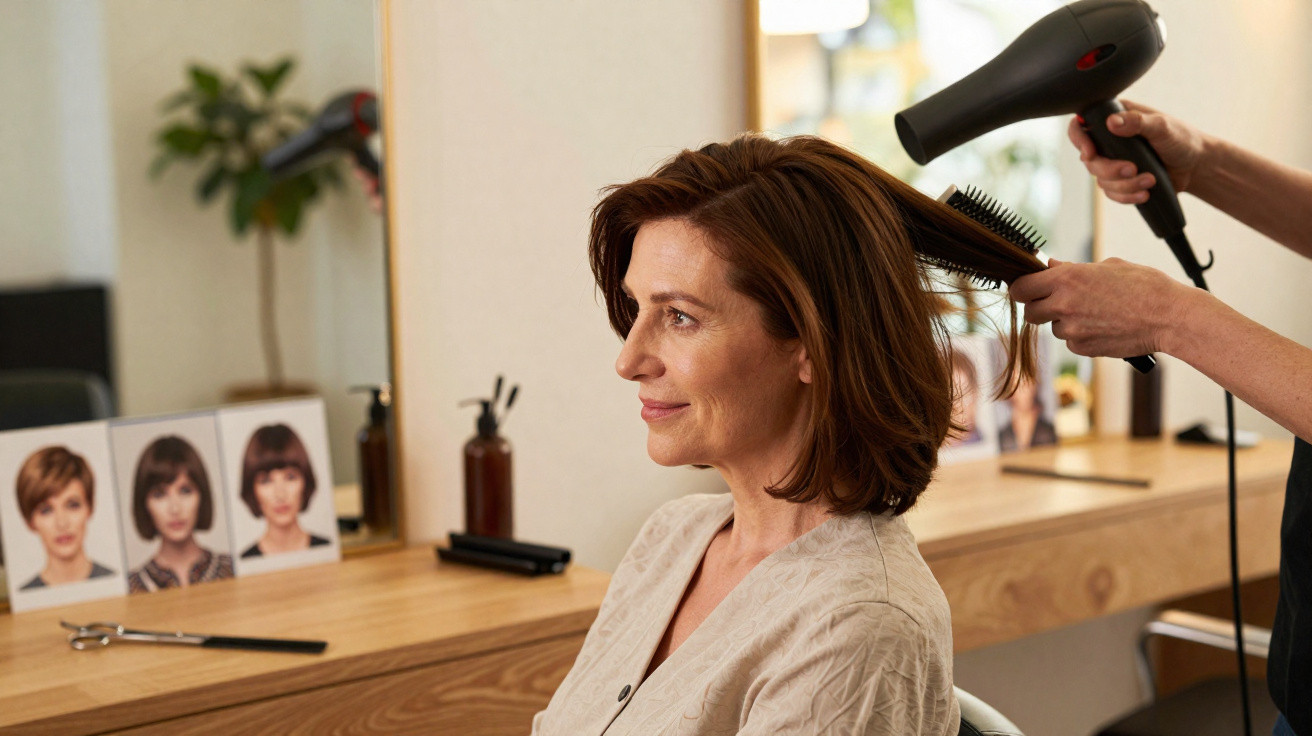
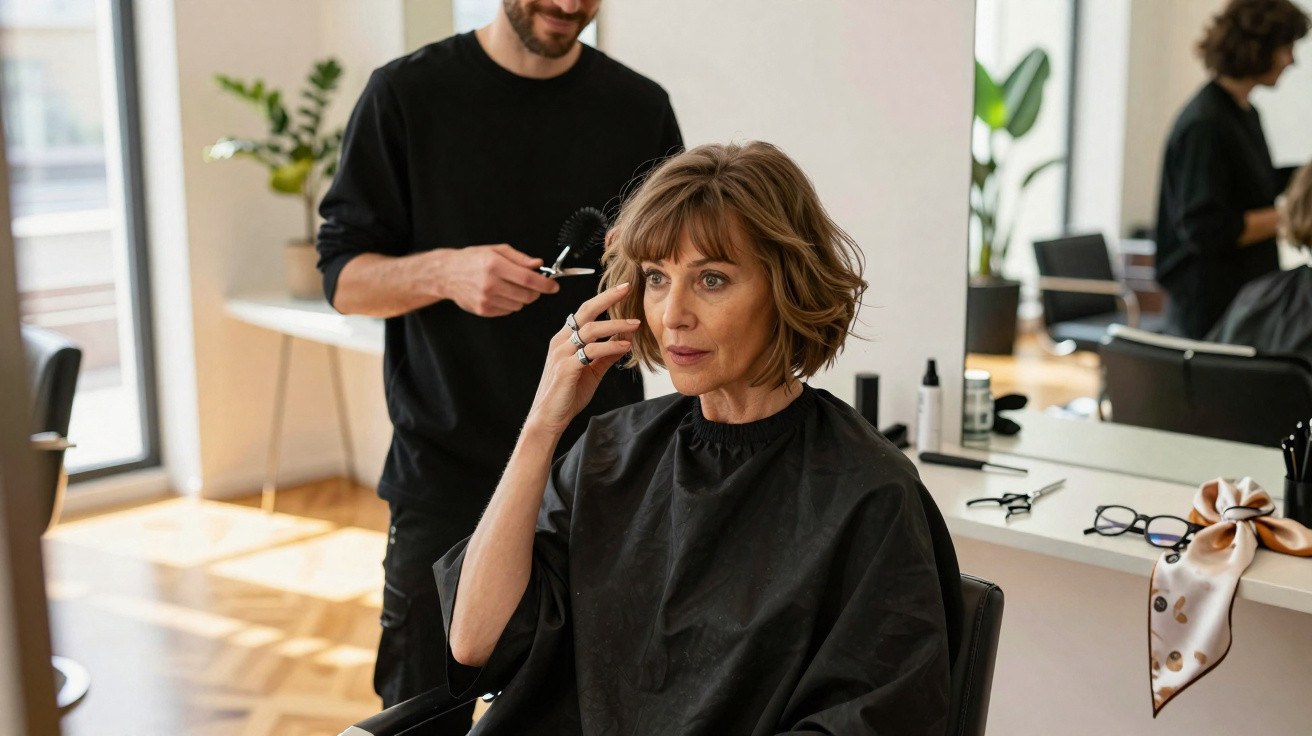
The hairdresser swivelled the chair towards the mirror, and she stopped cold.
The same face. The same eyes. Yet something was different. Her jawline appeared more defined, her cheekbones more pronounced, and the signs of tiredness seemed softer. She blinked twice before laughing: “Wait… did you redo my skin or my hair?”
The stylist simply shrugged. “Neither. I just cut everything that was pulling your face down.”
We spend endless time discussing skincare, serums and contouring techniques. But a single 30-minute cut can achieve what months of expensive creams never quite manage. One poorly placed line can make the cheeks seem heavier; one flattering angle can lift the whole expression.
Certain haircuts work almost like a subtle visual facelift.
And experts insist that three styles deliver this result almost every time.
The secret “lifting” effect: why hair after 50 changes everything
Visit a busy salon on a Saturday and you will notice it straight away. Women in their 50s and 60s settle into the chair, scroll through old photographs on their phones and quietly say: “I just want to look fresher… not different, just fresher.”
Colour matters, naturally, and so does shine. Still, experienced stylists tend to make the same point: the first anti-ageing tool is the cut itself.
How the ends sit can either pull the features downwards or draw the eye up.
One Paris stylist often tells a story that has become something of a legend. A client in her late 50s came in with long, weighty hair tied into the low ponytail she had worn “since forever.” Her concern was simple: “I look tired, no matter how much sleep I get.”
They left the colour alone. Instead, they cut the hair to just above the shoulders, created gentle layers around her face and raised the fringe slightly. Once the blow-dry was complete, she stood up to move closer to the mirror. “I swear my nose looks smaller,” she joked. Her daughter, waiting on the sofa, then whispered: “Mum, you look ten years younger.”
That optical “lifting” effect is not magic; it is geometry.
Hair creates a frame around the face. Long, straight vertical shapes can highlight downward pull, particularly around the jaw and neck. Rounded, upward and diagonal lines, meanwhile, lead the eye towards the cheekbones and eyes, which naturally sit higher on the face.
That is why very long, flat hair can make a face appear older, while a slightly shorter, sculpted style can immediately make it look more energetic. Think less blanket, more architecture.
Experts do not describe this as “hiding age”. Instead, they focus on redistributing volume so that light and attention fall where you want them: on the eyes, smile and bone structure.
The 3 “lifting” haircuts experts love after 50
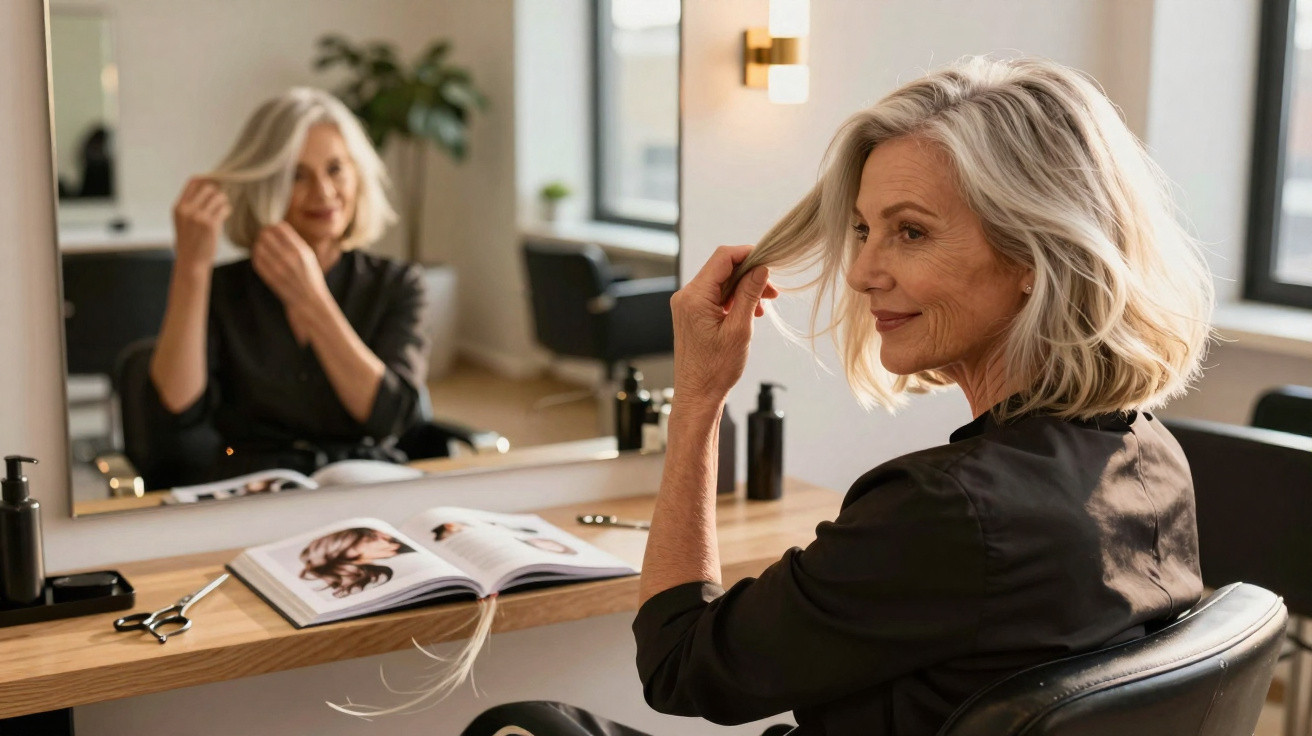
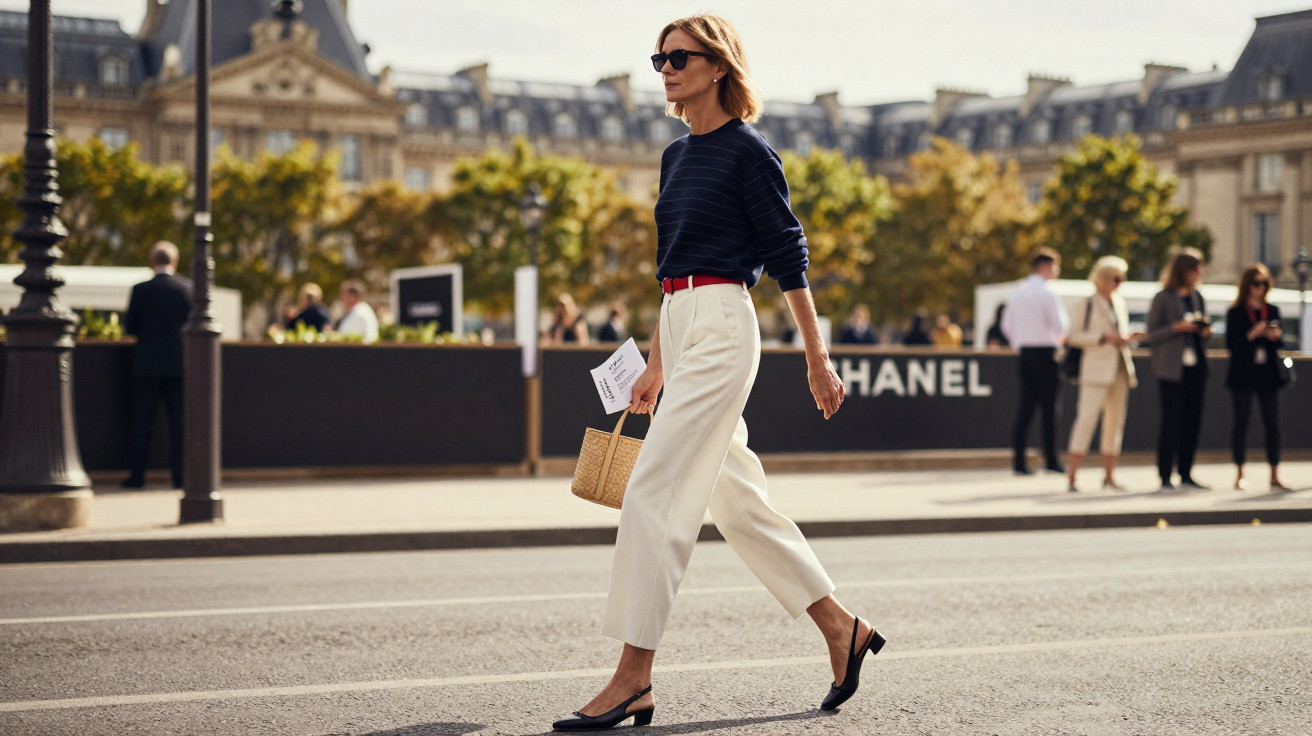
The first major favourite is the soft, layered lob, falling anywhere between the chin and collarbone. It should not be a rigid, blunt cut, but a lightly textured style that moves as you walk.
The key lies in understated layers around the face. Front sections begin somewhere between the lips and cheekbones, helping the features appear more open. Styled slightly away from the face, these layers form small, invisible upward arrows. That creates the lifting illusion.
Ask your hairdresser for a lob that brushes the collarbone, with airy ends rather than dense, heavy blocks of hair. A slight bend created with a round brush or curling iron is enough to retain youthful movement rather than a severe finish.
The second expert favourite is the modern shag, or “butterfly” cut, designed to hug the cheekbones. Think soft pieces that frame the face, long layers and no harsh lines.
A London colourist says she gives this style to women who tell her, “I miss my long hair, but it makes me look tired.” The butterfly cut preserves some length at the back while removing weight around the face. Its shortest layers begin near the cheekbones before flowing downwards like wings.
It is particularly effective on slightly wavy hair: natural texture creates lift at the crown, the sides are less likely to fall flat, and the ends do not form a heavy line across the chest. With straight hair, a little dry texture spray can recreate that soft, tousled lift, giving a light rather than flat result.
The third haircut stylists discreetly suggest after 50 is an airy, layered bob with volume at the crown. This is not the helmet-like bob of the 1990s, but a modern and lightweight version.
This bob generally finishes between the jaw and just beneath the chin, with the back a touch shorter than the front. That gentle angle makes the neck appear longer and gives the jaw more visual definition. Add some root lift at the top and the face instantly looks more vertical and less pulled down.
Its biggest advantage? It dries fast, suits both fringes and no fringe, and grows out elegantly. Realistically, no one completely restyles their hair every day. A well-cut bob is forgiving on rushed mornings while still maintaining that lifted shape.
How to ask for a “younger” cut without sounding cliché
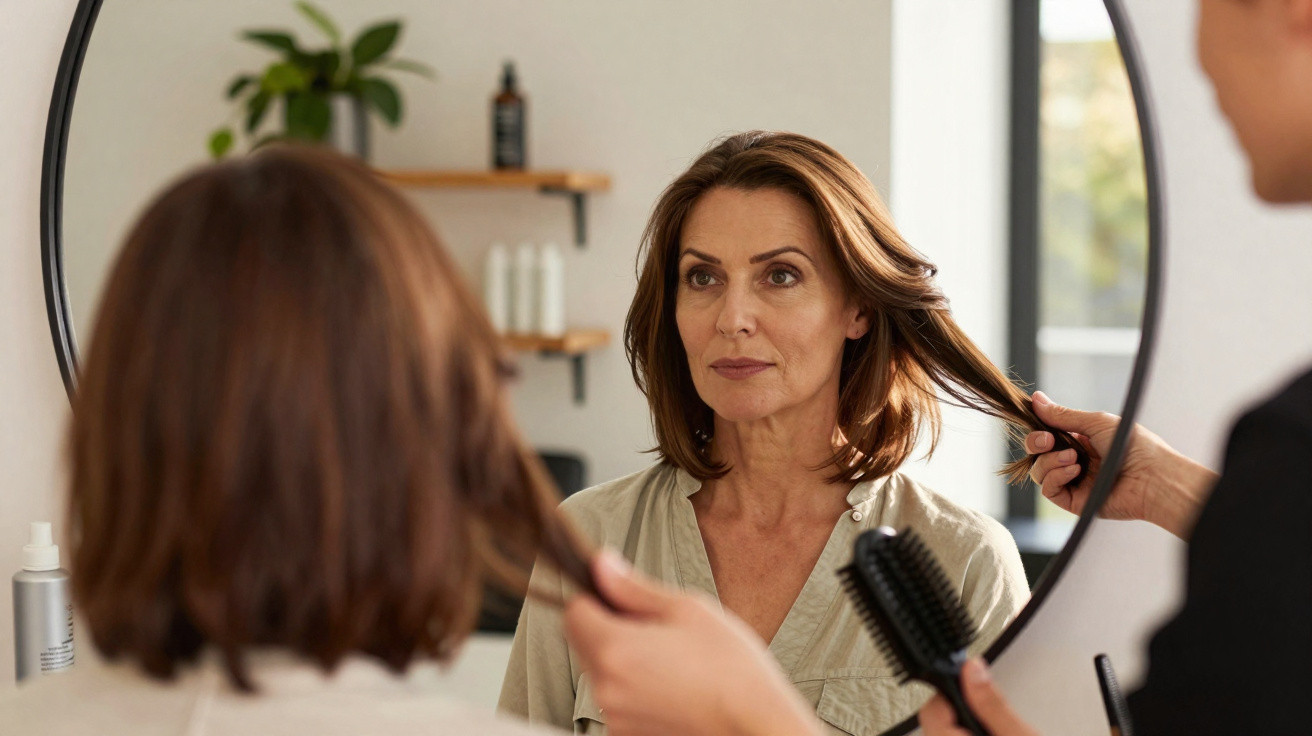
Focus less on age and more on shapes and how you feel. Hairdressers respond much better to “I feel like everything falls down here,” as you point towards your jaw, than to “I want to look younger.”
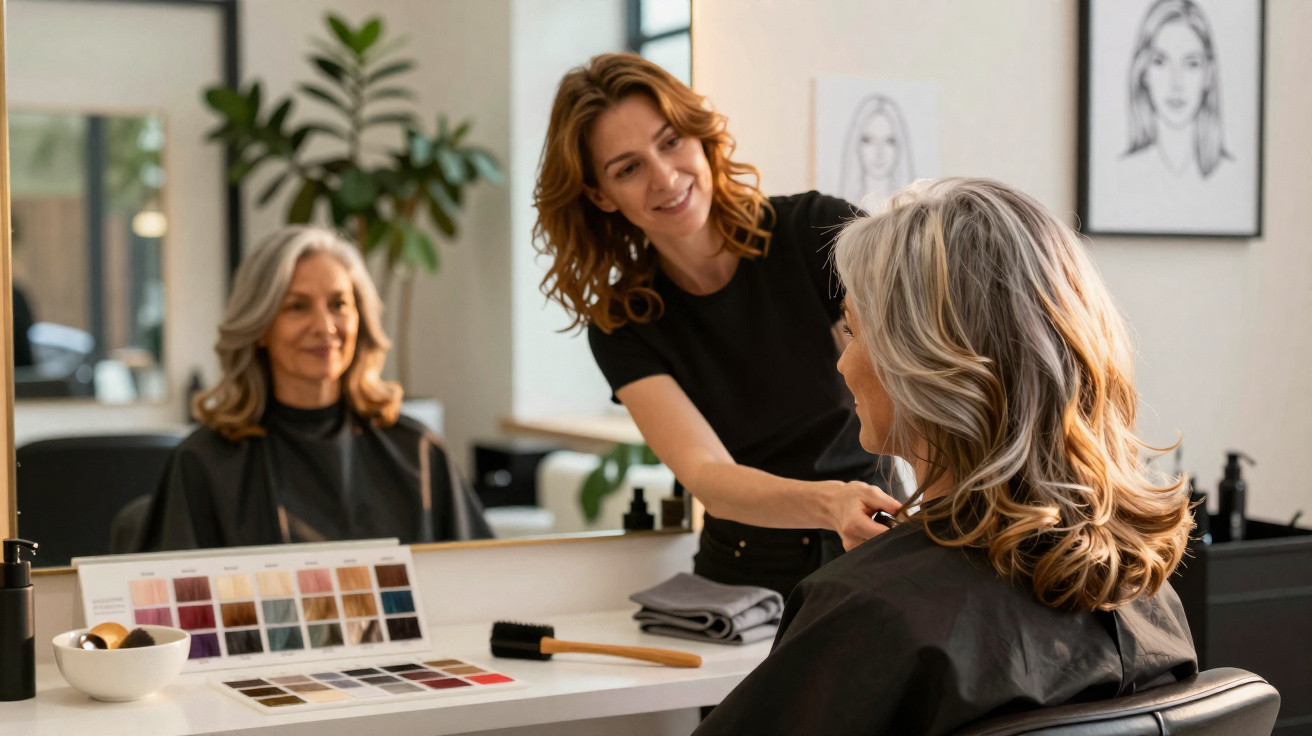
Take along one or two photographs, but make clear what appeals to you: “I love how her hair lifts at the cheeks” or “I like how the ends don’t pull her face down.” This gives your hairdresser a useful guide to volume and angles, rather than length alone.
Also discuss your routine. Do you blow-dry your hair, allow it to air-dry or use a round brush? A lifting cut that depends on 40 minutes of styling will not look youthful beyond the first week.
Many women over 50 make the same choice out of fear: they either hold on to the long hair they had at 30 or cut it all into a very short crop they do not truly enjoy.
If you genuinely love longer hair, there is no need to cut it all off. The experts’ approach is to take away weight in strategic areas: lighter ends, more space around the neck and soft framing at the temples. Even five centimetres can alter the way your face is perceived.
Conversely, choosing an ultra-short style “because that’s what women my age do” can make features appear harder when the cut is too structured and leaves too little softness around the hairline.
“Hair after 50 isn’t about hiding age,” says one Milan stylist who works with actresses in their 60s. “It’s about giving the face support. When the skin relaxes a bit, the hair can come in and lift the expression. That’s its real job.”
Ask for upward movement
Use terms such as “lift”, “soft volume at the crown”, “face-framing layers” and “angled front pieces”. Stylists consider the direction in which the hair moves.Choose your “anchor point”
Decide whether you want the focus on your eyes, cheekbones or jaw. Then tailor the length so the hair ends or curves near that area. This becomes your visual anchor.Soften the outline
Extremely sharp lines and thick sections of hair can look severe. Soft, lightly textured ends generally blend more naturally with the skin and appear less harsh.Use fringe wisely
A light curtain fringe, parted through the middle, can make a long forehead seem shorter and bring attention to the eyes. If it is too thick and straight, however, it can weigh down the entire look.Respect your texture
A cut that fights against your natural wave or curl will not remain “lifting” throughout the day. Work with your hair’s natural tendencies rather than against them.
Choosing the right “lifting” cut for your real life
Here is the unspoken truth: a haircut is only rejuvenating when it suits the life you live now, rather than the one you had 15 years ago. If you have ten minutes in the morning between emails and breakfast, a fringe requiring daily straightening will make you feel older through frustration alone.
Consider your everyday habits. Do you constantly tuck your hair behind your ears? You may prefer a bob with a clean line in front of the ear and a little height at the crown. Do you wear glasses most of the time? Layers beginning below the frames tend to sit more comfortably and avoid crowding the eyes.
There is an emotional element too. We have all experienced the moment of leaving the salon and barely recognising ourselves - and not in a positive way. A successful “lifting” cut should make you feel like yourself on your best day, not as though you are wearing somebody else’s hair.
Sometimes, the smallest adjustment to the length, angle or fringe is all it takes to look fresher, lighter and more awake - while still being quietly, unmistakably yourself.
| Key point | Detail | Value for the reader |
|---|---|---|
| Use cuts that lift, not drag | Choose lobs, soft shags/butterfly cuts or airy bobs with upward movement and light layering | An immediate visual “facelift” effect without a dramatic change or demanding styling |
| Think in lines and anchor points | Use length, angles and face-framing pieces to guide the eye towards cheekbones, eyes or jaw | Enhances facial structure and reduces a tired, sagging appearance |
| Match the cut to real habits | Select shapes that suit your natural texture and the time you can realistically spend styling | Hair looks youthful every day, rather than only when you leave the salon |









Comments
No comments yet. Be the first to comment!
Leave a Comment