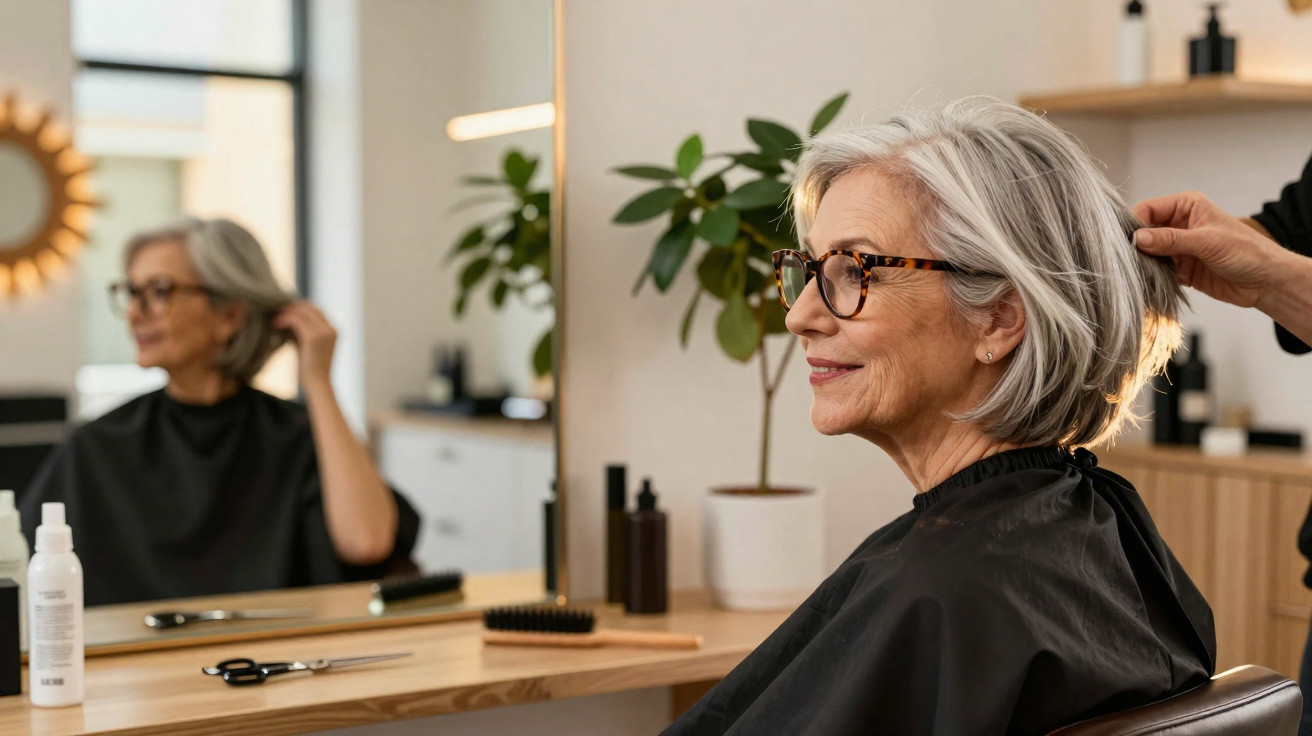
If you are 70-plus, you may recognise the situation: the glasses stay, hair becomes thinner, and the mirror raises new questions. Keep it long, go dramatically short, have a fringe or not? Women who wear glasses in particular often want a cut that feels soft, lively and fresh rather than severe. One short hairstyle can offer exactly that – provided it is cut properly.
Why hair and facial appearance change after 70
As we get older, the texture of our hair changes noticeably. Individual strands can look finer, while the scalp may show through in places. Grey or white hair often feels coarser, becomes more unruly and is prone to frizz.
- Hair becomes finer and loses fullness
- Its texture becomes drier and more fragile
- Light-coloured hair appears less dense
- Spectacle frames create strong lines across the face
Many women respond by having their hair cut shorter. It reduces blow-drying time, makes styling easier and initially seems more practical. Yet very short styles, especially when paired with glasses, can quickly look harsh, severe or overwhelmed – with the frames then taking over the entire face.
The key is not simply to “cut it short”, but to make skilful use of lengths, layers and the shape of the glasses.
The layered short hairstyle: a cut designed to work with glasses
Among hair professionals, the layered short hairstyle is considered especially flattering for women over 70 who wear glasses. It combines defined lines at the nape with softer, flowing sections around the face.
The central principle is this: leave the hair at the sides and around the forehead long enough to softly frame the face rather than draw attention to fine lines. At the crown, the hairdresser creates layers to build volume. The nape is usually kept shorter so the style feels light rather than weighed down.
This placement of fullness creates a subtle lifting effect: facial contours appear raised, cheekbones stand out and the face looks more alert. The glasses no longer seem like a separate element, but become part of the overall shape.
How the cut supports fine, thinning hair
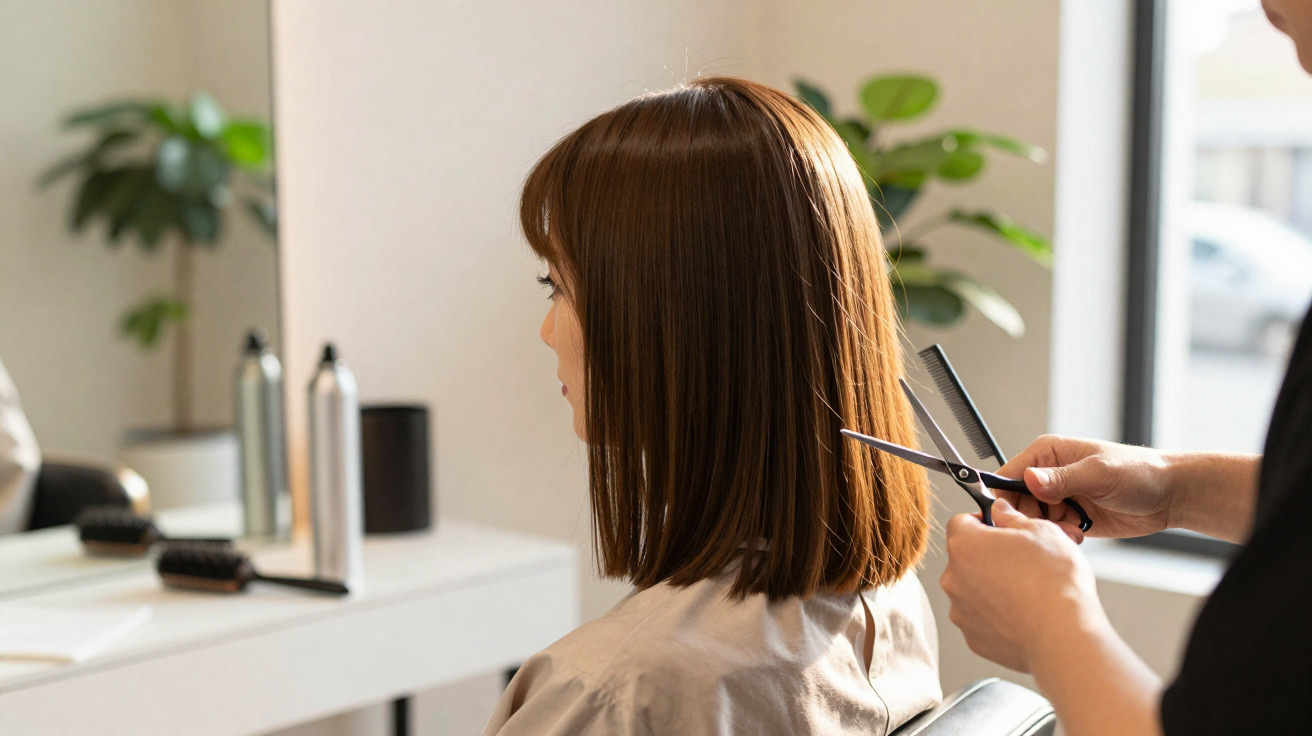
A major advantage of the layered short hairstyle is its ability to work purposefully with fine hair. Rather than leaving every length to hang evenly, which can often look flat and lacklustre, the hairdresser distributes the hair through layers.
This offers several benefits:
- Layers at the crown add volume without requiring extensive styling
- Shorter sections in thinner areas help disguise sparse patches
- A few carefully positioned strands can cover a slightly visible scalp
- The cut grows out softly and still looks “intentional” after several weeks
This technique is particularly effective with natural grey shades. Different lengths reflect and break up the light, making the colour appear more nuanced rather than flat.
How glasses influence the cut
The frame of your glasses helps determine how a haircut will look. Ignoring it risks making the hairstyle and glasses compete; using it well creates a highly cohesive overall impression.
| Type of glasses | Recommended cut details |
|---|---|
| Thick or highly graphic temples | Keep the temple area slightly clearer so nothing appears too heavy |
| Fine, delicate frames | Add more structure at the sides and allow slightly longer sections |
| Dark or intensely coloured glasses | Keep the hairstyle simple and clean so the glasses can remain the accent |
| Understated, discreet styles | Be bolder with extra movement and texture in the hair |
The more striking the glasses, the calmer the hairstyle can be – and vice versa.
White or silver hair can look especially attractive against dark frames, creating a contrast the haircut can deliberately echo. The hairdresser should ensure that the hair’s outline does not clash with the top edge of the glasses, but instead gently follows it.
The ideal appointment: how to speak to your hairdresser
Even the best cut is of little use if your hairdresser does not fully understand what you want. A clear briefing at the salon can make the decision much easier.
What to say at your appointment
Be sure to take your glasses to the salon – ideally, wear the exact pair you use every day. Then use clear, straightforward wording.
- Explain that you wear your glasses every day.
- Specifically ask for a short, layered hairstyle with volume at the crown.
- Request that the face is not exposed too strongly, so the features remain soft.
- Point out the areas where your hair has become particularly thin.
Ask directly about a realistic schedule for trim appointments. For layered short cuts, intervals of six to eight weeks usually work well: the shape stays neat without requiring constant salon visits.
Fine details that make all the difference
Beyond the main shape, small adjustments determine how youthful and harmonious a cut appears. The temple area is one example: when it is cut too short and sharply, it can soon look angular and harsh. Leaving a few softly tapered strands there makes the transition to the glasses much gentler.
A very light, relaxed fringe can also be appealing. It should not fall in a dense block, but look more piecey, so it softly skims over forehead lines rather than emphasising them. Your hairdresser can assess whether your forehead shape suits this type of fringe, or whether a side-swept front section would work better.
Easy styling with minimal effort
Many women over 70 want hairstyles that work without complicated tools. This is where the layered short hairstyle shows one of its greatest strengths: a small amount of volumising mousse or a light texturising cream is often enough. Lift the hair with your fingers, tousle it briefly, let it dry naturally or give it a quick blow-dry – and it is done.
If you wish, lightly define individual strands at the sides to mirror the lines of your glasses. The important thing is to use products sparingly, so the hair remains airy rather than becoming stiff or sticky.
What this cut can do for self-image and everyday life
A successful short hairstyle with glasses changes far more than the reflection in the mirror. Many women describe a sense of relief: less effort, less uncertainty and more definition in the face. The combination of a distinctive accessory and a well-considered cut becomes a kind of personal signature.
At the same time, it restores room for personal style. Those who once hid behind long strands often find it liberating to embrace an open, defined look. The glasses no longer feel like a necessary aid, but like a deliberate accent – supported by the right haircut.
If you are still unsure, choose a slightly longer version of the layered short hairstyle the first time. If you like the result, you can gradually go shorter with more confidence. In this way, your comfort zone can grow with every salon visit.










Comments
No comments yet. Be the first to comment!
Leave a Comment