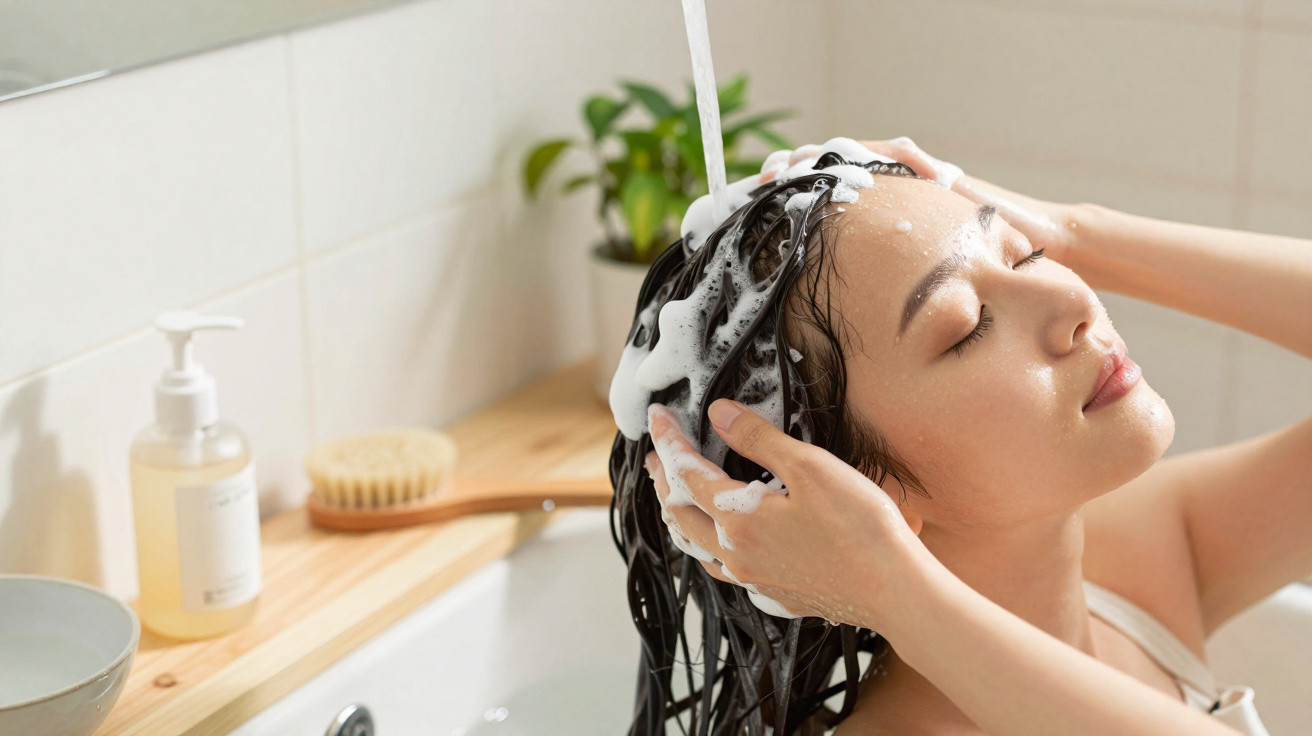
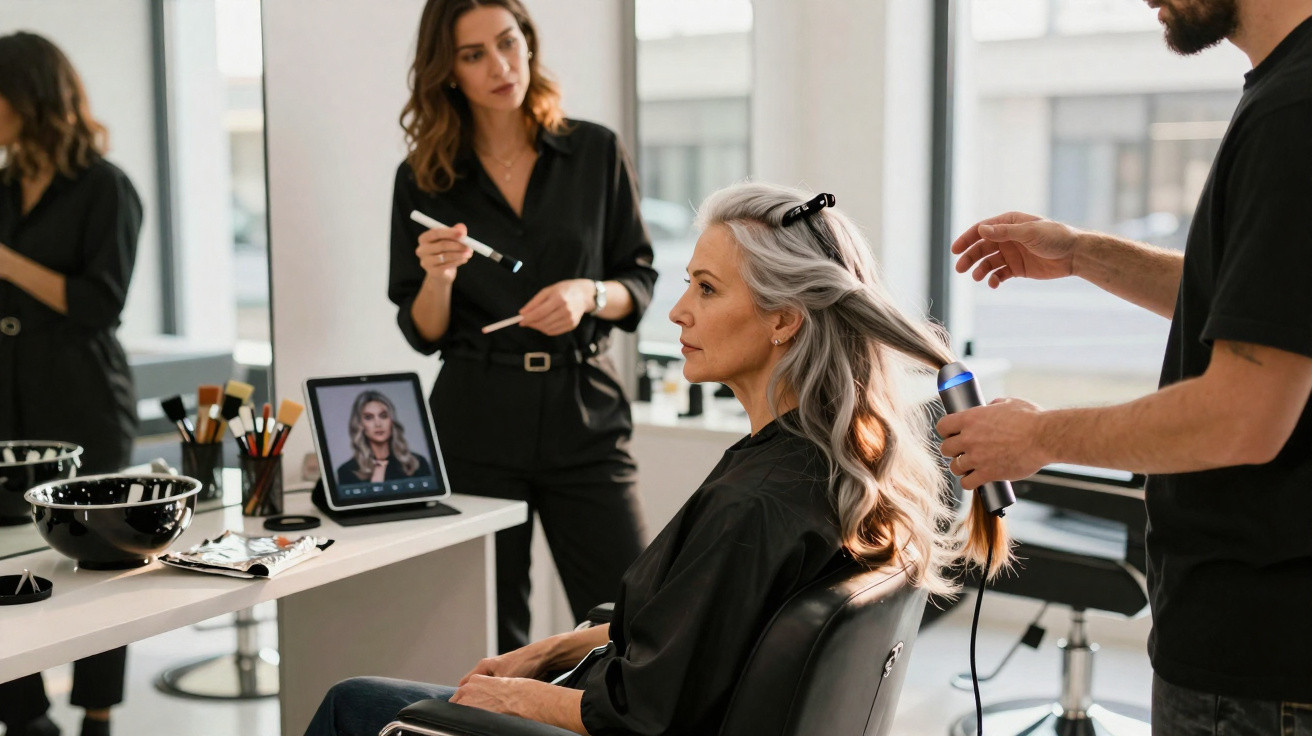
With her eyes shut and her head reclined, she simply breathes as the stylist’s hands move unhurriedly across her scalp. There is no haste, no billowing foam and no vigorous scrubbing. The room is almost silent, apart from the muted sound of water and the gentle rhythm of fingertips. A full twelve minutes go by before the stylist even picks up a towel.
When she gets to her feet, her hair appears… changed. It is not merely clean: it is shiny, light and almost without weight. She has the expression of somebody who has enjoyed both a restorative nap and a proper cry. Beyond the salon, the street is once again loud and lit by neon, yet she leaves feeling more settled, as though the shampoo had acted as a small reset.
Professionals have a name for this ritual: the Japanese washing method. Once you grasp it, washing your own hair in the shower can start to seem rather basic.
The understated science of the Japanese wash
Ask a Japanese hair stylist what makes the biggest difference to hair, and “miracle shampoo” is seldom their answer. Instead, they mention water, time and hands. The Japanese washing method is not so much a product trick as a carefully sequenced routine: an extended pre-rinse, a very small amount of shampoo, a scalp massage and another long rinse. Each action has a purpose.
Many Western washing routines are quick and forceful: a generous squeeze of shampoo, lots of lather, a fast rinse, then finished. The Japanese approach reverses that emphasis. Shampoo is used briefly, while water and massage take longer. Hair specialists say that this is where the real benefit lies-not in the bottle, but in how its contents are applied.
Picture it as a spa experience hidden inside an ordinary hair wash: slow, careful and nearly ceremonial. It is also remarkably effective.
In Tokyo salons, stylists commonly spend three to five minutes rinsing hair before shampoo is used at all. One stylist told me she keeps a quiet timer in her mind: “I don’t start counting until the hair feels like silk under the water.” This initial rinse is their first tool, clearing away sweat, dust and product residue while helping to loosen sebum around the roots.
By the time shampoo is introduced, the quantity can seem almost absurdly small to Western eyes-often a pea-sized amount for short to medium-length hair, or a small coin-sized amount for long hair. Mixed with water between the palms, however, it produces a soft, light foam that spreads evenly from the scalp to the ends.
Japanese customers are known for their commitment to salon practices. A 2023 survey of urban salons in Japan found that over 70% of clients book appointments solely for “shampoo & blow-dry”, rather than for haircuts or colour. They are, quite literally, paying for the wash alone. That shows how important this ritual is and how strongly they trust the technique.
Behind its calm atmosphere sits a practical rationale. Hair specialists note that friction, rather than shampoo ingredients, causes much of the damage to hair. Gathering hair on top of the head and scrubbing it as though washing a jumper creates tangles, breakage and the dull, frizzy halo many people know well. The Japanese method significantly reduces this friction.
The technique concentrates on the scalp rather than the lengths, targeting the area where oil and build-up genuinely collect. The lengths are mostly cleansed gently as foam moves down them. There is less rubbing, less cuticle swelling and fewer split ends becoming visible weeks afterwards. Shampoo is more about scalp hygiene than achieving “squeaky clean” hair.
It also reflects a skincare-style way of thinking. The scalp is handled like facial skin: with care rather than aggression. That means lukewarm water, gentle pressure and plenty of patience-all quietly working while you try not to think about your emails.
How to recreate the Japanese washing method at home
If you would like to try the Japanese washing method in your own small bathroom, begin with the step people rarely mention: the pre-rinse. Hold your hair under lukewarm running water for at least one full minute; two minutes is better still. It will seem like a long time. Your mind will tell you, “that’s enough.” Keep going.
Tip your head slightly backwards so that the water travels from roots to ends. With your fingertips, softly separate sections as if you were hand-combing beneath the stream. Do not scratch; simply direct the hair. You are releasing oil and dust, leaving shampoo with less demanding work afterwards.
When the hair is fully saturated and feels smoother and heavier, use a very small quantity of shampoo. Before applying it to the scalp, blend it with water between your palms. This easy step distributes it more evenly, just as salon professionals do at the wash basin.
Next comes the step that makes the greatest difference: massaging the scalp. Set your fingertips-not your nails-at the hairline, then make small, gentle circles. Move through the sections methodically: front hairline, temples, crown and nape. Think of drawing tiny spirals on the scalp, rather than dragging through the hair.
Keep the lather modest. A dense, airy mass of bubbles usually means that too much product has been used. Japanese stylists explain that you want a creamy, low foam that sits against the scalp, not a towering pile of suds. The benefit comes from the movement, not the bubbles.
Allow roughly two minutes for the massage. It may sound brief, but time it properly and you will see how swiftly most of us usually rush through it. This is the point at which many salon clients genuinely drift off. The mind settles while the scalp is stimulated.
This is also where good intentions often become impractical. People hear “massage” and “slow wash” and assume every shower now requires a 25-minute spa ritual. Let’s be honest: nobody really does that every day.
Hair specialists are more forgiving than we tend to expect. Their advice is to aim for the full Japanese method once or twice weekly. On busier days, even adopting one element-such as a proper pre-rinse-can help. Regularity matters more than perfection. Your scalp will not hold it against you if you miss a massage on a Tuesday morning because you are running late for work.
Another frequent error is treating the lengths with the same scrubbing action used on the scalp. That is precisely the habit Japanese stylists seek to change. Let the foam flow through the hair instead; do not twist or rub strands together. Friction is shine’s real enemy.
One Tokyo trichologist told me something that stayed with me:
“People think their hair is dirty when it feels heavy. Often it’s just tired from rough handling, not from real dirt.”
That is the restrained philosophy behind the Japanese method: treat the structure with respect, and it will return the light.
For an easy shower-time reminder, here is the routine at a glance:
- Extended pre-rinse (1–2 minutes)
- A tiny amount of diluted shampoo
- Scalp-only massage using fingertips, not nails
- Allow foam to run through the lengths, without scrubbing
- An equally long rinse, followed by a gentle towel squeeze
After repeating it three or four times, your hands begin to learn the process. It starts to feel less like another task and more like brushing your teeth-only considerably more enjoyable.
Why this gentle Japanese washing method feels unexpectedly emotional
At its most practical level, the Japanese washing method is sound hair care: less friction, improved scalp circulation and more targeted cleansing. Yet it reaches something gentler too. On an exhausting evening, standing beneath warm water while someone-or you-works carefully across your scalp can lower your defences. It feels unusually intimate.
We do not often handle our bodies with this much gentleness. We hurry, scrub and tackle knots as if they have personally offended us. That is why a slower wash can feel awkward, even self-indulgent, the first time you try it. On a hectic day, spending two extra minutes simply rinsing your hair may feel almost rebellious.
At a deeper level, the method challenges an idea many of us were raised with: that “clean” must mean squeaky, stripped and tight. Hair professionals in Japan quietly argue for the reverse. Clean hair ought to move rather than squeak. The scalp should feel refreshed, not tight or itchy. Shine should resemble healthy fibre, rather than silicone posing as gloss.
Most of us have had a day when our hair looks unexpectedly brilliant-softer, shinier and easier to style-and credited a random new product. Often, the meaningful change was in how we used our hands, how long we rinsed or how lightly we handled the strands. There is a real comfort in recognising that better hair does not always require another purchase.
The Japanese method does not require you to clear out the entire bathroom shelf. It asks for something less expensive but more difficult: attention. A marginally longer pre-rinse, slightly less shampoo and a few additional circles with your fingertips. These small adjustments build quietly over weeks rather than hours.
Some readers will turn it into a complete ritual involving oils, scalp brushes and playlists. Others will take just one idea-perhaps the longer rinse-and leave the rest behind. Both approaches are perfectly valid. Trends will arrive and disappear, from glass hair to heatless curls, but the principle that water, time and light pressure can improve hair is likely to endure.
The next time you step into the shower and reach for the bottle, you may think of a woman in a Tokyo salon, eyes closed, while a stylist’s hands move slowly around her head. For that one wash, you might choose to slow your hands down a little. You may be surprised by how different “just washing your hair” can feel.
| Key point | Detail | Benefit for the reader |
|---|---|---|
| Long pre-rinse | 1–2 minutes of lukewarm water before shampoo | Improves cleansing and reduces the need for harsh scrubbing |
| Scalp-focused shampoo | Tiny amount, diluted, massaged only on the scalp | Targets oil and build-up without drying the lengths |
| Low friction, long rinse | No rubbing of lengths, with a gentle rinse lasting as long as the pre-rinse | Protects shine, limits breakage and leaves hair softer |








Comments
No comments yet. Be the first to comment!
Leave a Comment