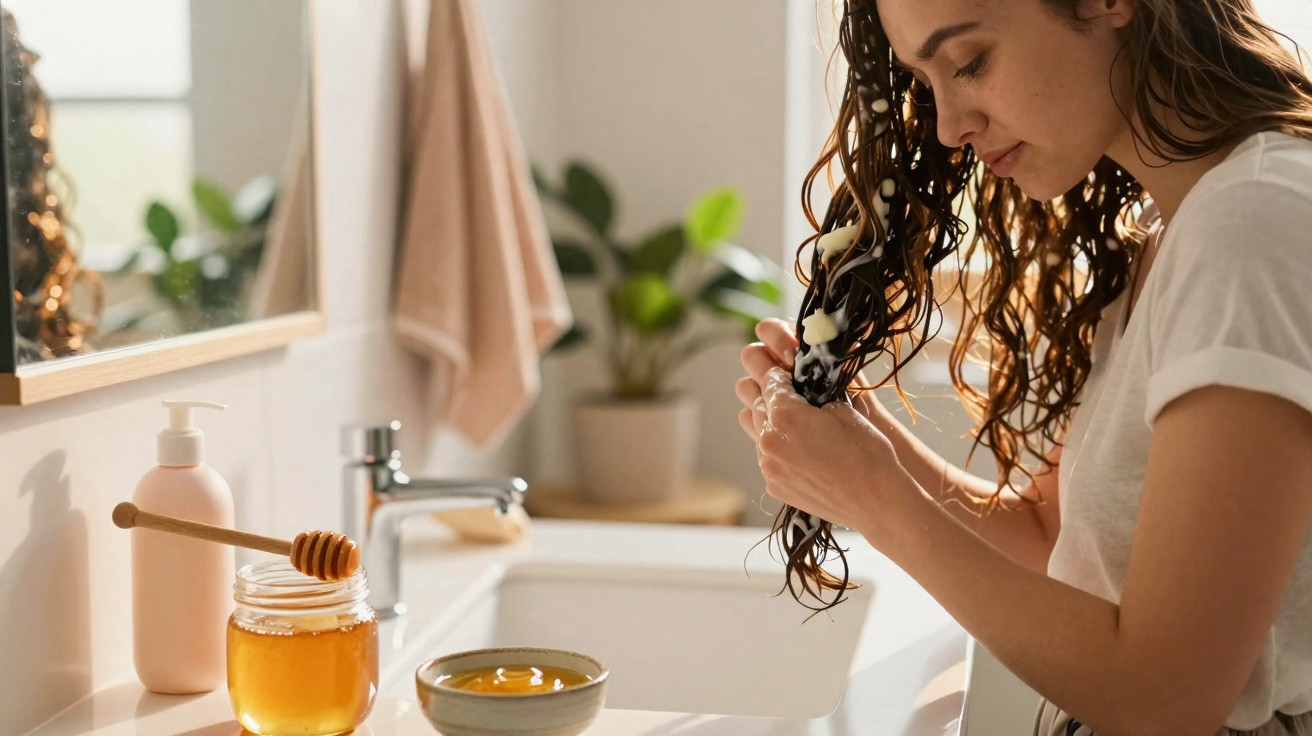
When the ends feel rough, tangled and hard to comb through, a simple pre-wash step can make your routine easier. Mixing a very small amount of honey into conditioner and applying it only through the lengths may help with detangling while leaving the hair feeling softer.
Why use the mixture before washing your hair?
Conditioner coats the strands, helping to reduce friction between them. This can be particularly helpful when the ends are dry or knotted. With less resistance as you handle the hair, it is easier to separate the strands without pulling as much, which may also reduce breakage caused by excessive force.
Honey is included in only a minimal quantity as an addition to this routine. The aim is not to make hair grow faster or claim an alleged vitamin replacement, but to create a brief step before washing that promotes softness, manageability and more comfortable detangling.
How do you prepare honey and conditioner?
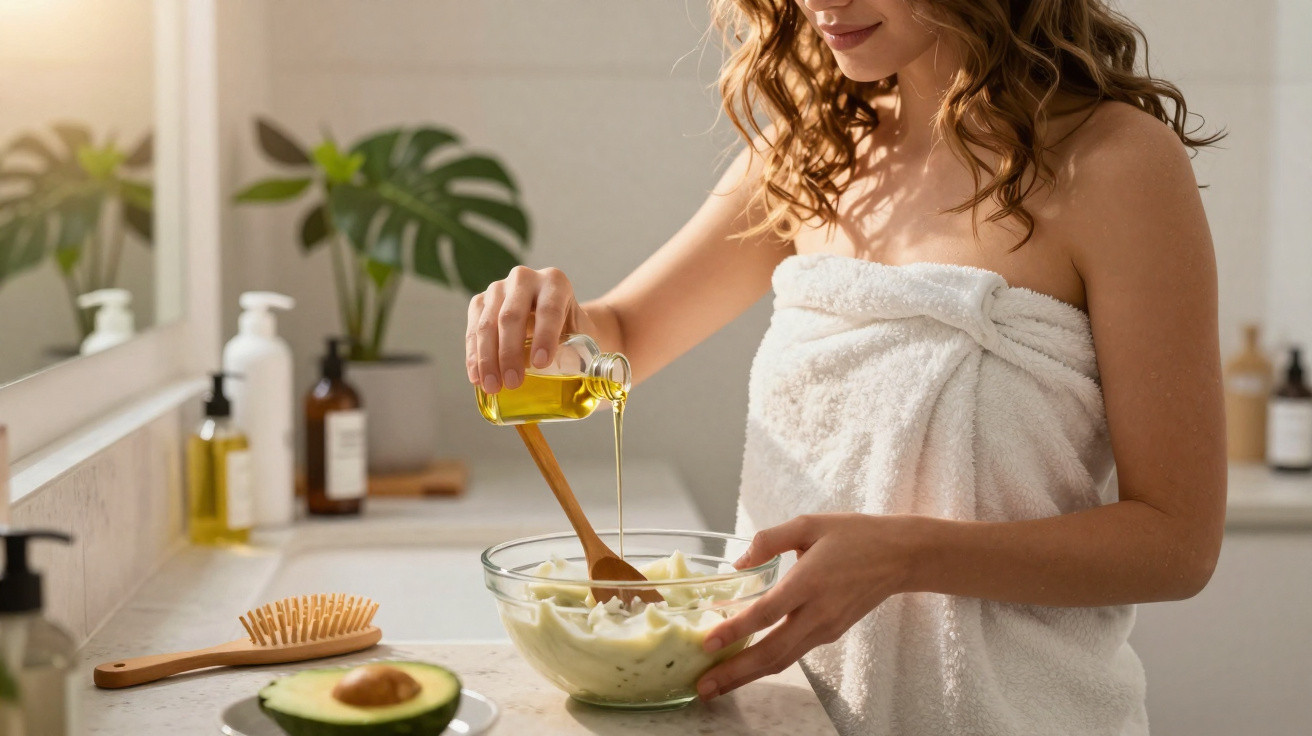
There is no need to make a large batch or store the mixture. Put into your hand only the amount of conditioner you would normally use on the lengths, then add a very small portion of honey. Blend it thoroughly with your fingers until it has an even consistency that is easy to spread through the hair.
Too much honey may leave hair sticky and make rinsing more difficult, so less is more. The goal is to keep the conditioner’s texture pleasant and easy to distribute, rather than turning the treatment into something heavy or hard to wash out afterwards.
Which application tips make a difference?
Keep the application to the lengths and ends, particularly the areas that tend to knot the most. Once you have spread it gently through the hair, leave it on for a few minutes. A few straightforward precautions can make this step more practical and prevent overdoing it.
- Mix only a minimal amount of honey into the conditioner.
- Apply it exclusively to the lengths and ends.
- Leave the mixture on for just a few minutes before washing.
- Rinse thoroughly so that no residue is left on the hair.
After the short waiting time, rinse the entire mixture away with water and continue with your usual wash routine. There is no need to leave the product on for long periods in pursuit of a stronger result. With this type of care, keeping things simple makes the process more comfortable and lowers the likelihood of residue.
Watch the video shared by the YouTube channel Abner Matias, discussing the benefits of honey for hair.
Conditioning hair can reduce frizz and breakage
When hair is properly conditioned, individual strands generally glide over one another more easily. This lower level of friction may help control the appearance of flyaways and reduce the force needed to detangle, especially at the ends, which are often more affected by dryness and wear.
This does not mean permanently repairing a fibre that has already been damaged, but rather temporarily improving its surface and flexibility. In practice, hair that feels less rough is easier to comb and requires less pulling, which is important for anyone who notices brittle ends or frequent tangles.
Is this honey and conditioner treatment worth trying on the ends?
For people who regularly deal with knots, the mixture can be a quick option within their routine, provided it is used sparingly and rinsed away completely. The main expected benefit is straightforward and realistic: making detangling easier and leaving the lengths feeling softer.
If your ends tend to catch in a comb or snap while being detangled, pay attention to how your hair responds to this step. A small change before washing may prevent unnecessary pulling. Try it with a small amount and give your strands attention now, before the knots become even harder to deal with.











Comments
No comments yet. Be the first to comment!
Leave a Comment