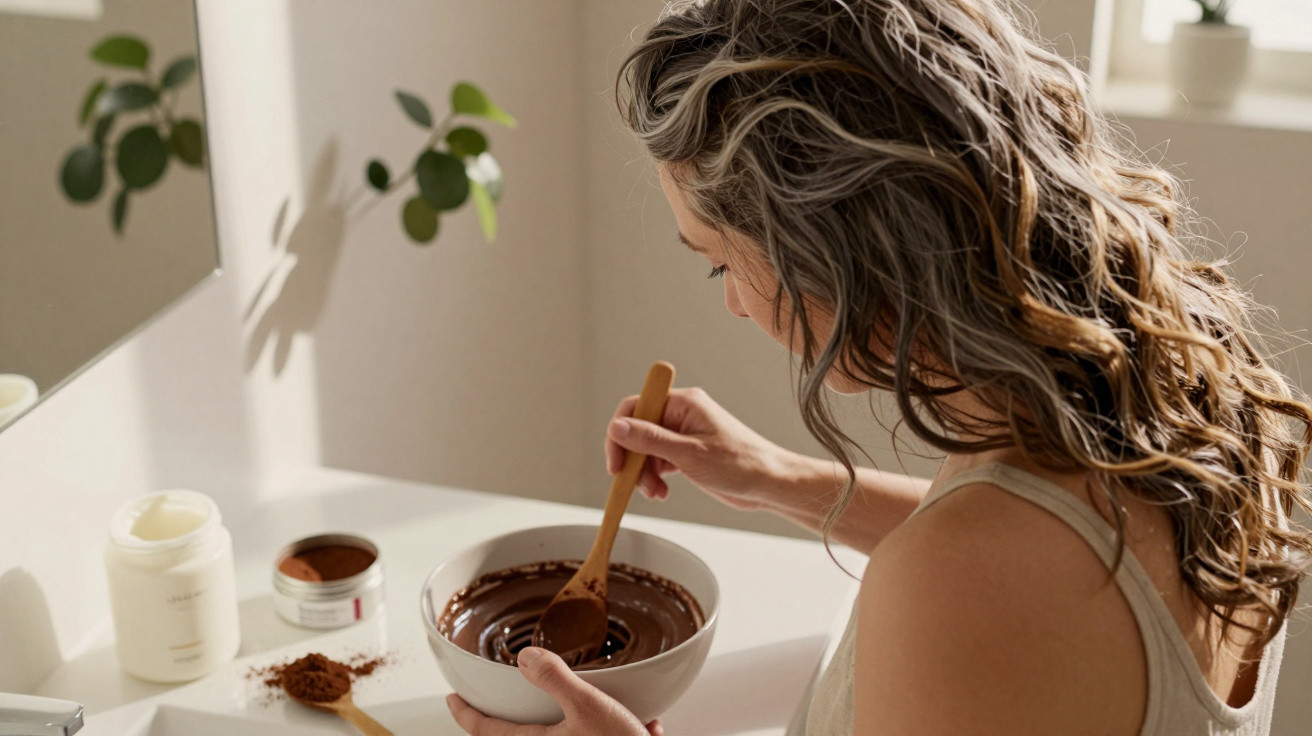
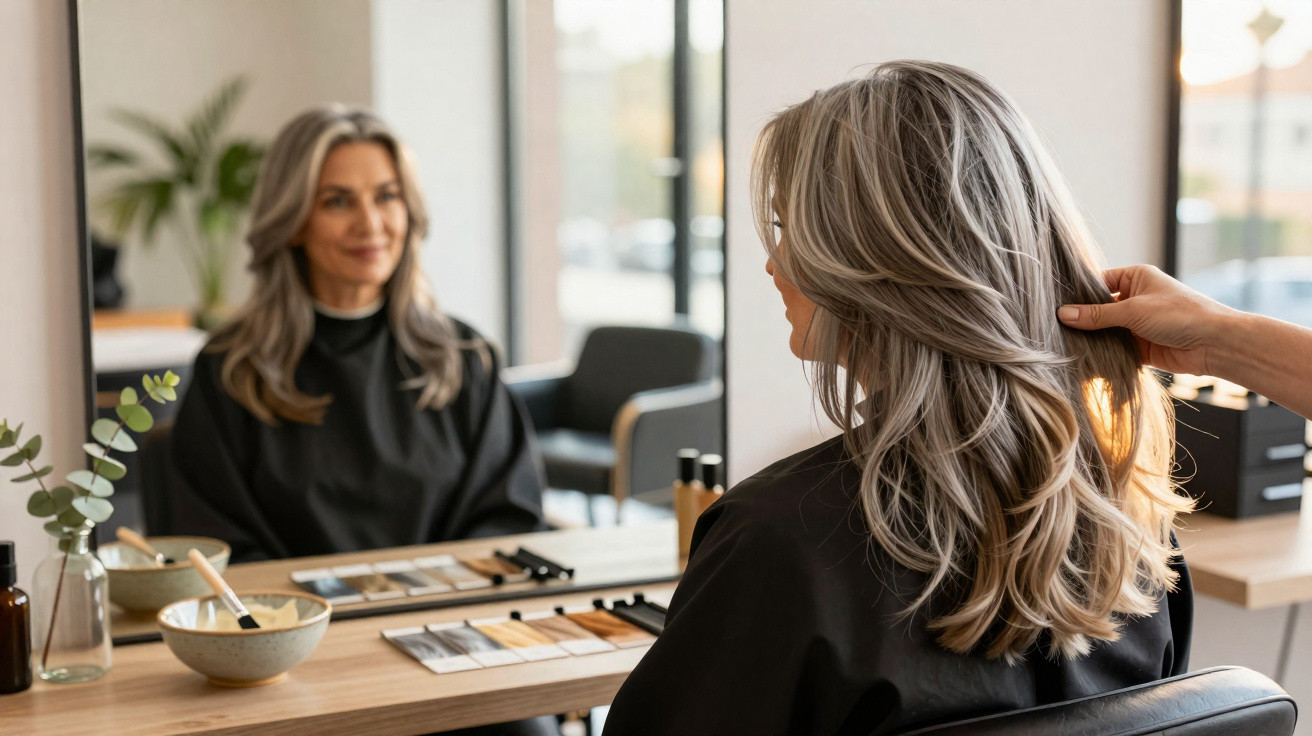
Rather than scheduling colour appointments months in advance, an increasing number of people with greying hair are making an inexpensive, low-maintenance adjustment to their usual conditioner. They say it can gently mute silver strands and bring them closer to their natural colour.
A softer approach to grey hair
Grey hair develops when pigment-producing cells in the follicles reduce or stop making melanin. Although age is a factor, genetics, smoking, prolonged stress and nutritional deficiencies may accelerate the process. For years, the usual solutions have been permanent colour, root touch-up products or plant-based dyes, which can be difficult to manage.
Permanent and semi-permanent colours create fast, noticeable changes, but they commonly contain ingredients that may make the hair shaft rougher and irritate sensitive scalps. Even ammonia-free formulas alter the hair’s internal structure. As hair becomes older, it is often finer and drier, meaning regular colouring can lead to frizz or breakage.
Natural alternatives, including henna and indigo, may sound gentler, but the resulting shades can lean red, orange or deep blue-black, while errors are not easily fixed. Once the pigment takes hold, it usually remains. For anyone hoping merely to tone down a handful of silver hairs without adopting an entirely different look, these options may seem excessive.
“Between harsh dye jobs and doing nothing, a third option is taking shape: tinting grey hair using kitchen-grade cocoa mixed straight into everyday conditioner.”
The cocoa conditioner trend for grey hair
The newest social media trend comes not from a laboratory but the baking cupboard. When unsweetened cocoa powder is blended with a basic conditioner, it works as a delicate, washable tint that can gradually cover grey hair with a gentle brown hue.
Cocoa contains naturally occurring plant compounds, including flavonoids and tannins, which adhere to the exterior of each hair fibre. Instead of forcing open the cuticle, these compounds remain on its surface and create a light-filtering coating. On blonde or light brown hair with grey running through it, the coating can appear as a subdued, smoky brunette shade. On naturally darker hair, it may provide warmth and gloss without completely altering the colour.
Unlike many coffee-rinse trends, cocoa offers more than colour alone. Its antioxidants may help protect hair from environmental damage, while its slight conditioning properties can make coarse grey hair feel less wiry.
Mixing cocoa into conditioner
This approach is straightforward enough for a Sunday evening bathroom routine and requires no professional expertise.
- Wash your hair as normal, then towel-dry gently until it is damp rather than soaking wet.
- Put a serving of silicone-free conditioner into a clean bowl.
- Mix in 2–4 tablespoons of unsweetened cocoa powder, depending on your hair’s length and thickness.
- Whisk or stir the mixture until it is smooth and a consistent chocolate colour.
- Divide the hair into sections and apply liberally, focusing on noticeable grey at the roots, temples and parting.
- Use a wide-tooth comb to distribute the mixture evenly from roots to ends.
- Leave it on for roughly 20 minutes, or for up to 30 minutes on particularly resistant white strands.
- Rinse with lukewarm water until the water runs clear, then style as usual.
The outcome is progressive rather than dramatic. After repeated applications, many users say bright white hairs take on a cool beige or smoky brown tint, helping them blend more softly with the underlying hair colour.
“Think of cocoa conditioner as a tinted moisturiser for hair: it blurs, softens and enhances, rather than fully covering or transforming.”
Who notices the most visible change?
This method is not a universal solution for grey hair, so realistic expectations are important. The visibility of the result depends on the hair’s colour and texture, as well as the amount of white hair present.
| Hair profile | Likely cocoa outcome |
|---|---|
| Mostly grey, fine hair | Beige-brown cast, smoother feel, less stark contrast |
| Salt-and-pepper medium brown | Softer, more even shade, gentle blending of scattered greys |
| Dark brown or black with a few greys | Slight warmth and gloss; individual greys look less bright white |
People with isolated silver strands, rather than entirely white hair, are generally most pleased with the effect. The absence of harsh chemicals can also appeal to those with sensitive scalps. For someone with very dark hair and extensive greying, however, the change may be so understated that it resembles a gloss treatment more than an actual colour adjustment.
What cocoa does to the hair shaft
Grey hair can feel different as well as look different. Its outer cuticle may be more raised, leaving strands rough to the touch and more prone to catching against one another. Conditioner is intended to smooth this outer layer, enabling the fibres to glide more freely.
With cocoa added, tiny particles settle on the surface of the conditioned hair. Repeated use creates successive layers, deepening the gentle tint over time. Unlike permanent hair colour, these particles do not penetrate far into the hair or change the structure responsible for its strength. This can make the method attractive for ageing hair that is already prone to dryness.
“Cocoa does not restore melanin from the inside; it simply lays down a gentle, chocolate-toned veil on top of the hair.”
Cocoa compared with other grey hair solutions
Numerous kitchen-based and salon treatments claim to “reverse” grey hair. Coffee and black tea rinses may leave a mild stain, although they can sometimes make hair feel dry or coarse. Salon grey blending produces refined results but involves greater expense and ongoing appointments. Ready-made tinted conditioners fall between the two, combining conditioning with colour, although they may still include synthetic dyes or fragrance allergens.
Cocoa is notable for being affordable, easy to find and food-grade. It fits into an existing hair-washing routine with minimal effort. The compromise is that results differ from person to person, and any residue must be rinsed out thoroughly. Without careful washing, the same powder that provides colour may dull the hair’s surface or leave deposits on the scalp.
Safety considerations and realistic results
While cocoa powder is safe to eat, this does not mean it cannot cause a reaction on the skin. Anyone with a highly reactive scalp, a chocolate allergy or eczema around the hairline should proceed carefully. Testing a diluted mixture on a small patch of skin behind the ear is a sensible precaution.
It is also worth remembering that cocoa will not make blonde hair dramatically darker after one treatment, nor will it turn silver hair jet black. Its effect is more like a soft-focus filter than a complete recolour. Those looking for immediate coverage of prominent white roots will still require conventional hair dye or professional colouring.
Beyond the conditioner bowl
Genetics have a strong influence on greying, although lifestyle habits may affect the process. Some studies link chronic stress, heavy smoking, intense sun exposure and diets lacking antioxidants with earlier or more rapid pigment loss. No food or supplement can guarantee a reversal, but an overall balanced lifestyle may support the pigment cells that remain.
People who begin using cocoa conditioner often make other adjustments too: applying UV hair sprays in strong sunshine, lowering the temperature of heated styling tools, and alternating with richer masks containing oils and lipids to protect brittle strands. Together, these changes may help grey hair feel softer and appear shinier, regardless of how pronounced the cocoa tint becomes.
Practical times when the cocoa trick works best
The cocoa method can be particularly useful in certain circumstances. Someone growing out previous permanent colour, for example, may use it to soften the obvious divide between dyed lengths and natural roots. A person in their 30s or 40s with a few early silver streaks could apply it weekly as a low-commitment means of blurring them without booking salon appointments.
It also has seasonal applications. During winter, when indoor heating can leave hair drier, replacing one standard conditioning treatment with a cocoa-infused version may provide a little extra depth without drying the cuticle further. For those thinking of fully embracing their natural grey, cocoa can offer an interim step: a reversible, low-pressure option for easing the transition while becoming accustomed to seeing more natural colour in the mirror.








Comments
No comments yet. Be the first to comment!
Leave a Comment