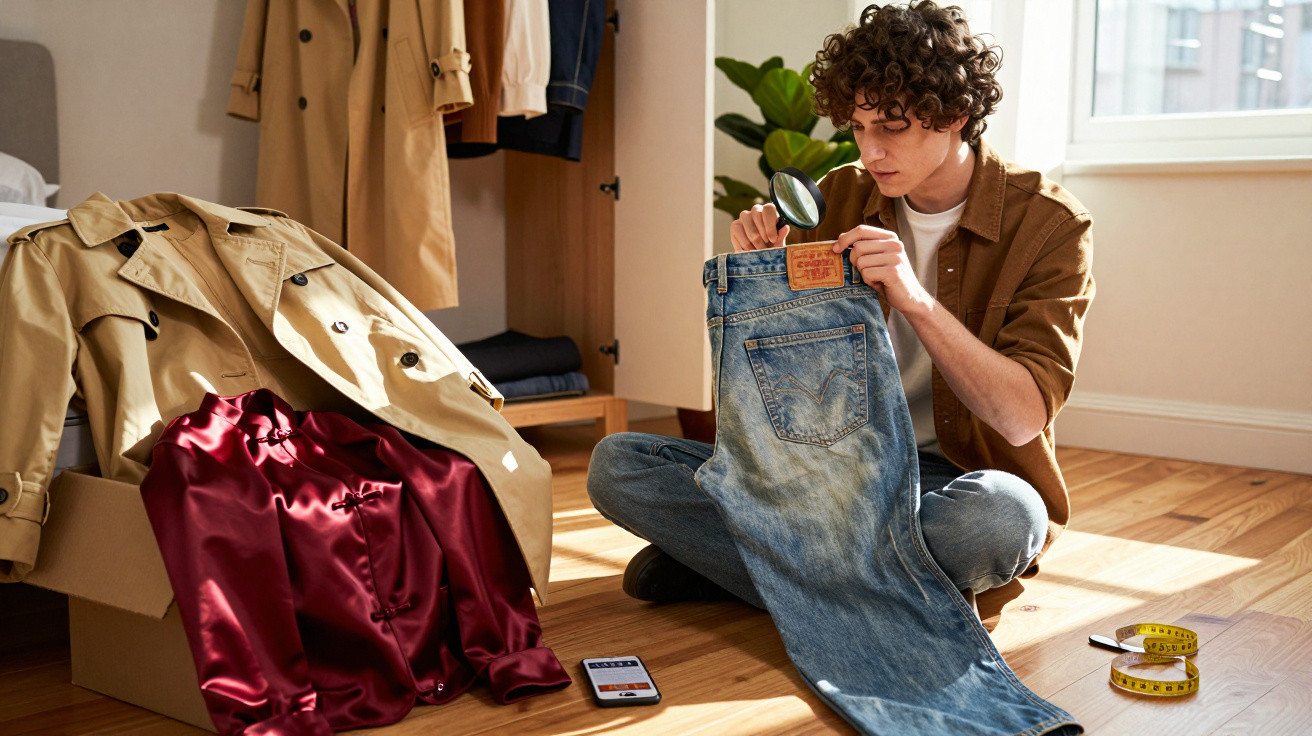
Among old moving boxes, mothballs and yellowing photo albums, there are often garments that disappeared from everyday life long ago. What was once dismissed as “embarrassing”, “outdated” or fancy-dress costume could now provide a useful boost to the household budget. The global vintage fashion market is booming, which currently works strongly in favour of anyone who owns old original pieces.
Why old clothes are suddenly in demand
The vintage fashion market is estimated to be worth around €40 billion in 2024, with forecasts pointing sharply upwards. Buyers are specifically looking for originals from an era when fabrics were heavier, seams more durable and cuts more distinctive. Nostalgia, sustainability and scarcity come together here.
Many sought-after pieces are not kept in expensive collections, but in ordinary homes – often forgotten in the loft.
Three categories stand out in particular at present: classic old jeans, trench coats from major fashion brands and traditional satin jackets with an East Asian influence. Anyone who happens to own items like these could potentially make several hundred euros.
The three garments currently worth serious money
1. The old Levi’s 501 – jeans from the “golden era”
Perhaps the most exciting source of value is an original Levi’s 501 dating from before the mid-1980s. Depending on their condition, these trousers often sell for €150 to €500. Especially desirable are very old versions with a red tab featuring a capital “E”, known in the scene as “Big E”. These jeans broadly date from before 1971.
What collectors look for:
- “Made in USA” on the label
- heavyweight denim, often around 14 oz, with a firm handle
- a selvedge edge on the inside leg seam
- old zips or buttons bearing names such as “Talon”
If you still have a supposedly “worn-out” 501 tucked away somewhere, do not give it away carelessly. Even worn examples can be of interest, provided that large tears or DIY alterations have not ruined their original appearance.
2. A classic trench coat from major fashion brands
The second major winner is the trench coat from well-known fashion houses, produced before the 1990s. Designs by Burberry are particularly capable of commanding high prices. A well-preserved vintage designer trench coat often sells for more than €300. There are documented cases of an 1980s trench coat being sold alongside a chunky Irish knit jumper for more than €400.
Important points to check on trench coats:
- a label showing the country of origin, such as England or Italy
- high-quality buttons, neat stitching and heavyweight cotton or gabardine fabrics
- for Burberry: the distinctive checked lining, which can help with dating
- ideally no faded fabric or very large stains
Many people discarded these coats during the 1990s or 2000s because they seemed “too stuffy” or “too oversized”. Today, that very look fits perfectly with the retro trend again – as long as the coat is original and not completely worn out.
3. Tangzhuang-style satin jackets
At first sight, it can look like a cross between a traditional celebration jacket and a costume: a shiny satin jacket with a stand collar and decorative knotted buttons. This exact garment, often described as a Tangzhuang, is currently enjoying a major surge in popularity on platforms such as Vinted and Depop.
Typical characteristics include:
- a Mandarin-style stand collar
- fabric-covered knotted buttons, often called Pankou
- vibrant satin, ideally made from 100% silk
- elaborate, dense embroidery without a cheaply repetitive-looking pattern
These jackets were once often placed in the “dress-up” section of second-hand shops. Now, many people wear them open over a T-shirt with jeans or cargo trousers. This makes the jacket feel less like a costume and more like a statement piece – and that is reflected in its price.
Identifying originals: how to check what is in the box
If you are unsure whether you are looking at a genuinely valuable item, a few straightforward checks can help.
How to identify a genuine 501
- Check the inside seam: is there a selvedge edge with a clean woven finish?
- Read the label: does it say “Made in USA”, and does the label look old or perhaps slightly faded?
- Examine the red tab: a capital “E” points to a very early model.
- Inspect the zip and buttons: names such as “Talon” or old button stamps are a good sign.
What indicates a high-quality designer trench coat
A trench coat from a major fashion house differs noticeably from an unbranded coat. Its lining is inserted neatly, its buttons are securely attached, and the fabric feels weighty without being stiff. Labels often feature older typefaces, countries of origin and serial numbers.
The better documented and identifiable an item is, the more likely collectors are to pay a premium.
Satin or synthetic fibre? A simple material test
With old coats and jackets in particular, the question often arises whether the fabric really is wool or silk. Professionals often use the so-called “flame test” on a tiny loose thread or bit of fluff:
- if it smells like burnt hair and leaves fine ash behind: it is more likely to be an animal fibre, such as wool or silk
- if the material melts, draws into strands and smells chemical: this suggests a synthetic fibre
Anyone who does not feel confident carrying this out should instead visit a vintage boutique or textile specialist before damaging the garment.
Where selling is genuinely worthwhile
Different sales channels suit different items in the wardrobe:
| Item | Suitable platforms | Typical advantage |
|---|---|---|
| Vintage Levi’s 501 | Vinted, Depop, eBay | Many denim enthusiasts, quick sales |
| Designer trench coat | Vestiaire Collective, auction houses | Higher prices, targeted collectors |
| Tangzhuang-style satin jacket | Vinted, Depop | Trend-focused audience, fashion creators |
Before creating a listing, it is worth checking items that have already sold. On eBay, for example, you can filter for “sold items”; on other platforms, search histories and ratings provide an indication of what buyers have actually paid, rather than simply what sellers are asking.
How to get more from old garments
Anyone hoping to make money from old clothes should not simply photograph them carelessly on the floor. Good presentation and detailed information often determine whether an item sells.
- Have the item cleaned and remove obvious dirt and odours.
- Use a good hanger to restore the shape of coats and jackets.
- Take plenty of photographs: front, back, labels, details and any flaws.
- Include measurements: chest width, total length and sleeve length – collectors pay attention to these.
Small faults, such as loose buttons or open seams, can often be repaired with only a little effort. This considerably improves the chance of achieving a fair price. More serious damage should be mentioned openly and photographed, otherwise complaints may follow.
Vintage fashion boom, sustainability and seller risks
The strong demand for old originals is also linked to a desire for more sustainable consumption. Wearing an existing pair of jeans from the 1970s rather than buying a new fast-fashion item saves resources while making a fashion statement.
There are pitfalls, however. Fake labels, brand tags sewn on later, or newly produced “retro pieces” made to look vintage can mislead inexperienced sellers. If in doubt, it is sensible to ask a specialist shop, a dedicated second-hand boutique or an online community for an assessment.
It also helps to familiarise yourself briefly with the terminology: “selvedge”, for example, refers to a particular woven edge found on high-quality denim fabrics. “Big E” describes older Levi’s labels. These terms appear regularly in listings and make it easier to assess realistic price ranges.
Ultimately, it is worth taking a critical look through every old box before anything goes into the textile recycling bin. Not every item is a treasure, but pieces that are surprisingly sought after today are repeatedly found among apparent clutter and forgotten memories – and they could make the next month a little easier financially.

















Comments
No comments yet. Be the first to comment!
Leave a Comment