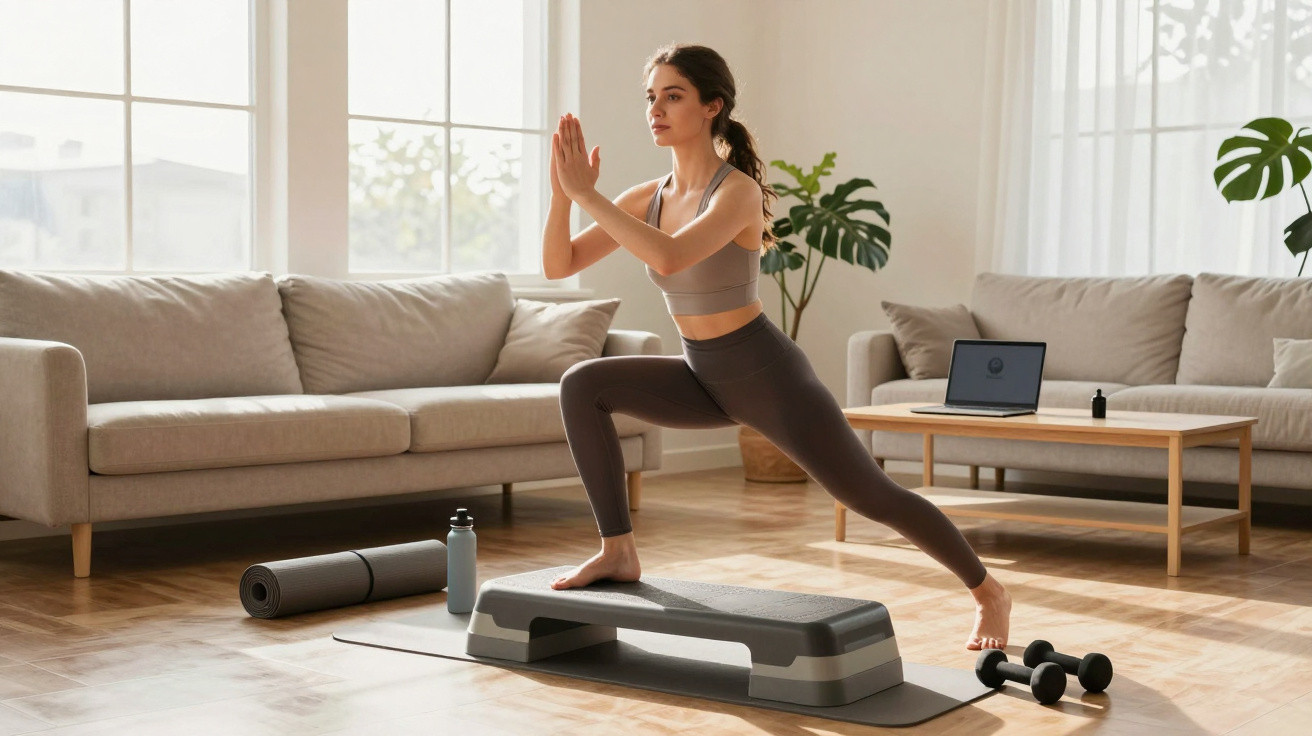
Many people want to get fitter without paying monthly gym fees or booking costly Pilates classes. Lidl has introduced an option aimed squarely at this group: a compact step platform from its Crivit own brand that combines several types of exercise in one piece of equipment – and, at its price, makes some class-based options look expensive.
What the affordable Lidl step platform offers
On the shelf, the step platform looks fairly plain: a grey plastic board with integrated resistance bands and two height-adjustable risers. It costs €22.99. Yet behind this simple appearance is a considered solution for working out at home.
Weighing about 2.8 kilograms, the board can easily be moved between rooms. In homes where space is limited, it can be stored upright in a corner or slid beneath a bed. That makes it suitable for small flats where there is no room for a dedicated home gym area.
“One compact piece of equipment that supports cardio, strength work and balance exercises – with no extra accessories or ongoing costs.”
Its textured, non-slip surface is designed to help prevent feet from sliding, including during barefoot training. Rubberised feet on the underside help the board remain secure on tiled floors or parquet flooring.
Adjustable height: from beginner sessions to demanding workouts
The intensity is where the Crivit board becomes particularly interesting. It can be set to two heights:
- 10 centimetres high – for beginners, gentle cardio and low-impact exercises
- 15 centimetres high – for more experienced users and a noticeably tougher workout
The height, and therefore the workout load, can be changed in just a few simple steps. The higher the platform, the more the thighs and glutes have to work. Calorie expenditure also rises because the heart and circulatory system are under greater demand.
Standard movements such as repeatedly stepping up and down, lunges and knee lifts raise the heart rate. When combined with regular exercise, they can support overall endurance and build the leg muscles.
The Lidl step board does more than stepping up and down
The equipment is not limited to conventional step workouts. Its flat, sturdy surface also works as a compact exercise bench for strengthening and balance work:
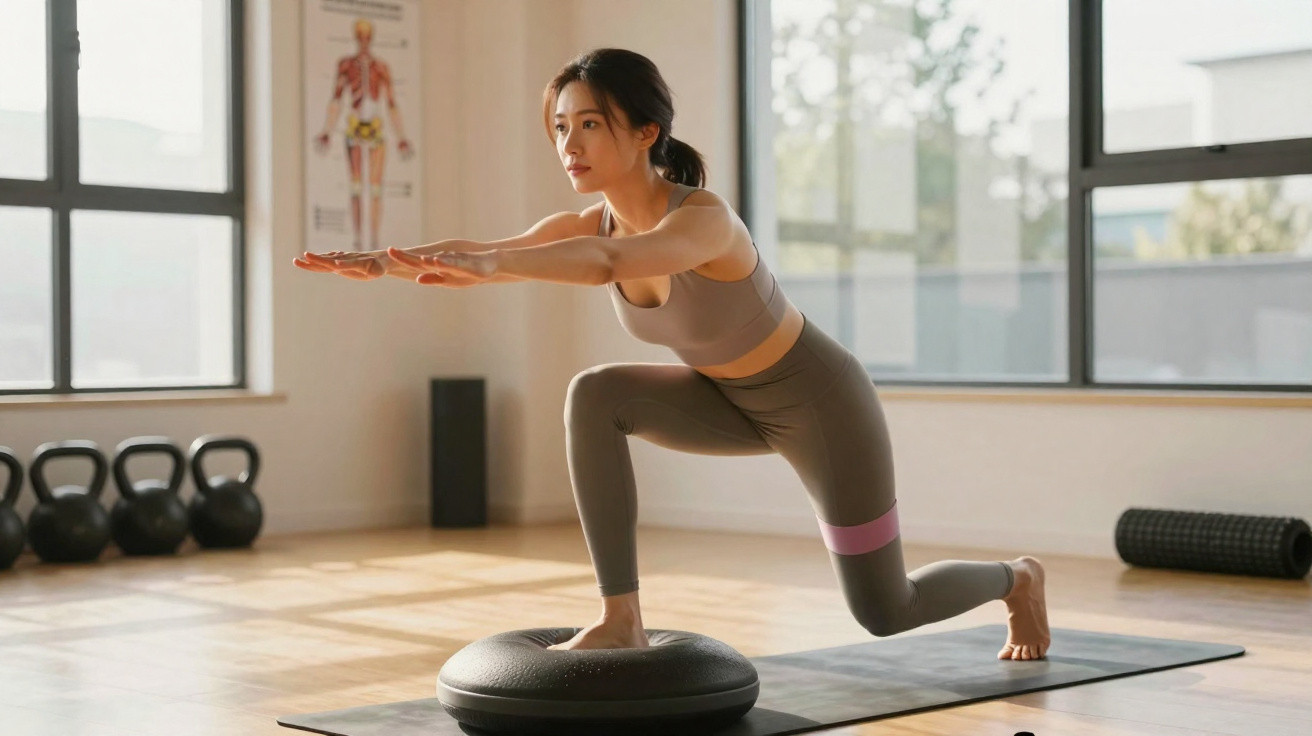
- Squats with one foot on the board for unilateral strengthening
- Side-step movements targeting the hips and outer thighs
- Planks with hands or feet on the board to build core strength
- Balance exercises, such as standing on one leg or controlled rolling movements
This particularly engages the deeper muscle groups: the abdominals, lower back and the stabilising muscles around the hips and knees. These areas are often neglected in everyday movement, but they are important for helping to prevent discomfort in the back or joints.
Integrated resistance bands add upper-body training
One easily overlooked feature makes the board especially versatile: the integrated resistance bands. Attached at the sides, they can be used for pulling movements from different directions. This effectively creates a small full-body gym.
“The resistance bands work not only the legs and glutes, but also the back, shoulders and arms – without any additional equipment.”
Possible resistance-band exercises include:
- Standing rows for the upper back
- Front raises and lateral raises for the shoulders
- Biceps curls and triceps extensions for the arms
- Upper-body rotations to strengthen the oblique abdominal muscles
Anyone who spends long periods at a desk may particularly benefit from focused back training. Here, the board offers an affordable way to address muscular imbalances without also having to buy dumbbells or kettlebells.
How users rate the board
According to customer reviews from retailers, Lidl’s step platform has an average rating of 4.9 out of 5 stars. Stability and durability receive particular praise – two essential factors in home exercise equipment.
Users frequently highlight:
- the secure footing provided by the non-slip surface
- the straightforward height adjustment
- the compact design for small flats
- the value for money compared with gym memberships and classes
Naturally, equipment like this does not replace personal coaching from a trainer. Beginners in particular should focus on proper technique and, if unsure, use short tutorials or instructions to avoid incorrect loading.
Why many view it as an alternative to Pilates
Pilates is regarded as a gentle yet demanding form of training for the core, posture and mobility. Anyone attending classes regularly can quickly pay €10 to €20 per session. Over a year, that can add up to a considerable amount.
Lidl’s step platform cannot fully replace a structured Pilates class, but it targets comparable benefits:
| Training goal | Pilates class | Lidl step board |
|---|---|---|
| Core stability | Systematic mat-based exercises | Planks, balance exercises, dynamic step combinations |
| Posture | Emphasis on body awareness | Strengthening the back and glutes, counteracting sitting posture |
| Leg and glute muscles | Controlled leg sequences | Step exercises, squats, lunges |
| Cost | Ongoing cost per session | One-off cost of €22.99 |
Those who specifically want to improve posture and body awareness are generally better served by systematic classes. However, anyone mainly looking for an affordable, flexible way to add more movement to daily life will find the board a far cheaper alternative.
Who the Lidl board is genuinely suited to
The equipment is ideal for people who:
- want to exercise at home but have limited space
- want to strengthen their leg and glute muscles
- are looking for combined cardio and strength training
- do not want to buy several separate pieces of equipment
- want something to complement walking or jogging
Intensive step training is less suitable for people with acute knee or hip problems. In those cases, a doctor or physiotherapist should advise on an appropriate level of exertion and the height at which the board may be used.
Practical advice for getting started at home
Anyone who has never used a step board should begin at the lower height with simple movement patterns. Three short sessions a week can be enough to notice initial effects.
- Duration: 15–20 minutes per session
- Structure: warm-up, simple step combinations, several strengthening exercises and a short stretch
- Progression: after two to three weeks, gradually change the height or add more repetitions
Conveniently, many fitness influencers provide free videos featuring step workouts. These can be followed using the board. Once the movements have been mastered safely, the workout can then be varied independently.
Combining the board with other activities
The equipment becomes especially useful when it forms part of a small but well-planned home routine. One possible weekly plan includes:
- Two step-training sessions for the cardiovascular system and legs
- One upper-body session using the resistance bands
- Two short sessions focused on core stability and balance
Combined with regular walks or light jogging, this creates a fairly comprehensive activity programme – without a gym, lengthy travel or high costs. For many people, this flexibility is likely to be the Lidl board’s real appeal.




Comments
No comments yet. Be the first to comment!
Leave a Comment