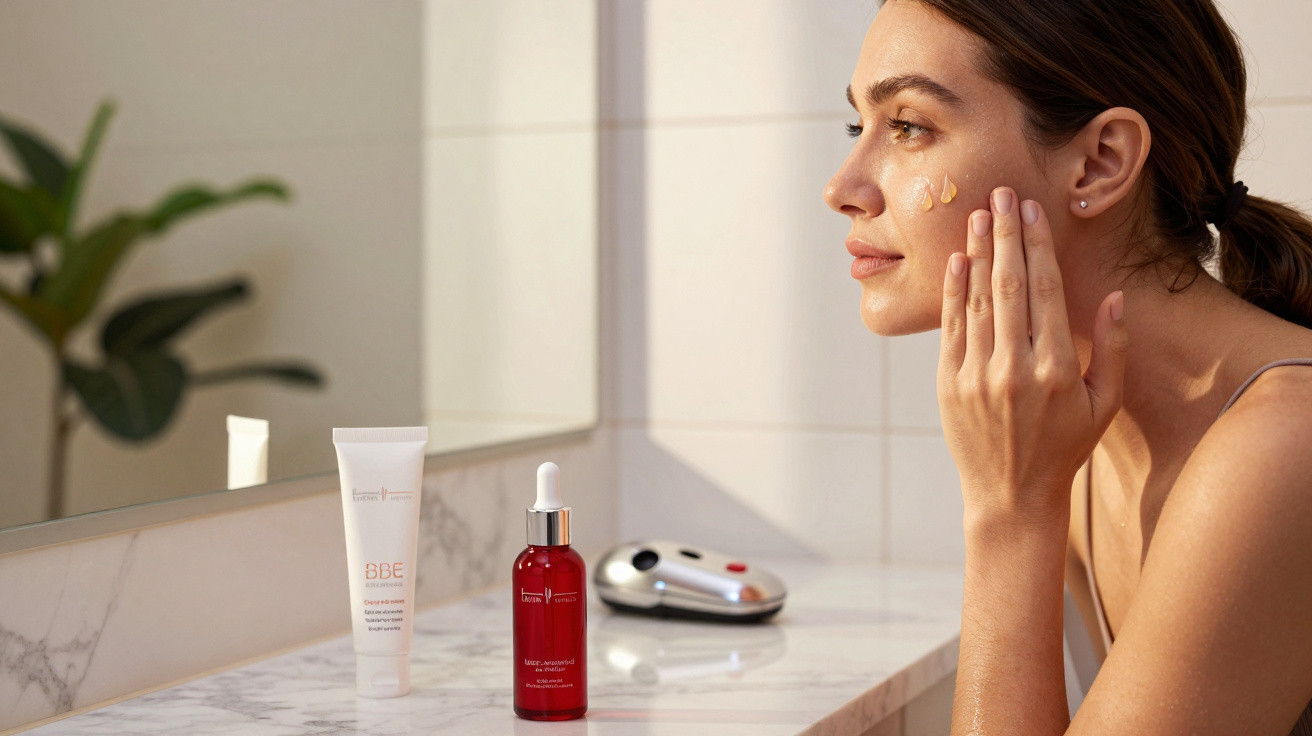
L’Oréal Paris, the French beauty giant, is tapping into that interest with a new product it says can visibly soften wrinkles and reduce dark spots within a week - without any laser treatment.
A serum with laser-treatment ambitions
The product is Revitalift Laser Serum-Cream, with a hybrid consistency positioned between a high-strength serum and a soothing moisturiser. The brand presents it as a response to three frequent signs of skin ageing: wrinkles, uneven pigmentation and a lacklustre, fatigued-looking complexion.
This serum-cream is marketed as delivering visibly smoother skin, a more even tone and renewed radiance within seven days of use.
Instead of addressing a single issue, the formula is intended to tackle several concerns simultaneously. L’Oréal says this “triple action” mirrors what people often want from professional laser procedures: a refined texture, less noticeable dark spots and a brighter-looking skin surface.
The marketing rationale is straightforward. Clinical laser procedures can be costly and somewhat daunting, while home-use devices remain a specialist category. A laser-inspired product available in supermarkets or online lowers both the perceived risk and the financial barrier.
Melasyl: the lab-developed molecule at the formula’s core
The key active is Melasyl, a patented ingredient that L’Oréal says required 18 years of research before launch. Developed internally, the compound is described as a new approach to pigmentation concerns before they show visibly at the skin’s surface.
The brand claims Melasyl can trap excess melanin during its formation phase, helping to prevent dark spots from fully developing.
Put simply, melanin is the pigment responsible for skin colour. If its production becomes irregular - because of sun exposure, hormonal changes or inflammation - darker areas may form in clusters. By acting early in that process, Melasyl is designed to prevent excess pigment from becoming established as persistent marks.
As well as prevention, the ingredient is promoted as helping to diminish existing areas of hyperpigmentation and create a more even-looking complexion over time. This directly speaks to those concerned about sun spots, post-blemish marks and age-related discolouration.
Support from established skincare actives
Melasyl is not the formula’s only active. It is paired with familiar skincare ingredients:
- Vitamin C for antioxidant protection and its brightening effect on dull-looking skin
- Niacinamide to help improve texture, reinforce the skin barrier and lessen the appearance of brown marks
Vitamin C is commonly used to counter oxidative stress - damage linked to pollution, UV exposure and lifestyle influences. By neutralising some of these stressors, it may support collagen and leave the skin surface looking fresher.
Niacinamide, or vitamin B3, is now a mainstay of contemporary skincare routines. Research associates it with a smoother texture, better moisture retention and a gradual improvement in surface pigment unevenness. In this serum-cream, it is intended to strengthen the even-tone message while improving skin comfort.
A hybrid texture intended to simplify a skincare routine
Its texture is among its central selling points: a serum-cream designed to offer serum-like potency alongside the enveloping feel of a moisturiser. The aim is to provide intensive care without the need to apply three or four separate layers.
L’Oréal states that the formula offers up to 100 hours of hydration while still targeting wrinkles and pigmentation.
Lightweight and rapidly absorbed, it can be worn beneath make-up in the morning or applied at night without a greasy finish. It may be used alone, or underneath an extra moisturiser when skin feels especially dry or tight.
The brand also highlights inclusivity. The serum-cream was developed for different skin types and a broad spectrum of skin tones. This is particularly relevant to pigmentation, as deeper skin tones can develop more pronounced or persistent marks and may respond differently to certain brightening treatments.
How does Revitalift Laser Serum-Cream compare with actual laser treatments?
Despite the word “laser” on its packaging, L’Oréal does not say the product can replace a dermatologist’s laser device. The brand acknowledges that in-clinic laser procedures are still more powerful and can produce more substantial structural changes in the skin.
Laser treatments in a clinic reach deeper layers of the skin and trigger controlled micro-damage that the body repairs by producing new collagen.
By contrast, creams and serums are restricted to topical effects. They primarily work on or close to the surface, helping to support skin functions rather than transforming them in one appointment. Cosmetic formulas can, however, reproduce some visible qualities associated with laser results: more even tone, smoother-feeling skin and, over time, a reduced appearance of fine wrinkles.
What the brand says on application and timing
| Question | Brand’s position |
|---|---|
| When can results be expected? | Initial visible improvements in radiance and fine lines may be seen after 7 days of consistent use. |
| How frequently can it be used? | Apply twice a day, morning and evening, to clean skin before moisturiser or in place of it. |
| Is it suitable for sensitive skin? | It is formulated for most skin types, although patch-testing a small area before everyday use is recommended. |
These promises reflect a wider skincare trend: brands are cutting their claimed result times from several weeks to only days, driven by consumer impatience and social media culture. Although some people may notice quick improvements in hydration and glow, more lasting changes in pigmentation often require several weeks or even months.
How to incorporate a “laser-inspired” serum into an everyday routine
Anyone considering a product of this kind should also consider the rest of their routine. Brightening and anti-ageing ingredients perform best when paired with regular SPF use, since sun exposure is one of the principal causes of wrinkles and brown spots.
A high-factor sunscreen during the day is the non-negotiable partner of any product targeting dark spots or fine lines.
For most skin types, a straightforward routine could be:
- Morning: cleanse gently, apply Revitalift Laser Serum-Cream, then sunscreen and make-up if wanted
- Evening: cleanse, use a separate serum if desired, apply Revitalift Laser Serum-Cream, then add a richer cream if skin feels dry
People with reactive skin may prefer to introduce it gradually, using it once daily for a week while monitoring for redness, tingling or tightness. Provided no irritation occurs, use can then be increased.
Key terms and their real meaning
Anti-ageing campaigns often depend on technical language. Several expressions associated with this launch are useful to explain:
- Hyperpigmentation: a broad term for darker patches caused by an excess of melanin in one area. It covers sun spots, age spots and marks remaining after breakouts.
- Antioxidant: an ingredient that helps to neutralise unstable molecules known as free radicals. If not controlled, these can accelerate visible signs of ageing.
- Hydration claim in hours: testing generally measures how much water the upper skin layers retain over a period. A high figure does not mean moisturiser can be abandoned for days, but it indicates strong support for water retention.
Managing expectations is important too. A topical serum cannot raise deep creases or remove decades of sun damage in seven days. If the formula and routine work for the user, it may soften finer lines, enhance surface radiance and gradually reduce visible marks. Daily sun protection, a balanced diet and adequate sleep are likely to produce much better outcomes than depending on one “miracle” tube.
Those considering a purchase might also take a staged route: use this sort of serum for a few months, review any changes, then decide whether professional lasers or peels are needed. This keeps more intensive - and expensive - options for situations where at-home care does not achieve the desired aims.













Comments
No comments yet. Be the first to comment!
Leave a Comment