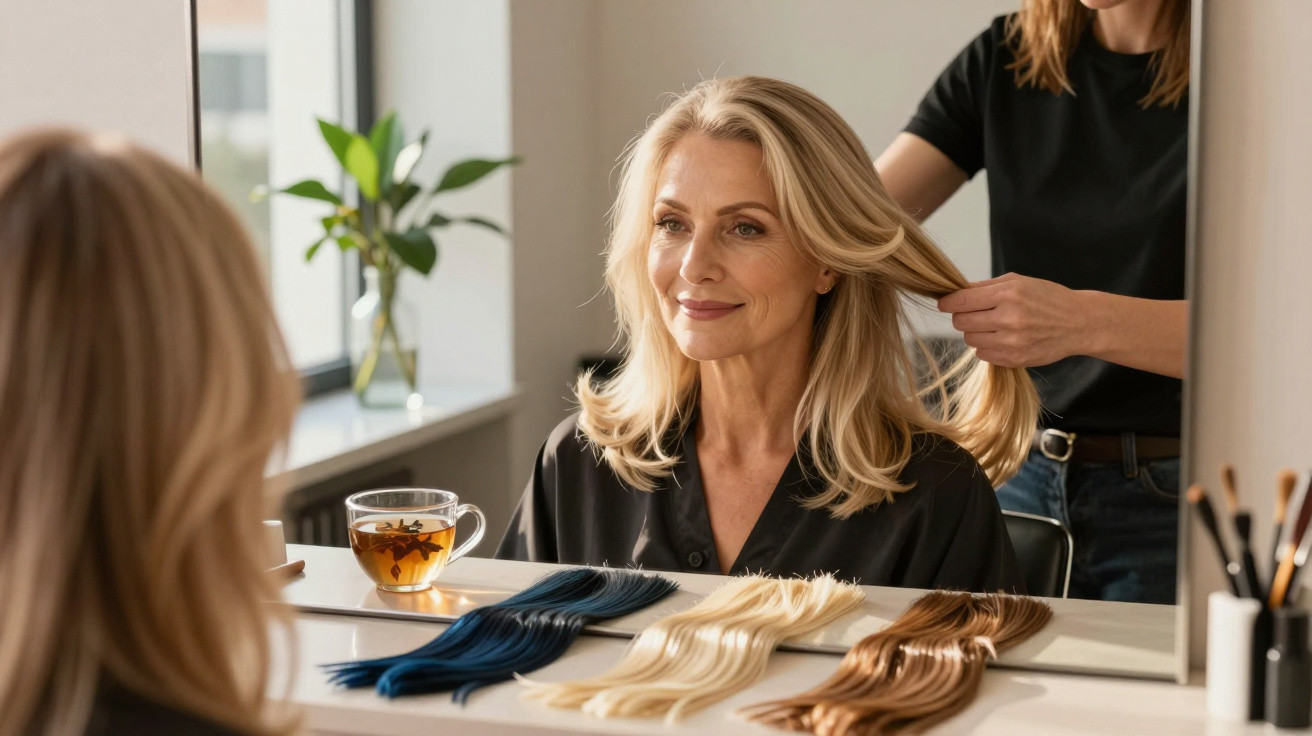
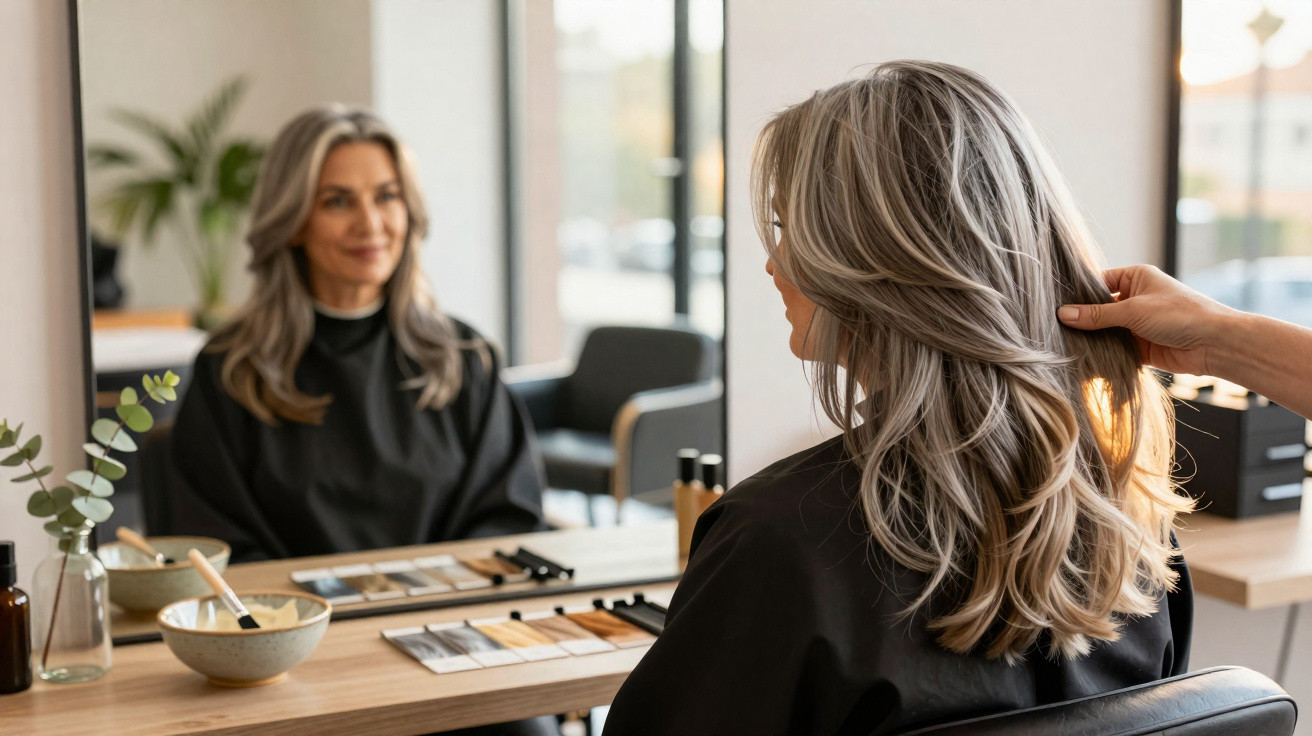
The woman sitting in my chair wound a lock of hair around her fingers as she frowned at the mirror. “It just… falls,” she said. “It used to have life. Now it’s like wet silk.” Her hair was fine and soft, cut into a long style that pulled her face downwards. At 47, she was stylish, funny and clearly fed up with struggling with it every morning.
I lifted a section at her crown, saw it immediately fall flat, and knew precisely where the weight had to be removed. She was not after a dramatic transformation, only a more intelligent cut: one that suited her age without ageing her by another ten years.
When I turned the chair at the end, she looked at herself quietly for a moment. Then she smiled with that gentle, startled expression that says: Oh. I’m still in there.
The style that created that reaction? A modern short cut that works beautifully for fine hair over 40.
The modern short cut that gives fine hair its power back
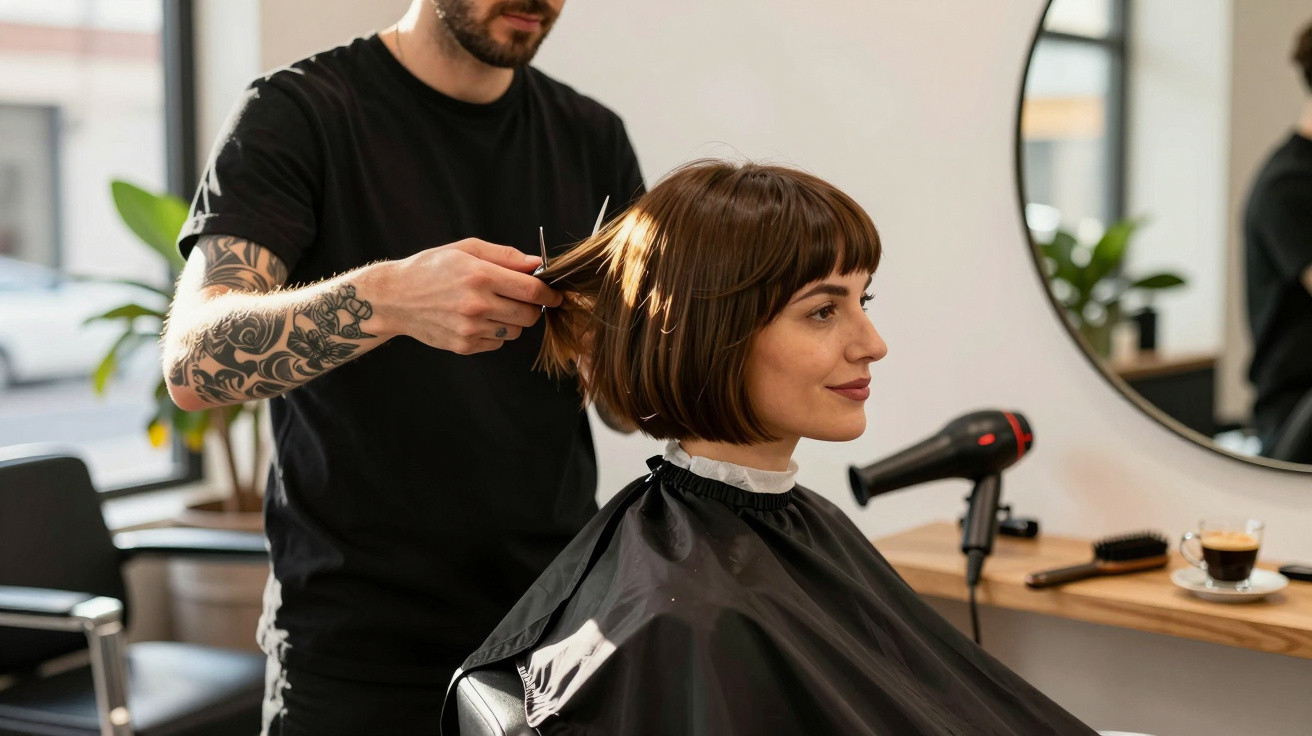
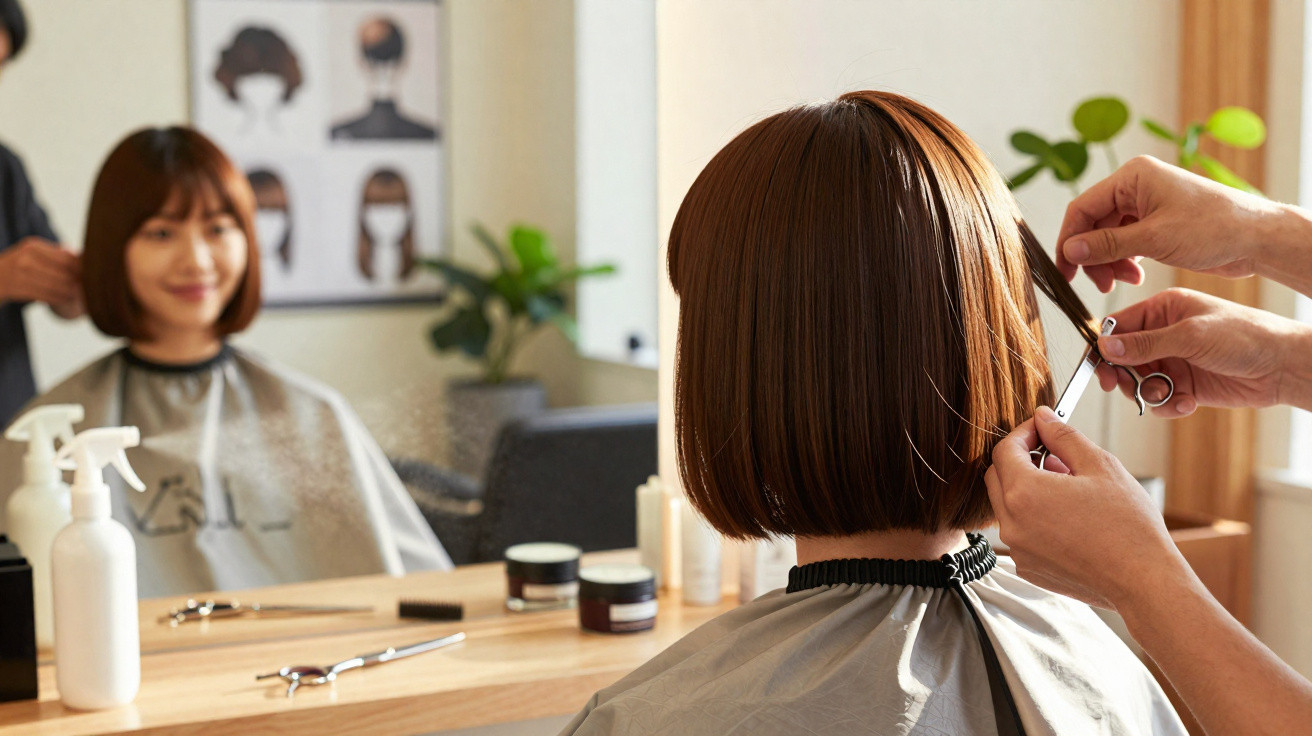
For clients over 40 with fine hair, the style I return to time and again is a contemporary short bob with soft layers, grazing the jawline or falling just beneath the cheekbones. It is neither the rigid, sharply geometric bob of the 2000s nor the excessively layered “soccer mum” version. Instead, picture polished lines, weightless texture and movement framing the face.
With fine hair, keeping length beyond a certain point is seldom helpful as we get older. Gravity takes over. A shorter shape with clear structure does the work on your behalf, preserving volume exactly where it matters: at the cheekbones, through the crown and behind the ears.
Its strength comes from balancing dense, blunt ends with internal layers that cannot be seen.
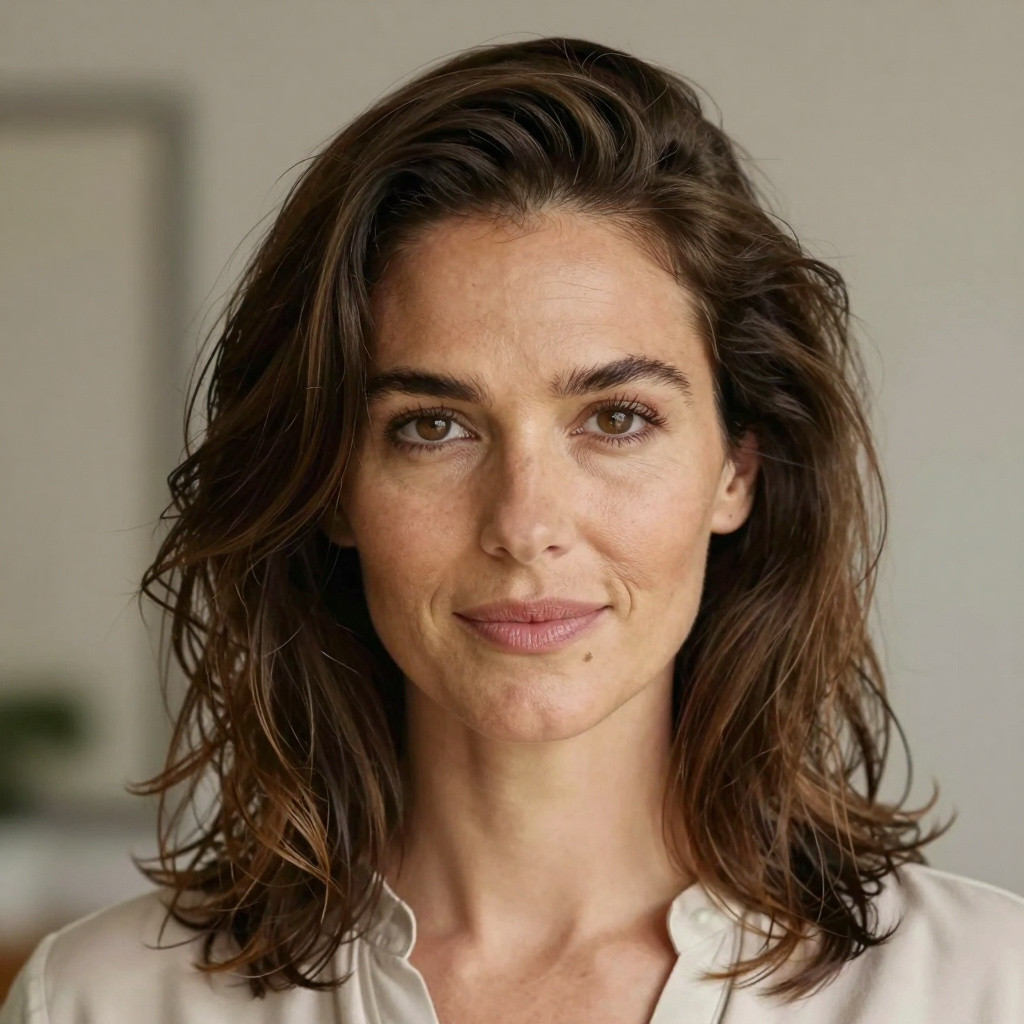
A 52-year-old client once arrived adamant that she would never wear her hair short again following a terrible pixie cut in her 30s. Her hair was long, thin and flat at the crown, and she wore it in a low ponytail all the time. “My hair makes me look tired,” she said. “And I already am tired.”
Together, we assessed her face in the mirror: the places her eyes naturally drew attention, where her jawline softened and where her neck began to curve. I created a short bob ending at the narrowest part of her neck, adding a delicate fringe that opened up her eyes. It was not dramatic; it was simply accurate.
She returned three weeks later with the same line: “I had no idea my hair could do this.” The hair was unchanged, but its architecture was entirely different. That is the real point.
After 40, fine hair often becomes lighter, softer and slightly more resistant to styling. Hormonal changes occur, density alters, and the old approach of simply trimming the ends no longer delivers. A modern short bob tackles three issues together: it minimises the appearance of transparency, creates lift around the face and speeds up styling.
Blunt ends create an impression of greater density, while understated layers stop the style from becoming helmet-like. Because the cut stays above the shoulders, the strands are no longer battling against their own weight.
For a round face, I leave the front a little longer. With a long face, I create added fullness at the sides. On extremely fine or fragile hair, I steer clear of aggressive texturising and choose gentle slicing instead. It is not so much about the scissors as it is about the placement of volume.
How to cut, style and live with this cut in real life
The key to this modern short cut is to work in sections rather than simply making one area shorter and another longer. I begin at the back, shaping a subtly graduated nape that follows the neck. This adds lift without producing an outdated, heavily stacked effect. I then work around the sides, keeping the perimeter blunt to make the ends appear thicker.
Within this outer shape, I introduce invisible layers that allow the hair to move freely. Rather than cutting into the ends, we remove weight from inside the cut so the hair can lift. Around the face, I often add a soft, curtain-style fringe or face-framing section that lands somewhere between the cheekbone and the lip.
The longest section generally acts as the anchor, or the place where the eye naturally rests. For fine hair over 40, this anchor should fall where the face is most expressive, rather than where it looks most fatigued.
Most clients describe the same cycle: shelves full of volumising products, round brushes and lengthy blow-dries, only for their hair to go flat by lunchtime. On an ordinary Tuesday, there is no time for that kind of struggle. And, honestly, let’s be honest: nobody really does all that every day.
With the appropriate short cut, the routine becomes more like this: towel-dry the hair, apply a lightweight root spray, then quickly blow-dry while lifting sections with your fingers rather than tools. Use a flat brush if you prefer a sleeker finish. Finally, work a very small amount of paste or cream through the ends to separate them.
The most common error I see is over-layering fine hair in pursuit of movement, which leaves it looking thin and stringy. The next is holding on to those final 10 cm of length even when they are doing absolutely nothing for you.
There is another reality that is rarely voiced: after 40, fine hair is as much about feelings as it is about density. You are not merely cutting hair; you are cutting through history.
“I don’t want to look younger,” a regular told me once. “I just don’t want my haircut to give up before I do.”
When discussing this cut, I offer clients a straightforward guide they can easily recall:
- Keep the length above the shoulder, allowing the hair to support itself.
- Request a blunt perimeter with soft internal layers, rather than choppy ends.
- Position fullness at the cheekbones or just beneath them to create a natural “lift”.
- Use thinning shears sparingly; on fine hair, they can destroy body.
- Book a refresh every 6–8 weeks to keep the shape and volume defined.
On a good day, this cut almost styles itself; on a bad day, it still looks intentionally undone. That is what makes it practical to wear, rather than merely Instagram-pretty.
Why this cut hits differently after 40
Beyond 40, hair becomes part of a wider conversation about energy, identity and the way you enter a room. A modern short bob for fine hair does not shout; it implies. It says: I know who I am, and I’m not hiding behind my hair - or my age.
Practically, the reduced length brings less breakage and less rubbing against collars and scarves. Your hair appears fuller not only because of clever cutting, but also because it is healthier. The ends remain more precise, the overall shape lasts, and colour looks more dimensional.
Emotionally, the first wash-and-go morning after this new cut can feel like a subtle reset. Nothing dramatic: simply a little more “you” and a little less effort.
| Key point | Detail | Benefit for the reader |
|---|---|---|
| Strategic length | A short bob above the shoulder, often sitting at the jawline or just below | Lightens fine hair and creates natural volume without demanding heavy daily styling |
| Internal structure | A defined, full perimeter combined with discreet internal layers | Creates the impression of thickness while retaining movement and flexibility |
| Adaptation to the face | Volume placed at the cheeks, nape and crown according to face shape and lifestyle | Enhances facial features and provides a “lift” effect without surgery or artifice |





Comments
No comments yet. Be the first to comment!
Leave a Comment