
The woman ahead of me in the supermarket shampoo aisle had three bottles in her basket. “My hair gets greasy so fast,” she said to her friend, while reading labels that promised miraculous results in seven days. Anti-grease, ultra-purifying, micellar detox: a complete chemistry lab packaged in pastel plastic.
I recognised the scene. Years ago, I had stood in front of my own bathroom mirror, asking why my supposedly “clean” hair looked dull by 5 p.m.
Look closely and the contradiction is hard to miss: we are washing our hair more frequently than ever, yet increasing numbers of people complain about limp roots, itchy scalps and lifeless lengths. It does not quite make sense.
The surprising answer may not be a newer, better formula. It could simply be… using less shampoo.
And that one small change can alter everything.
Why washing less can actually clean more
A quiet bathroom rebellion is under way, with people gradually leaving more time between shampoo days.
It is no longer merely, “I’ll skip once in a while”, but rather, “I’ve gone from daily washing to twice a week and my hair has never looked better.” Initially, it sounds like the sort of TikTok trend that will disappear within a month. But once you hear enough personal accounts, a clear pattern emerges.
People who wash a little less regularly often describe roots that stay fresher for longer, ends that are less prone to breakage and curls that suddenly… return.
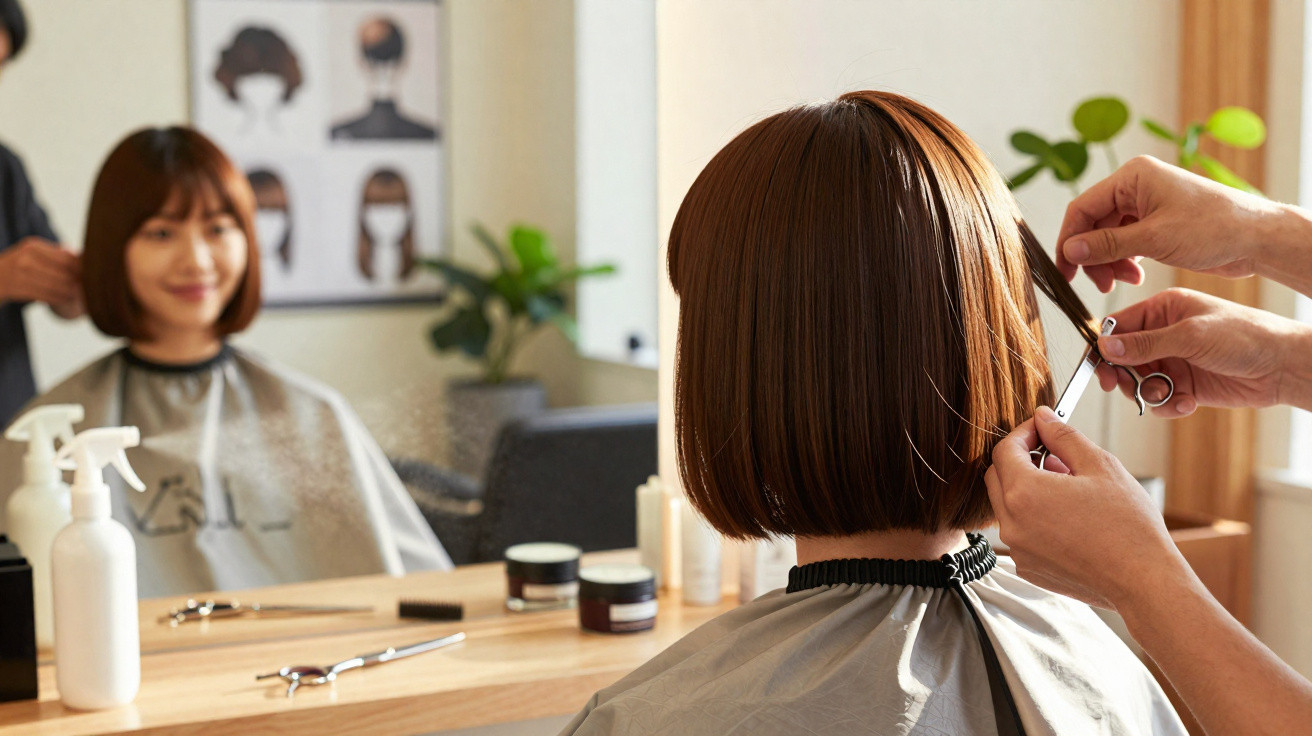
A London hairstylist once told me about a client who faithfully shampooed every morning. “If I skip a day, my hair is disgusting,” she complained. Her scalp was red, her lengths were dry and, by lunchtime, her fringe had stuck to her forehead.
The stylist proposed a modest trial: move from daily washing to every other day for one month. If she felt confident enough afterwards, she could then try washing every three days.
She logged the experience in her notes app. The first week was difficult. During week two, her scalp became less itchy. By the fourth week, she returned amazed: “I only washed twice this week. My hair actually looks good on day three.”
What had changed? Not her genetics or the water in her city. Her scalp had simply been given time to rebalance.
Frequent shampooing removes sebum, the natural oil produced by the scalp to protect both skin and hair. Like other irritated skin, the scalp can respond defensively by producing excess oil. You wash more often, it produces more oil, and a cycle begins.
Extending the time between washes interrupts that cycle. The scalp settles, sebum production slows and hair can look less greasy rather than more so. What once felt like a “dirty day two” can eventually become a good hair day.
How to use less shampoo without feeling unclean
If you normally wash your hair every day, waiting three or four days may sound unbearable. The key is not to leap from 0 to 100, but to lengthen the gap gradually.
Begin by delaying your wash by only half a day. If you usually shampoo each evening, wait until the following morning. Then maintain an every-other-day routine for two or three weeks.
Use this period to observe what truly happens: how long it takes before your roots fall flat, whether your scalp becomes more or less itchy, and when your lengths begin to feel dry. That observation stage is more valuable than any online rule.
Nearly everyone makes a few mistakes at the beginning. One is compensating by applying too much dry shampoo between washes. A little is fine; creating a cloud around your head each morning is not. It can clog the scalp, taking you straight back to irritation and bursts of oil production.
Another common mistake is using far too much shampoo on wash day. It is easy to think, “I waited longer, so I need three pumps.” You do not. For medium-length hair, a small coin-sized amount, thoroughly worked into the scalp, is generally sufficient. Let the friction of your fingers do more work than the foam.
Some people feel self-conscious during this “transition phase”. Their hair may seem heavier, its shine may resemble oil rather than gloss, and they may assume they are getting it wrong.
One trichologist told me something that stayed with me:
“Your scalp isn’t misbehaving. It’s responding to what you do to it, every single day.”
- Wash slightly less often, and your scalp gradually stops panicking.
- Massage gently rather than scratching, and redness can ease.
- Apply shampoo to the roots instead of the lengths, and the ends remain softer.
- Treat non-wash days as a chance to try buns, clips and headbands – not to conceal your hair, but to go with the flow.
The science of shine and why “squeaky clean” is a lie
There is a sound that many of us secretly aim for: that squeaky, rubbery sensation as hair is rinsed. It feels like evidence that your hair is clean. It is not. It is evidence that its protective film has been stripped away.
Hair has a natural lipid layer that reflects light, creating the gloss seen in photographs. Over-washing, particularly with harsh shampoos, repeatedly removes these lipids. The hair surface becomes rougher, so light scatters instead of reflecting. The result is dullness, frizz and that strange contradiction of freshly washed hair that still looks tired.
In truth, shine depends on three factors: a calm scalp, intact cuticles and a balanced coating of sebum along the hair shaft. Not none, and not too much: just a light, even veil.
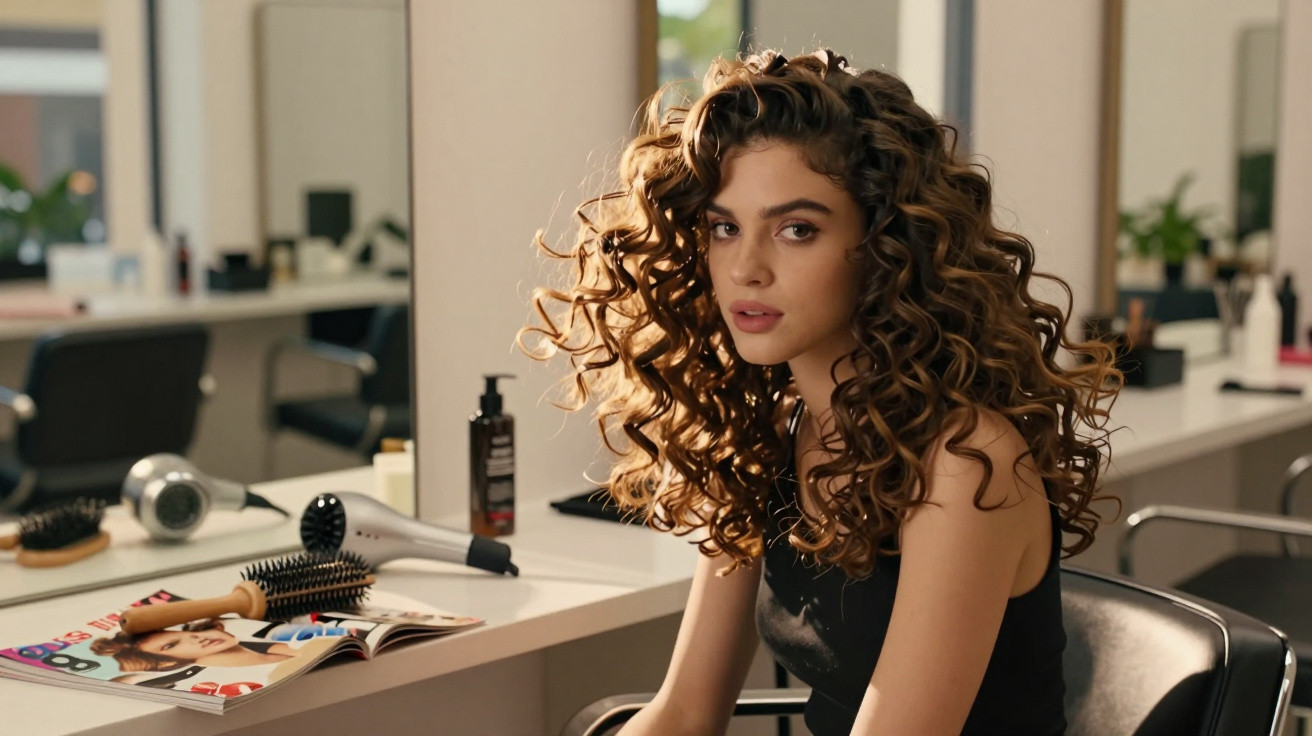
When you shampoo less, sebum has more time to travel from the roots through the lengths. On straight or wavy hair, this can naturally condition the mid-lengths without the need for additional serums. For curls, it often brings more defined patterns and less fluff.
This is why some people find their hair photographs better on the second or even third day than immediately after washing. The light reflects from a surface that has been allowed to settle into balance.
We also tend to overlook the ways our technique undermines that natural shine. Vigorously rubbing hair with a towel, as though scrubbing dishes, roughens the cuticle. Gathering all of your hair on top of your head while shampooing turns the lengths into a tangle.
Reconsidering wash days is not only about using fewer products. It also involves gentler movements: softly pressing out excess water, using your fingers as combs and allowing hair to fall in one direction beneath the shower rather than swirling it around. Together, these tiny adjustments help preserve that light-reflecting surface.
Small changes, big payoff
Using less shampoo is not a dramatic lifestyle overhaul. It is a collection of small, almost mundane choices that gradually make a difference.
You begin by questioning the default: do I genuinely need to wash my hair today, or is it simply routine? Instead, you might massage your scalp at night with the pads of your fingers, stimulating circulation without introducing another product. You could replace one weekly wash with a water-only rinse on the lengths, refreshing them without detergent.
None of this is glamorous. But after a few weeks, the mirror begins to give you a different answer.
There is an emotional side to this that is rarely discussed. When your hair looks bad, it is tempting to reach for the nuclear option: a double shampoo, clarifying formula, mask, serum and spray. A whole mini ritual intended to restore a sense of control.
In practical terms, this often has the opposite effect. Excessive cleansing followed by excessive product coating weighs the hair down. The scalp becomes confused, and you start to feel that your hair “needs” constant intervention. Deep down, it is exhausting. It is expensive, too. Let’s be honest: no one really does all that every day.
Using less shampoo can feel unexpectedly liberating. You spend less time in the shower, your shopping list becomes shorter and you stop chasing “miracle” formulas every time a new bottle promises an instant reset. You allow your scalp some credit for being able to find balance.
Something else also shifts, beyond beauty standards. You start paying attention to your body rather than the marketing copy on a bottle. This simple change in focus often spreads elsewhere: to how you notice your skin, your sleep and even your stress levels.
One hairstylist I met in Paris put it bluntly:
“Most people don’t have ‘problem hair’. They have over-treated, over-washed, over-scrubbed hair that’s trying to recover.”
- Leave at least one additional day between washes this week, then observe what happens without judging it.
- Use your fingertips rather than your nails to massage your scalp.
- Keep shampoo on the scalp, allowing the foam that runs down to cleanse the lengths.
- If you use plenty of styling products, do one gentle clarifying wash each month before returning to your lighter routine.
A different kind of “clean”
There is a quiet moment in this process that hardly anyone mentions. One morning, you see yourself in the mirror on what was once an unquestionable wash day. Your hair is not perfect. The roots are softer and slightly lived-in, while the ends are loose rather than freshly styled.
Yet you do not feel dirty. You feel… like yourself. Not filtered or polished to the extreme, but presentable, human and perfectly fine to be seen at the bakery or on a video call without an emergency hair operation.
We all know that moment of standing over the sink, late for work, wondering whether there is enough time to wash, dry and style our hair. That brief panic reveals how much control we have allowed a bottle of shampoo to have over our day.
Reducing daily washing is not neglect. It is a new definition of “clean”. Clean can mean a scalp that does not itch at 3 p.m. Clean can mean hair that retains its shape without three spritzes of texturising spray. Clean can mean shine created by your own oils rather than a coating of silicone.
Once you experience that, it is difficult to return to the old approach. You begin mentioning it to friends. Someone admits that their best hair photographs are always taken on day three. Someone else quietly reveals that they shampoo only once a week, and nobody has ever noticed.
It becomes less about rules – “wash twice a week, use X, avoid Y” – and more about a gentle experiment with your own biology. Perhaps your balance is washing every four days. Perhaps it is twice weekly, with a water rinse in the middle of the week.
What matters is that, the next time you stand in the shampoo aisle, you are not merely choosing a fragrance or brand. You are deciding how often you want that product to influence the way your hair behaves.
| Key point | Detail | Benefit for the reader |
|---|---|---|
| Fewer washes | Gradually space out shampooing to calm the scalp | Less greasy roots and more manageable hair |
| Gentle technique | Massage using the pads of your fingers, focus on the roots and protect the lengths | Less breakage and more natural shine |
| Redefine “clean” | Accept a slightly lived-in look and listen to the scalp’s actual needs | A simpler routine, fewer products and greater everyday comfort |














Comments
No comments yet. Be the first to comment!
Leave a Comment