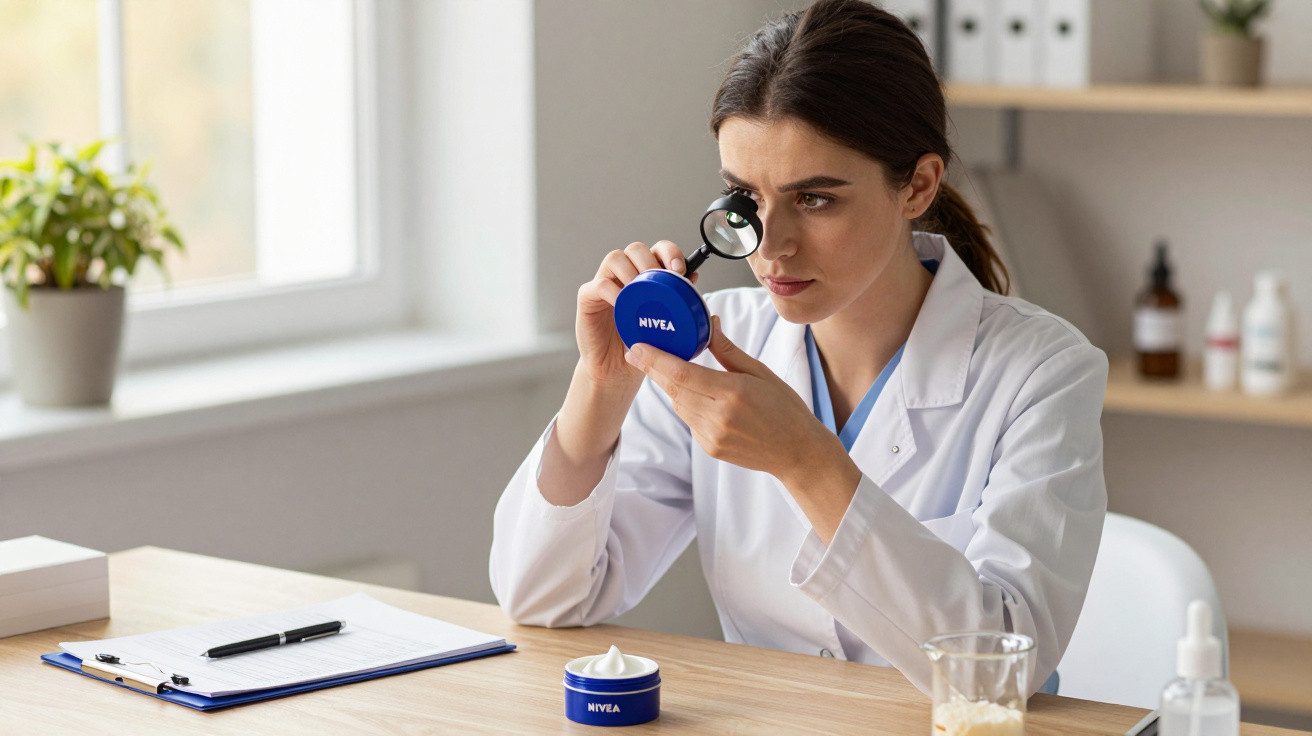
It has occupied bathroom shelves for generations, but a dermatologist has taken a close look at Nivea’s legendary blue cream.
The iconic metal tin has been familiar to many people since childhood, used as hand cream, face cream and an all-purpose moisturiser for the whole family. A dermatologist has now examined the ingredients in classic Nivea Cream in detail and delivered an honest professional assessment, looking beyond nostalgia and advertising claims.
The blue tin phenomenon – why it is in so many bathrooms
Classic Nivea Cream has been around since 1911. More than a century on, the blue tin remains one of the world’s best-selling skincare products. In France alone, several million tins were sold in a single year – amounting to hundreds of packs every hour.
Its popularity has several reasons:
- a very low price compared with many modern skincare creams
- wide availability in chemists, supermarkets and online shops
- instantly recognisable packaging
- a reputation for being “suitable for the whole family”
Despite the arrival of countless new brands, high-tech serums and trending ingredients, the blue tin continues to sell consistently. But the question many people ask remains: from a dermatological perspective, is it really as good as its reputation suggests?
What dermatologists think of classic Nivea Cream
Several dermatologists have professionally assessed the cream and shared their views on a beauty blog. Their verdict is nuanced, yet surprisingly favourable when it comes to its core purpose: hydration.
The cream performs well for moisturising – particularly as a protective product for dry, rough skin. For many skin types, it works as a dependable basic moisturiser.
The experts point out that Nivea relies on established moisturising and lipid-replenishing ingredients in its formula. This makes its effects predictable: it is not a high-tech miracle, but it reliably does what it is designed to do.
Inside Nivea Cream: the ingredients behind its effects
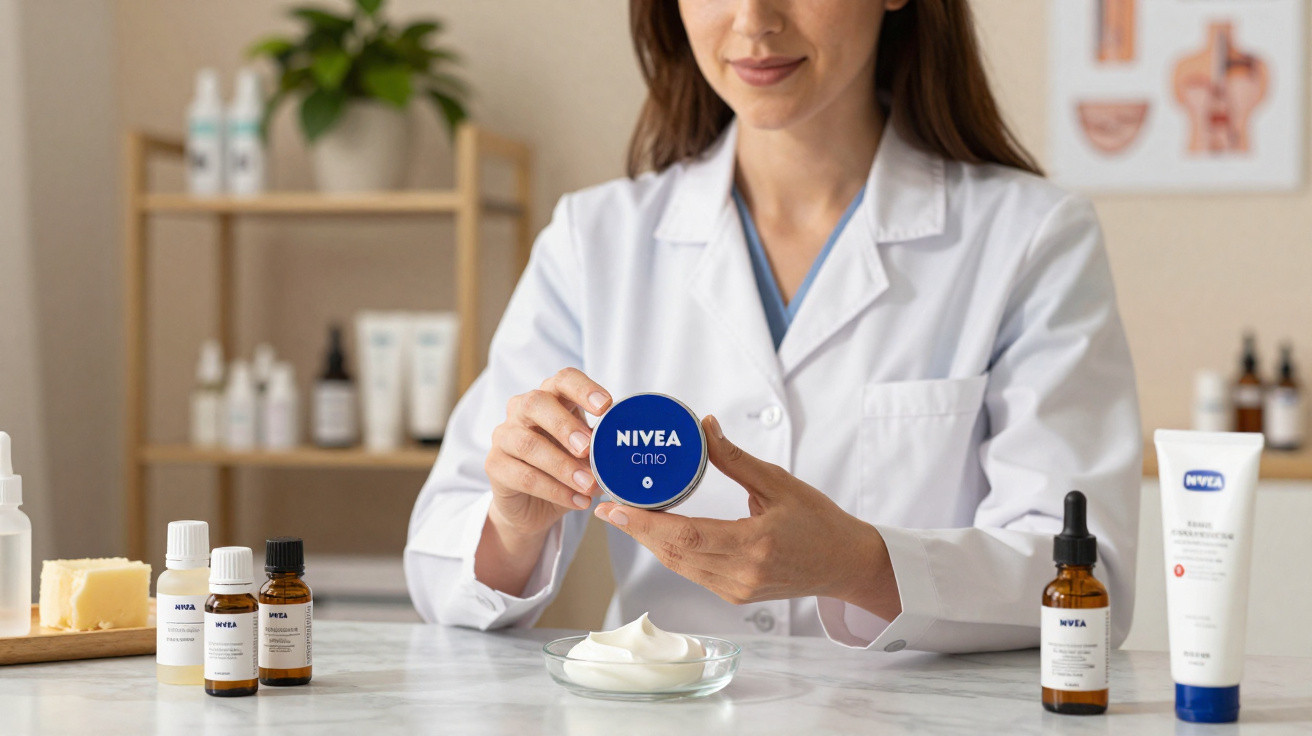
The dermatologist focused on the formula itself. In particular, she highlighted two long-standing skincare staples:
- Glycerin: retains water in the outermost layer of the skin, eases feelings of tightness and can make skin appear smoother.
- Shea butter: supplies lipids and helps very dry, rough areas feel soft and supple again.
The cream also contains a rich fatty base, which forms a protective layer that slows the evaporation of moisture. This can be particularly beneficial for chapped skin in winter, when central heating, wind and cold take their toll.
The dermatologist considers this combination practical for many skin types, especially for:
- dry hands and elbows
- flaky shins
- rough knees and heels
- localised fine lines caused by dryness
How effectively does the cream hydrate?
According to the cited specialists, clinical studies support the hydrating effect of Nivea Cream. It measurably boosts moisture levels in the outer layers of the skin while also helping to prevent further moisture loss.
For straightforward moisturising, this cult cream achieves results comparable with much more expensive products from pharmacies or perfumeries.
From the dermatologists’ point of view, its major strength lies in the balance between effectiveness, price and availability. It is not necessary to spend a great deal to provide skin with useful moisture and lipids: the blue tin does this reliably.
Why dermatologists still recommend additional skincare products
While the assessment of its basic function is positive, the professionals make one point very clear: this cream is not the answer to every skin concern.
The dermatologist stresses that although the classic formula moisturises, it does not contain targeted active ingredients for:
- deep wrinkles and loss of elasticity
- pronounced pigmentation marks
- acne and blemishes
- rosacea or inflammatory skin conditions
Anyone seeking anti-ageing effects, brightening or anti-inflammatory care will therefore need additional products containing suitable active ingredients, such as retinol, niacinamide, salicylic acid or vitamin C.
The place of Nivea Cream in a modern skincare routine
Rather than relying on “one cream for everything”, dermatologists favour a modular routine:
- Gentle cleansing – without stripping too much oil from the skin barrier.
- Targeted active ingredients – chosen according to the skin concern, such as a serum for wrinkles, blemishes or redness.
- Occlusive protection – this is where Nivea Cream can be used as a final layer to seal in moisture.
Used in this way, the classic cream becomes a kind of “protective jacket” for the skin. It does not replace other products, but supports them.
Which skin types suit the blue cream – and which do not?
The dermatologists consulted consider the blue tin particularly beneficial for normal to dry skin. Highly sensitive skin or skin prone to blemishes may respond differently depending on the individual.
| Skin type | Dermatologist’s assessment |
|---|---|
| Very dry body skin | Well suited, especially for hands, legs and feet. |
| Normal skin | Fine as an occasional protective moisturiser. |
| Combination skin / oily facial skin | Use cautiously on the face, as it is very rich. |
| Acne-prone skin | Assess carefully before using on the face; if unsure, ask a dermatologist. |
| Sensitive skin | Test on a small area first and wait to see how the skin reacts. |
How to use Nivea Cream effectively day to day
The dermatologist describes classic Nivea Cream as a typical all-round product that can be particularly useful in the following situations:
- as a hand cream for cracked, dry skin in winter
- as overnight foot care beneath cotton socks
- on rough patches on the knees and elbows
- as a protective layer on the shins after showering
- as an emergency cream on holiday when skin feels tight
Some people also use it as facial skincare, especially during winter. Here, the dermatologist advises keeping an eye on the skin: anyone prone to blemishes should apply only a small amount and monitor their skin’s response closely.
Why an honest look at ingredients matters more than ever
The social-media hype around active ingredients, from retinol to peptides, has led many traditional products to be viewed with suspicion. The dermatologist’s assessment shows that heritage does not automatically mean outdated – but neither does it mean that a product is automatically ideal for every skin type.
The more important question is: what does your own skin actually need? Those mainly dealing with dryness can find a simple, tried-and-tested solution in the blue tin. Anyone aiming to address wrinkles, pigmentation disorders or acne needs to take a more targeted approach and examine active-ingredient lists more closely.
What “hydrating” and “occlusive” actually mean
Two terms appear particularly often in discussions about this cream: hydration and occlusive protection. Understanding the difference is crucial when choosing skincare products:
- Hydration: water-binding ingredients such as glycerin draw moisture into the outer layer of the skin or retain it there.
- Occlusive: rich, sealing ingredients sit on the skin like a film and reduce water loss.
Classic Nivea Cream combines both approaches. This explains why it works so well against feelings of tightness, especially on areas with few sebaceous glands, such as the shins and feet.
Dermatologist’s verdict: a solid basic product, not a miracle cure
The dermatologist’s message is clear: blue Nivea Cream is a dependable moisturiser offering strong value for money. It is highly suitable as a basic and supplementary product for dry, rough skin, but it does not replace specialist products with targeted effects.
When viewed correctly – as a classic for protection and hydration rather than a product that can do everything – it can remain on the bathroom shelf with confidence and be incorporated usefully into a modern skincare routine.












Comments
No comments yet. Be the first to comment!
Leave a Comment