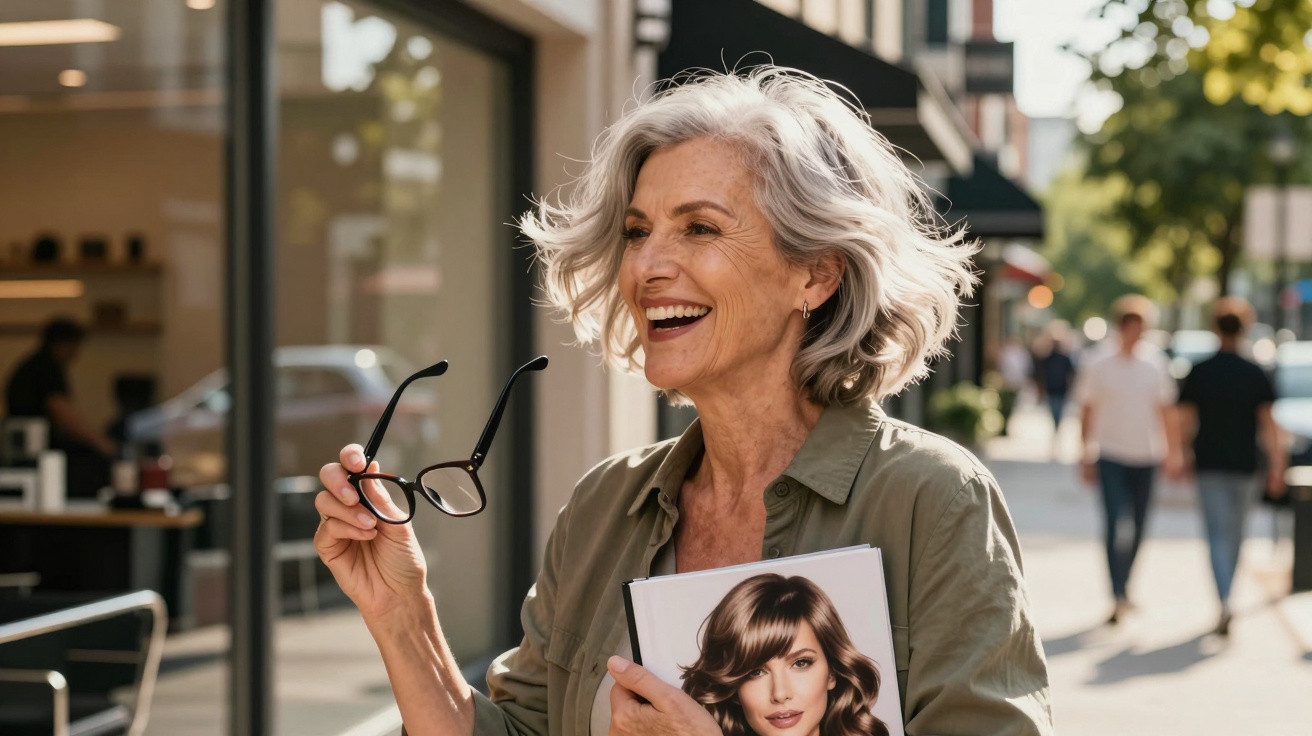
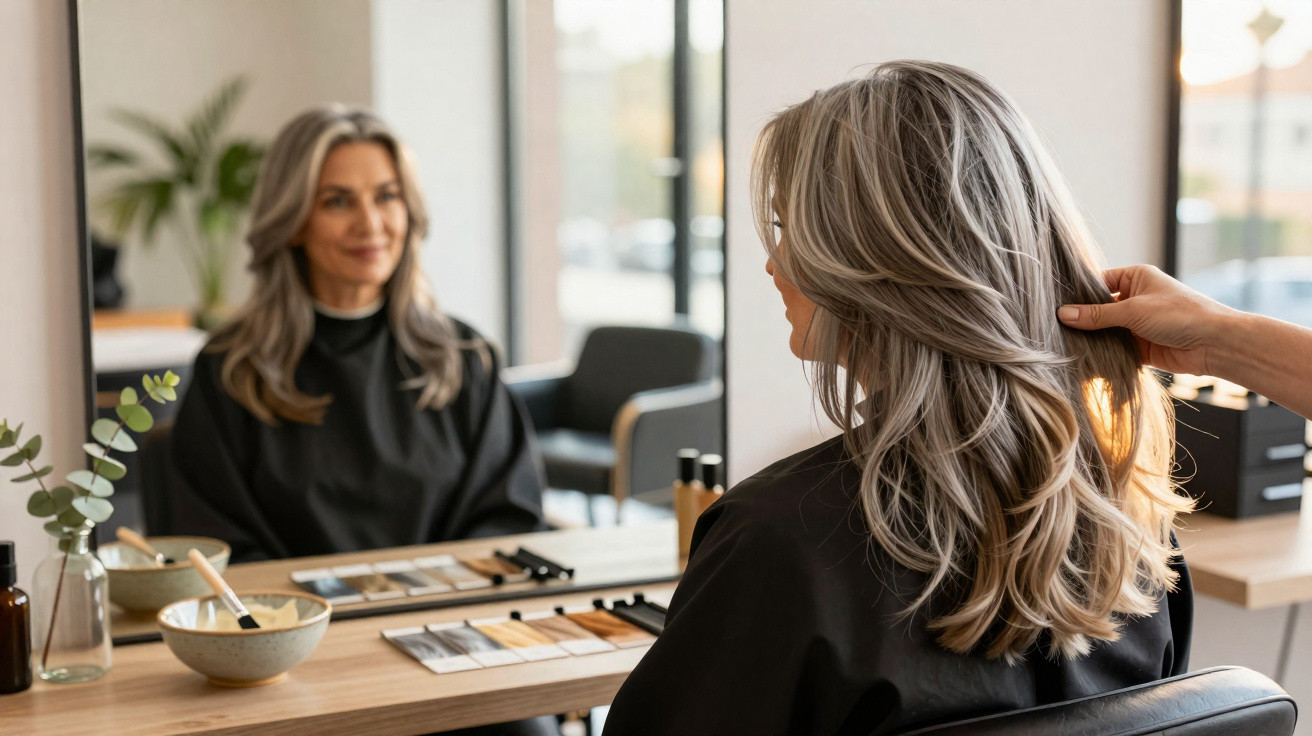
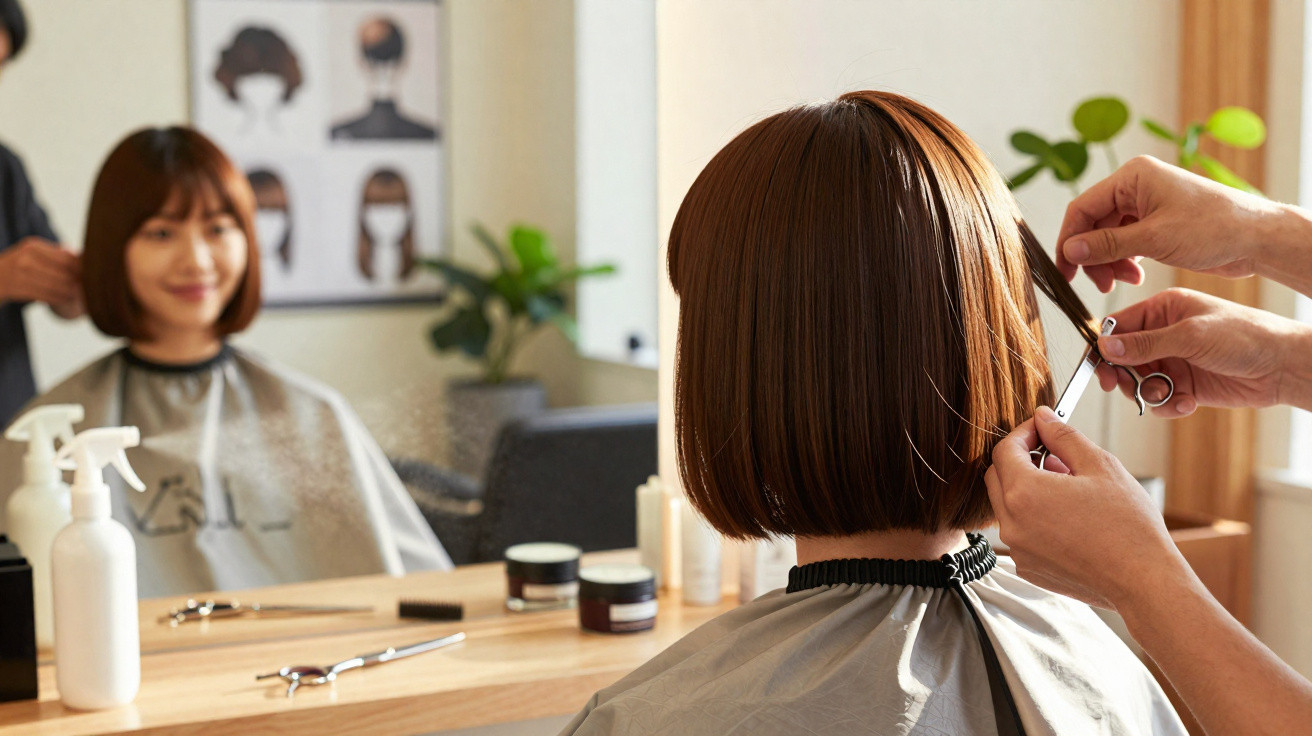
The woman facing the salon mirror is 67, with silver regrowth visible through an overgrown bob. She winds a limp, weary-looking section around her finger and lets out a sigh. “My hair used to be huge,” she tells the stylist. “Now it just… lies there.” The stylist smiles, raises the ends and replies gently: “Let’s give you a cut that does the heavy lifting.” The scissors begin their work. Small clippings drift to the floor like confetti. Ten minutes later, the same woman is sitting a touch taller. Her cheekbones are more defined, her eyes seem livelier and her hair suddenly appears… fuller. Not younger. Better.
A subtle change has taken place in how women over 60 are choosing to cut their hair.
Why short hair is having a quiet revolution after 60
Spend a weekday morning in a busy salon and you will hear one phrase repeatedly from women over 60: “My hair has gotten so thin.” Hairdressers encounter it constantly. Hormonal changes happen, hair density reduces, and the trusted shoulder-length style worn for two decades can abruptly stop being flattering. Long, wispy ends begin to look transparent against the neck. The crown loses its lift. You spend 30 minutes styling it, only for it to fall flat again by lunchtime. At that point, modern short haircuts feel less intimidating and more like a release.
A Paris stylist once described a 72-year-old client who held on to her long hair “because my husband loves it.” Her hair was fine and flyaway, and she usually wore it in a low ponytail because “it never looks good down.” One day, her stylist proposed a gentle layered pixie that followed the head shape while adding height at the crown. They removed 20 centimetres in a single appointment. Still in the chair, she sent her daughter a selfie. Within seconds, the response arrived: “Mum, you look 10 years younger and like YOU again.” Her husband, incidentally, loved it as well.
There is straightforward reasoning behind the effectiveness of short cuts for thin hair. With long, fine hair, every strand has farther to travel, which means gravity takes over. The ends gather together and the scalp becomes more visible. Reducing the length instantly concentrates the hair you do have. Individual strands sit nearer to one another, making the overall effect appear “fuller”, even though no extra hair has appeared. With well-placed layers and texture added too, the stylist is creating a support structure. The haircut becomes an architectural shape that retains volume, rather than leaving you to battle with mousse and an exhausted round brush.
Short haircuts for thin hair over 60 that create fullness
Hairdressers specialising in fine, mature hair frequently begin with one question: “Where do you naturally get a bit of lift?” The hairstyle is then planned around the answer. A popular choice is a contemporary pixie-bob, left slightly longer around the ears and nape, with concealed layers at the crown. It lets the hair be softly directed forwards or to one side, producing the impression of greater thickness around the face. The cropped shag is another excellent option, with airy broken layers, a little fringe and texture that appears effortless rather than overly “set.” Both styles remove the weight of dragging lengths and retain fullness where thin hair is still able to provide it.
For years, many women over 60 ask for “just a trim”. Gradually, the shape loses definition, the ends become thinner and the haircut turns into a compromise. We’ve all been there, that moment when you look at an old photo and realize your current hair has quietly deflated. A London colourist told me that scissors, rather than hair dye, create the most dramatic changes in her salon. A client arrives with an uninspiring chin-length bob and says, “My hair is hopeless.” The stylist gives her a short, squared-off cut with slight graduation through the back and a soft, feather-light fringe. She walks out repeatedly touching her hair, amazed that it can still move.
There is one blunt reality that most stylists will share when asked directly: thin hair doesn’t benefit from being “kept” long just because it always has been. Releasing old length is seldom about age; it is much more about texture. Shorter cuts make room for methods that do not work on elongated, delicate hair: point cutting to create softness, undercutting to take out weight where it pulls, and micro-layers that add lift without making the outline “frizzy”. The difference is made in millimetres. A fringe finishing at the eyebrow rather than the middle of the forehead. Side sections that brush the cheekbone instead of reaching the jaw. These small adjustments draw attention upwards, away from crown thinning and towards the features you want to emphasise.
How to talk to your stylist - and what to avoid at all costs
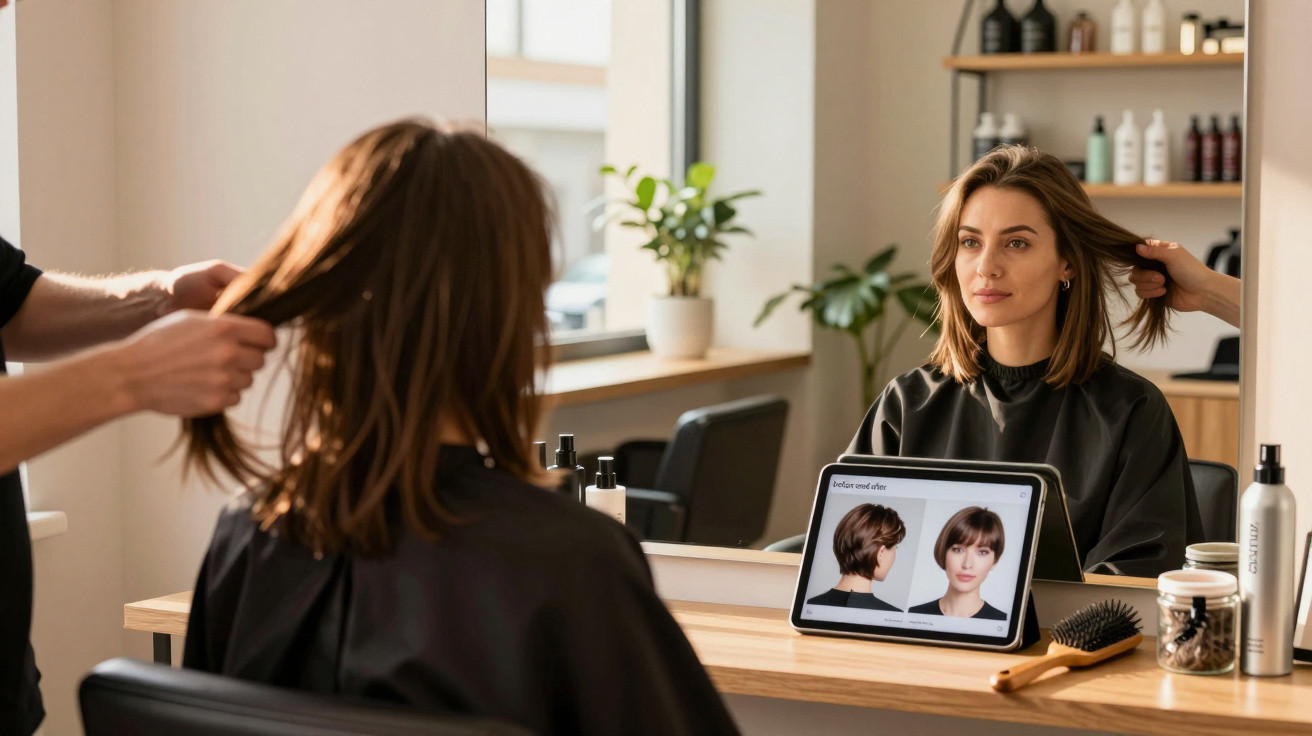
Women who leave the salon with hair that looks fuller nearly always share one habit: they explain their lifestyle rather than merely describing their desired appearance. A skilled stylist will ask, “How often do you blow-dry? How does your hair sit on day two? Do you wear glasses?” With thin hair, the aim is a style that settles into a shape when air-dried, rather than one dependent on 30 minutes with a round brush. Take photographs with you, certainly, but choose them carefully. Find images of women near your age with a similar hairline. Indicate the volume, fringe and silhouette that appeal to you, rather than focusing on the celebrity in the photograph.
The greatest error for fine, ageing hair is attempting to create thickness through a blunt, weighty cut. It may suit a 12-year-old with dense hair, but on a 65-year-old with fragile strands, a severe line can hang like a curtain and reveal every sparse section. Another frequent mistake is saying, “I don’t want it too short,” and then leaving with almost precisely the haircut you arrived with. A considerate stylist may challenge that gently: “If we keep this length, you’ll keep this flatness. Are you ready to feel lighter?” And honestly, no one follows an elaborate routine every single day. Styling must suit your actual life, not the imagined routine you promise yourself you will begin on Monday.
“After 60, haircuts aren’t about rules,” says Milan stylist Laura Conti. “They’re about strategy. You work with what the hair still loves to do, and you stop fighting what it can’t do anymore.”
- Ask for soft, internal layers, rather than obvious, choppy ones. They add height without creating frizz.
- Avoid razor cutting on especially fragile hair; scissors leave neater edges and can reduce breakage.
- Retain some softness at the ears and nape so that the hairstyle grows out elegantly.
- Think about a light fringe or side-swept bangs to conceal thinning at the front.
- Apply a pea-sized amount of volumising mousse; excess product simply weighs fine hair down.
Letting your hair tell a new story after 60
When women over 60 try shorter hairstyles, the most striking result is not simply the visual volume. It is the change in their posture and the ease that suddenly appears in how they move. They stop touching their hair so often because it stays where it belongs. They spend less time at the bathroom mirror and more time getting out of the house. The right contemporary short haircut does not announce, “I gave up.” Instead, it quietly communicates, “I’ve edited.” You retain what adds life to your face and remove what pulls it down.
Some women embrace bold, shaped pixies that celebrate silver texture. Others prefer gently layered bobs grazing the jaw, which look particularly good with statement earrings or glasses. There is no single ideal hairstyle for “women over 60.” There is only your hair as it is today, your lifestyle this year and your willingness to make a change right now. The most important question when you take the salon chair is not “How old am I?” but “What story do I want my hair to tell from here on?”
| Key point | Detail | Value for the reader |
|---|---|---|
| Choose structure over length | Short, layered shapes concentrate thin hair for a fuller look | Understand why long, wispy cuts flatten your profile |
| Talk lifestyle, not just style | Describe your routine, tools, and patience honestly | Get a cut that works on busy, low-effort days |
| Use millimetre changes wisely | Adjust fringe, side pieces, and crown height subtly | Lift features and distract from thinning areas without drama |




Comments
No comments yet. Be the first to comment!
Leave a Comment