
Many people instinctively colour their first grey strands – while others simply let them grow, sending a surprisingly powerful message.
At first glance, someone who stops colouring their hair as they age may seem merely less concerned with appearance. Look more closely, however, and the opposite is often true: a relaxed attitude towards grey or white hair frequently reflects a number of striking character traits. People who consciously embrace their natural grey are making a clear choice about identity, time and priorities – and that decision shapes everyday life, both personally and professionally.
Ageing calmly: what choosing natural grey hair can mean
The first grey roots in the mirror can take many people by surprise. Some reach for hair dye immediately. Others pause and realise they no longer want to keep chasing a particular shade. Choosing to keep natural grey hair is not a rejection of self-care; it is a decision not to hide.
“Grey hair often signals: I do not have to disguise my age to feel worthwhile.”
This is not about one choice being “right”. Rather, the deliberate decision not to use hair dye can reveal a great deal about self-image, values and inner calm. The same eight strengths often emerge.
1. Leading by example: giving others confidence to be themselves
Visible grey hair stands out in a world of filters and anti-ageing promises. Not loudly, but unmistakably. The people around them notice that this is someone who respects themselves enough not to play a part.
This may affect:
- younger colleagues, who become less fearful of ageing
- friends, who begin to question their own insecurities
- family members, who become more relaxed about wrinkles, weight and the passing years
This quiet example changes conversations. There is less discussion of “problem areas” and more talk of experiences, dreams and plans. Attention shifts away from looks and towards what a person genuinely has to say.
2. A clearer focus: fewer outside pressures, more time for what matters
Regular colouring appointments take money, effort and, above all, time. Anyone who opts out is consciously choosing to put those resources elsewhere.
Common everyday effects include:
- free evenings instead of thinking, “I urgently need to get to the hairdresser”
- less stress before appointments because regrowth no longer matters
- greater resistance to other unnecessary obligations
“Anyone who takes back control of their time does not seem careless, but organised – and that is precisely what brings greater calm.”
This approach to hair colour is often only the visible sign of something broader: a willingness to say “no” to expectations that do not fit one’s own life.
3. Authenticity: allowing the real personality to come through
Whether we intend it or not, hair colour affects how we are perceived. Showing natural grey hair means deliberately choosing an appearance that suits one’s present stage of life rather than imitating a younger version of oneself.
It communicates:
- I know who I am.
- I no longer have to pretend to anyone.
- My history belongs to me – and people may see it.
In conversation, such people often appear more direct. They evade less and are less likely to tell others what they want to hear. Relationships can become more honest because their outward appearance already makes one thing clear: this is someone who does not put on an act.
4. A growth perspective: seeing every stage of life as an opportunity
Grey strands are a reminder that time passes. For some, that feels frightening; for others, it is an important prompt to ask: what do I want to do with the years ahead?
“People who accept grey hair often say to themselves: My path is not over; it is simply changing.”
Rather than fighting ageing, many use this period to pursue new directions:
- taking up hobbies that have long been postponed
- adjusting working hours or changing professional priorities
- setting firmer boundaries with family and at work
The grey hair becomes a kind of marker: this is how far I have come – and now I will decide more consciously what happens next.
5. Visible self-confidence: nothing needs to be concealed
People who feel insecure internally often cling to outward signs of youthfulness. By contrast, someone who goes through the day confidently with grey hair conveys a different message: their self-worth does not depend on pigment.
In daily life, this can be seen in several ways:
- in meetings: they speak more calmly and feel less need to prove themselves
- in private: they are less likely to be drawn into defensive discussions about age, weight or wrinkles
- when making decisions: they judge by their own standards, rather than by whether something might look “young”
This kind of self-assurance is infectious. It encourages others to stop measuring their worth solely by the surface.
6. More energy: less chemical exposure, less effort, more strength
Hair dye is not only time-consuming. It also involves regular contact with chemical substances, frequent washing and often extra care to keep hair looking reasonably healthy.
“When people leave their hair alone, they often allow their body to breathe more easily too.”
Many people report that their hair texture and scalp settle once colour is no longer involved. There is also mental space: removing one care-related task from the internal to-do list can feel remarkably freeing.
That newly available energy often goes into things that genuinely restore them: exercise, sleep, conversations and projects that have long been saved “for later”.
7. Self-respect: treating one’s body with kindness
Accepting grey hair also means saying: I will stop fighting a biological process that I cannot prevent anyway. It is an act of respect for one’s own body, which has carried a person through decades of life.
This often leads to new habits:
- a more conscious approach to stress and rest
- better nutrition, because health becomes more important than appearance-based tricks
- greater awareness of personal limits
The reflection in the mirror changes. Instead of asking, “What can I hide here?”, people more often ask, “How can I treat myself well, just as I am?”
8. Maturity and calm: grey hair as a sign of experience
In many cultures, grey hair represents experience. In professional life, this can be an advantage: people with natural grey hair are often seen as more considered, reliable and less impulsive.
“Every grey strand tells of crises, decisions, new beginnings – and of having survived them.”
A life that has been lived brings a particular kind of calm. Conflicts feel less threatening, while setbacks are less likely to seem like personal failure and more like another opportunity to learn.
What fear of grey hair can really reveal
Someone who panics as soon as grey roots appear is often expressing more than vanity. There may be deeper anxieties about losing attractiveness, career opportunities or social acceptance. Behind this frequently lies a society that places too much value on youth.
That is exactly why people who reject this trend can appear so strong. They resist an unspoken norm and say: my worth is not measured in calendar years. This is a quiet yet effective protest against age discrimination – at the office, in relationships and in public life.
Practical tips for transitioning to natural grey hair
Anyone wanting to make the change does not have to take a drastic approach overnight. A few options include:
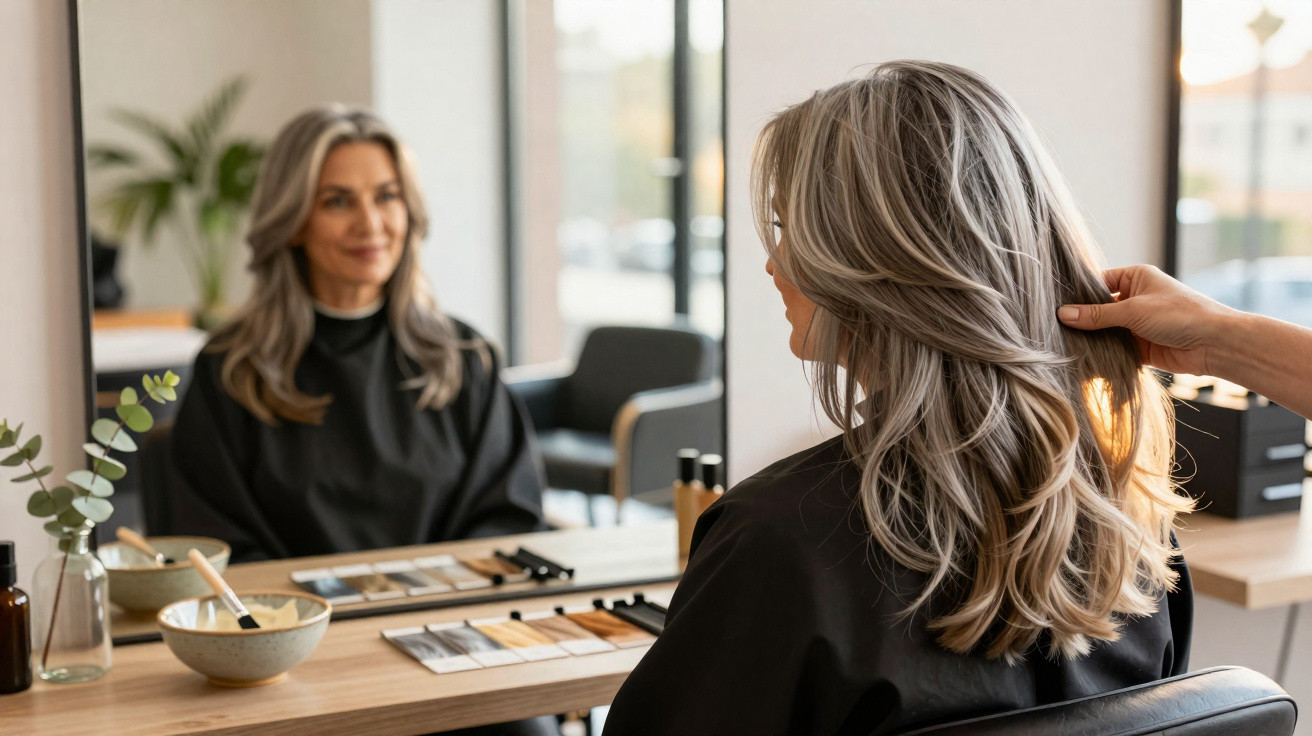
- highlights instead of full colour to make the transition softer
- a shorter haircut so coloured sections grow out more quickly
- quality care products for shine and texture, so grey hair looks intentionally cared for
- a considered clothing style that complements the new hair colour
What matters is that the transition feels right. Natural grey hair does not mean giving up. It means styling things differently – with less camouflage and more clarity.
Why this choice is more than a question of style
Our attitude to grey hair reveals how we think about ageing, gender roles and self-worth. Anyone who wears natural grey hair with conviction sends many subtle messages: I respect my history. I take my time seriously. I do not define beauty only through youthfulness.
Whether someone still colours their hair or has long been living with silver strands, the central question remains: does my approach to ageing truly support me, or am I chasing an ideal that is never satisfied?
People who answer that question with a clear yes to themselves and visibly embrace their natural grey hair demonstrate eight remarkable strengths. They can be seen not only on their heads, but in the way they speak, decide and live.











Comments
No comments yet. Be the first to comment!
Leave a Comment