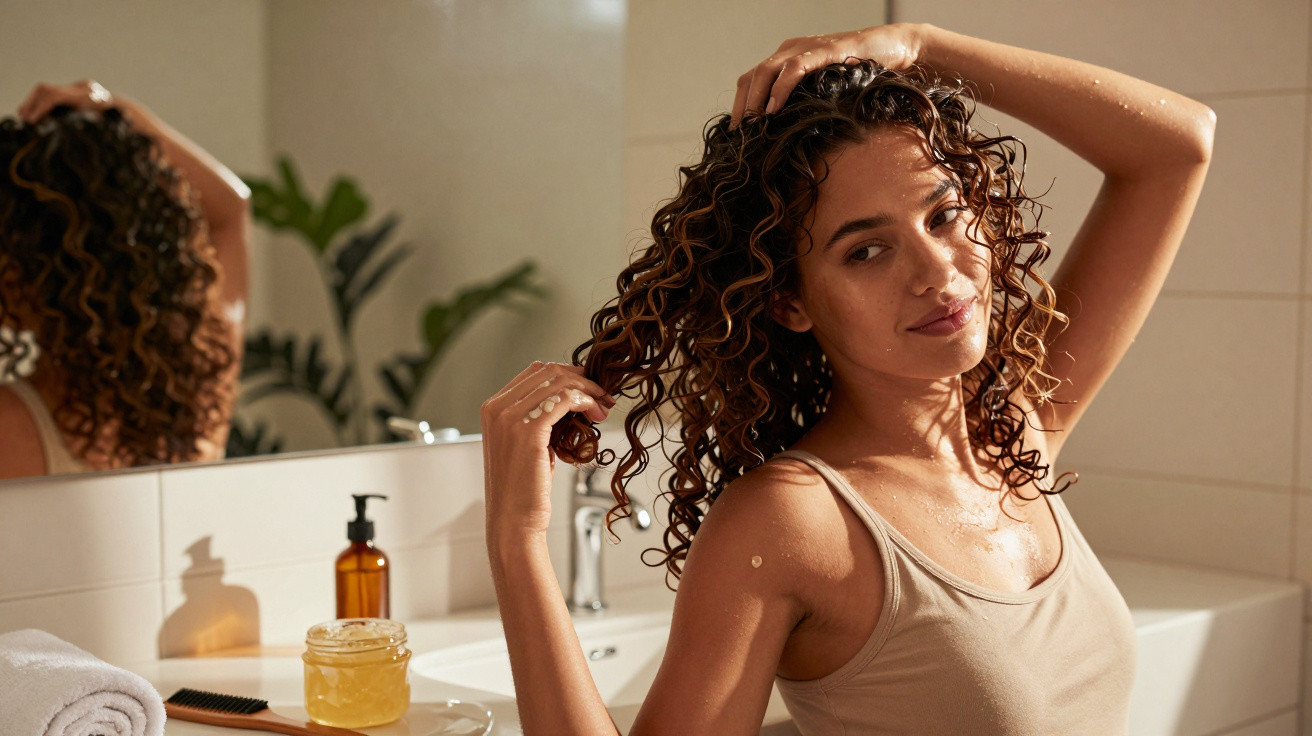
A new styling gelée now promises calmer, more manageable hair.
Anyone with curls or waves often faces a daily battle in front of the bathroom mirror. One day the strands hang limp; the next they stick out in every direction, with dry ends and persistent frizz somewhere in between. A new gelée from John Frieda’s Frizz Ease range aims to tackle precisely these concerns: defined curls, less frizz and added care, all without the hard, crunchy ‘helmet hair’ finish.
Curls, character and frustration: why it feels so personal
Curls are more than simply a hair type. Many psychologists regard the way we wear our hair as an expression of personality. Anyone who has blow-dried their waves straight for years will recognise the feeling of fighting against their own natural texture. At hair salons, comments such as “My hair does whatever it wants” or “My curls only look good straight after washing” are common.
People with strongly textured hair - from loose beach waves to corkscrew curls - tend to mention three main issues:
- pronounced dryness, particularly at the ends
- frizz caused by humidity, wind or perspiration
- a lack of definition, causing curls to lose their shape
At the same time, the trend is clearly moving away from harsh straightening and towards natural texture. Curls should be allowed to look like curls again - simply at their best. This is the gap John Frieda’s new “Boucles Couture” gelée is designed to fill.
The concept: a product that shapes hair like a styling gel while moisturising it like a conditioning cream - created specifically for curls and waves.
What makes this John Frieda Frizz Ease gelée different
Part of the established Frizz Ease family, the gelée has been developed for what is known as “textured hair”. This includes every hair type whose strands do not fall straight, instead forming waves, curls or ringlets - often with a relatively dry, porous surface.
Vegan, silicone-free and alcohol-free
Many traditional styling gels use alcohol to dry quickly and silicones to smooth the hair. While this can create hold, it can also strip moisture from the hair surface. This new gelée takes a different approach:
- vegan: contains no ingredients of animal origin
- silicone-free: curls are not weighed down
- free from drying alcohol: reducing the risk of brittle ends
Instead, the formula relies on a high proportion of moisture-binding agents: more than 14 per cent humectants. These ingredients attract water and retain it within the hair, which is especially important for curls.
Humectants bind water to the hair fibre and can stabilise the fine hydrogen bonds inside the hair - helping curls to retain their shape more easily.
Hydration and definition together
The gelée is intended to deliver two results at once: curls should look defined without becoming rigid, while feeling cared for without appearing greasy. Its consistency sits between a classic gel and a lightweight cream - clear, soft and non-sticky.
One of its key ingredients is moringa oil. This plant oil is considered rich in fatty acids and antioxidants. It forms a fine layer around the hair without making it heavy, helping to seal in the moisture applied beforehand.
This is intended to keep curls supple for longer, particularly during summer, when sun, heat and frequent washing can become an issue.
How to apply the gelée correctly
Application has deliberately been kept straightforward, so it can fit into an everyday routine - whether someone follows the Curly Girl Method closely or simply wants to give their curls occasional support.
Step-by-step application
- Wash your hair as usual, ideally using a gentle shampoo and a moisturising conditioner.
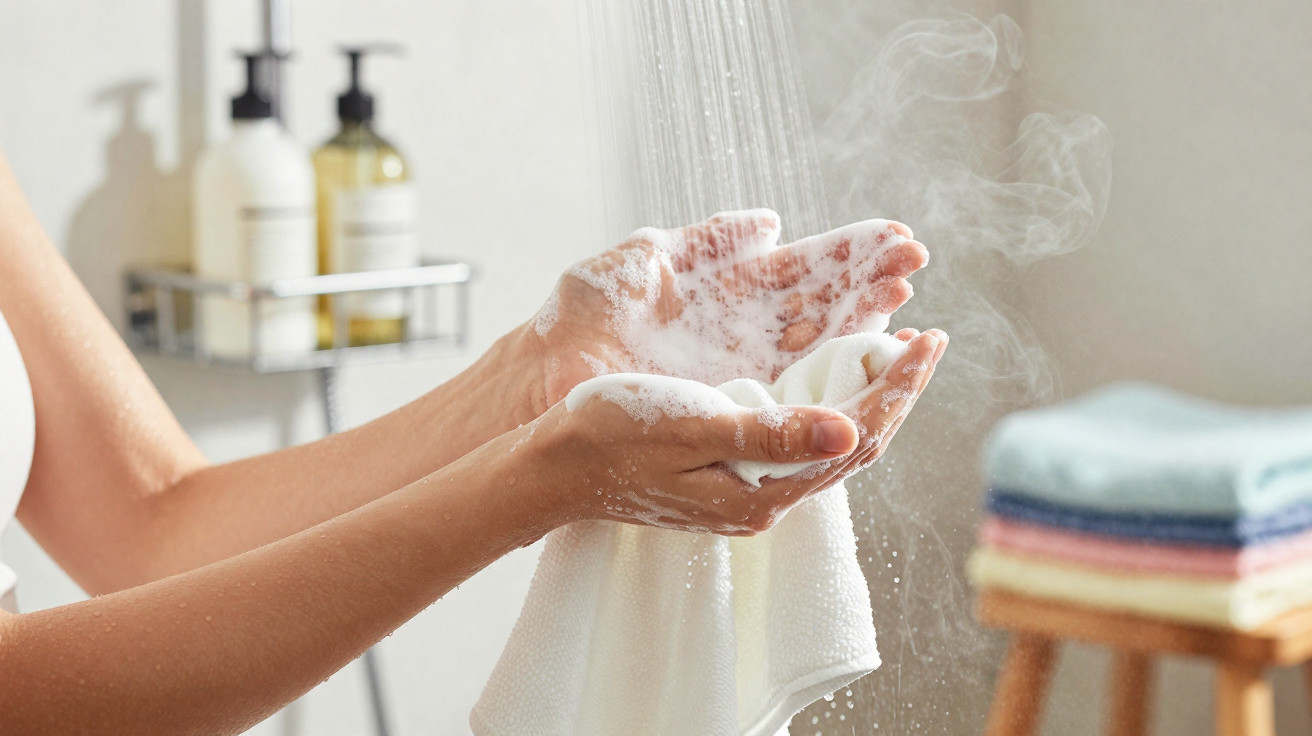
- Gently squeeze out excess water with a towel or microfibre cloth rather than rubbing.
- Rub a small amount of gelée between your hands.
- Apply it to damp hair, either section by section or by scrunching from the ends towards the roots.
- Then allow the hair to air-dry, or use a diffuser on a low setting.
Many users report that their curls retain their shape and bounce for up to 24 hours without feeling stiff. Hair feels soft, looks more clumped together and is less prone to separating into frizz.
Scrunching: what does the term mean?
In the world of curls, “scrunching” has long been standard vocabulary. It describes a specific kneading technique:
- Place the hair ends in the palm of your hand.
- Gently close your hand and push the strands upwards towards the scalp.
- Repeat the movement several times, until the curl pattern visibly contracts.
This technique places the gelée exactly where the curl forms its wave. It provides greater bounce without leaving the roots greasy.
Why curls need specialist care
Curly hair loses moisture more quickly than straight hair. This is because the cuticle is often slightly raised, while the curve of the hair fibre makes it harder for natural sebum to travel from the roots to the ends. Moisture escapes more easily, and frizz develops.
| Hair texture | Typical issue | What helps |
|---|---|---|
| loose waves | quickly become limp; frizz in drizzle | lightweight gelée, a small amount of product, airy drying |
| defined curls | dry and difficult to control | moisture and definition, for example gelée + leave-in |
| tight corkscrew curls | very dry, vulnerable ends | oil to seal in moisture, gelée for targeted curl clumping |
The new styling gelée is aimed at all three groups. Waves benefit from its light texture, while those with denser hair can simply use more product or layer it over a richer conditioning treatment.
How the gelée fits into a Curly Girl routine
Many followers of the Curly Girl Method pay close attention to ingredients, avoiding drying alcohols and heavy silicones in favour of products that support natural texture. With its vegan, silicone-free and alcohol-free formula, the gelée fits well into this approach.
A useful routine can combine three stages:
- Cleansing: a gentle shampoo or co-wash to cleanse the scalp without removing too much oil from the lengths.
- Moisture: conditioner or a mask, potentially followed by a leave-in spray.
- Definition: the gelée, distributed through still-damp hair, holds the shape in place.
Anyone who also uses hair oil should apply it sparingly to the ends once the gelée has absorbed. This keeps curls soft while preserving their clumped definition.
What to consider when styling curls
No single product suits every curl type. A few factors can make choosing easier:
- Hair density: fine hair can only tolerate a small amount of product, whereas thick hair needs more support.
- Scalp: if your scalp becomes greasy quickly, apply the gelée mainly through the lengths.
- Climate: in very humid conditions, strong moisture-binding ingredients can help keep frizz under control.
Anyone used only to conventional hair gels may need a short adjustment period with a gelée. It initially feels softer, developing its hold almost from within through the combination of moisture and light fixation.
What terms such as “frizz” and “textured hair” mean
Frizz refers to small flyaway hairs that break away from an orderly curl pattern. It is usually caused by dry hair fibres reacting to humidity, or by mechanical stress such as rough brushing or towel-drying.
Experts use the term “textured hair” when hair is not straight but has visible movement, ranging from loose waves to Afro-textured hair. These hair types often have a strong character of their own, yet can be styled very expressively with the right routine.
A gelée that addresses both care and shape can remove a great deal of day-to-day stress. Rather than despairing each morning about how curls will fall that day, one quick styling step after washing can be enough.
People who have rejected their natural texture for a long time often experience an aha moment with the right product: what was once seen as “problem hair” suddenly becomes their strongest visual asset. This is exactly the moment John Frieda is working towards with its new Frizz Ease gelée - less frizz and more personality on your head.
Comments
No comments yet. Be the first to comment!
Leave a Comment