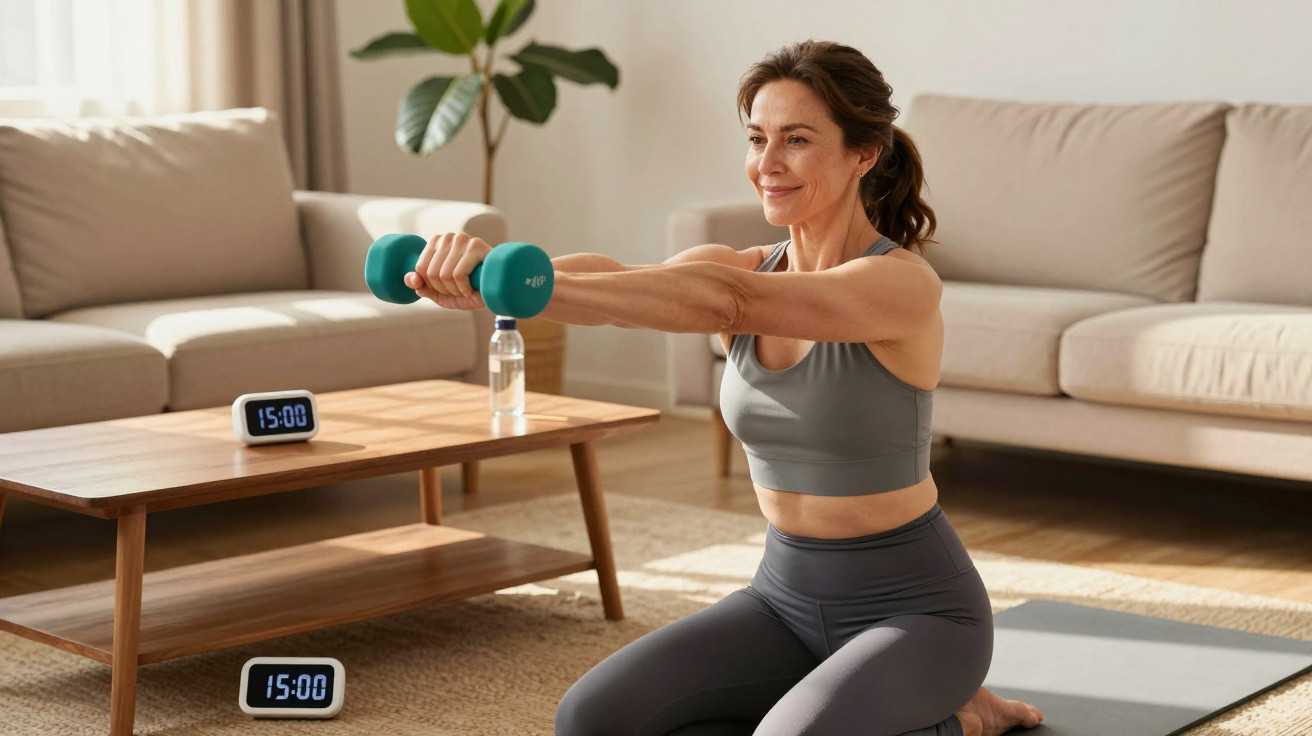
While Pilates and traditional dumbbell sessions have long been considered an insider tip for toned arms, one seriously overlooked activity is now gaining attention: skipping. A fitness trainer in the United States is convinced that just 15 minutes a day can firm the upper arms, reduce fat and visibly shape the whole upper body – especially after the age of 50.
Why skipping is so effective for women over 50
At first glance, skipping may seem like a straightforward leg workout. In reality, it engages the entire body – which is exactly why it is such an appealing option for older women starting to exercise.
As the rope turns, the arms, shoulders and upper back stay active continuously – the biceps, triceps and shoulder muscles receive an intensive mini workout with every jump.
There is also a second benefit: skipping is highly endurance-focused. Your heart rate rises quickly and the body burns plenty of calories in a short period. Over time, lower body fat can also mean leaner, more defined arms – even if the scales barely change because muscle is being built.
Many people over 50 are understandably hesitant about jumping. Concerns about joints, bones and the pelvic floor are valid. However, when introduced gradually and performed in supportive footwear, skipping can provide what is often lacking at this stage of life: muscle maintenance, cardiovascular exercise and a noticeable tightening effect in the upper body.
The 15-minute plan: an arm workout with a skipping rope
The session below is made up of three short blocks. Together, they form a compact circuit that takes around 15 minutes. Resting for 30 to 60 seconds between blocks is sensible, depending on your current fitness level.
Block 1: Warm-up and arm activation
This section is designed to get your heart and muscles moving while switching on the upper body.
- 60 seconds of skipping at an easy pace
- 30 plank jacks (forearm plank or high plank, with the feet jumping out to the sides)
- 60 seconds of skipping
- 30 plank jacks
- 60 seconds of skipping
Plank jacks combine a forearm plank with sideways hops of the feet. The core remains steady while the arms and shoulders work to hold the position. This creates extra upper-body tension and intensifies the work for the arm and shoulder muscles.
Block 2: Coordination and intensity
The second section adds skipping variations that challenge the legs and core more strongly while raising the heart rate.
- 8 regular rope jumps
- 8 rope jumps in which the feet jump apart and back together sideways, similar to jumping jacks – repeat this two-part sequence 3 times
- 8 regular rope jumps
- 8 rope jumps with the knees lifted upwards – repeat this two-part sequence 3 times
- 8 rope jumps with high knees
- 8 jumping lunges with the rope (4 on each side) – complete 3 rounds
The changing variations make the body work from different angles. Your arms must keep guiding the rope steadily, while the lower body experiences varied loading. This increases the training stimulus without making the session much longer.
Block 3: Short, fast and effective
Finish with a brief sprint section that challenges the muscles one final time.
- 15 seconds of skipping at a normal pace
- 15 seconds of skipping at a noticeably faster pace
More experienced exercisers can repeat this mini sprint three to four times. If you are just getting started, stick to one or two rounds and focus on using good technique.
How skipping helps firm the upper arms
The key muscles for toned upper arms are the biceps at the front and the triceps at the back. Many everyday movements barely challenge the triceps – which is why the familiar wobbling sensation can develop when you wave.
When you skip, the following happens:
- Biceps and triceps work together constantly to keep the rope rotating evenly.
- Shoulders stabilise the movement and keep the arms in position.
- Upper back muscles help maintain an upright posture, which immediately creates a more elongated appearance.
- Abdominal muscles tighten automatically to keep the body stable.
Anyone who regularly swings a rope not only strengthens their arms, but also shapes a noticeably more defined silhouette across the whole upper body.
Combined with the high calorie expenditure, this creates a twofold effect: greater muscle tension alongside less excess body fat, making the upper arms appear firmer and slimmer.
Starting safely: skipping after 50 without unpleasant surprises
If you have not exercised for some time, do not begin immediately with the 15-minute plan. It is better to build up slowly and allow your body to adapt to the impact of jumping.
Preparation: technique, rope length and surface
- Warm-up: 5–10 minutes of gentle marching on the spot, light squats, shoulder circles and ankle rotations.
- Correct rope length: Stand with both feet in the centre of the rope and pull the handles upwards – they should reach roughly armpit height.
- Shoes: Wear trainers with good cushioning, particularly if your knees are sensitive.
- Surface: Use wooden flooring, a sports floor or a thicker mat; avoid jumping on tiles or concrete where possible.
Technique matters just as much: keep your arms close to your body, drive the movement mainly from the wrists and use small jumps of only a few centimetres. Jumping too high places unnecessary strain on the joints and causes fatigue sooner.
Increase your training volume gradually
For women over 50 who are new to skipping, an interval-based approach works well. One possible format is:
- 30 seconds of skipping
- 30 seconds of rest
- Repeat for 4–6 rounds
Over time, the jumping intervals can become longer and the rest periods shorter. The 15-minute session made up of three blocks can be a goal, but it does not need to be mastered from the outset. Pain in the knees, hips or back is a warning sign and should be taken seriously.
| Training level | Recommended duration | Weekly frequency |
|---|---|---|
| Beginner | 3–5 minutes with plenty of rests | 2–3 sessions |
| Regular exerciser | 8–12 minutes using intervals | 3–4 sessions |
| Advanced | 15 minutes with intensive blocks | 3–5 sessions |
When skipping is not a good idea
As effective as this workout can be, it is not suitable for every body. Anyone with severe excess weight, pronounced osteoarthritis in the hips or knees, recent disc problems or weak pelvic floor muscles should speak to a doctor beforehand. In some cases, alternatives may be appropriate, such as swinging the rope without jumping or low-impact options without leaving the ground.
A supportive sports bra is also essential for women with a larger bust to prevent pain in the breast tissue. Short sessions at a calm heart-rate level are a sensible place to start, while anyone with cardiovascular conditions should always seek individual advice from a qualified professional.
Combining skipping intelligently
To enhance the effect on the upper arms further, combine skipping with simple equipment-free strengthening exercises:
- Tricep dips using a sturdy chair
- Wall press-ups or press-ups against a raised step
- Shoulder presses using water bottles
- Rows with a resistance band
Adding two short strength sessions to skipping on three days each week can quickly create a solid foundation. Muscles become stronger, posture improves and the impact on the upper arms is more noticeable.
Many women also report an unexpected bonus: skipping evokes childhood memories, feels enjoyable and encourages them to keep going. Especially after 50, that sense of lightness may be the key to making movement a lasting part of everyday life – and to enjoying the sight of your own arms in the mirror again.












Comments
No comments yet. Be the first to comment!
Leave a Comment