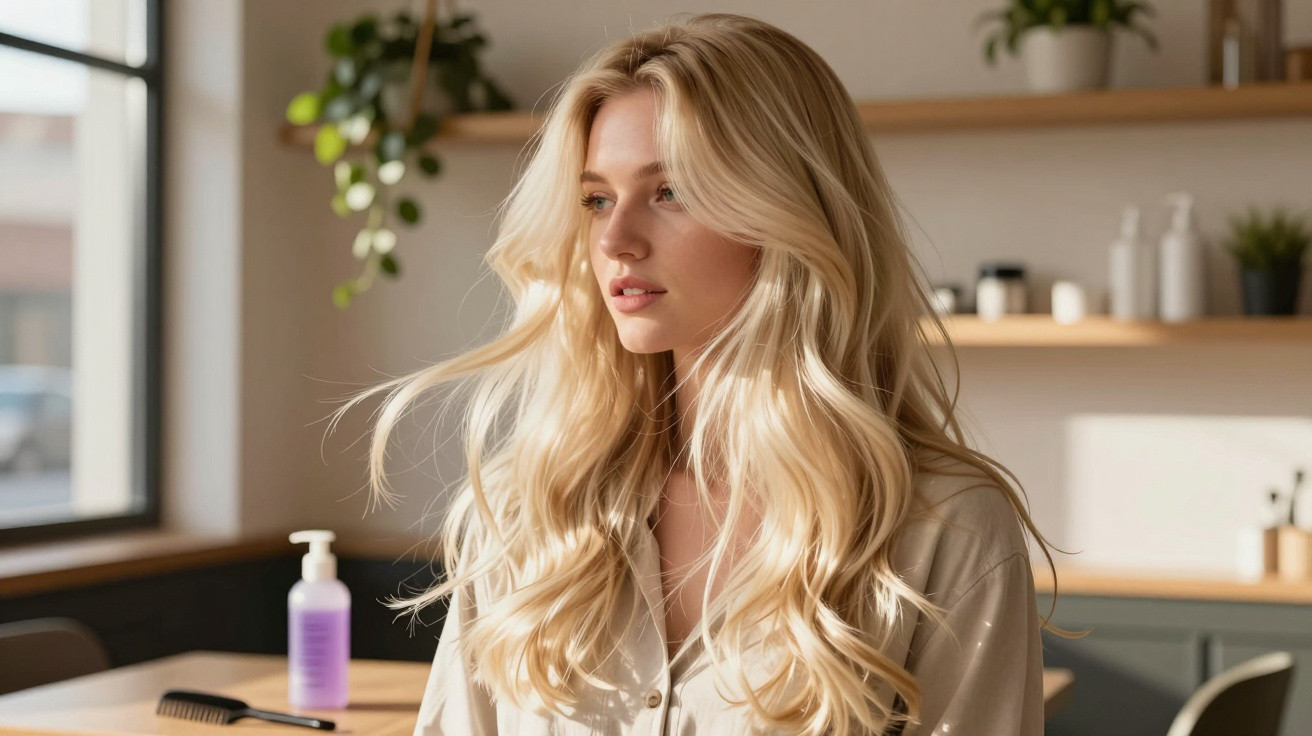
If classic, cool blonde feels too severe but you still fancy a noticeable change of look, there is one particular style to choose this season: Pavlova Blonde. Its name may bring dessert to mind, yet the result is more like a gentle beauty filter for the face – which is exactly what makes this trend so appealing.
What the Pavlova Blonde trend shade is all about
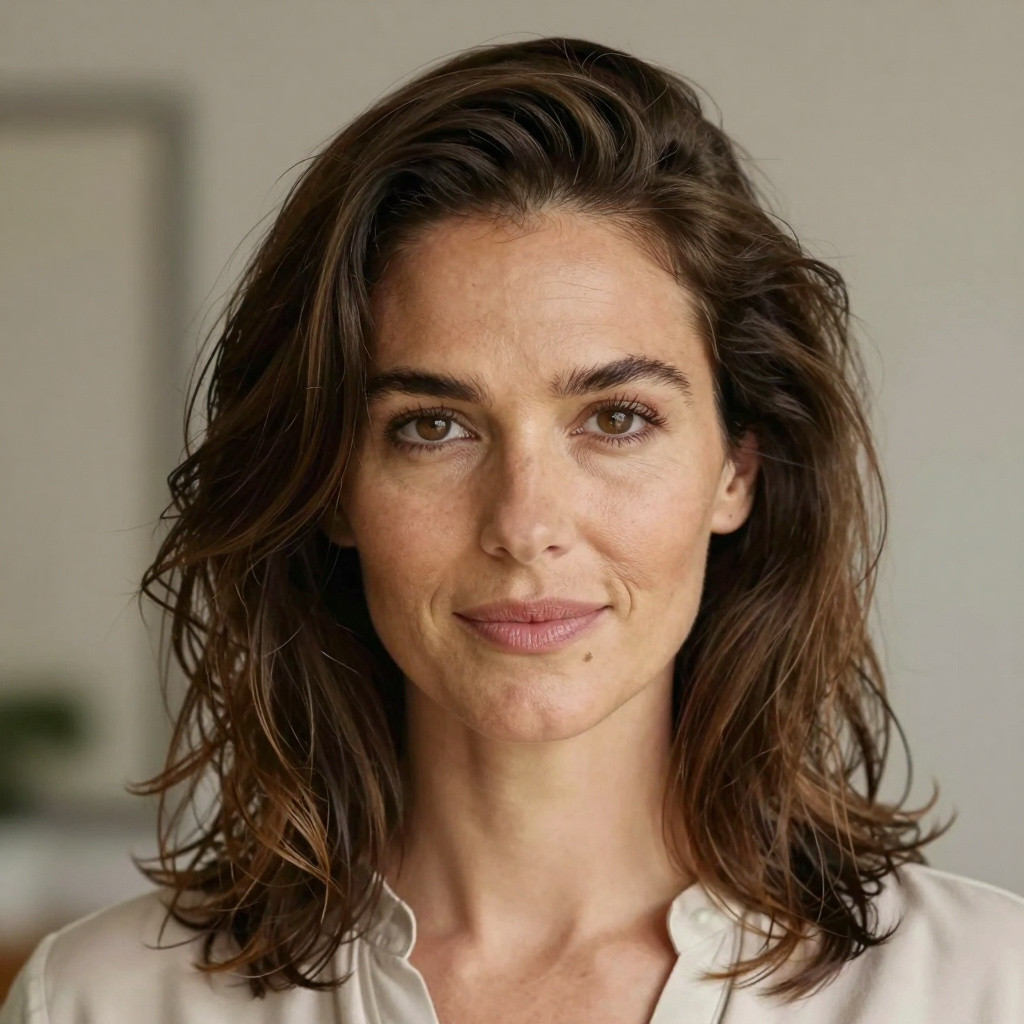
Pavlova Blonde is not standard platinum blonde. The colour takes its cue from the famous airy meringue dessert: light, creamy and touched with the faintest hint of pink – all kept exceptionally subtle.
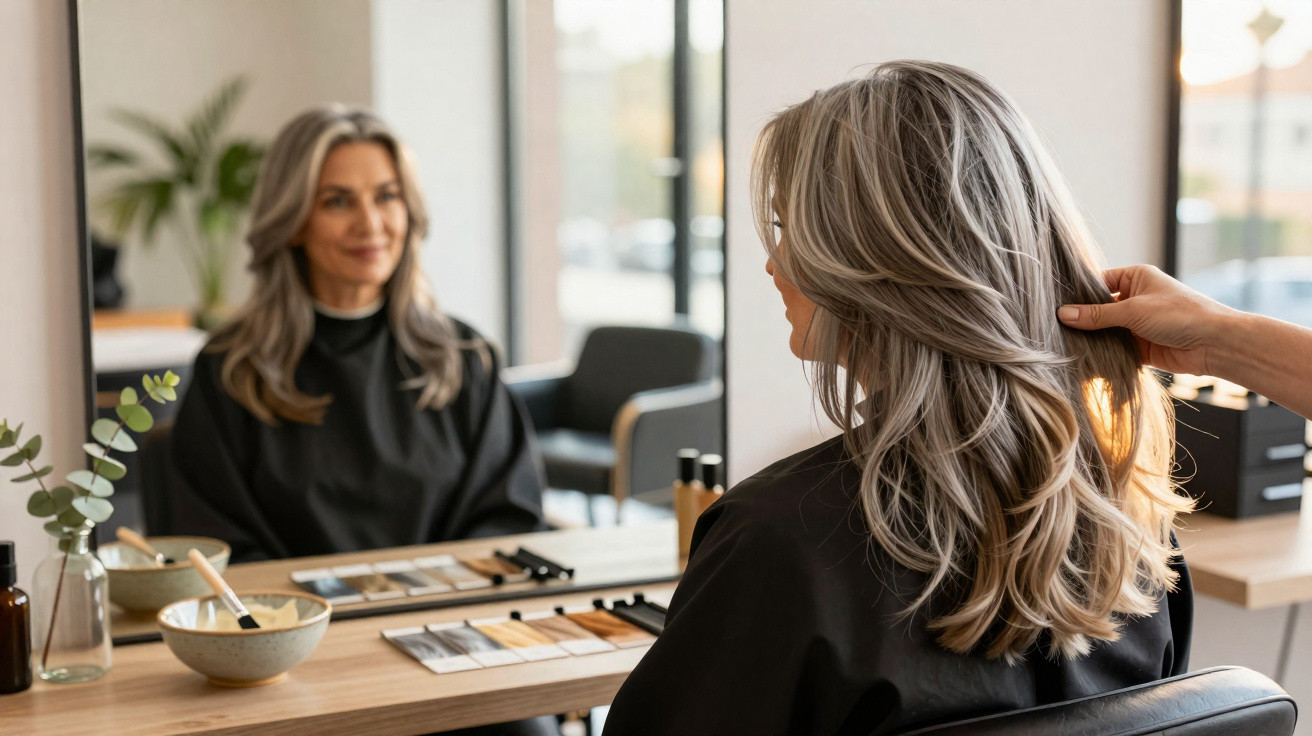
Pavlova Blonde is a very light, cool blonde with a creamy undertone and a delicate pastel sheen that remains surprisingly soft despite intensive lightening.
This look relies on several tones layered over one another. Rather than creating a flat, fully coloured blonde, it combines:
- cool, almost icy highlights
- soft beige tones beneath
- barely pink reflections that are usually properly visible only in daylight
Depending on the lighting, the hair can appear more silvery, creamier or lightly rosy. This creates the impression of far more volume and movement – even in fine hair.
Who does Pavlova Blonde suit best?
The trend does not work equally well for every colouring. Before reaching for bleach, colour professionals focus particularly on skin tone.
Pavlova Blonde is ideal for people with:
- fair to very fair skin
- a cool or neutral undertone (rosy or olive skin rather than a golden tan)
- light eyes – grey, blue, blue-green or cool green
With this starting point, the cool blonde looks harmonious and can make the complexion seem fresher. Redness is softened, the eyes appear clearer and facial contours look gentler.
Naturally warm, golden skin does not automatically rule out the look. Many salons now tailor Pavlova Blonde with more beige and less pink, so the hair does not appear overly cool. The style remains inspired by the original trend while suiting the individual more effectively.
When Pavlova Blonde can be more difficult
A few situations are more complicated:
- very dark natural hair colour (dark brown or black)
- lengths that have been heavily coloured or recoloured frequently
- very damaged, brittle hair
In these cases, achieving the trend colour will usually require several appointments. Otherwise, uneven results or breakage may occur. Anyone starting with very dark hair should agree a gradual plan with their stylist: begin with a slightly darker blonde, then move slowly towards Pavlova Blonde rather than trying to force the full transformation in one day.
How the colour is created in the salon
This trend shade is nearly always built on substantial lightening. The hairdresser generally works through several stages:
- lightening with bleach or high-lift colour, often using foil highlights or a balayage technique
- toner or gloss to create the desired creamy shade and control the rosy sheen
- fine lowlights where additional depth and movement are wanted
The skill lies in lifting the hair as light as possible while protecting its condition at the same time. For this reason, many salons use modern bond-building products that help stabilise the hair bonds during bleaching.
A good Pavlova look is high-tech work: without professional lightening, toner and bond-building care, the shade can quickly look yellow or dull.
Care rules: keeping Pavlova Blonde hair healthy
Light, cool blonde only looks refined when the hair shines rather than appearing straw-like. Choosing Pavlova Blonde almost automatically means committing to a care routine.
The foundation: repair and moisture
Every bleaching session reduces the hair’s structure and moisture. The best response is to use:
- repairing masks containing proteins (keratin, silk, wheat) to improve strength
- rich emulsions or conditioners with oils and butters to smooth the cuticle
- leave-in products, such as sprays or lightweight creams, for everyday protection
A rule of thumb in many salons is to schedule an intensive mask at least once a week, ideally twice. A brief application is rarely enough – leaving it on for ten to twenty minutes delivers a noticeably better effect.
Colour care: keeping yellow tones away
Cool blonde shades can quickly turn yellow or orange, especially with hard tap water or lots of sun exposure. Targeted colour care helps counter this:
- purple shampoo: neutralises yellow tones when the colour becomes too warm
- pink or pearlescent toning products: enhance the delicate pastel effect of the Pavlova look
It is best not to use these products every day, otherwise the hair can develop a grey or purple cast. Once or twice a week is entirely sufficient for most people.
Heat is the biggest enemy
Straighteners, curling tongs and similar tools damage bleached hair far more than untreated hair. Anyone wearing Pavlova Blonde should therefore keep a few rules in mind:
- apply a heat protection spray before every heat-styling session
- lower the temperature (a maximum of 180 degrees for fine blonde hair)
- alternate heat-styling days with days of air-drying
Without heat protection, even perfect blonde can look dull and brittle after just a few weeks – and the most beautiful trend shade then loses all its impact.
How often does Pavlova Blonde need refreshing?
The trend is relatively high-maintenance in the salon, but the commitment can be managed with a little planning.
| Treatment | Interval |
|---|---|
| Bleaching regrowth | every 6–10 weeks (depending on natural colour) |
| Toner/gloss for a fresh creamy tone | every 4–8 weeks |
| Bond-building or intensive salon treatment | every 4–6 weeks |
Choosing balayage or soft highlights rather than bleaching the entire head can extend the time between appointments slightly. Regrowth then blends in more softly and appears less stark.
Soft Glam instead of harsh contrasts
Pavlova Blonde fits perfectly with a broader trend that is becoming increasingly visible in beauty studios and across social media: moving away from extreme contrasts and towards “Soft Glam” – gentle transitions, delicate colours and healthy textures.
The blonde shade looks both polished and effortless. For everyday wear, soft waves are often enough to reveal the interplay of tones. Paired with natural make-up, glossed lips and a touch of highlighter, it creates a filtered-looking style that still feels believable.
Everyday styling ideas
- loose beach waves to emphasise light reflections
- a low, sleek ponytail with a glossy finish
- a messy bun, with pale strands framing the face
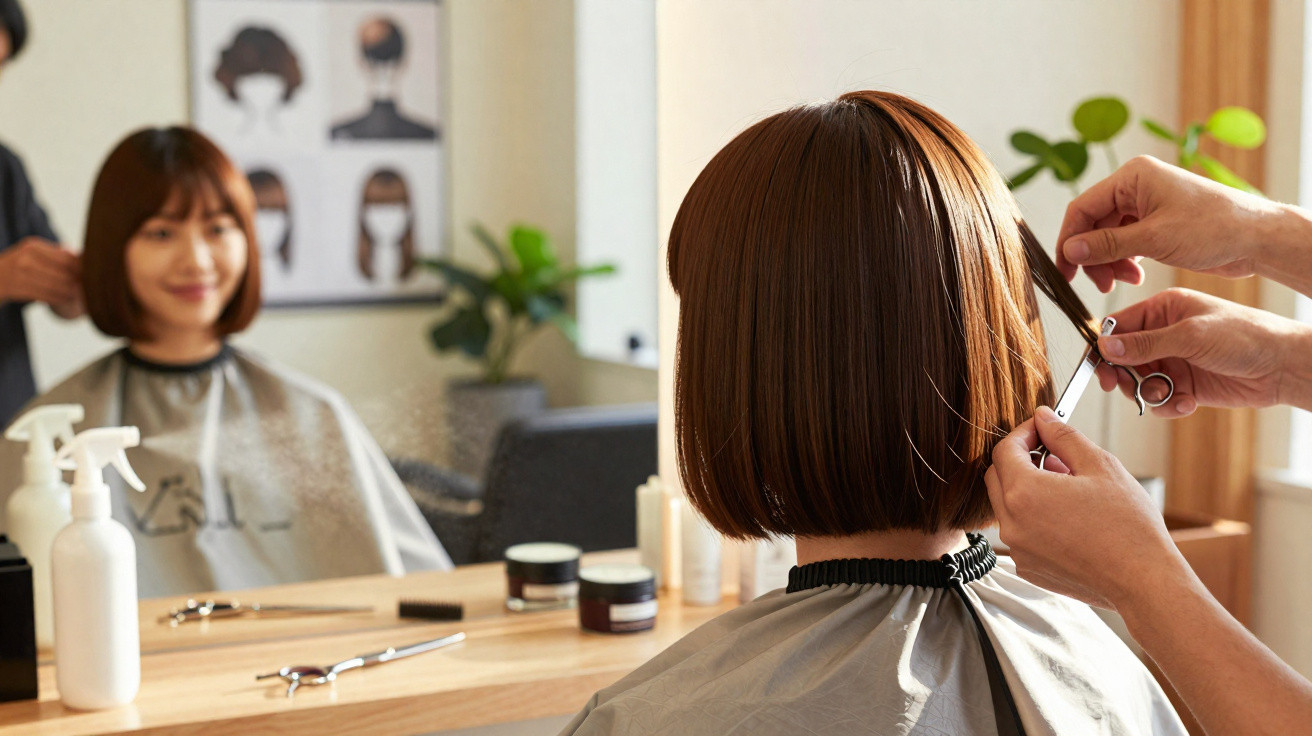
- a sleek centre-parted bob that brings the cool shade into focus
If you like, echo the subtle rosy touch with matching make-up, such as cool pink blusher or lipstick in a slightly raspberry-toned shade.
What to consider before a major blonde transformation
Such intensive lightening always affects the hair structure. A short salon consultation is worthwhile before making a decision. The following points should be discussed:
- previous colouring or henna applications
- current hair length and desired length – some hair may need to be cut if necessary
- budget for regular follow-up appointments and care products
Particularly with very long, damaged hair, it can make sense to improve the care routine first and then move towards Pavlova Blonde over two or three appointments. This significantly reduces the risk of breakage.
Anyone who ultimately does not feel ready for the complete transformation can also wear the trend in a lighter way: a few extremely pale, pastel strands around the face – known as a face frame – already create a hint of the Pavlova effect without bleaching the entire head. This lets you test whether the cool, filtered look suits you before committing fully.
Comments
No comments yet. Be the first to comment!
Leave a Comment