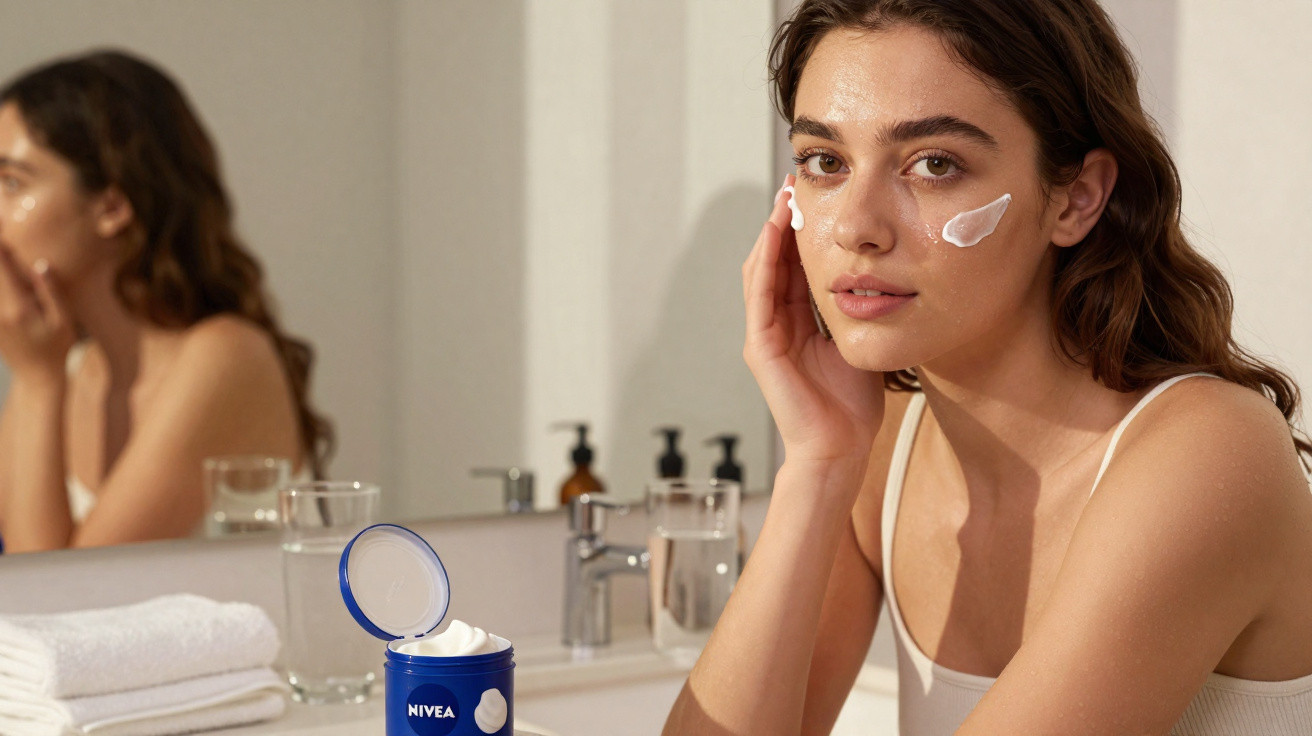
After seven days, a surprisingly clear difference emerges.
The classic Nivea cream in its blue tin can be found in countless bathrooms. Many people use it on their hands and body, or as an all-purpose product on holiday. But how does this classic perform when used consistently as intensive facial skincare – on just one side of the face? This small self-experiment delivers some intriguing results.
The starting point: putting a classic to the test
For more than 100 years, blue Nivea cream has been among the best-selling skincare products worldwide. It is known for being dependable, uncomplicated and affordable. At the same time, recent years have brought a whole jungle of serums, acids, retinol and high-tech creams. So many people wonder: can the original cream in the tin still hold its own in modern facial skincare?
The cream is considered:
- very rich and occlusive, meaning it sits on the skin like a protective film
- suitable for slowing moisture loss
- popular as an all-purpose product, from dry elbows to after-sun care
It becomes particularly interesting when it is used not just on isolated dry areas, but as an alternative to an overnight mask – with a deliberate comparison: cream on the left, none on the right.
The experiment: Nivea on just one half of the face for a week
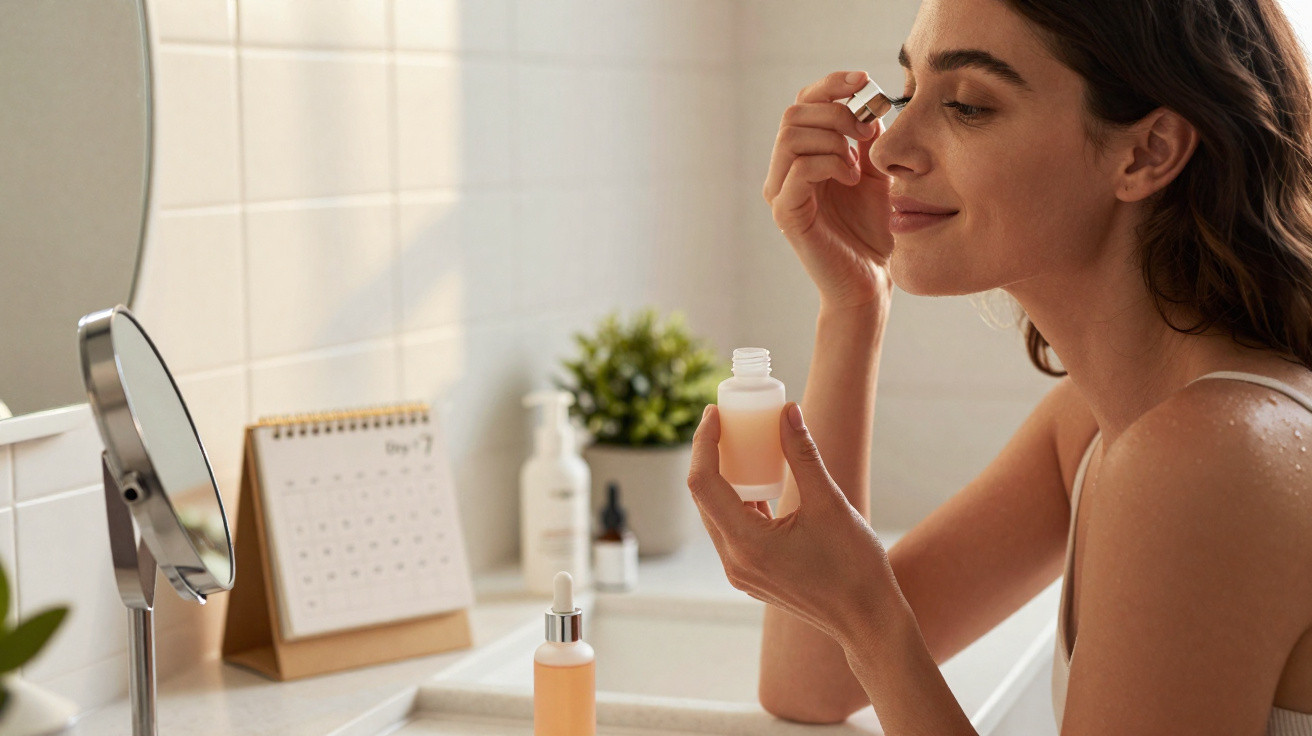
The same evening routine is followed for seven days. Both halves of the face are cleansed and cared for in exactly the same way, apart from one key difference: one side receives a thicker layer of Nivea cream at the end, almost like an overnight-mask film. The other side gets the usual skincare, without the famous blue final layer.
The evening routine in detail
The routine used for the test is deliberately skincare-focused rather than minimal. This makes it possible to see whether Nivea adds anything as an additional final step:
- Double cleanse: first an oil-based cleanser, followed by a gentle gel or foam cleanser
- Serum: for example, one containing hyaluronic acid or antioxidants
- Eye cream around the eye area
- A light moisturiser or gel
- Then, on just one half of the face: a generous layer of Nivea cream as an overnight mask
This creates a direct comparison: the same base routine, but with an extra layer of oils and protection from the classic cream on one side.
The first few days: visible differences in the morning
Changes become apparent after only a few nights, especially on waking. The “Nivea side” looks smoother, plumper and less creased.
“The half of the face treated with Nivea appears better moisturised and feels noticeably softer in the morning.”
The effect is especially noticeable in common areas of dryness:
- on the cheeks
- around the mouth and sides of the nose
- along the edge of the forehead
In these areas, skin treated with Nivea feels more supple in the morning, while fine dehydration lines become slightly less noticeable. This is due to its highly occlusive texture: the cream forms a film that helps retain moisture in the tissue overnight. This is also when the skin’s natural repair process is working at full speed.
How Nivea works as a “slugging” cream
Using a rich, fairly greasy cream as a thick final layer has long been an online trend. The international beauty community refers to it as “slugging”. The concept is simple: a dense layer of skincare seals in the products applied underneath and reduces water loss.
The following principles are at work with Nivea cream:
| Property | Effect on the skin |
|---|---|
| Rich oils and waxes | Form a protective layer over the skin’s surface |
| Occlusive film | Reduces moisture evaporation during the night |
| Relatively simple formula | No high-tech active ingredients, but a reliable protective effect |
This film can feel particularly pleasant during dry central-heating months or when skin is severely dehydrated. It eases feelings of tightness and supports the comfort of the skin barrier.
The downside: when the cream becomes too much
After several days, the experiment reveals more than just positive effects. In the T-zone – the forehead, nose and chin – small blemishes can develop when a generous amount of Nivea is applied every evening.
“For skin that is more oily or prone to blemishes, daily ‘slugging’ with Nivea can quickly lead to clogged pores.”
Although the protective film retains moisture, it also traps sebum and sweat more effectively. For certain skin types, this can result in:
- pores in the T-zone appearing enlarged
- small under-the-skin spots and bumps
- a shiny, somewhat greasy-looking surface rather than a healthy glow
Anyone who already has combination or oily skin should therefore use this method carefully rather than making it part of their daily routine.
How often does the cult cream make sense for the face?
The week-long experiment points to a clear pattern: as occasional intensive overnight care, the blue cream works surprisingly well. As a daily ritual, however, it is likely to be too much for many faces over time.
A sensible rule of thumb could look like this:
- dry to very dry skin: 1–2 times per week as a thicker layer
- normal skin: every 1–2 weeks, especially during the central-heating season
- combination or oily skin: only on very dry patches, not across the entire T-zone
Anyone who notices their skin becoming shiny or developing small spots should leave longer gaps between applications, or treat only selected areas such as the cheeks or skin around the mouth.
Who is the method suitable for – and who should avoid it?
Well suited to
- people with dehydration-related fine lines around the eyes and mouth
- skin that feels very tight due to central heating or winter cold
- people who already use an effective serum and want to “seal it in”
Less suitable for
- very oily skin that becomes shiny quickly anyway
- highly sensitive or acne-prone skin
- people who use several comedogenic, meaning pore-clogging, products at the same time
If you are unsure, start by testing a small area of the face, such as one cheek for several nights. This allows you to observe your skin’s individual reaction without putting your whole face at risk.
What to consider when using blue Nivea cream on the face
A few details matter if the method is to offer genuine benefits:
- Always apply it to clean, thoroughly cleansed skin
- Ideally, use it after lightweight water-based serums and fluids
- Use it only in the evening, as the texture can feel too heavy beneath make-up
- Wash it off thoroughly in the morning so that oil and sweat residue do not remain on the skin
Anyone using several active ingredients, such as fruit acids or retinol, should take care not to over-irritate their skin. The cream itself does not provide an additional active-ingredient boost, but it does prolong the time that previously applied products remain on the skin.
What the experiment reveals about simple skincare
The side-by-side comparison of one half of the face with Nivea and the other without it shows, on a small scale, how strongly occlusive skincare can affect the appearance of skin in the short term. More moisture in the tissue can make lines look flatter and leave skin feeling plumper. On the other hand, too much oil and film can disrupt the natural balance between sebum production and skin shedding.
For many readers, the most practical benefit is likely to lie in a mixed approach: a well-formulated serum or light daytime moisturiser as the base, with the blue cult cream as an occasional “booster” on nights when skin feels particularly dry or stressed. Anyone who respects this limit can get a surprising amount from a simple high-street classic without overwhelming their skin.










Comments
No comments yet. Be the first to comment!
Leave a Comment