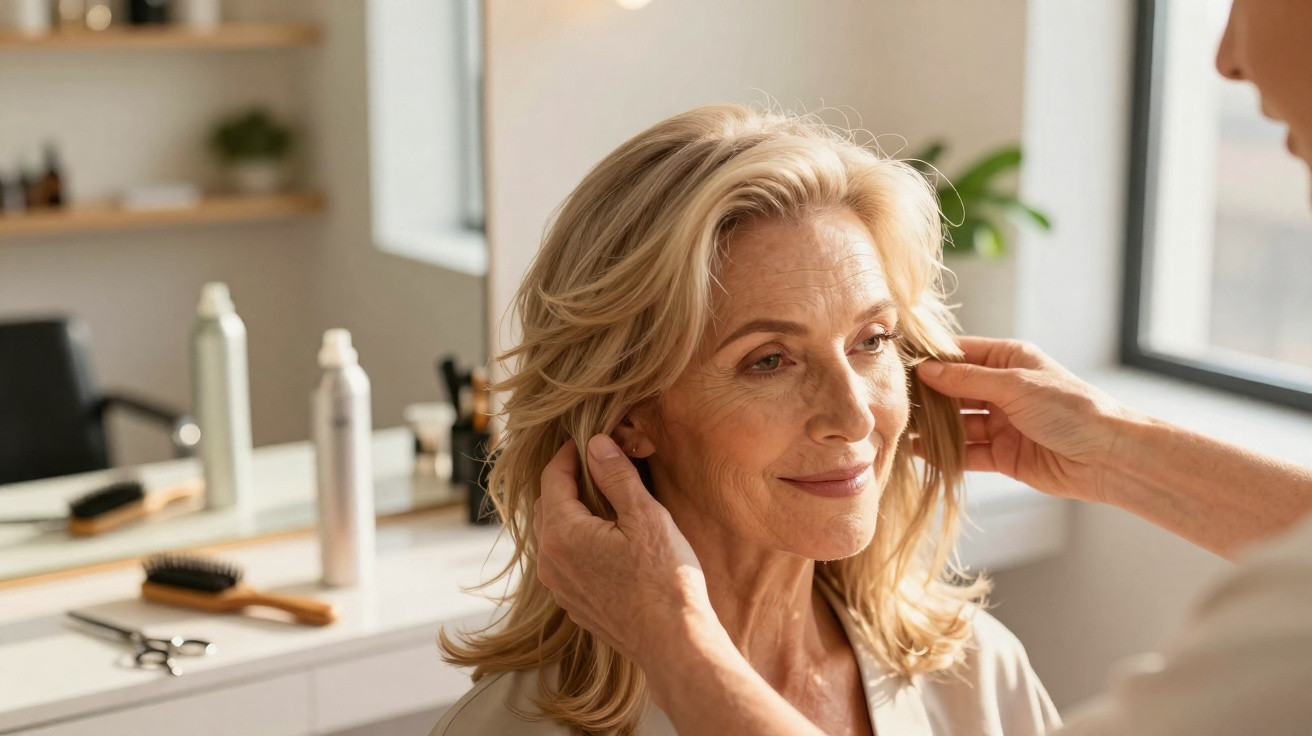
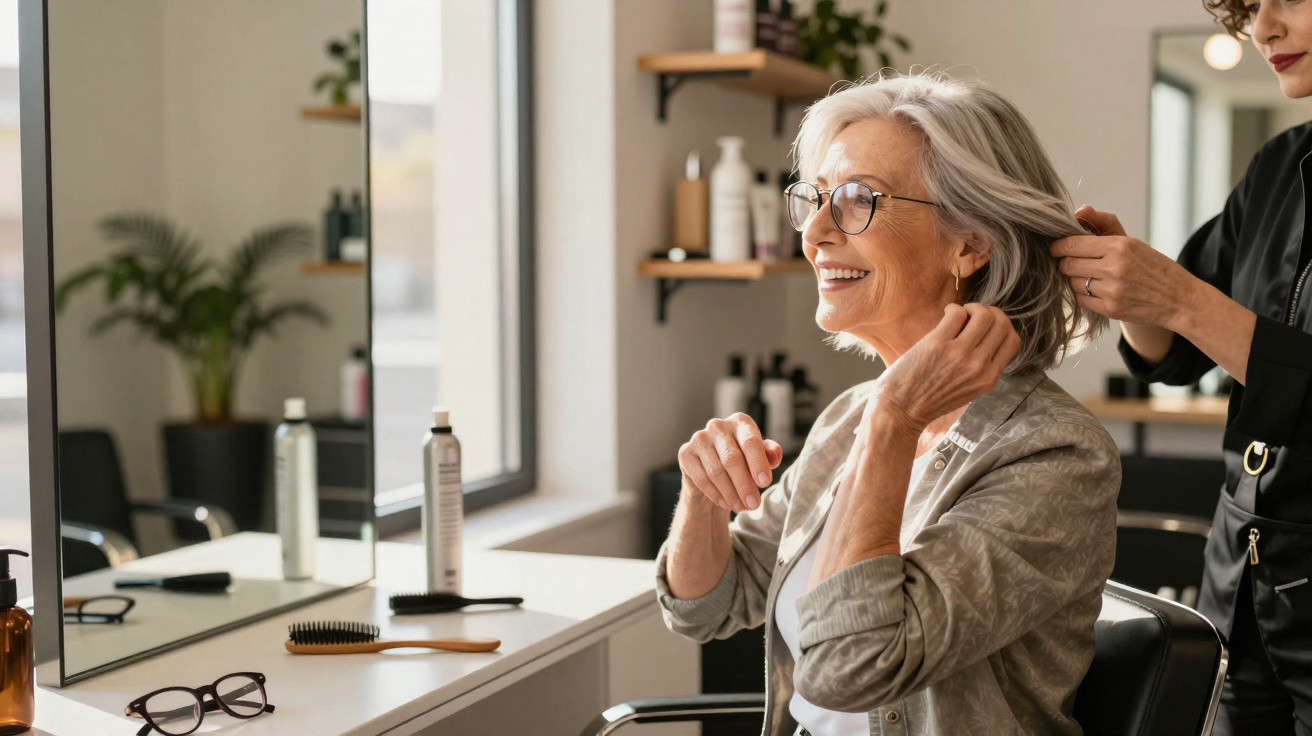
The woman sitting in the salon chair had an effortless elegance that could not be copied. She wore a tidy trench coat and lovely leather shoes, and her hands shook slightly as she removed her glasses. “I don’t want to look like a grandma,” she told the hairstylist, almost in a whisper. She was 74. The hairdresser smiled. “Then we’ll avoid the ‘grandma cut’ everyone keeps asking for without realizing it ages them.” She looked taken aback. “You mean… short?” He shook his head. “No, not short. Flat and stuck to the head. That’s the real trap.”
All around them, hairdryers buzzed, a young woman filmed herself in the mirror, and a man replied to emails while sitting between two sheets of foil. Generations seemed to merge. The only thing that truly revealed age was hair that had lost all movement.
For a moment, something about that remark silenced the entire salon.
The real “grandma hairstyle” mistake after 70
Speak to any seasoned hairstylist who works with women over 70 and their response is likely to be very similar. The style that ages a face most is not white hair or a few lines around the eyes. It is the stiff, overly shaped, helmet-like cut that locks everything in place from the forehead downwards. Hair is cut short and rounded, frequently thinned too much at the ends, sometimes curled into tight waves and saturated with hairspray. The effect is harsher-looking features, a jawline that appears to drop, and an overall impression that the face is being pulled downwards.
The problem is not the passing years; it is the silhouette.
A stylist I spoke to in Lyon described a regular client aged 72 who arrived with a very traditional request. “Just redo what my old hairdresser did, I don’t want to change.” Her inspiration image showed a flawlessly spherical 1990s blow-dry, with the fringe rolled under and the sides pressed against her temples. He carefully persuaded her to try a style with greater root lift and some movement around her cheeks. It was not a dramatic change: no drastic cut and no wild colour. When she returned a month later, she said friends had repeatedly asked whether she had had facial work done.
The only difference was the removal of that restrictive, rounded cut.
Technically, this “helmet effect” squeezes the face both vertically and horizontally. Roots that sit flat can make the forehead seem larger. Curved sides around the ears shorten the neck visually and form a solid block with the jaw. Ends that are curled too tightly draw the eye to cheek height, precisely the area where many women worry about sagging. Add a highly set, glossy finish and the mind immediately connects it with an older generational style code. Age is not what says “grandma”; lack of movement does. Hair that cannot breathe suggests that everything else is frozen as well. Even the smallest amount of movement creates an impression of energy and presence.
How to avoid the “helmet” and refresh your face
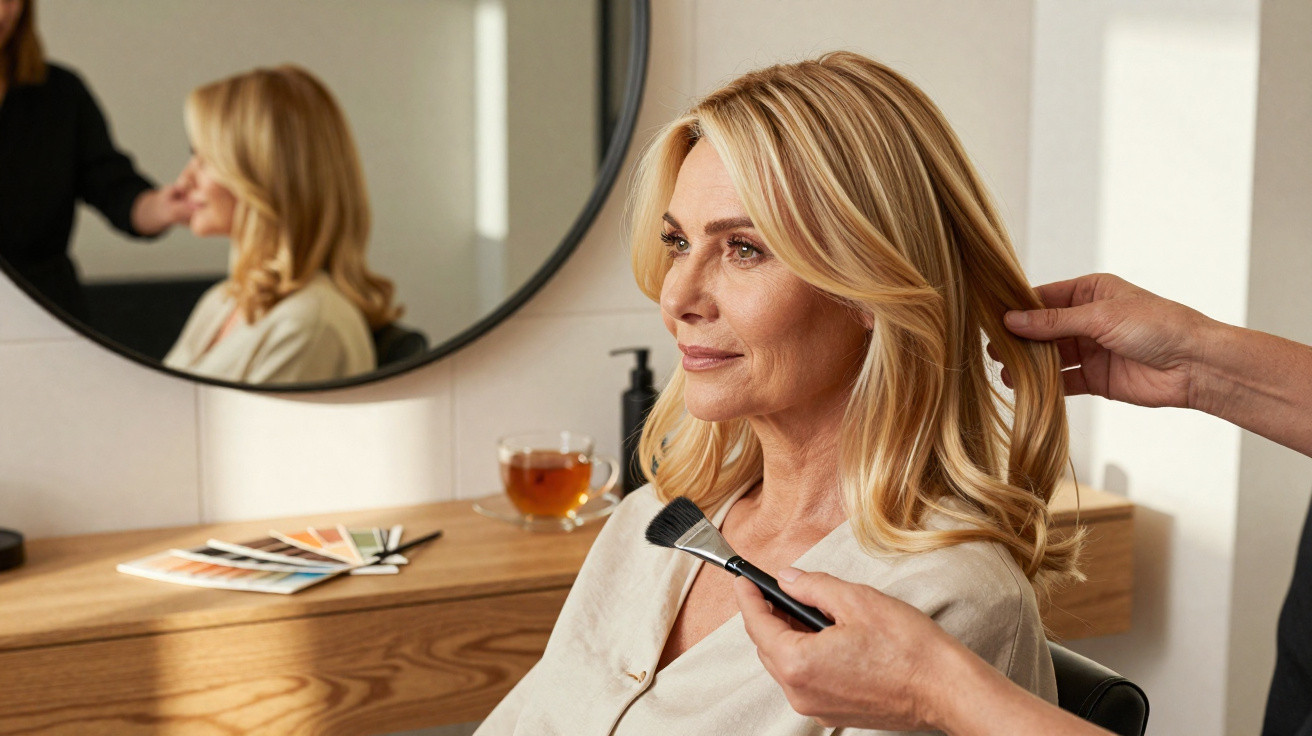
According to hairstylists, the first practical step is remarkably straightforward: allow the hair to rise a little from the scalp. Nothing more is required. You do not need enormous volume or the kind of blow-dry worn by television presenters. A few millimetres of lift at the crown and front can already alter how the face is perceived. Ask your hairdresser for gentle layers that make the top lighter and prevent dense, heavy sections from clinging to the sides. Even very short hair benefits when there is a touch of texture on top, as it opens up the features.
The aim is not “big hair”; it is creating air between your hair and your scalp.
The second step takes place at home in front of the bathroom mirror, which is where many women return to familiar routines. Out comes the round brush, every section is perfectly turned under, and then hairspray is applied until no strand can possibly move. It looks polished and feels reassuring, but it is also exactly how the helmet returns. One stylist told me that she regularly advises clients to stop styling for the final 10%. Dry the hair, shape it, then leave a slight softness: an uneven strand or a looser end. Realistically, nobody manages that every single day. Yet even doing it twice out of three will make hair appear livelier and less prescribed.
“The worst mistake after 70 isn’t cutting your hair short,” says Paris-based hairstylist Claire M. “It’s cutting it into a perfect little bubble and freezing it there. The face needs light, not a frame that closes in on it.”
- Ask for softness at the contour of the face – A few lighter, more tapered strands around the cheeks can soften lines and prevent a block-like effect.
- Avoid ultra-thin ends on very short cuts – They stick to the scalp and flatten the whole look rather than adding movement.
- Keep a bit of length where your features need support – Around the jaw or nape, one or two centimetres can visually lift the entire silhouette.
- Use flexible styling instead of stiff lacquer – Lightweight mousse, texturising spray or a soft cream looks far less ageing than a glossy, rigid varnish-like finish.
- Accept a little imperfection – That defiant strand is often what disrupts the “grandma” code and makes the style feel current again.
Hair after 70: choosing yourself, not your birth year
What stands out when you spend time in a salon is the number of women over 70 who arrive already apologising. “At my age, I can’t wear it longer.” “At my age, I should cut it short.” Those ideas do not come from hair itself, but from a culture that has long encouraged women to quietly disappear once they reach a certain age. The genuine change begins when the discussion moves away from age and towards personality. Do you feel most like yourself with a soft, collarbone-length bob, or with a pixie cut and a tousled fringe? Do you enjoy tucking your hair behind your ears, or would you rather feel it brush against your neck as you walk?
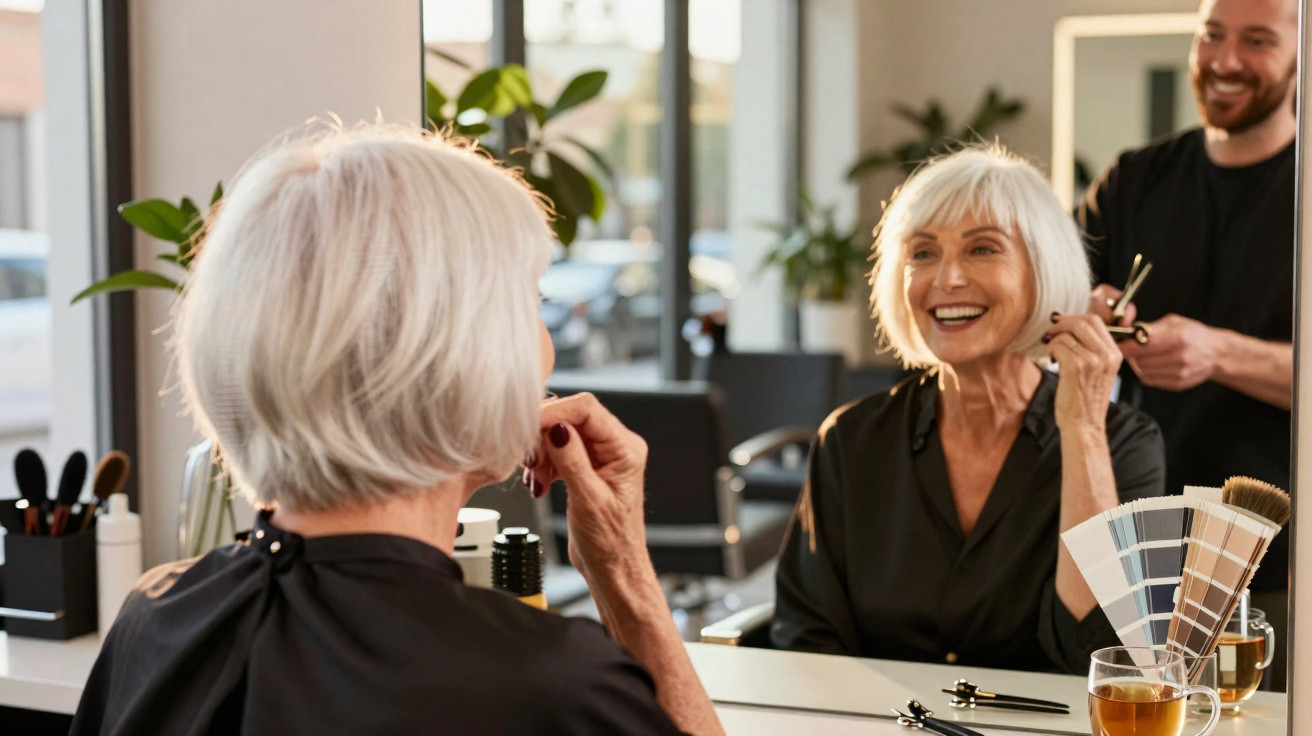
Most of us know that moment of seeing an old photograph and realising that it was not the number of candles on the cake that made us look older, but a style that never really felt like our own. The same applies to hair after 70. A white, softly waved bob that falls to the jaw can look more contemporary than a dyed-brown helmet, provided it suits your features and the way you move. The plain truth is: the “grandma” effect starts the second you stop recognizing yourself in the mirror and start styling only to obey a rule. When hair works with your actual life - your glasses, clothes, walks, dinners and even naps - it stops announcing your age and begins quietly telling your story.
| Key point | Detail | Value for the reader |
|---|---|---|
| Volume, not helmet | Root lift and light layers rather than rounded shapes that cling to the head | The face appears more lifted, while features look softer and more awake |
| Movement over rigidity | Flexible styling, a little texture and ends that are not all turned under | Disrupts the “grandma” code and creates a fresher, more contemporary feel |
| Personality first | Hair length and shape selected for lifestyle and face rather than age rules | Helps you look like yourself rather than a stereotype of “a woman over 70” |
FAQ:
- Question 1 What length is most flattering after 70 to avoid the “grandma” effect?
- Question 2 Does going fully grey automatically age the face?
- Question 3 Can very short hair be modern after 70, or does it always look strict?
- Question 4 Which styling products should I prioritise to avoid the helmet effect?
- Question 5 How often should I adjust my cut as my face changes with age?











Comments
No comments yet. Be the first to comment!
Leave a Comment