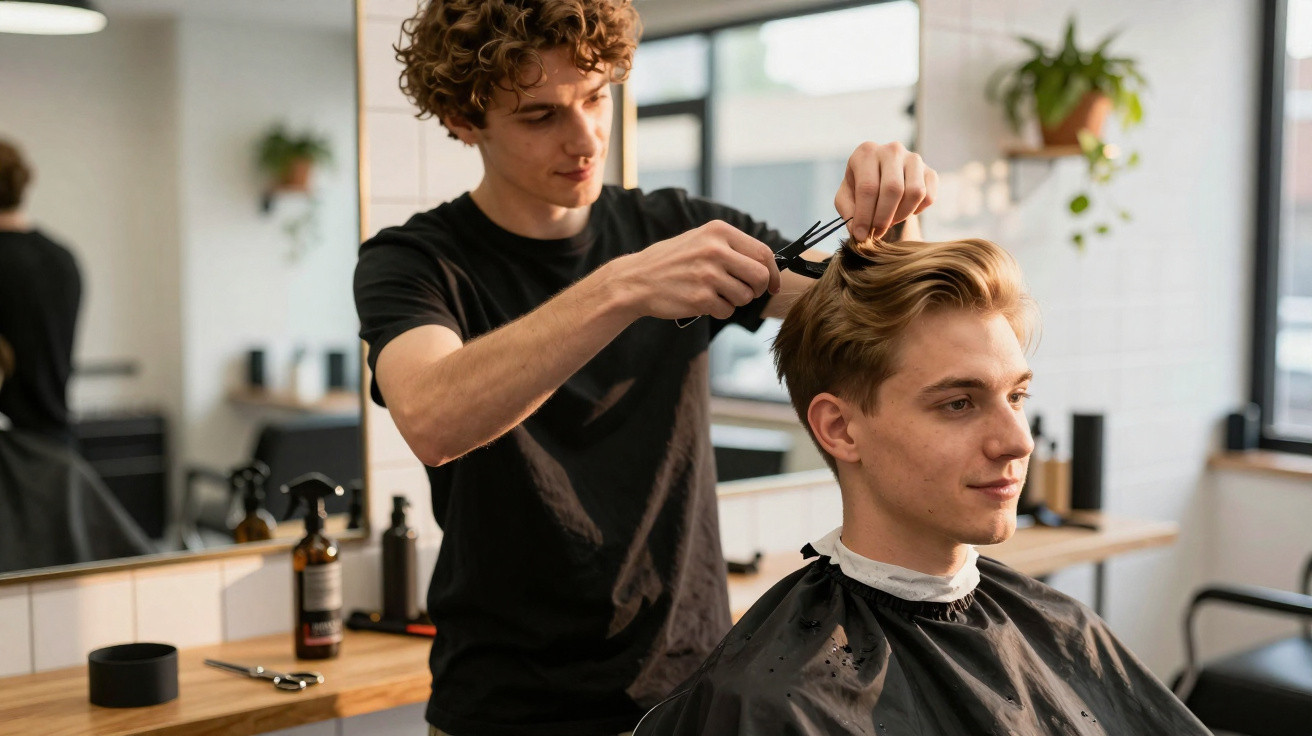
The person in my chair wore a look I recognise instantly: one hand gripping the armrest, the other apparently casually checking the thinning at his crown in the mirror.
His hair was freshly washed and soft, yet it was pressed completely flat to his scalp. You could make out the volume it once had, like the outline of a former hairstyle. He was not after an extreme buzz cut or an artificial influencer-style makeover. He simply wanted to feel that his hair had not given up on him.
He asked the question I hear every week: “Is there anything you can do with this?”
I picked up my scissors rather than my clippers. When fine hair begins to lose volume, going shorter is not always the answer. Sometimes the better answer is a more considered approach.
That is exactly where this subtle textured cut comes in.
A quiet cut that changes everything
When fine hair starts thinning, many people assume they need something dramatic. They request much shorter sides, sharper fades or thick styling powders that leave the hair feeling dusty. Yet fine hair does not respond well to drama; it responds to detail. This cut works discreetly, using gentle layers, removing hidden weight and retaining length precisely where it will create lift.
I maintain a recognisable shape - not a haircut that makes someone look like a different person, but an improved version of their usual style. Its effect comes from how the hair settles as they move, rather than only how it appears while they look directly into the mirror. The technique is not visible; the result simply looks like more hair.
One afternoon, a regular client in his late thirties arrived and quietly spoke about “getting old up there.” From the front, his hair seemed perfectly fine. From the side, though, the flattened crown and a shiny area beginning to show through were clear. He had been using a heavy clay, and it caused the whole style to collapse by midday.
We changed his haircut to this subtle textured version: leaving more length across the top while gently reducing the underlayers. I point-cut through the mid-lengths rather than the ends, allowing the hair to build lightly upon itself without appearing choppy. He returned two weeks later saying people had repeatedly asked whether he had been “sleeping better lately.” Nobody mentioned his hair. They were simply seeing his face again.
That is the understated strength of well-placed texture. It does not shout “new haircut”. Instead, it suggests “something looks good, not sure what.” That subtle result is invaluable for thinning hair. You do not want clear layers or visible step lines. What you need is tiny amounts of built-in lightness that give every strand space to rise. Think of it as clearing clutter from a haircut rather than loading it with product.
From a technical perspective, the aim is to adjust weight distribution: take away bulk in places where gravity takes over, while preserving support where the style needs to stand. Once that balance is achieved, even exceptionally fine hair can stop slipping down the head and begin supporting itself.
How the subtle textured cut works and why your hair responds
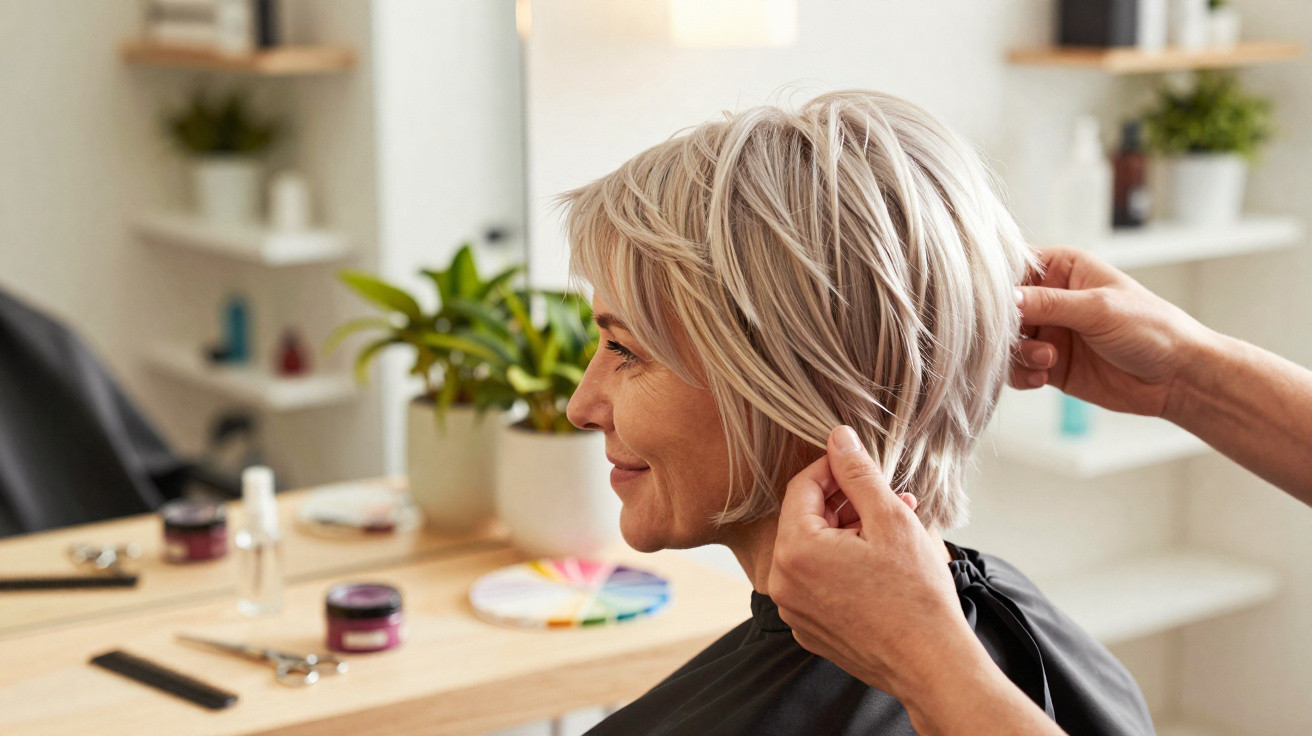
Controlled chaos is at the centre of this subtle textured cut. I begin with damp hair, identifying three essential areas: the front, where lift is wanted; the crown, where density is reducing; and the sides, where hair commonly grows straighter and flatter. I retain extra length at the front, but avoid those dense, square fringes that flatten the roots.
At the crown, I use gentle, shallow point-cutting through the mid-lengths rather than cutting close to the scalp. This disperses weight without producing obvious layers. At the sides, I create a mild taper, but avoid very close skin fades for anyone whose top hair is fine or thinning. That faded contrast can make the hair above look thinner still.
The finished cut has movement. When you run your fingers through it, the hair naturally returns to place instead of separating or sticking flat. That is the difference you notice each morning.
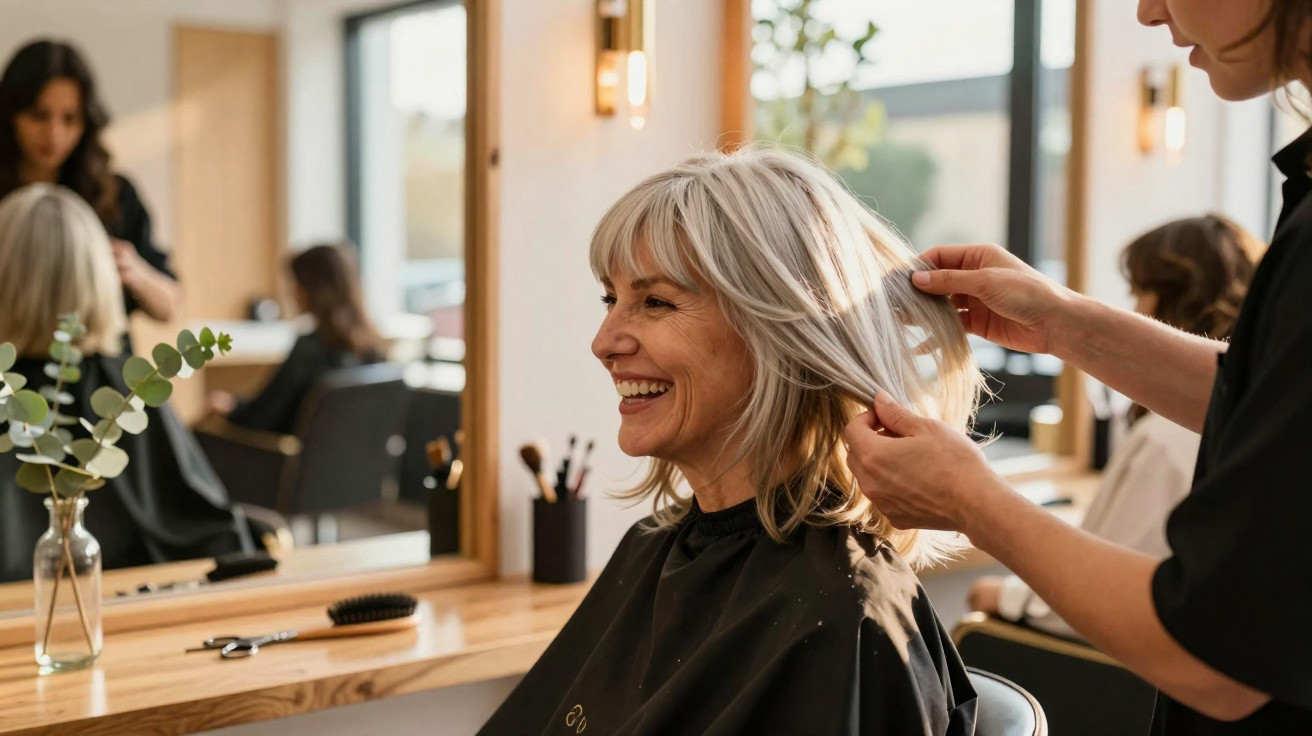
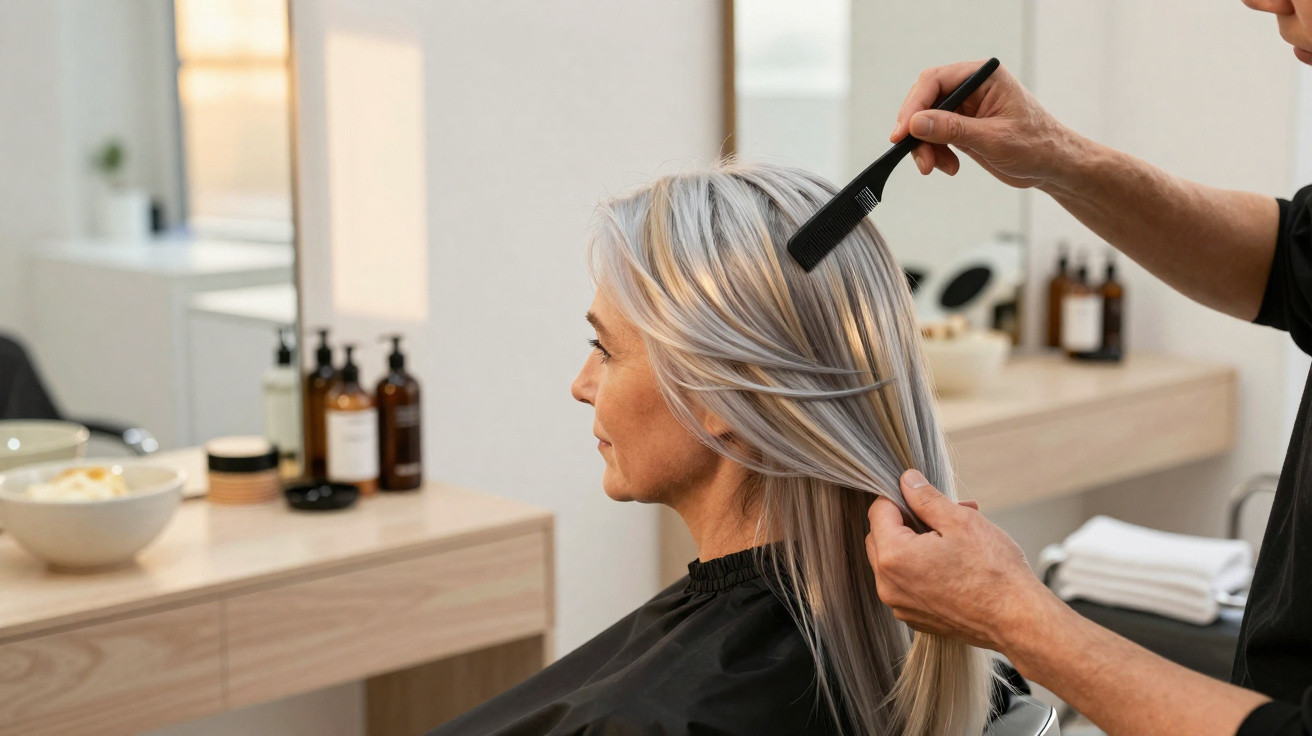
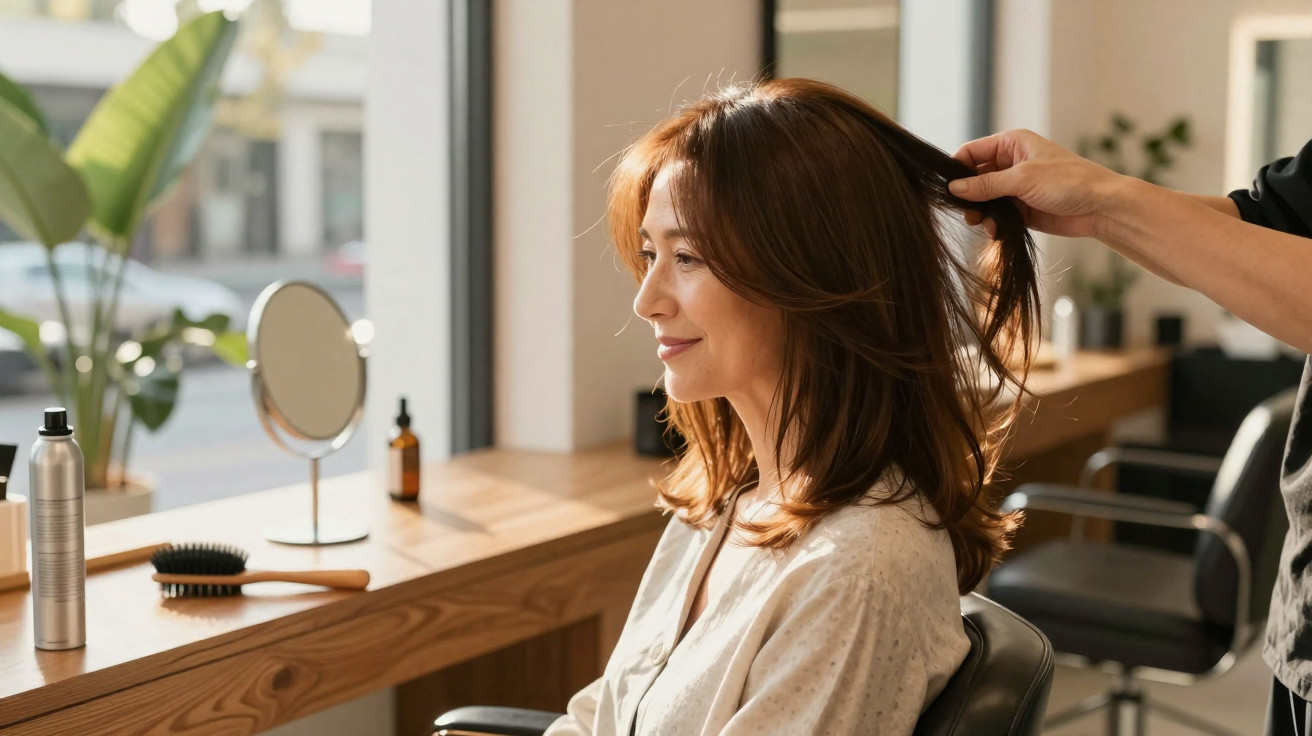
The same principle applies to a woman in her mid-forties with fine, shoulder-length hair. She came in with a familiar concern: “When I blow-dry, it looks great for ten minutes, then boom, gone.” Her hair had been cut bluntly, with only the bottom 2.5 cm “feathered” - a finish that looks attractive in the salon but falls flat in everyday life. The roots were carrying all the weight.
We introduced concealed layers through the interior, just above the cheekbone level, and used a razor with extreme control on only the final third of selected strands. The purpose was not to thin her hair, but to soften severe edges. By raising sections vertically and cutting into the midshaft, I helped the hair settle gently on itself instead of hanging as one heavy curtain.
Three days later, she sent me a selfie: no round brush and no complicated styling tricks. Her words: “This is the first time in years my hair looks like hair and not like I’m trying to hide something.” That is the real measure of success: not how it looks on salon day, but how it holds its shape on day three beneath unforgiving bathroom lighting.
Technically, this process changes the way light lands on the hair. Flat hair reflects light in a way that reveals every area of thinning. Micro-texture disrupts that reflection, making the eye interpret fullness instead of flatness. It is much like how a textured wall conceals flaws better than a glossy painted door.
Fine hair that is losing volume also struggles with strong lines. A blunt perimeter creates a visible boundary for the eye to follow, making translucent areas easier to spot. Softening internal sections allows the outline to remain neat while the interior does the work. The haircut becomes a structure, not just a length.
There is also the issue of scalp visibility. Cutting thinning areas too short or layering them too heavily can expose more scalp. With a subtle textured cut, the lengths are selected to sit where each part of the head has the greatest density. This is why it is not a one-size-fits-all trend; it is a method tailored to every person’s growth pattern.
How to wear it day after day without losing your mind
Let us focus on everyday life rather than barber-chair theory. Whenever I create this cut, I plan it around unhurriedly lazy mornings. Most people are not going to follow a four-step styling routine. Let’s be honest: nobody really does that every day. The styling routine I suggest therefore has just three straightforward steps.
First, apply a lightweight volumising spray or mousse only at the roots of towel-dried hair. Keep it off the ends, as that is how a style turns crunchy. Next, rough-dry with your hands, lifting hair upwards and away from the scalp, particularly at the front and crown. A brush is unnecessary unless you enjoy using one. Finally, after the hair is dry, rub a pea-sized amount of matte cream or paste between your hands until it is almost invisible, then scrunch it gently into the mid-lengths rather than the roots.
That is all it takes. The cut performs the hard work, while the product merely backs it up.
The greatest styling error people make with fine, thinning hair is panic. They apply heavy waxes, gels and strong-hold sprays in an effort to “lock in” volume. In reality, these products glue strands into clumps and expose the scalp between them. They then blame their hair rather than their routine. I encounter this nearly every week.
I always say this with genuine empathy: you are not failing your hair; it simply requires another strategy. Choose lighter rather than stronger. For this hair type, a soft-hold product with a natural finish outperforms high-hold, high-shine gel nine times out of ten. Even changing the placement of your product - applying it to the mid-lengths and ends rather than the roots - can transform the result.
Washing matters too. Fine hair often benefits from more regular washing with a gentle shampoo because oils can quickly weigh it down. However, there is no need for a complicated shelf full of miracle products. One quality lightweight shampoo and a non-greasy conditioner used from the mid-lengths to the ends can already alter the way your cut performs.
“My job isn’t to give you a cool haircut for today,” I told a client recently. “My job is to make sure your hair still looks like you after you’ve slept on it, rushed out the door, and forgotten where you put your styling cream.”
Here is how this subtle textured cut works in practical everyday terms:
- Maintenance rhythm – Booking a refresh every 5–7 weeks keeps the texture tidy without taking off too much length.
- Product rule – If a product feels heavy on your fingers, it will feel heavy in your hair.
- Grow-out comfort – As it grows, this cut softens rather than collapsing, so you avoid that sudden “Oh no, my hair’s dead” week. It gradually relaxes until your next appointment.
The quiet confidence that comes with the right cut
The emotional impact of losing volume is not discussed often enough. On a good day, the response may be “whatever, it’s just hair.” On a difficult day, it can feel far more significant. Hairstyles are connected to memories: university photographs, a first job, or that picture where you are certain your hairline was lower. At a basic level, many people worry that when their hair begins lying flat, there is no comfortable option between “floppy” and “shaved.”
That is why a subtle textured cut can bring a sense of small relief. It does not claim to restore the hair you had at 18. It works kindly with the hair you have now. The mirror no longer feels confrontational. You see yourself looking a little fresher and lighter around the eyes, as if you have had a full night’s sleep or finally replaced that old pillowcase.
For some people, the difference remains private. They notice it when they catch themselves in a shop window and do not immediately focus on the crown. For others, it becomes social: they suggest the cut to friends who quietly bring up thinning hair over dinner or at family gatherings. On a deeply human level, it offers a small permission slip: you can age, care about your hair and still want it to look good.
At a deeper level, cuts like this show that a solution does not need to be showy. A subtle textured cut does not shout “transformation,” but it can gently reshape your everyday life. It changes how your hand passes through your hair, how you feel in photographs and how you stop repeatedly checking your reflection under office lights.
We have all experienced a small, barely noticeable adjustment that made an entire day easier - tightening a loose handle, repairing a squeaky door or altering the chair used for hours. Hair can be the same. Minute changes in texture, weight and length can unlock something more important: feeling comfortable in your own skin.
Perhaps that is why people return asking for “whatever you did last time, that thing that made it look fuller.” They may not know the technical term. They only know it felt as though a small weight had been lifted. And that is the cut I will keep advocating for from my chair.
| Key point | Detail | Benefit for the reader |
|---|---|---|
| Subtle internal texture | Gentle point-cutting through the mid-lengths, rather than at the roots | Creates fullness without visible layers or harsh lines |
| Weight distribution | Retain length where density is beneficial and remove bulk where gravity causes flattening | Makes thinning areas appear more balanced and less exposed |
| Lightweight styling routine | Root-focused volume, rough-drying and matte, lightweight products | Straightforward to repeat at home and realistic for busy mornings |











Comments
No comments yet. Be the first to comment!
Leave a Comment