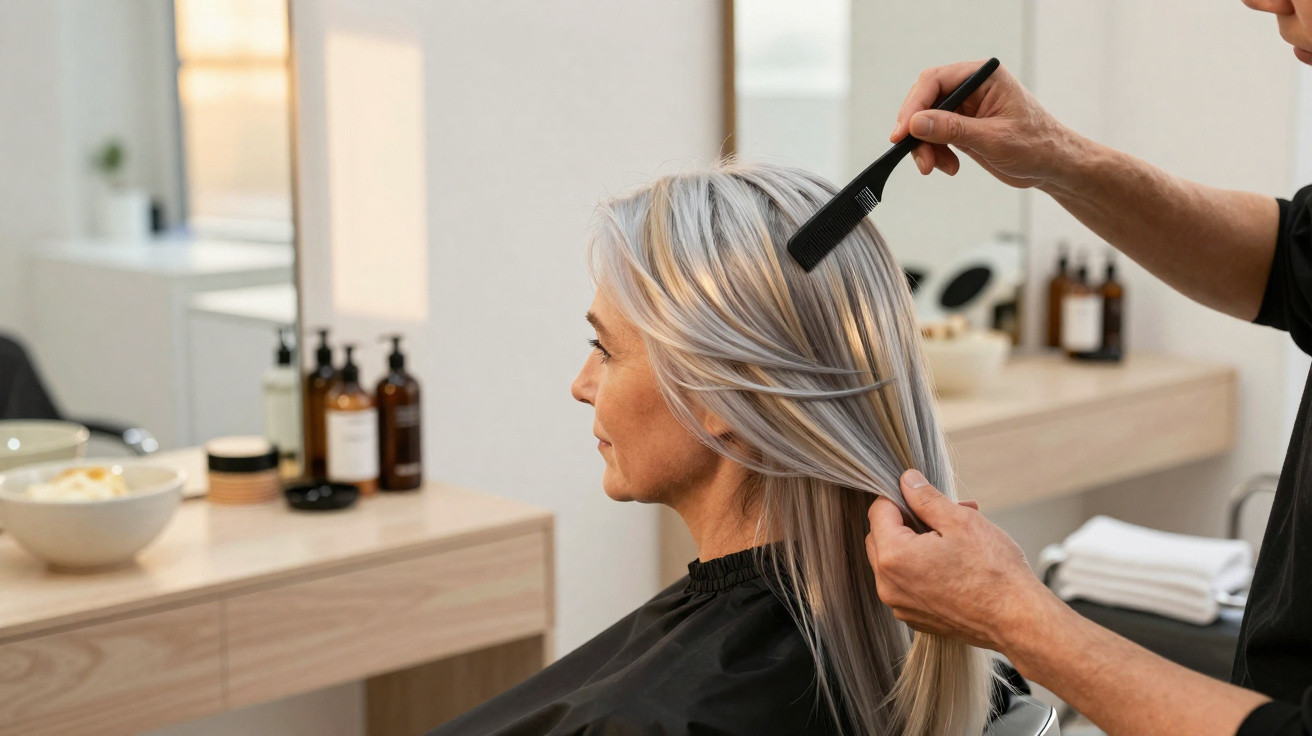
She settles into the salon chair wearing the half-apologetic smile people save for confessions that begin, “I’ve let myself go”. A solid stripe of silver shows at her roots, while the lengths remain a faded brunette, as though nothing has changed. She laughs, yet keeps touching her parting, almost as if checking whether more white appeared overnight. Nearby, other women browse their phones and save photographs of celebrities whose flawless salt and pepper hair never seems to turn yellow or limp.
The colourist moves closer, assesses the combination of grey and old colour, then says softly: “You know, we could stop fighting your roots. We can actually make them the star.”
That is when the term High-Low enters the conversation, and the feeling in the mirror changes.
High-Low balayage: working with your roots rather than against them
High-Low balayage begins with one straightforward idea: your natural salt and pepper is the “high”, while the soft, deeper shades added to it create the “low”. Rather than hiding grey, the colourist works around it. It is rather like contouring, but for your hair.
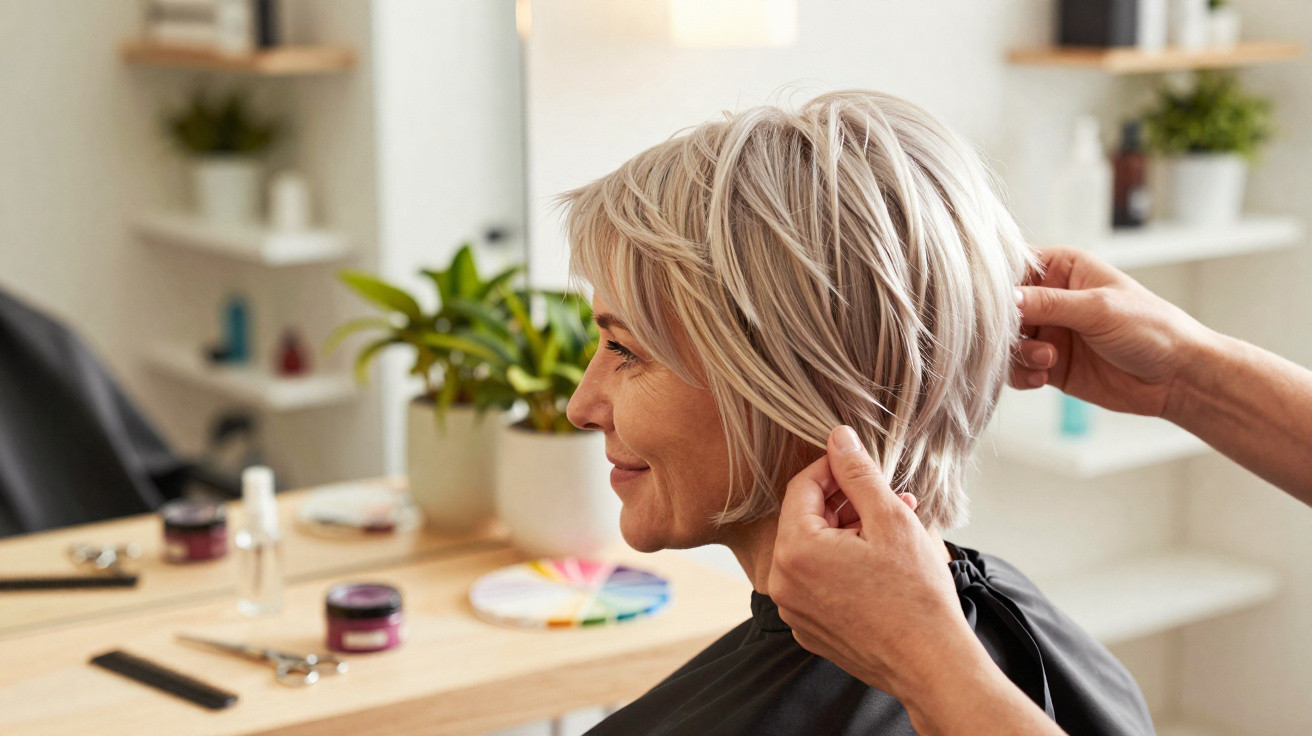
The roots are kept largely natural, particularly along the parting and hairline. Cooler, slightly deeper ribbons are then woven through the lengths to frame and bring out the silver. The effect is softly contrasted rather than stripy.
The outcome is hair colour that appears deliberate, modern and unexpectedly freeing. There is no severe regrowth line and no anxiety as the roots appear. There is simply dimension.
A Paris hairdresser I spoke with told me about a client in her late 40s who arrived declaring, “Either you erase the gray or I cut everything off.” Nearly 70% of her hair at the top was white at the roots, while the ends retained a chocolate tint from years of faithful box colouring. Although she had coloured it every three weeks without fail, the divide between the two shades resembled a poor at-home dye job.
They decided to try High-Low. The stylist toned the mid-lengths down with an ashy beige, placed several deeper, smoky sections underneath, and left the loveliest silver strands untouched. When she got up from the chair, she did not look falsely “younger”. She looked more defined. Brighter. Like the Pinterest images she had been collecting, only real.
The same client returned three months later, not because she needed to, but because she wanted a small refresh.
There is a clear principle behind the method. Full coverage works against your hair’s natural direction, meaning every millimetre of regrowth demands attention. With salt and pepper hair, the eye naturally notices contrast. If that contrast is a dense block of colour against a bright root, it can look neglected.
With High-Low, however, contrast is dispersed through the lengths rather than piled up at the scalp. Natural white and grey becomes the palest tone in a gentle, blended palette. The “lows” are positioned carefully to create depth, ensuring the silver does not seem flat or “old lady”, to use the phrase many clients say under their breath.
The simple reality is that, once you have seen salt and pepper hair treated as a strength rather than an issue, all-over coverage can suddenly seem rather dated.
How a colourist creates High-Low balayage for salt and pepper hair
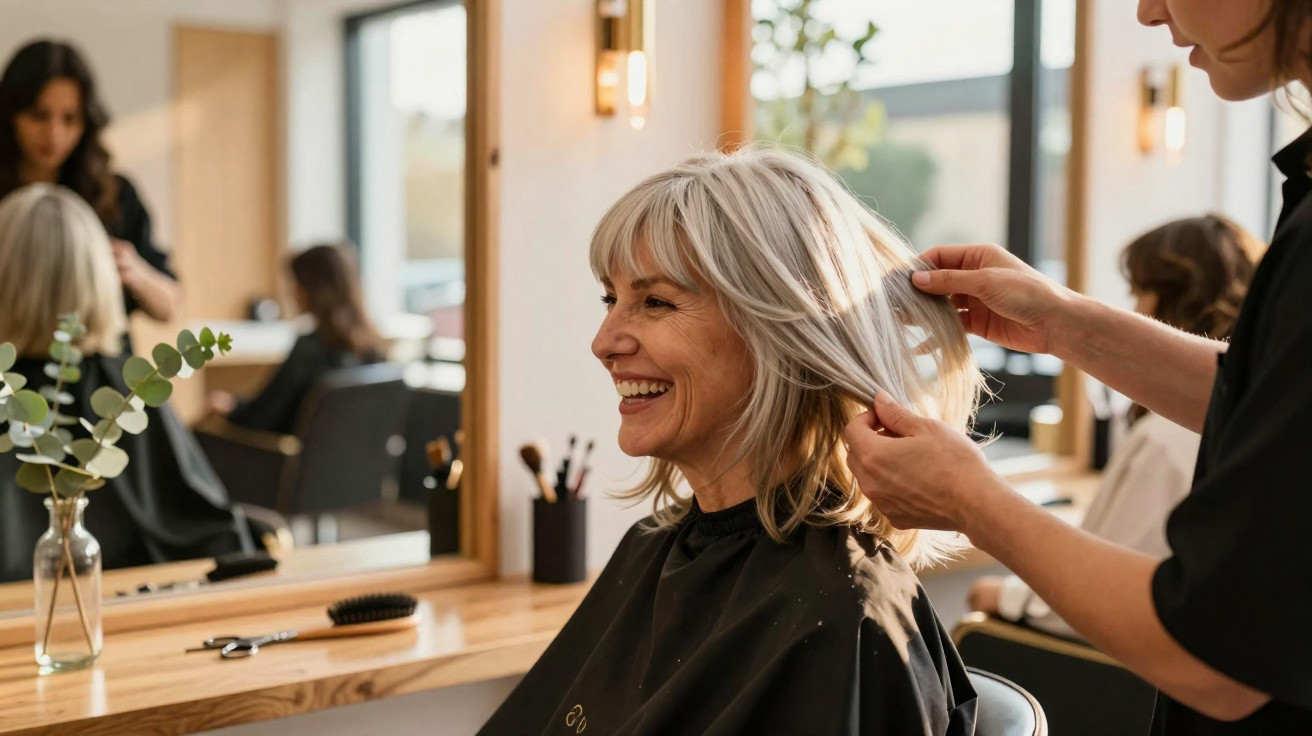
The appointment generally opens with an in-depth discussion in front of the mirror. A skilled colourist first identifies where grey is most concentrated, which is often at the temples, parting and crown. Those areas are protected because they will become the future highlights of the style.
Next, the stylist chooses the “low” shades. For cool, icy grey hair, ash or mushroom brown is often selected. With warmer, gentler silver, sandy or beige shades are more suitable. The intention is not to go darker than your natural base colour was 5–10 years ago. Anything too dark will make the grey appear severe.
Balayage sections are then painted through the mid-lengths and ends, while pieces of natural salt and pepper are left untouched, especially around the face and parting. The scalp area remains softly blended rather than solidly coloured.
The difficulty for many people comes when they attempt to move from years of uniform colour to a natural-looking grey result in a single appointment. We have all had that moment when shaving your head seems preferable to another root touch-up. High-Low makes it possible to make the change gradually.
The first visit commonly centres on disrupting the old colour. The stylist introduces lighter, cooler sections and softens any lingering red or orange tones in the lengths. At the following appointment, they may allow more natural grey to show and adjust the lows to suit the way your hair is changing.
One mistake clients often make is abandoning the process after one appointment because it does not immediately resemble an airbrushed Instagram image. High-Low is more of a gentle discussion with your hair than an instant solution. The positive part is that every session gives you more freedom between salon visits.
“On salt and pepper hair, High-Low balayage is my go-to,” explains London-based colorist Anna R. “I tell clients: I’m not here to erase your gray, I’m here to stage it. We keep the brightest silver where it’s naturally strongest and wrap it in soft shadows. The result isn’t ‘colored hair with roots’, it’s a palette that already includes your regrowth.”
- Ask for a grey-respecting plan: Your colourist should discuss how your grey will grow through and how the style will develop over time, not only how it will look on the first day.
- Stay within a cool or neutral colour family: Warm, golden lows may make silver hair appear yellow. Most stylists favour smoky, beige or ash shades for salt and pepper hair.
- Plan your appointments carefully: Every 3–4 months is sufficient for most High-Low clients. This technique is intended to grow out gracefully.
- Bring daylight photographs of your natural grey: Older selfies showing visible roots can help the colourist identify the right depth and undertone for the lows.
- Treat it as coloured hair, even when half of it is natural: Purple or blue shampoos, gentle masks and heat protection will keep both the silver and painted lows looking clear.
Living with High-Low salt and pepper hair: less pressure, more personality
What surprises many people after switching to High-Low is not the colour itself, but the effect it has on their routine. Urgent calendar reminders for root touch-ups quietly vanish. You no longer arrange holidays around your next colour appointment.
There is also a change in how you see yourself. The mirror no longer acts as a scorecard for “weeks since last dye”. Instead, you begin to notice different things: your hair’s texture, the way a cut changes the movement of the silver, and how various lipstick shades suddenly suit you better.
Let us be realistic: nobody has a professional blow-dry every day. A colour approach that continues to look good on air-dried, slightly frizzy, lived-in hair is more valuable than any filter. Salt and pepper hair, shaped by considered highs and lows, has an unusual advantage: it looks good when it is messy.
| Key point | Detail | Value for the reader |
|---|---|---|
| High-Low respects natural grey | Grey and white strands remain visible at the roots and hairline, with depth introduced only where it is required | Less noticeable regrowth, a more contemporary appearance and fewer urgent salon appointments |
| Cool, blended “lows” balance silver | Ashy, mushroom or beige shades are painted through the lengths to prevent brassiness | Salt and pepper hair appears luminous rather than yellow, flat or “aged” |
| Transition can be gradual | A series of appointments progressively softens old colour and reveals more natural grey | An easier move from full-coverage colour to visibly and confidently salt and pepper hair |
FAQ:
Question 1: How often do I need to redo a High-Low balayage on salt and pepper hair?
Most clients can extend appointments to every 3–4 months, and sometimes even to twice yearly. Since the roots stay mostly natural, there is no sharp line sending you back to the salon every few weeks.Question 2: Will High-Low work if I’m only 30–40% gray?
Yes, although the result will be subtler. Your stylist may add a few additional lighter pieces to recreate the appearance of more salt and pepper, so the pattern already allows for future grey regrowth.Question 3: Can I go back to full coverage color later?
Technically, yes, although most people no longer want to after experiencing the freedom of not chasing roots. If you do return to it, your colourist will use the existing highs and lows to prevent a flat block of colour.Question 4: Does High-Low damage gray hair more than regular dye?
The technique often requires less product overall than full coverage and keeps bleach away from the most delicate root area. With good home care, hair will usually feel healthier than it did during continual root retouching.Question 5: What should I ask my hairstylist if they don’t know the term “High-Low”?
Keep the description simple: say that you want your salt and pepper to remain visible at the roots, with soft, cool lowlights through the lengths, and that you want old colour broken up so regrowth blends in rather than creating a line.












Comments
No comments yet. Be the first to comment!
Leave a Comment