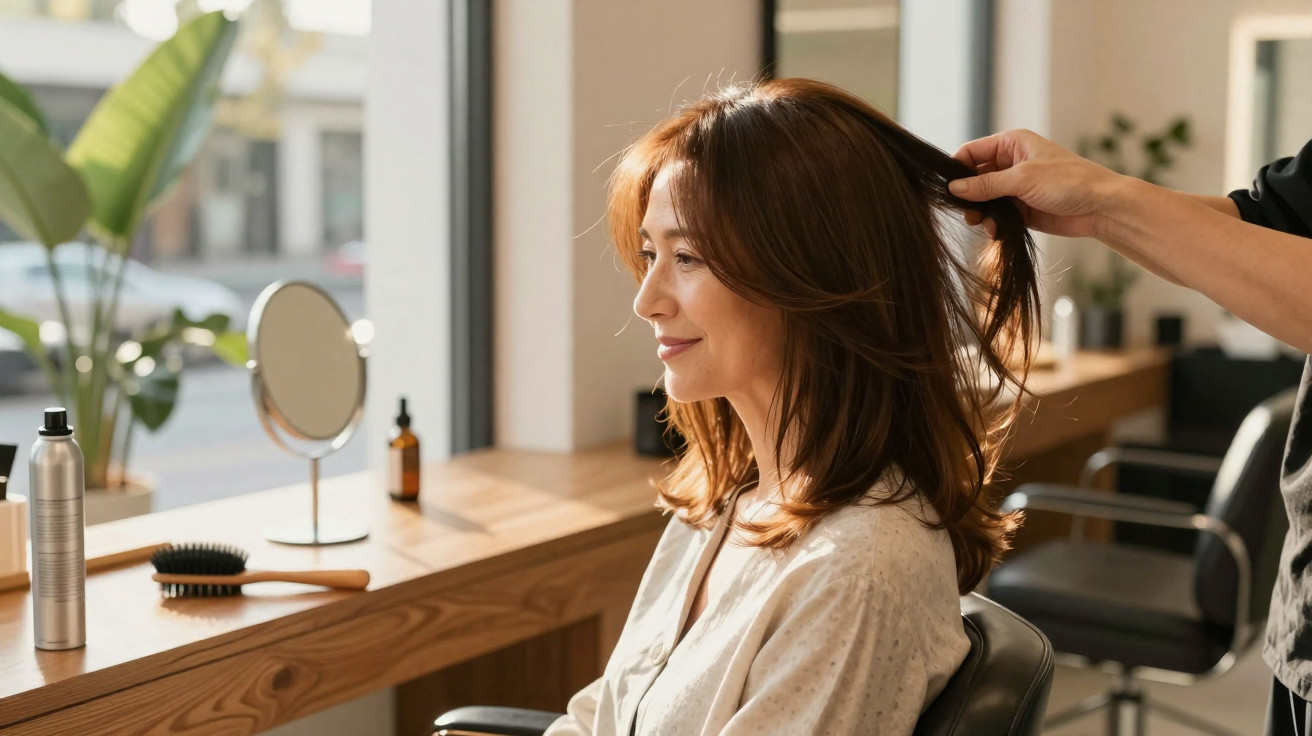
Beyond midlife, however, this style can subtly make the face appear harder and leave hair looking flatter.
Women in their fifties and sixties are increasingly seeing the same two changes: facial definition becomes softer, while hair at the crown turns finer and less dense. The classic angled bob, once sleek and stylish, may begin to look severe, drawing the face down rather than giving it lift. A newer group of so-called “anti-ageing” haircuts offers an alternative, not by concealing age but by shifting volume to the areas where it is most flattering.
Why the classic angled bob no longer works after 55
For decades, the angled bob – cut shorter at the back and longer towards the chin – has been a reliable favourite. Falling between short and long hair, it appears neat and polished while seeming easy to manage. On a mature face, though, its shape can begin to work against it.
Its longer front sections create a diagonal that directs the eye towards the jawline and jowls. As cheeks become less firm and the lower part of the face softens, this descending line can make features seem lower, emphasising sagging instead of disguising it.
The problem is not age itself, but where the weight of your hair sits: too much at the front, too low, and too heavy.
Hair fibres also commonly become finer during every decade after menopause. A bob that was once thick and bouncy can start to fall flat around the neck, with little height at the crown and wispy ends. From the front, the style may look harsh; from the side, it can appear tired.
What happens to your hair roots after menopause
Menopause involves more than hot flushes and changing moods. Hormonal changes affect scalp chemistry as well. Oestrogen levels drop sharply, whereas androgens – male hormones that women have too – decline much less.
This altered hormonal balance may miniaturise follicles across the top of the scalp. Individual hairs grow finer and shorter, and some follicles may eventually no longer produce visible strands. Hair at the sides and back generally remains fuller, making reduced density at the crown more noticeable.
Two patterns are particularly common:
- Thinning hair: the scalp becomes visible through the parting or at the crown, even where the hair length remains intact.
- Refined hair: the scalp still has coverage, but individual strands are thinner, with less hold and spring.
Both can produce the familiar combination of a broader parting, a flattened crown and hair that drops around the face. At this stage, merely “keeping it longer” is not the answer. The important issue is where the hair’s volume sits.
After 55, volume needs to rise towards the crown and cheekbones, not pool at the jawline and ends.
The move towards “anti-ageing” cuts that lift the face
Hairdressers throughout Europe and the US are increasingly avoiding weighty styles that pull downwards for mature hair. In their place, they are choosing cuts that interrupt vertical lines, reduce heaviness at the ends and create gentle height through the crown.
Two styles are regularly being requested in salons: the butterfly cut and the bixie. Each can be adapted, suits fine hair and is intended to reshape the facial oval without requiring a dramatic colour change or major loss of length.
Butterfly cut: layered lift for fine, mid-length hair
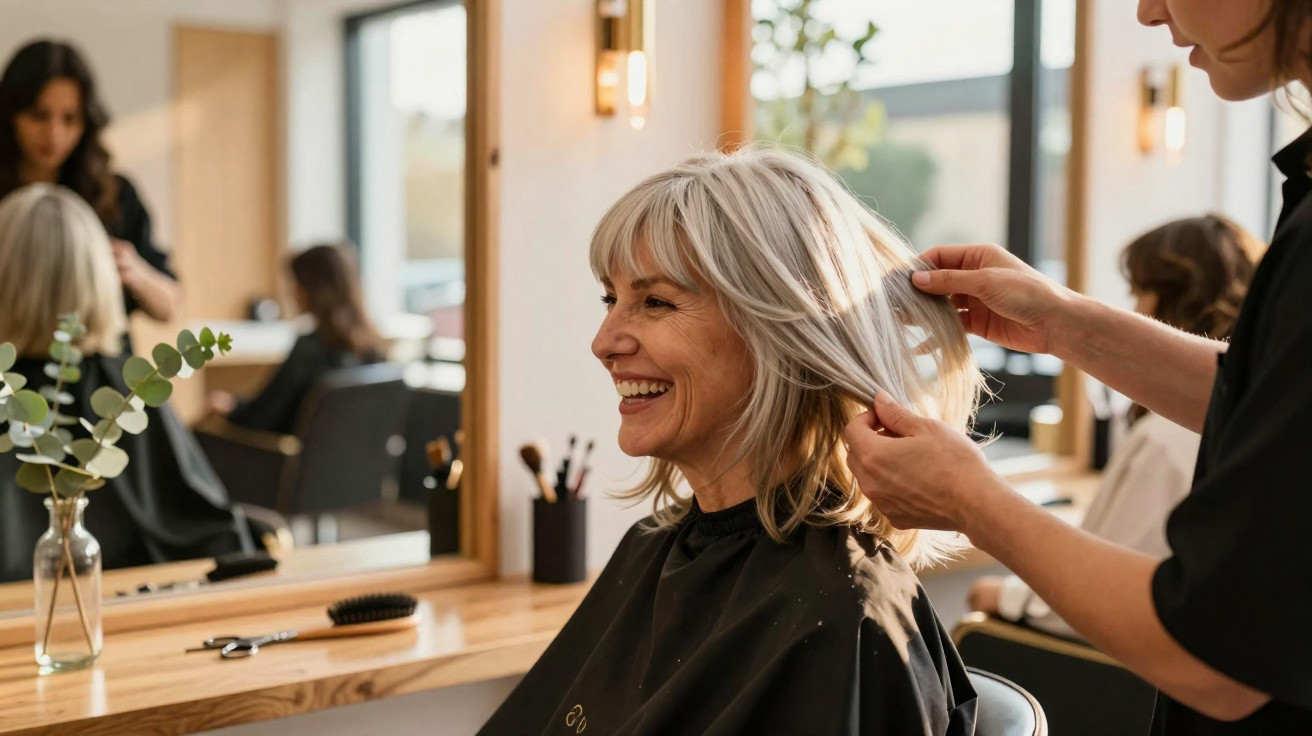
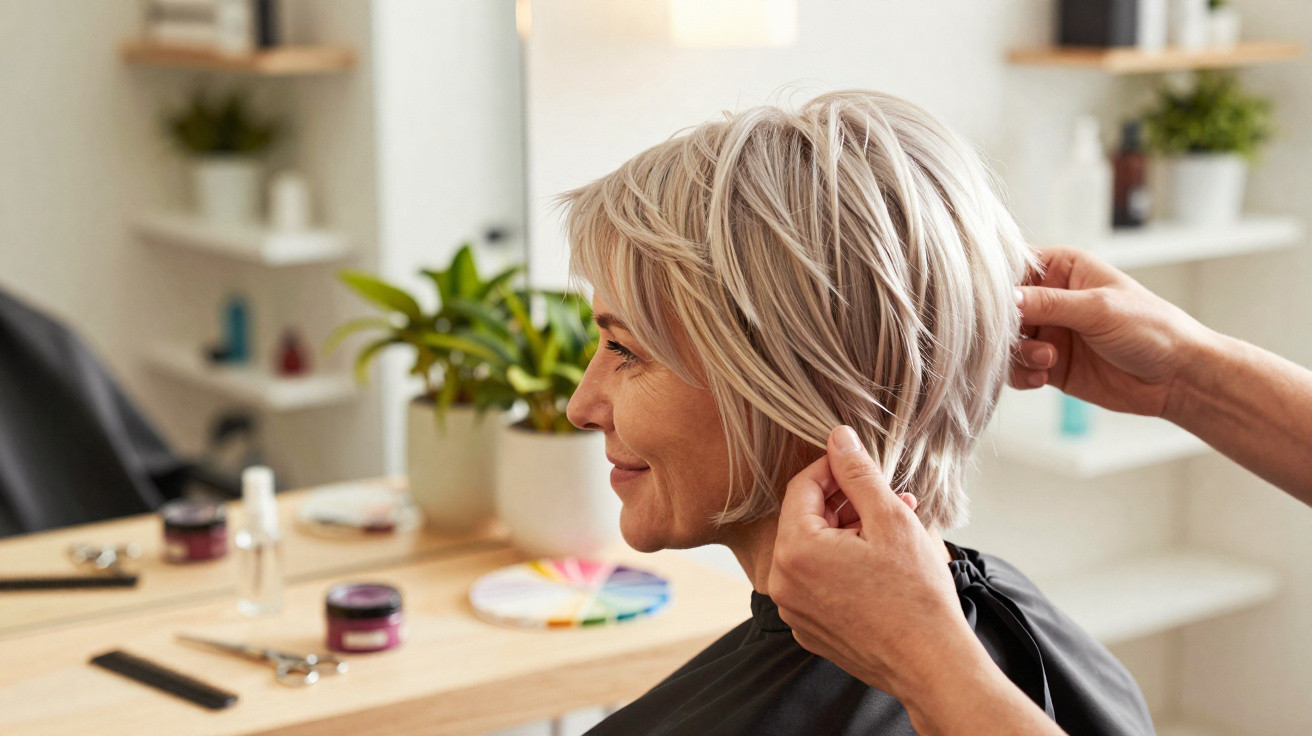
Drawing on the feathered styles of the 1970s, the butterfly cut is a mid-length, heavily layered shape with sections that frame the face. Its effect is light and airy rather than choppy.
For women over 55 with fine hair, the most suitable length generally falls between the jawline and collarbone. This provides enough weight to limit frizz, while the shorter upper layers can still add lift.
How the butterfly cut creates volume
- Delicate “ghost” layers are cut at soft angles, making them almost undetectable.
- Shorter layers around the crown work as a supporting structure, lifting the longer hair above them.
- Facial sections turn gently outwards, helping to open up the eyes and cheeks rather than enclosing the face.
A butterfly cut can be particularly useful when the hairline has receded slightly or the top of the head has begun to flatten. Its layers can help cover sparse sections by letting hair fall over them, rather than forcing it into a rigid parting.
Think of the butterfly cut as a built‑in “push‑up bra” for your roots: subtle support, maximum lift.
Bixie: the hybrid style that lifts the crown
Women who find their hair too fine for mid-length styles may prefer the bixie, a shorter and contemporary option. Combining elements of a traditional bob and a pixie cut, it retains softness while exposing the neck.
Who benefits most from a bixie
| Hair situation | Why a bixie helps |
|---|---|
| Very flat crown | Longer hair on top can be styled upwards to create height. |
| Visible thinning at the parting | Shorter sides and layers make flexible partings possible, helping to conceal sparse patches. |
| Neckline that feels heavy or ageing | An uncovered neck improves the appearance of posture and makes the profile seem lighter. |
The nape is cut closer to the head, while the top and front are left relatively longer. When styled using a round brush or a little mousse, the crown takes on a soft domed shape instead of looking flat, shifting attention away from thinner areas.
What to ask your hairdresser for
Going to the salon with a clear and practical brief can make a major difference. For thinning or fine hair after 55, hairdressers commonly suggest several broadly useful principles.
- Request a curtain fringe ending at the top of the cheekbones to create a soft lifting effect.
- Ask for layers beginning around chin level rather than higher, so the ends do not become stringy.
- Avoid razor thinning and request straight scissors instead, as they are kinder to already fragile strands.
- Book trims every six to eight weeks to preserve the cut’s structure and stop it from collapsing.
The goal is not “more hair”, but better‑placed hair that works with your face and lifestyle today.
Home styling changes for visible volume
The haircut is only one part of the result: how you dry your hair each day matters just as much when creating volume.
- Blow-dry with your head upside down until the hair is roughly 80% dry, directing airflow towards the roots.
- Complete the drying process with a 40–45 mm round brush, pulling crown sections upwards and away from the scalp.
- Replace firm hairspray with a lightweight salt or texturising spray for hold and movement.
- Apply a pea-sized amount of mousse or volumising foam to damp roots rather than the ends.
Hair with no movement can make the whole face appear fixed. On fine hair in particular, a softly undone result, a few imperfect strands and gentle movement through the ends will often look fresher than a rigid, lacquered finish.
Is it thinning hair or a more serious concern?
Not every change in hair after 55 is simply cosmetic. It is sensible to seek medical advice if shedding begins suddenly, if round patches of hair loss appear, or if the scalp feels itchy or burning. Thyroid disorders, iron deficiency and autoimmune conditions may first show signs through the hair.
Where thinning is gradual and age-related, lifestyle measures can complement the benefits of a well-chosen cut. Eating enough protein, avoiding smoking, reducing persistent stress and gently massaging the scalp with a non-irritating oil may help you retain your existing hair for longer.
How colour, texture and cut work together
A haircut is only one tool. Both colour and texture can influence how full hair appears.
- Subtle highlights give an impression of depth and movement, particularly around the face.
- Too dark a colour against very fair skin may make features appear sharper and expose thinning, whereas slightly softer tones usually reduce contrast.
- Permanent straightening may leave fine hair looking flatter; soft waves made with a large-barrel tool or heat-free methods can make each strand appear fuller.
A well‑judged mix of cut, gentle colour and airy texture usually beats any “miracle” volumising product.
Trying a new silhouette before committing
For anyone unsure about making a change, several low-risk options can help test a different shape before any hair is cut. Many salons now provide digital consultations, during which a stylist can show a butterfly cut or bixie on a photograph of you. Some wig shops also offer similar synthetic-hair silhouettes to try, which may reassure people who have worn a long bob for decades.
You could also make the change gradually: begin by softening your existing angled bob with a curtain fringe and several crown layers, then shorten the back or add more butterfly layers at a later appointment if you feel comfortable.
The key is to choose a haircut that suits who you are today: active, visible and not prepared to be burdened by a style that no longer serves you, however loyally you wore it in your forties.












Comments
No comments yet. Be the first to comment!
Leave a Comment