
On a Thursday afternoon at about 5.45 pm, the salon mirror can feel unforgiving. Under fluorescent lighting, with work-worn skin and a weighty ponytail that suddenly seems to belong to somebody else, Sophie, 42, studied her reflection. She leaned towards her stylist and said: “I think my hair length is aging me.” It lingered between them as both a confession and a request for help.
The same dilemma was visible all around her: women in their early 40s caught between holding on to long hair and choosing a cut that better fits the lives they lead today. Work, children, dating apps, perimenopause arriving quietly, and hair texture changing without warning all play a part.
At about this age, something begins to shift, and the mirror is often the first place you notice it.
How your 40s can change your hair and reflection
Your early 40s can feel like an in-between stage. You are not “old”, yet you are no longer the person who insisted on waist-length beach waves at 27. Hormones begin to fluctuate, sleep becomes less restful, tension settles in the jaw, and hair reflects all of it. It may become finer and drier, flatter through the roots or more unruly at the ends.
Hair that once felt sensual when it was long can start to pull the face down, draw attention to tiredness, or outline lines that were not obvious last summer. A length that once defined your look can begin to resemble a costume from an earlier chapter of life. This is often when the thought of altering your hair length arrives, small but persistent.
Consider Lena, 41, who had kept her hair halfway down her back since university. During Zoom meetings, she began to notice herself in screenshots: frizzy, lengthy ends and a face that appeared visually “pulled” downwards. Friends would tell her, “You look exhausted”, even when she genuinely felt well. One Sunday, she asked a friend to photograph her in profile. Her hair dominated the image - jawline, neck and shoulders alike.
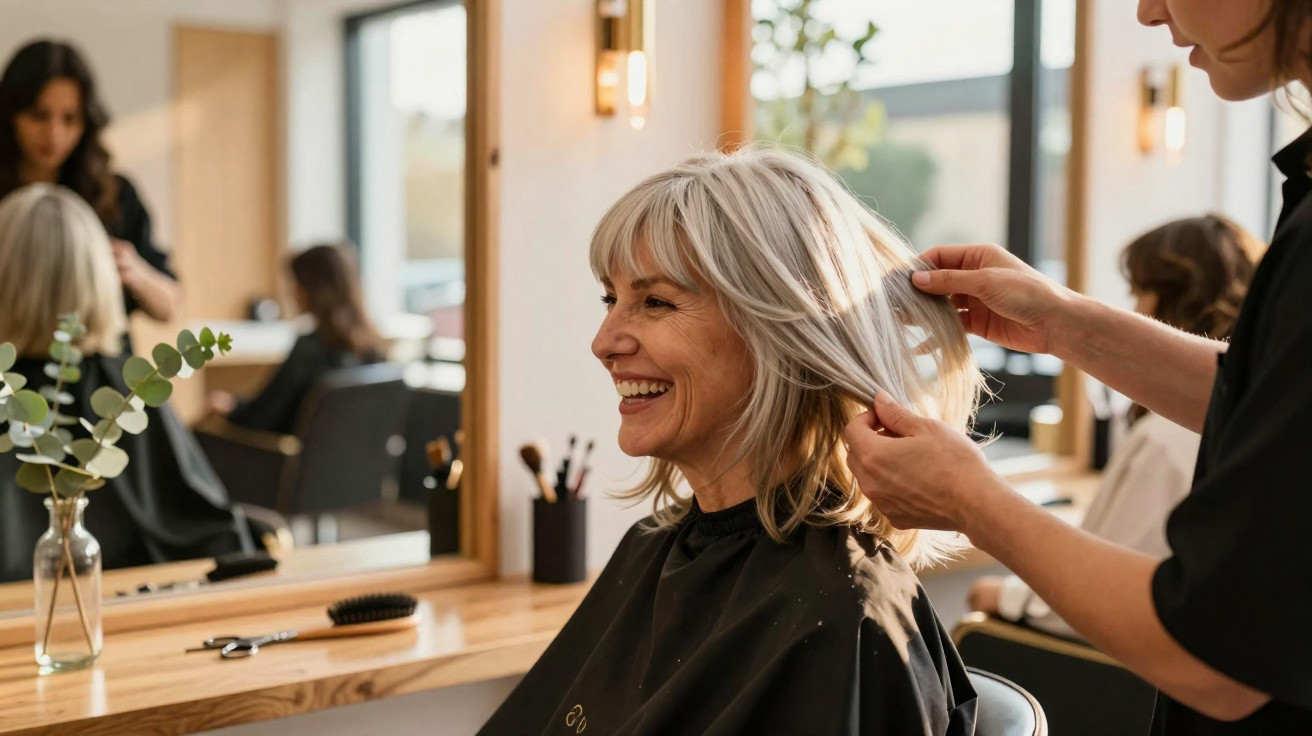
She arranged a haircut and chose a collarbone-length lob. She was still the same person, with the same face and the same level of tiredness. But the result was striking. Her cheekbones appeared more defined, her eyes looked brighter, and her neckline was visible again. After sharing a photograph on Instagram, she received the sort of responses usually reserved for returning from a major holiday: “Did you lose weight?”, “You look rested”, “You look so fresh.” She had simply changed the length to suit where her face and body were in her 40s.
There is a subtle reason this can work. In our 40s, collagen production slows, facial volume changes position and features become softer. Very long hair adds visual weight and length to the head’s overall outline, potentially intensifying that downward effect. Medium or shorter cuts add lift around the cheekbones and jaw, bringing definition to areas where nature is gradually reducing it.
Hair density often declines too. When finer hair is spread over a very long distance, it can appear flat and stringy. Removing some length concentrates the volume, making hair look healthier and fuller without adding a single strand. It is not magic but visual balance: the same hair, positioned differently, creates a fresher and more defined impression.
Finding the right hair length for your 40-something face
The most useful decision in your early 40s is not simply to “cut it short”. It is to reassess where your hair should end. Try standing in front of the mirror and holding your hand horizontally at several points: chin level, jaw level, collarbone level and upper-chest level. Notice what each imagined line does to your face. At which point does your jaw seem more defined? When do your eyes appear more open?
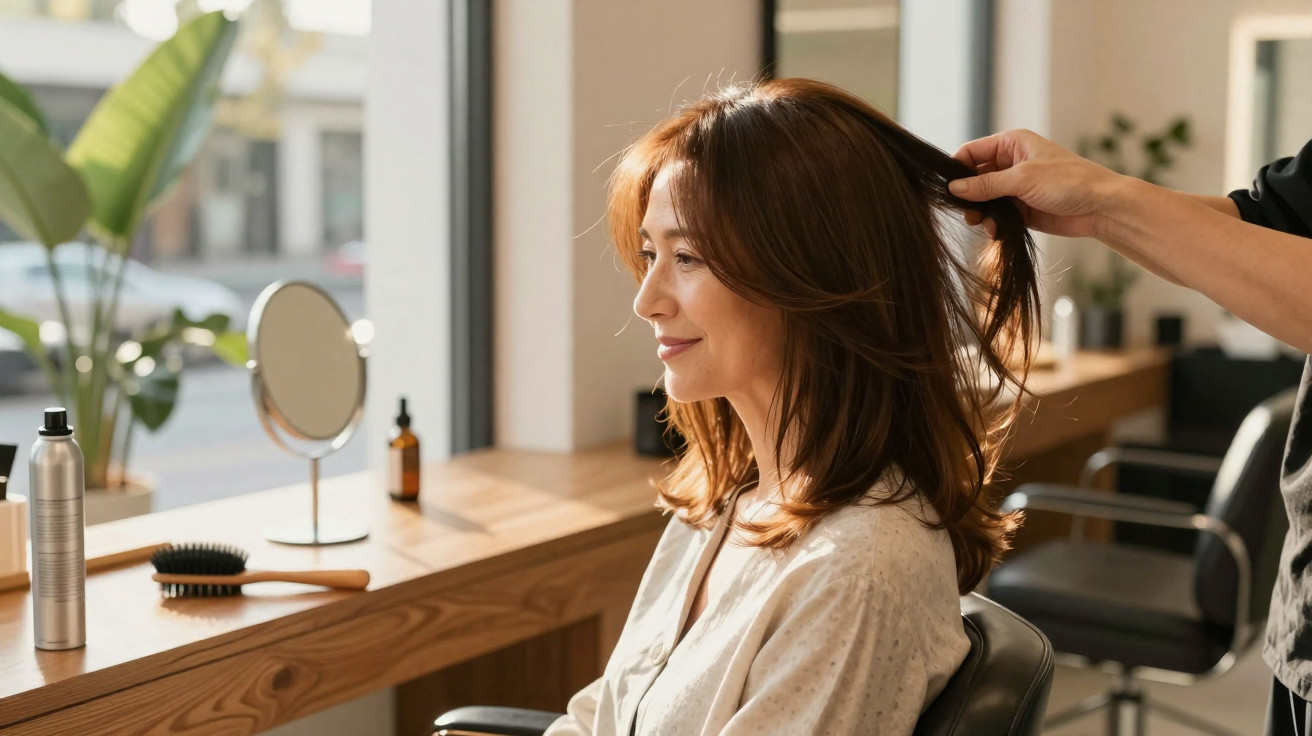
Texture should be part of the decision too. Fine, straight hair often works particularly well in a blunt bob or lob that falls between the jaw and collarbone. Wavy hair can flourish from chin to shoulder length, allowing relaxed bends to form naturally. Curls may look their best at shoulder level, where their bounce frames the face rather than weighing it down. The “perfect length” at 42 will seldom be identical to the one you had at 32, and that is not a failure. It simply means your personal beauty map has changed.
One common mistake is making an extreme change too quickly in order to “feel different”. You may wake up with a crop and discover that your hair texture has more cowlicks than a children’s playground. The better approach is to experiment gradually. Move from mid-back length to just below the collarbone, then to the shoulders if that feels right, and perhaps later try a proper bob. Every stage gives your eyes and your sense of self time to adapt.
Keeping the same layers and fringe from ten years ago is another frequent error. Face shape changes over time, so the heavy side fringe you adored at 30 may now make your features appear compressed. Small adjustments at the front - slightly shorter pieces around the cheekbones, a gentle curtain fringe or a raised layer near the jaw - can achieve more than a complete transformation. Honestly, hardly anyone books an annual “hair strategy meeting”. Yet this kind of quiet review can be particularly rewarding in your 40s.
“When a woman in her early 40s lets go of the idea that long hair equals youth, something liberating happens,” explains Claire Dupont, a Paris-based hairdresser who sees this transition phase every week. “We talk less about age, more about bone structure, lifestyle, texture. The cut becomes about the woman, not about the decade.”
Watch your natural texture for a week
Allow your hair to air-dry without heat whenever possible, then note where it bends, frizzes or becomes flat. Your true texture should be the foundation for a flattering hair length.Pick one main priority
Decide whether volume, easy styling, a face-lifting effect or growing out damage matters most. Base your length choice on that priority rather than trying to achieve five aims at once.Take photographs of yourself rather than celebrities
Your stylist can assess your previous lengths, the way your hair responded and what truly suited you more effectively than any Pinterest board can.Allow your “signature look” to change
Looking recognisably like yourself does not require freezing your hair in the past. A current adjustment can reveal the same essence with more definition.Choose for the 10-minute routine you will actually follow
A brilliant hair length has little value if it demands 40 minutes of styling. Your cut should still look presentable on a rushed Tuesday morning when it is only half dry.
Hair length in your 40s as a quiet form of self-respect
Changing your hair length in your early 40s is rarely only a fashion choice. It can mean recognising that your life, energy and mornings are different now, then allowing your appearance to reflect that reality. There is real gentleness in accepting that your hair no longer has to prove anything - neither that you are “still young” nor that you “haven’t changed”.
The change can feel unexpectedly emotional. Some women feel as though they are “cutting off” their youth with the ends of their hair. Others experience instant relief, as though they have put down a bag they carried for too long. We have all known that moment when the stylist turns the chair and a new version of yourself appears: familiar, yet slightly startling. Your response can reveal much about the story you are prepared to tell next.
| Key point | Detail | Value for the reader |
|---|---|---|
| Reassess length as you age | The early 40s bring subtle shifts in facial shape, hair texture and density that very long hair may exaggerate. | Helps you select a length that lifts your features rather than drawing them down. |
| Work with natural texture | See how your hair behaves without intensive styling before committing to a different cut. | Cuts daily effort and prevents choosing styles that work against your actual hair. |
| Make changes gradually | Progress from long hair to medium lengths, then move shorter step by step. | Creates a gentler visual and emotional transition, with less “hair regret”. |













Comments
No comments yet. Be the first to comment!
Leave a Comment