A woman in the waiting room wears a beige trench coat, clasping her hands together anxiously. The skin on her face looks blotchy and slightly flushed, with flaking across her cheeks. “But I drink so much water,” she murmurs, more to herself than anyone else. Beside her, a young man flicks through Instagram: filtered, flawlessly smooth selfies and comments underneath such as “Skin goals” and “How do you do it?”. The room carries the familiar blend of disinfectant and perfume, while a skin-analysis device hums quietly somewhere nearby. Then the door opens. “Mrs Klein?” the dermatologist calls, offering a brief smile and gesturing for her to come in.
We all know that moment when the mirror is more critical than any friend. Dry patches, unexpected redness, a dull complexion that will not glow even with highlighter. It is easy to say, “I just have problem skin.” The doctor in the consultation room sees it differently. He starts with a word we all know, yet routinely underestimate.
What moisture really does for the skin
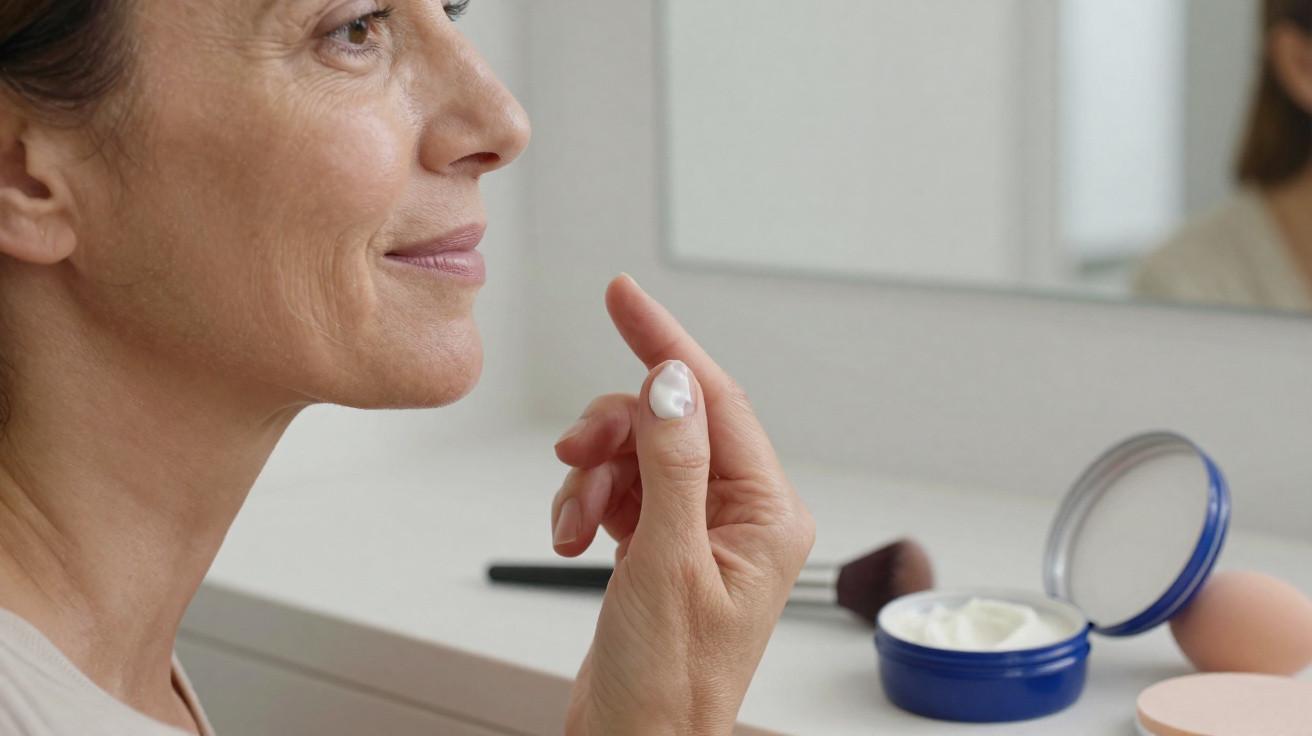
“Skin is like brickwork,” the dermatologist explains calmly, moving his stool closer. “Except your bricks are cells, and the mortar between them is made of lipids and moisture.” He places a dermatoscope against Mrs Klein’s cheek as she watches every movement in the mirror. When this invisible wall becomes dry, tiny cracks begin to show: tightness, itching, redness and fine lines that suddenly no longer seem all that fine. It becomes clear why a straightforward moisturiser can be more than a pleasant beauty extra. It is essential care.
He later recalls another case that has stayed with him: a 29-year-old project manager with high stress levels, long hours on a laptop and little sleep. She came to the clinic because of recurring clogged pores beneath the skin and flaky areas around her nostrils. Her bathroom shelf contained three different exfoliants, two foaming cleansers and an alcohol-based anti-spot gel. What it did not contain was a proper moisturiser. After four weeks using a mild cleanser and a simple cream with glycerine and ceramides, her skin was visibly calmer and the redness had almost disappeared. “I always thought I needed to get rid of oil,” she said at her follow-up appointment, “but my skin had been thirsty all along.” This misunderstanding is remarkably common.
There is a matter-of-fact logic behind it. The outermost layer of the skin, the stratum corneum, is made up in significant part of water. Once that level falls below a certain point, its whole structure changes. Micro-cracks develop, external irritants enter more easily and inflammation increases. At the same time, the skin loses more water to the outside, creating a vicious circle. The dermatologist compares it to a leaky bucket: “Until you seal it, you can pour as much water into the top as you like.” Moisturising skincare therefore does not mean simply putting water on the skin; it means binding water, retaining it and protecting it. It may sound unremarkable, but it is often the turning point.
How an effective daily moisturising skincare routine works
The doctor favours a simple routine, which he scribbles on a note for almost every patient. In the morning, use a gentle cleanser that does not leave the skin feeling squeaky-clean. Follow with a hydrating serum containing hyaluronic acid or glycerine on slightly damp skin. Next comes a cream that acts like a lid, keeping that bound moisture in place. The final layer is broad-spectrum sun protection. The evening follows much the same pattern, without SPF and, depending on the skin’s condition, with a slightly richer texture. It sounds basic, yet in many bathrooms it may as well be science fiction. Let us be honest: hardly anyone follows it every single day. That is precisely where the problem begins.
Many people only arrive at the clinic once their skin has “gone haywire”. They have cleansed too harshly, used too many acids or applied masks too often that pull and sting. The dermatologist then hears comments such as: “I deliberately chose mattifying products.” Or: “I thought it worked if it stung.” It hurts him a little every time, because this is almost never about laziness; it is about confusion. There are marketing claims, TikTok trends and contradictory advice from friends. Amid all that noise, people miss the fact that well-hydrated skin is far less likely to behave like a “sensitive soul”. Redness tends to be less severe, spots heal more quickly and wrinkles look softer. Not perfect, but more at ease.
When speaking with sceptical patients, he deliberately puts it in plain terms.
“Moisturising skincare is not a self-care luxury,” he says. “It is as fundamental as brushing your teeth. If you leave it out, you will notice the consequences not only cosmetically, but medically over time too: eczema, cracks and chronic irritation.”
- Begin with fewer products rather than constantly adding new serums: one good moisturiser is better than five half-hearted tubes.
- Choose textures that suit your day-to-day life: a gel during an office heatwave, and richer versions when central heating dries the air.
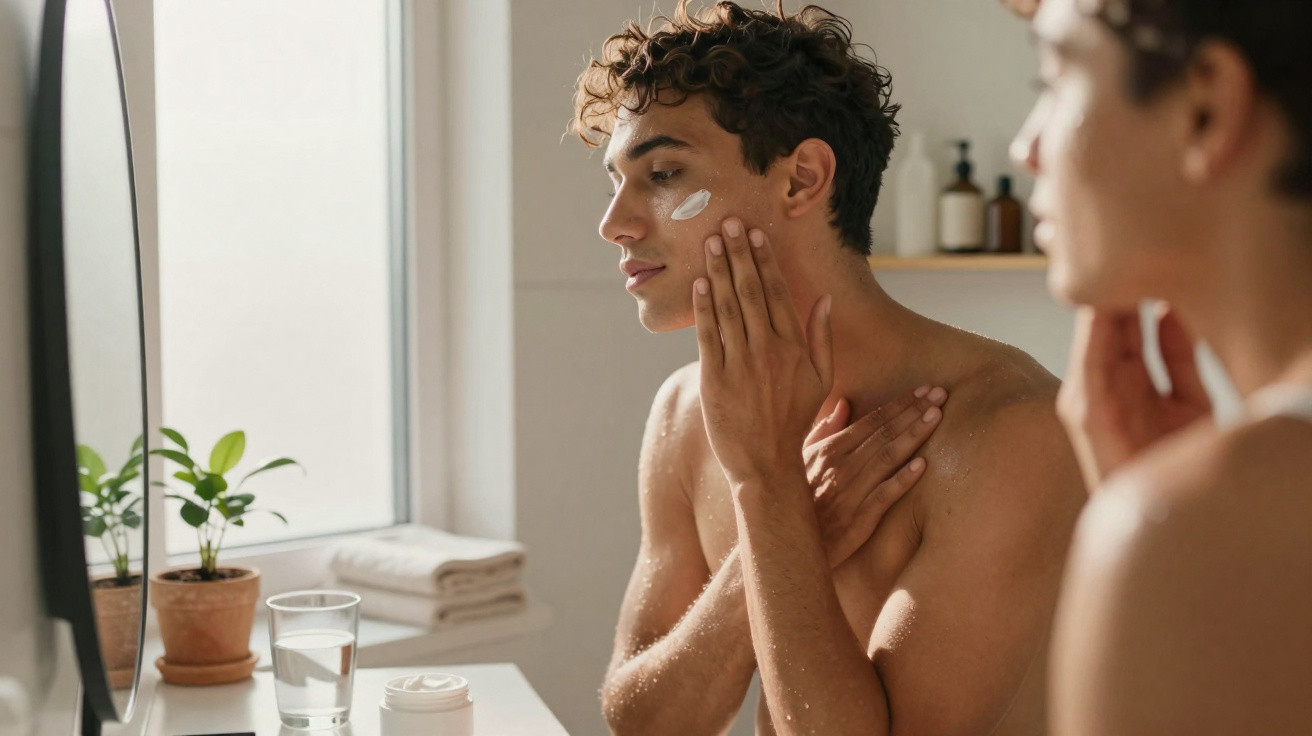
- Apply moisturising skincare immediately after showering, while the skin is still slightly damp, to “seal in” its natural water reserves.
- Assess your skin over weeks rather than hours: real improvements are quiet, not dramatic.
- And yes, it is fine to account for laziness: a product you genuinely use is always better than an elaborate ritual that fails at the bathroom sink.
Why consistent skincare is about self-respect, not vanity
During the practice lunch break, the dermatologist stands by the window and looks down at the pedestrian precinct. People hurry past with takeaway coffees and smartphones held in front of their faces. Many have red patches, shiny T-zones or chapped lips. “You can immediately see on the street who is fighting their skin and who is working with it,” he says thoughtfully. Most people do not want to look perfect; they simply do not want to lose the battle in front of the bathroom mirror every morning. Moisturising skincare is something of a quiet ally in that respect. It is understated, reliable and not especially Instagrammable, but its absence is noticeable.
Perhaps you remember winter days when your hands crack because you went out without gloves. Or perhaps it is a summer holiday, when skin throbs with heat after sunburn and every touch hurts. Those are the moments when everyone understands how much our largest organ depends on the right moisture level. What causes pain in an extreme situation begins more quietly in everyday life: tight skin after showering, make-up settling into fine lines or small flakes landing on a dark jumper. Anyone who ignores these signs often only realises years later how much ongoing stress their skin endured.
Perhaps that is the real message the dermatologist wants to convey: moisturising skincare is not decoration, but a quiet promise to your own body. No product can undo a sleepless night or a month full of stress. Yet skin whose barrier is respected reacts more gently, needs less repair and carries us better through hectic periods. And yes, some things remain simple: one tube of cream by the bed, one on the desk and one in the bag. Not perfect, not arranged in an Instagram-ready display, but there when the skin quietly says it is “thirsty”. Those who begin listening at that point often see more change than they would from a tenth “miracle serum”.
| Key point | Detail | Benefit for the reader |
|---|---|---|
| Moisture as the foundation of the skin barrier | A well-hydrated stratum corneum prevents micro-cracks and water loss | Understands why skin feels less tight and itchy, and reacts less, when it has “had enough to drink” |
| A simple, consistent routine | Mild cleanser, hydrating serum, cream and SPF during the day | Has a clear, practical structure instead of product chaos in the bathroom |
| Long-term results rather than an instant effect | Regular care reduces inflammation and stabilises the skin over several weeks | Reduces frustration because expectations become more realistic and progress is easier to see |
FAQ:
Question 1: Is simply drinking more water enough to ensure my skin has enough moisture?
Drinking is essential, but it is only one part of the equation. Skin needs ingredients such as glycerine, hyaluronic acid or urea to bind water, as well as lipids to retain it in the skin. Without external care, much of that internal “supply” evaporates too quickly.Question 2: I have oily skin - will moisturising skincare not make me even shinier?
Many people with oily skin are actually dehydrated. Lightweight, non-comedogenic fluids or gels can balance moisture levels without adding more oil. Sebum production may even regulate itself slightly as a result.Question 3: How can I tell that my skin lacks moisture?
Common signs include tightness after washing, fine dehydration lines, rough or flaky areas and make-up that appears to “sit” on the skin. Some people also feel a slight sting when using products containing alcohol.Question 4: Can I use too much moisturising skincare?
Too many layers of occlusive products may block pores and lead to blemishes. In most cases, a balanced combination of humectants, such as hyaluronic acid, and light lipids is entirely sufficient.Question 5: Do I need different moisturising creams for daytime and night-time?
Not necessarily. Many people do well with one well-formulated cream. During the day, add sun protection; at night, you can use a slightly richer layer if needed or apply a hydrating serum underneath.











Comments
No comments yet. Be the first to comment!
Leave a Comment