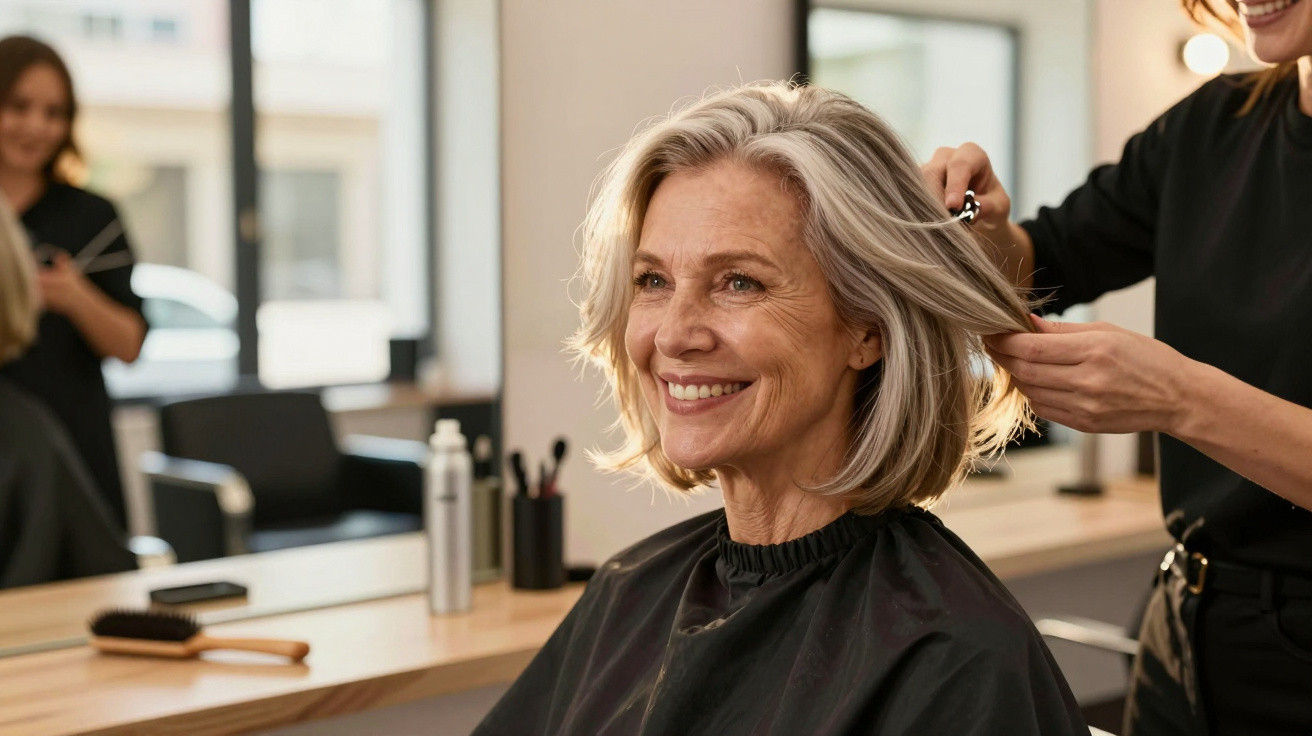
Saturday morning, 9.15 a.m., and the salon is already alive with activity. The coffee machine hisses, hairdryers whirr, and in the third seat beside the window, a woman in her sixties combs her fingers through her hair and gives a faint sigh. “It was so thick when I was 30,” she says to her hairdresser, almost as though reaching 60 were somehow her fault. Beneath the fluorescent lights, her fine, flyaway hair appears to sink flatter by the minute. She is looking for volume without a “helmet”, softness without limpness, and a contemporary style that does not try to make her look 25.
The hairdresser smiles, picks up a comb and says softly: “For thin hair after 60, there’s one cut that changes everything.”
The atmosphere around the chair immediately changes.
The layered bob that discreetly creates more volume after 60
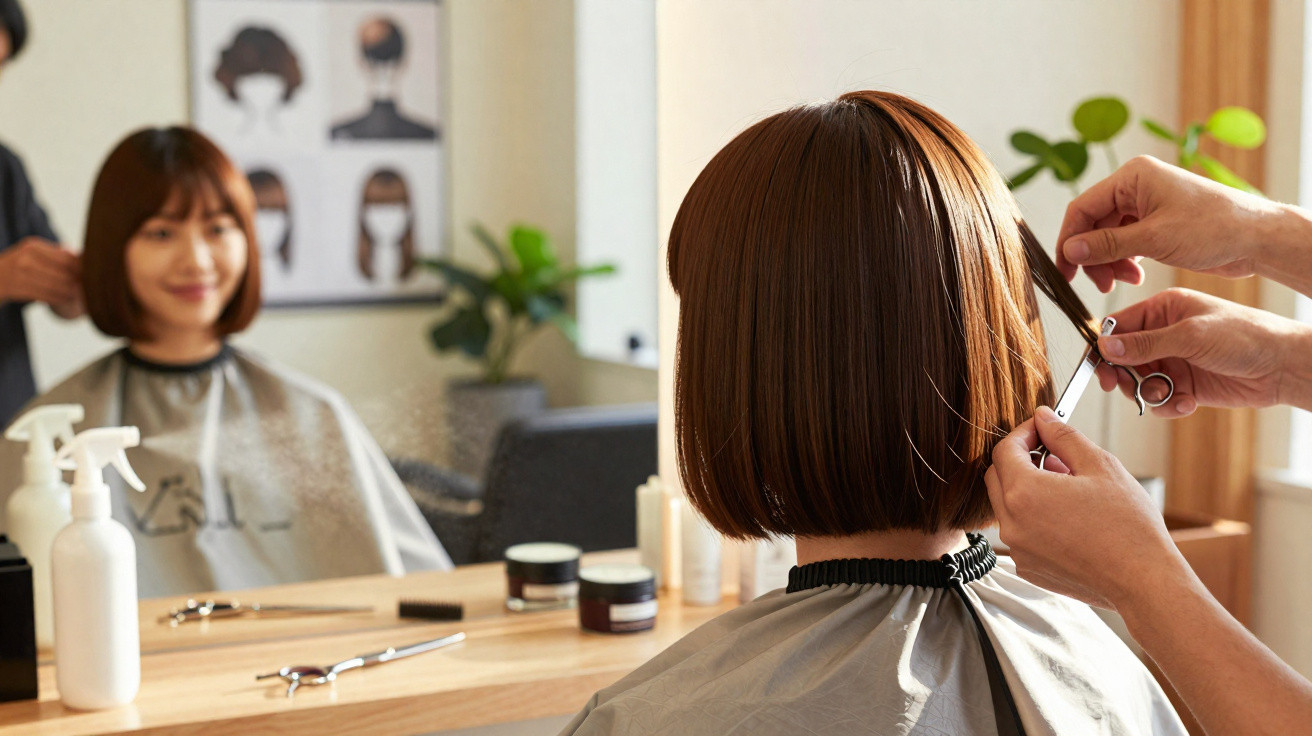
Ask any three stylists what works best for thin hair after 60, and you are likely to hear the same response: a layered bob, cut somewhere between jaw and collarbone length, is among the most flattering options for creating volume. It is neither overly long nor too short, with soft layers that encourage movement rather than pulling the hair down.
At this length, the style complements a mature neckline, frames the face and gives the hair an airy, cushioned effect around the head. Instead of hanging heavily, the hair seems to float. That sense of lightness is perceived as volume.
Consider Fran, 67, who arrived at a central London salon wearing a long, worn-out ponytail that had become what she described as “three sad strands.” Her stylist proposed a long layered bob that would just skim her shoulders, but she was unsure. “If you cut it, I’ll have nothing left,” she joked.
Forty minutes later, she was laughing as she moved her head from side to side in front of the mirror. The cut rested lightly at her collarbone, with the layers curving in gently and grey streaks reflecting the light. It was the very same hair, yet it suddenly appeared twice as full. Even people in the waiting area looked up. This sort of subtle transformation can be felt throughout the room.
There is a straightforward reason this particular haircut suits thin hair after 60 so well. Long hair weighs itself down, drawing each strand flat to the scalp. Very short crops, meanwhile, may reveal more of the scalp and take away too much softness from the face. A layered bob sits neatly between these two extremes.
Removing some internal weight while introducing subtle layers allows the hair to rise naturally away from the head. There is less bulk pulling it down and more motion through the ends. The eye reads movement as thickness, even when the hair itself is fine.
How to request the right volume bob at the salon
The process begins before a pair of scissors comes near your hair. Take a seat, pause, and explain what your hair does on a bad day, rather than simply describing your ideal result on a good one. Let your hairdresser know if the crown falls flat by 3 p.m., your fringe splits apart or the hair at the back becomes stringy.
Then be clear and uncomplicated: request a jaw-to-collarbone bob with soft, blended layers, plus a little volume through the crown. Explain that you do not want sharp, choppy tiers, but delicate internal layers that retain a fairly full outer shape. This preserves the appearance of density while allowing the hair to lift.
Many women over 60 arrive with screenshots of celebrities half their age, then leave feeling disappointed. The truth is that fine, ageing hair follows its own physics. Images can be useful, but the discussion is more important. Tell your stylist how much time you can genuinely devote to styling. If you have a maximum of five minutes with a brush and perhaps a hairdryer, say so clearly.
Let’s be realistic: hardly anyone gives themselves a complete salon-style blow-dry every day. Once your routine is understood, your hairdresser can tailor the layers, nape length and fringe to create a cut that looks attractive with little effort, rather than only beneath ideal lighting.
One London stylist, whose work is primarily with clients aged 55+, put it in a single sentence:
“Volume for thin hair isn’t a product, it’s a shape. The right bob gives you 70% of the result before you even touch a brush.”
Several important details make a significant difference to this haircut:
Keep the length between jaw and collarbone
At this point, hair is light enough to lift while still retaining a soft, feminine appearance.Add soft, internal layers
These hidden layers remove weight from within the cut without disrupting its fuller outline.Slightly raise the crown
Leaving a little extra length on top creates gentle lift and prevents the hair from becoming flat like a pancake.Avoid extremely thin ends
Blunt or gently textured ends suggest density rather than leaving transparent-looking tips.Think about a side parting or a soft curtain fringe
A diagonal line over the forehead quickly creates the impression of volume and brings brightness to the face.
Living with thin hair after 60: more than the haircut alone
After the scissors have done their part, daily styling takes over. Fortunately, the right layered bob is intended to work with gravity rather than fight against it. Gently towel-dry your hair, use your fingers to lift the roots as you blow-dry, and guide the ends slightly inwards or outwards according to your preference. Spending two or three minutes on the crown can matter more than repeatedly working on the lengths.
Many hairdressers advise applying a lightweight mousse or root spray only at the base, rather than through the ends, where product can weigh fine hair down. Finishing with a quick burst of cool air helps to hold that freshly lifted shape.
| Key point | Detail | Value for the reader |
|---|---|---|
| Ideal cut | Layered bob at jaw–collarbone length | Instant visual volume without losing softness |
| Cutting approach | Soft internal layers, fuller outline | Hair looks thicker while remaining easy to style |
| Styling habit | Focus on roots, light products only | Volume lasts longer through the day with minimal effort |













Comments
No comments yet. Be the first to comment!
Leave a Comment