The first time I spotted it, I was in a café as a woman in her sixties passed the window. Silver hair, jeans, white trainers, a leather handbag. There was nothing showy about her, yet every eye seemed to follow her. The secret was neither her outfit nor her shape. It was the movement of her hair: light, bouncy and cut into a current style that was worlds away from the “helmet” cuts our grandmothers used to wear.
Beside me, another woman from the same generation was repeatedly checking her firm, rounded blow-dry in her phone screen. The difference was striking. The same decade of life, but entirely different energy.
Sooner or later, many of us wonder: “Is my haircut aging me more than my wrinkles?”
One particular style comes up repeatedly when hairdressers discuss ways to look more youthful.
The haircut after 60 that stylists quietly swear by
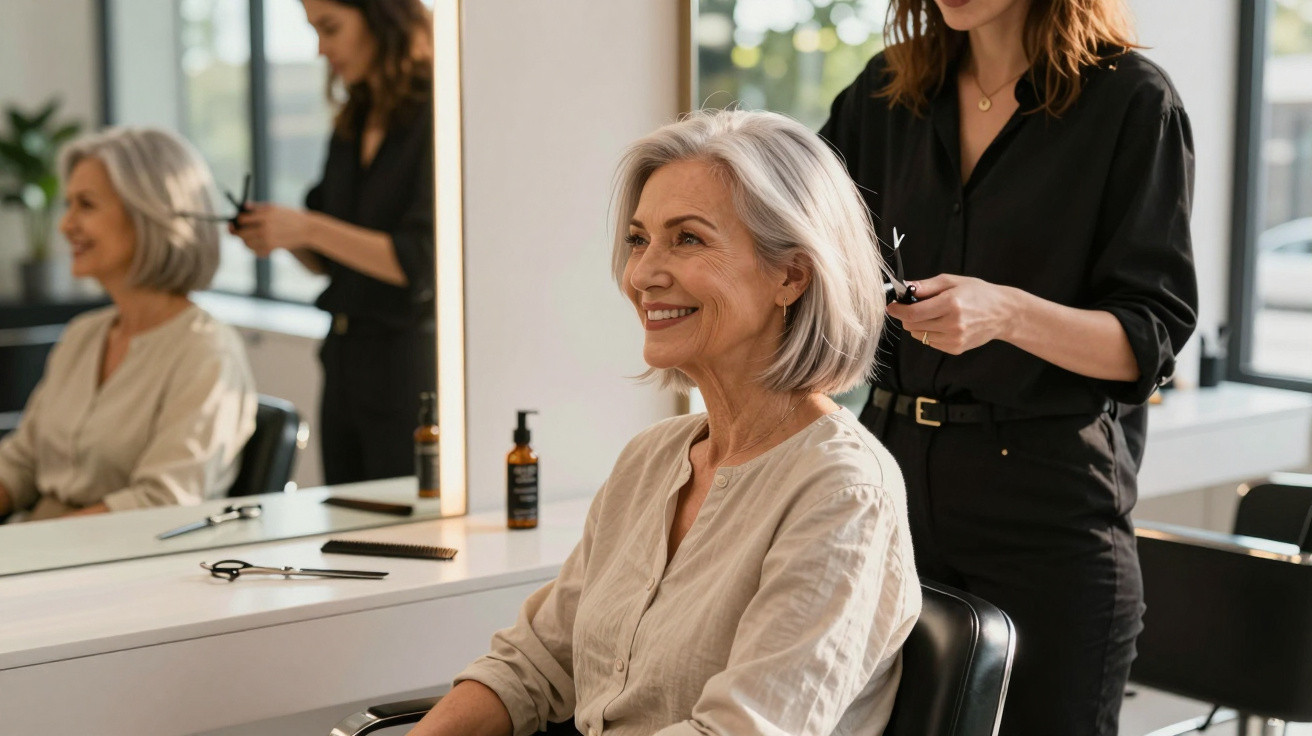
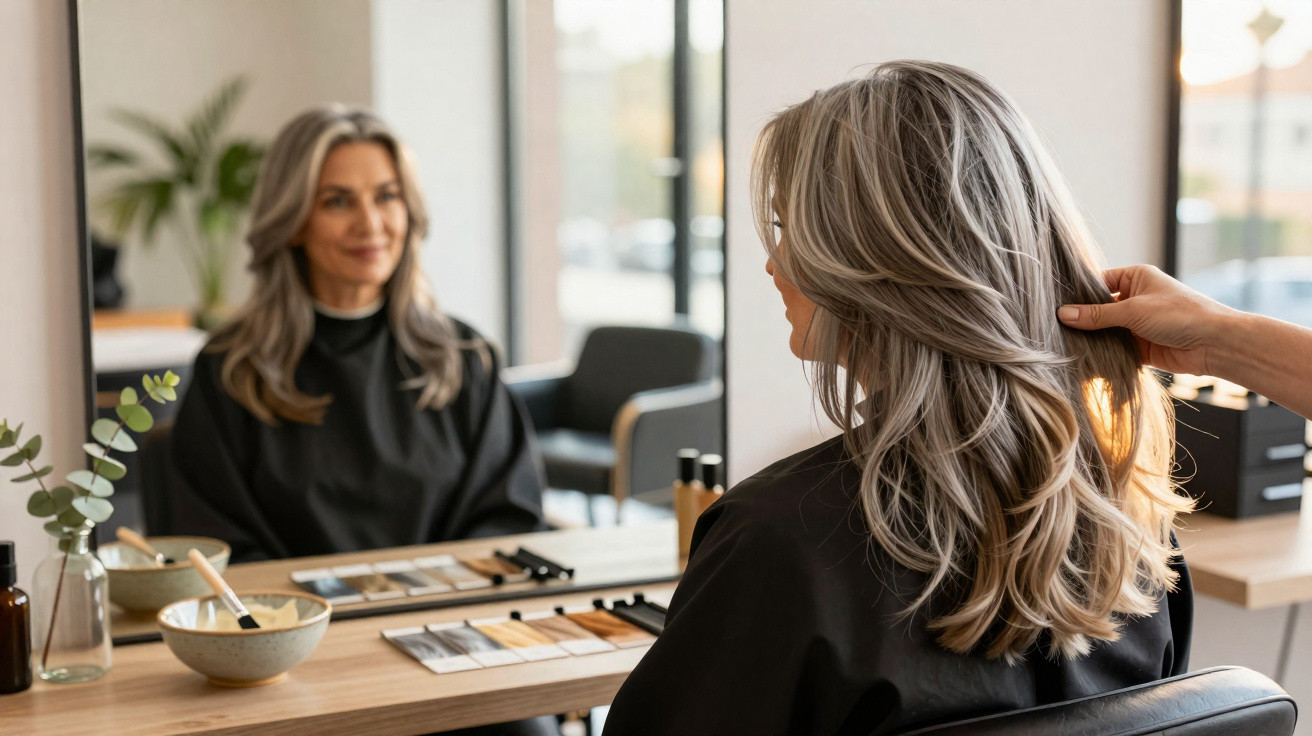
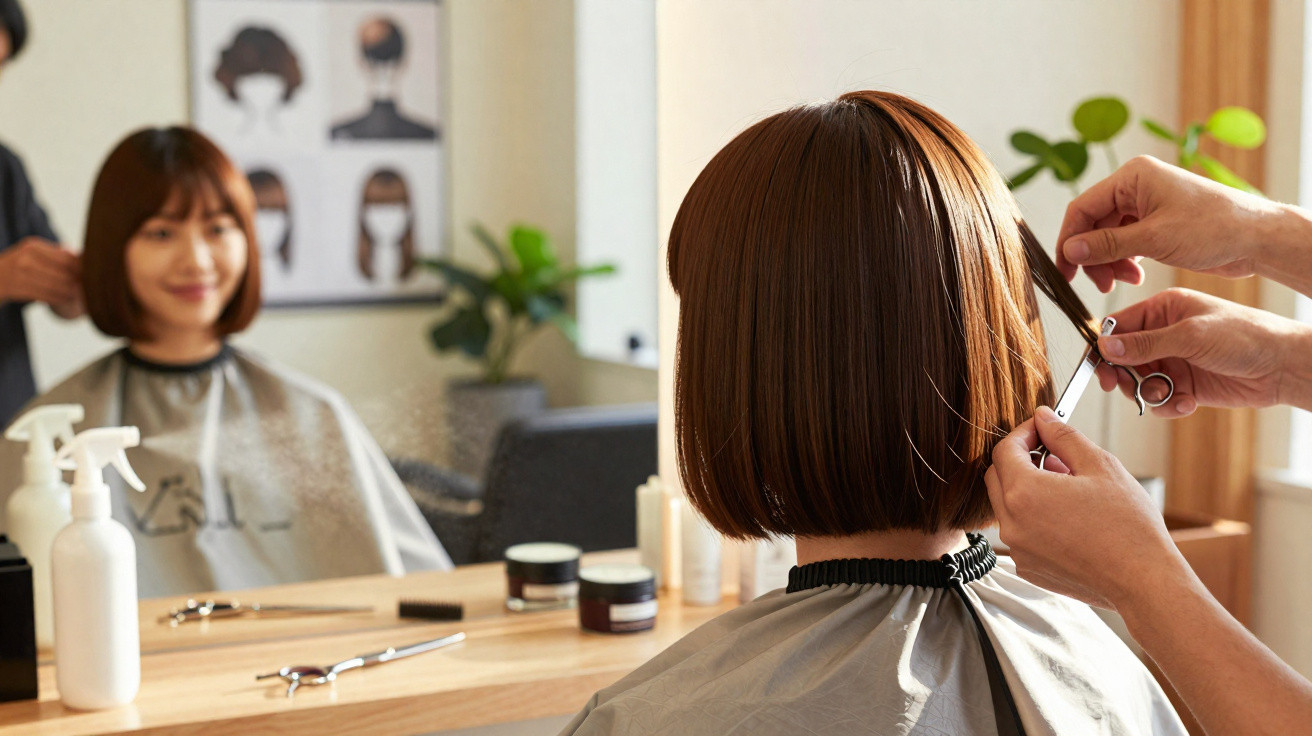
Ask ten professional hairdressers which haircut gives women over 60 the most youthful appearance, and you are likely to hear the same quiet recommendation again and again: a modern, lightly layered bob, usually falling somewhere between the jaw and collarbone. This is not the rigid bob of office years gone by. It is a softer, more airy version with movement.
This cut opens up the face and adds definition without making features appear harsh. It suits grey, white and coloured hair alike. It does not shout “I’m trying to look 30 again”. Instead, it says: “I’m fully in my age, but wide awake.”
That is the true appeal: it is not about appearing younger, but about looking alive.
Take Anne, a 64-year-old retired teacher. For years, she had kept the same short, rounded hairstyle she had worn since her forties. It was solid, lacquered and never allowed a hair to fall out of place. Then one day, her granddaughter delivered the unfiltered honesty of a 10-year-old: “Grandma, your hair looks like a Playmobil.”
Slightly wounded, Anne booked in with a recommended hairdresser. Her hair was cut just below the jaw, with subtle layers at the front and a gentler line at the back. There was no dramatic fringe and no radical colour transformation. Only a fresher shape.
The following week, three separate people asked whether she had been on holiday. Not one asked whether she had “done something” to her face.
Why does this style of bob seem so youthful? Firstly, it restores movement. Hair often becomes finer and drier as we get older, and long, weighty styles or tightly cropped cuts can draw attention to this. A layered bob removes bulk, builds texture and allows light to reflect from the strands.
Secondly, there is the length. Hair sitting around the jaw or collarbone can visually lift the neck and define the lower face, which naturally tends to soften over time. It works rather like contouring, without any make-up.
Finally, the shape itself communicates something. Traditional set hair says “don’t touch”. A softly undone bob says “I’m still part of the game.”
How to ask for and wear a truly modern bob after 60
At the salon, focus the conversation on softness and movement rather than length alone. Explain that you want a bob sitting between the jaw and collarbone, with delicate, invisible layers. Request a slightly lighter feel at the front, so the sections around your face do not become too weighty.
Say that you would rather avoid a close, geometric line that clings to the neck. A lightly textured edge that bends naturally tends to flatter mature skin more effectively.
If you wear glasses, ask your hairdresser to shape the sides so they work with your frames rather than competing with them. It is a small consideration, but one that can make a huge difference.
At home, the aim is straightforward: less effort and a more relaxed result. Rough-dry your hair using your hands, with your head tipped slightly forwards to lift the roots. Next, use a round brush - or simply your fingers - to smooth only the face-framing front sections.
Let’s be honest: hardly anyone creates a complete salon-standard blow-dry every day. That is absolutely fine. This cut is meant to work with some natural movement rather than resemble a sculpted helmet.
The biggest error is falling back into familiar habits: excessive hairspray, too much height at the crown and curls turned under as they were in the 1980s. That is when a bob can quickly shift from “fresh” to “old-fashioned”.
“After 60, I don’t cut hair to make women look younger,” explains Paris-based stylist Léa Martin. “I cut hair to let their face breathe. A light bob that moves a little when they laugh, that’s what changes everything.”
Keep the ends light
Ask for lightly tapered ends, particularly around the face, to prevent the hair from sitting in one solid block.Work with your natural texture
Whether your hair is curly, wavy or straight, the bob should follow its natural tendencies rather than require a daily battle.Soften the colour
A severe, flat colour can be more aging than grey hair. Gentle highlights or a blended silver finish add luminosity and dimension.Avoid a heavy fringe curtain
If you enjoy a fringe, keep it light and slightly longer, with tiny gaps that still allow the eyebrows to show through.Schedule a “mini refresh” cut
Reshaping the outline and removing dry ends every 6–8 weeks helps the cut retain its lift and youthful feel.
Beyond the scissors: what changing your haircut really changes
When a woman over 60 leaves behind an old, structured cut and walks out with a lighter bob, another change often follows: her posture, her stride and the way she looks at her reflection. It is not vanity; it is alignment. Her appearance finally reflects how she feels within.
We have all experienced that moment of seeing a photograph and thinking: “I don’t recognize myself.” The right haircut does not remove the years. It simply places your face and your story in the same picture, without a costume.
This is why many hairdressers gently steer clients aged 60+ away from very long hair with weary ends, as well as extremely short, close-cropped styles. Both extremes can feel like armour. The modern bob occupies the middle ground: it has enough length to feel feminine and sufficient structure to look deliberate.
The simple truth is that the “age-appropriate” rules we were raised with mostly feed a fear of looking ridiculous, rather than a wish to feel good. Once that fear begins to ease, there is space to experiment again: change the parting, tuck one side behind an ear or allow grey streaks to shine instead of concealing them.
If you feel trapped in a haircut from a different stage of life, this could be the simplest change to try. Arrange a consultation, bring pictures of soft, layered bobs you like and discuss the reality of your daily routine. Do you swim? Do you wear helmets? Do you dislike styling? A skilled professional will tailor the cut to your actual life, not an unrealistic magazine image.
The most youthful quality of a hairstyle after 60 is not the number of centimetres removed. It is the feeling that your hair is finally working alongside you rather than against you.
And that one adjustment can resonate far beyond the bathroom mirror.
| Key point | Detail | Value for the reader |
|---|---|---|
| Modern layered bob | Jaw-to-collarbone length, soft movement and light front sections | Visually lifts the face while remaining easy to wear every day |
| Adapted styling | Minimal blow-drying, natural texture and no rigid products | Saves time and prevents an “overdone” appearance that can age the face |
| Global refresh | Soft colour, regular micro-trims, and a match for glasses and lifestyle | Creates a cohesive, youthful image without trying to reclaim lost youth |




Comments
No comments yet. Be the first to comment!
Leave a Comment