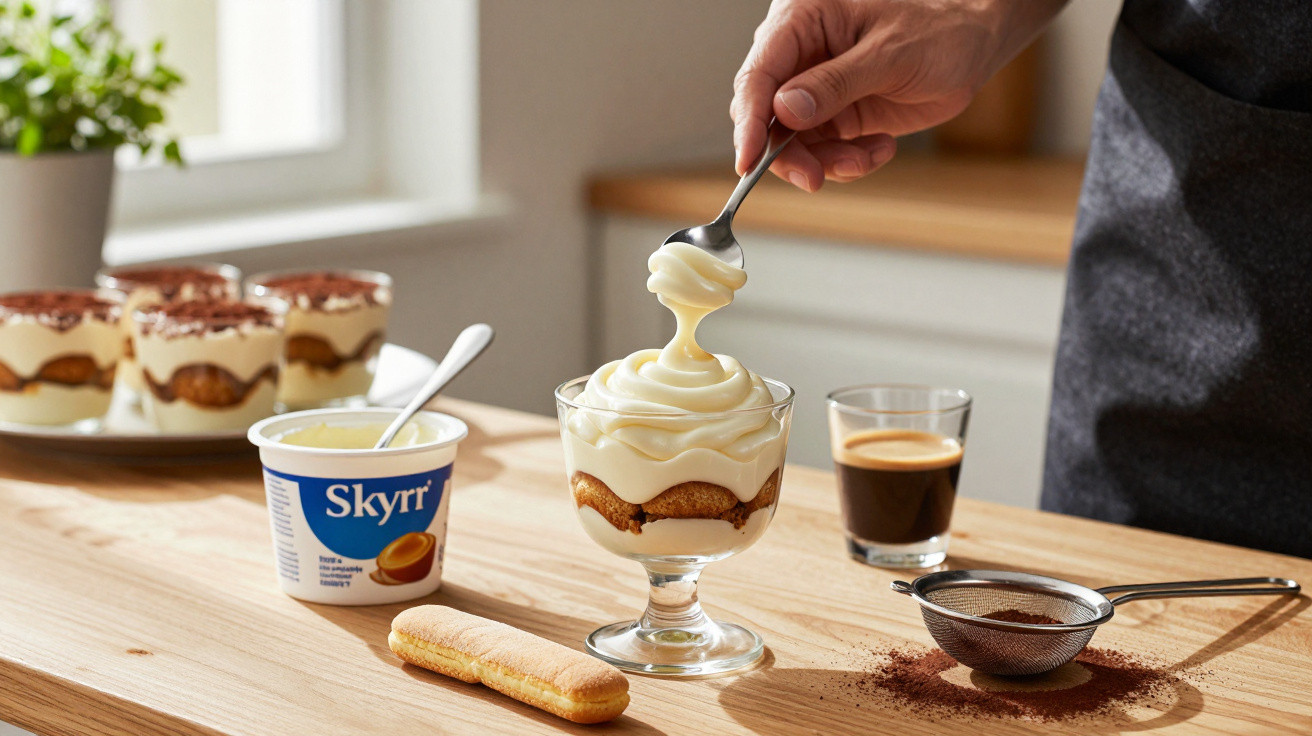
Many people love tiramisu for its creamy layers, the aroma of strong coffee and the chocolate dusted over the top. Yet the rich mascarpone filling can be off-putting, particularly when guests are eating more health-consciously. A particular chilled dairy alternative offers a solution without taking away the character of this classic dessert.
Why classic tiramisu is so calorie-dense
Traditional tiramisu contains a generous amount of mascarpone in its cream. This Italian double-cream soft cheese provides around 417 to 450 kilocalories per 100 grams, along with plenty of fat. A standard serving can easily contain several large spoonfuls.
As a result, even a small dessert bowl can contain a good 240 kilocalories or more. Anyone aiming to maintain their weight or lose weight may therefore think twice before adding tiramisu to the menu.
The challenge is to retain the familiar tiramisu flavour while making the cream considerably lighter.
This is where a high-protein, low-fat alternative comes in-one that many people associate more readily with breakfast than dessert.
Skyr: the secret star of a tiramisu dessert glass
Originally from Iceland, skyr sits somewhere between yoghurt and very firm soft cheese in both flavour and consistency. It is mild with a slight tang, contains plenty of protein and is low in fat. At roughly 60 to 70 kilocalories per 100 grams, it is almost a lightweight compared with mascarpone.
Replacing mascarpone entirely with skyr can reduce the dessert's energy content significantly. In many recipes, the figure per serving falls from around 240 to approximately 128 kilocalories-nearly half-without turning the dessert into a thin pot of yoghurt.
- Mascarpone: around 417–450 kcal / 100 g, very high in fat
- Skyr: approximately 60–70 kcal / 100 g, high in protein, low in fat
- Calorie saving: 40–60% fewer, depending on the recipe
Skyr's key benefit is that it is naturally very thick. This means the cream holds its shape despite containing less fat. That stability is exactly what is needed for tiramisu's distinctive layers.
Light skyr tiramisu: the shopping list
A lower-calorie version does not require any unusual ingredients. Most of them may already be in your kitchen cupboard.
Anyone who loves tiramisu does not need to give up coffee, sponge fingers or cocoa powder for a lighter version.
For a dessert serving around six people, the following quantities work well:
- 250 g plain skyr (or very low-fat quark or reduced-fat soft cheese)
- 4 eggs
- 30 g sugar (adjust to taste; erythritol or xylitol can also be used)
- 12 sponge fingers
- 200 ml strong, cooled coffee
- 200 ml unsweetened almond milk or another plant-based milk
- unsweetened cocoa powder
- a little vanilla extract or the seeds from a vanilla pod
If you want to make the dessert entirely free from animal products, use a plant-based egg substitute and vegan sponge fingers alongside the plant-based milk. The light tiramisu then also becomes a vegan dessert.
How to make skyr tiramisu step by step
Prepare the cream
First, separate the eggs, placing the yolks in one bowl and the whites in another. Add the sugar to the yolks, then beat vigorously with an electric hand whisk or balloon whisk until the mixture is pale and thickened.
Next, add the vanilla extract or fresh vanilla, then mix in the skyr. If you prefer an especially firm cream, leave the skyr to drain in a sieve for about an hour beforehand. This removes excess liquid, much as it does with labneh or Greek yoghurt.
Whisk the egg whites until they form stiff peaks. This introduces air into the cream, creating a lighter texture later on. Carefully fold the whipped egg whites into the skyr and yolk mixture rather than simply stirring them in. Use a spatula to lift the mixture from the bottom upwards, retaining as much air as possible.
Flavour the sponge fingers
At the same time, prepare the coffee mixture. Pour the cooled coffee and almond milk into a shallow dish. If you wish, lightly sweeten the mixture or add a splash of amaretto or rum. This will increase both the calorie and alcohol content slightly, but it makes the typical tiramisu flavour more intense.
Briefly dip the sponge fingers into the liquid. They should absorb it without breaking apart. One or two seconds on each side is enough.
Layer, chill and enjoy
Now follow the familiar tiramisu layering method. Arrange a layer of soaked sponge fingers in the base of a serving dish or individual dessert glasses. Spread over a thick layer of skyr cream, then add another layer of sponge fingers and finish with the remaining cream.
Finally, dust the surface generously with unsweetened cocoa powder. A fine sieve is best for distributing the cocoa evenly and without lumps.
For a well-balanced result, leave the dessert to rest in the fridge for at least eight hours, preferably overnight.
During this time, the coffee flavour melds with the sponge fingers and the skyr cream becomes slightly firmer. Only then does this lighter version of tiramisu achieve its full effect.
How different does the lighter version taste?
Anyone used to pure mascarpone will notice a fresher, gently tangy note in the skyr version. Many people actually prefer this, as the cream feels less rich and allows the coffee flavour to stand out more clearly.
Thanks to skyr's high protein content, the texture remains creamy and stable. The characteristic layered effect is retained when the dessert is cut or spooned out. In blind tastings, many testers only notice the lighter cream after the second spoonful-particularly when the vanilla, coffee and cocoa are properly balanced.
Tips, variations and mistakes best avoided
- Drain the skyr first: This prevents liquid from collecting at the bottom of the dish.
- Adjust the sugar: If you enjoy very sweet desserts, begin with 30 g and increase it if needed. For a more calorie-conscious option, even 20 g is enough.
- Make the coffee strong: A robust espresso or moka coffee delivers more flavour than mild filter coffee.
- Do not soak the sponge fingers for too long: Otherwise, they will fall apart and the dessert will become soggy.
- Allow enough chilling time: With fewer than six hours of resting time, the cream often remains too soft.
For a change, layer in fresh berries such as raspberries or strawberries. They add fruitiness and even more freshness to the dessert glass. Finely grated dark chocolate over the cocoa powder also enhances the flavour without making a major impact on the calorie total.
Why making the switch is worthwhile long term
For people who eat desserts regularly while watching their energy intake, swapping mascarpone for skyr makes a noticeable difference. A pudding containing only around half as many calories can be enjoyed much more often without guilt.
Skyr's high protein content also helps you feel full for longer. This may mean that you are less likely to reach for snacks after eating. Those who do strength or endurance sports also benefit from the protein for their muscles.
Skyr is useful for far more than tiramisu: it works in cheesecake fillings, creams for fruit salads, layered desserts in glasses and quick no-bake “cheesecake” variations. Once you have become accustomed to its flavour, you can replace at least some mascarpone in many recipes-saving calories regularly without sacrificing enjoyment.

















Comments
No comments yet. Be the first to comment!
Leave a Comment