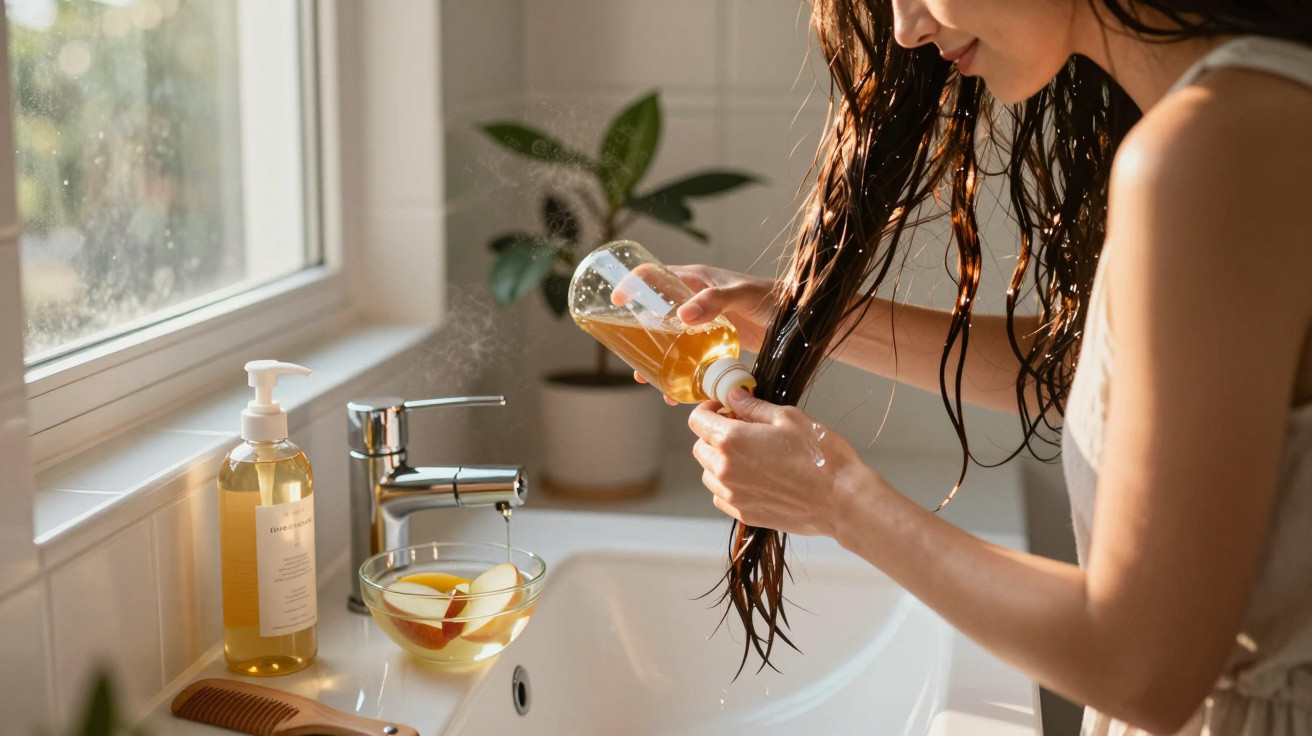
Many people experience dull, dry hair after regularly using a hairdryer or taking hot showers. A very simple, low-cost home remedy is said to restore natural shine and intensively strengthen the strands.
How does apple cider vinegar affect the structure of hair strands?
The outer layer of hair consists of cuticles, which act like overlapping roof tiles that protect the hair shaft. When these scales are opened by shampoo, the hair becomes undesirably porous and loses its healthy-looking finish.
More acidic substances have the biological ability to encourage these open cuticles to close completely. As this kitchen product is quite acidic, it seals the strands effectively, delivering a noticeable improvement in overall shine and texture.
Here are the key points about how this hair structure works:
- Outer cuticle: Protects the hair shaft from everyday external damage.
- Open scales: Lead to high porosity and a loss of natural reflection.
- Acidic environment: Works by closing the scales to protect the cortex.
- Radiant shine: Is the immediate result of the cuticle closing properly.
- Shampoo effect: Thoroughly cleanses the strands while temporarily opening the outer scales.
What do specialists recommend for safe application?
To prevent serious damage, the main recommendation is never to apply the ingredient neat or in a highly concentrated form to the hair. Excessive acidity may irritate sensitive skin, so proper dilution is essential before home use.
The ideal mixture should contain around three to four parts clean water for every one part of the chosen vinegar. Applying it mainly along the hair shaft also helps to avoid discomfort and protects your scalp from unnecessary irritation.
Below, watch an explanatory video from the Dr Paulo Müller Dermatologist YouTube channel, which outlines the necessary hair-care precautions:
Why does the product not work against hair loss?
Many people share home recipes online claiming that this acid fights hair loss. However, proper dermatological treatment shows that this kitchen ingredient has no real effect on controlling hair loss or encouraging growth.
Focus on the hair shaft
Action limited to the strands
Apple cider vinegar acts only on the visible part of the hair, sealing the cuticles and improving its cosmetic appearance. It does not reach the hair follicles responsible for producing new strands.
Therefore, applying the product to the scalp in an attempt to slow baldness or severe hair loss will not produce practical results, as its chemical composition has no anti-hair-loss properties.
There is no concrete evidence in the medical literature to support the use of this acidic ingredient as a direct treatment for the hair bulb. Dermatologists advise against this practice and recommend focusing instead on clinically proven interventions, ensuring full safety and effectiveness against baldness.
Understand why the product is limited to external cosmetic effects:
- No scientific evidence supports its use in treating baldness.
- It lacks nutrients able to stimulate the hair root.
- Its action is exclusively focused on sealing the visible outer cuticle.
What are the main practical benefits of this home ingredient?
The main advantage of this alternative method is the strong affordability offered by this everyday product. Compared with imported masks, it provides an excellent budget-friendly option, with visible results of high shine and considerable softness.
Its widespread availability in Brazilian kitchens makes this treatment especially convenient for people looking to streamline their at-home self-care routine. This acidic compound works quickly and efficiently to neutralise the harmful effects caused by extremely hot water.
See the main advantages of adopting this practice at home:
- Very low cost compared with salon cosmetics.
- Widely available from any supermarket or kitchen cupboard.
- Easy to mix quickly with everyday conditioners.
How can you include this treatment in your weekly shower routine?
A considered weekly application can be carried out straight after washing with your preferred everyday shampoo. You can combine the diluted solution with a hydrating mask, distributing it evenly through your weakened hair lengths.
Leaving the mixture on for a few minutes before rinsing thoroughly with lukewarm water can noticeably enhance the softness of the locks. This simple habit also effectively reduces the product’s strong characteristic smell, resulting in healthy, silky strands.
Read also: Hair serum seals split ends and restores shine to dull strands








Comments
No comments yet. Be the first to comment!
Leave a Comment