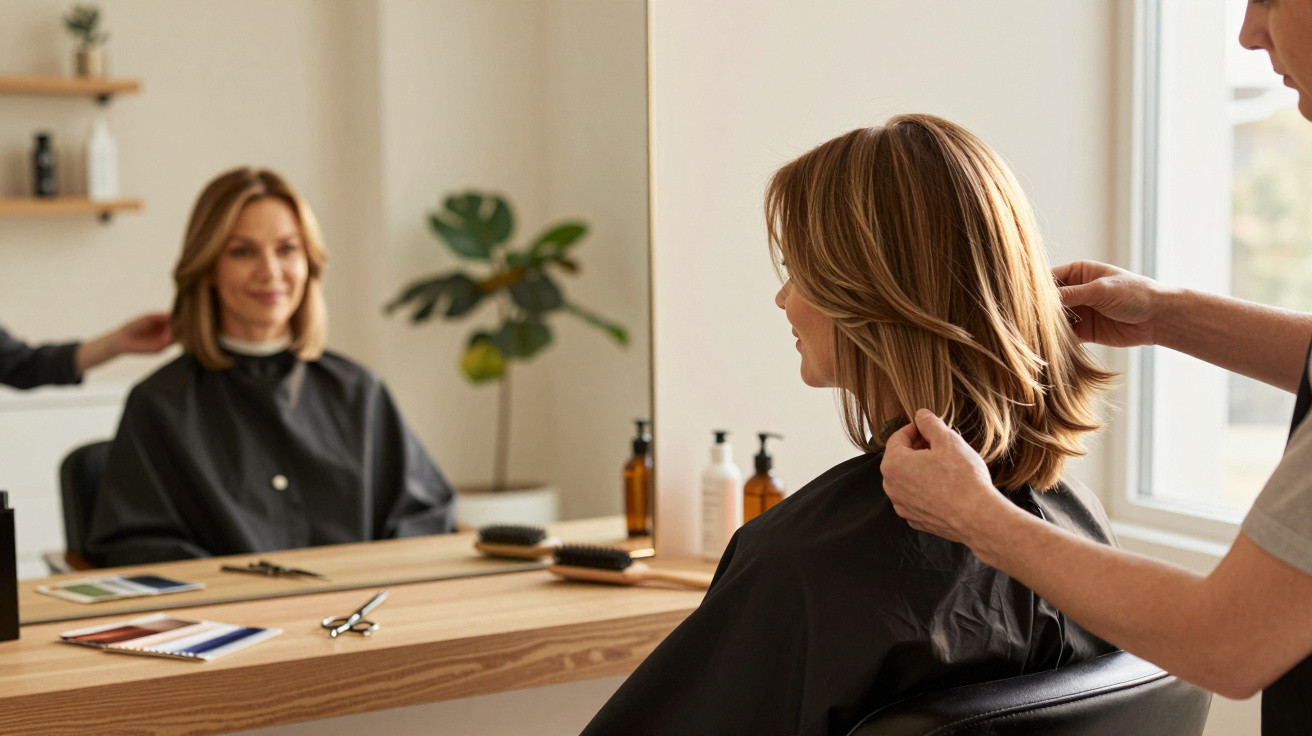
Susan, 56, wound a strand of hair around her finger. It was the same shoulder-length cut she had kept since her late thirties. The shade had altered and the lines in her face had become more pronounced, yet her hairstyle had remained exactly the same. Her hairdresser, Marc, observed her silently for a few moments before saying something that felt like a minor revolution: “You’re wearing a young woman’s haircut on a mature woman’s face.”
He was not being unkind. In fact, his tone carried a degree of admiration. Retaining the same style can mean holding on to the person you were before jobs, children, divorces, fresh relationships and exhausting mornings. Susan gave a slightly over-loud laugh and voiced the concern many women have after 50: “Short hair makes me look old, long hair drags my face down… so what’s left for me?”
Marc swivelled her chair away from the mirror and placed his hands on its back. “There’s a cut that lifts your face better than any cream,” he said. “It’s not short, not long. And it’s way more forgiving than people think.”
The rejuvenating haircut hairdressers recommend after 50
Ask three women aged over 50 about their biggest salon fear and the same supposedly threatening word is likely to emerge: “short”. Cropped cuts are still linked by many people with grandmothers and perms, as though any length above the shoulders automatically adds ten years. This is precisely why some hairdressers are discreetly suggesting another solution: a softly layered lob falling between the jaw and collarbones.
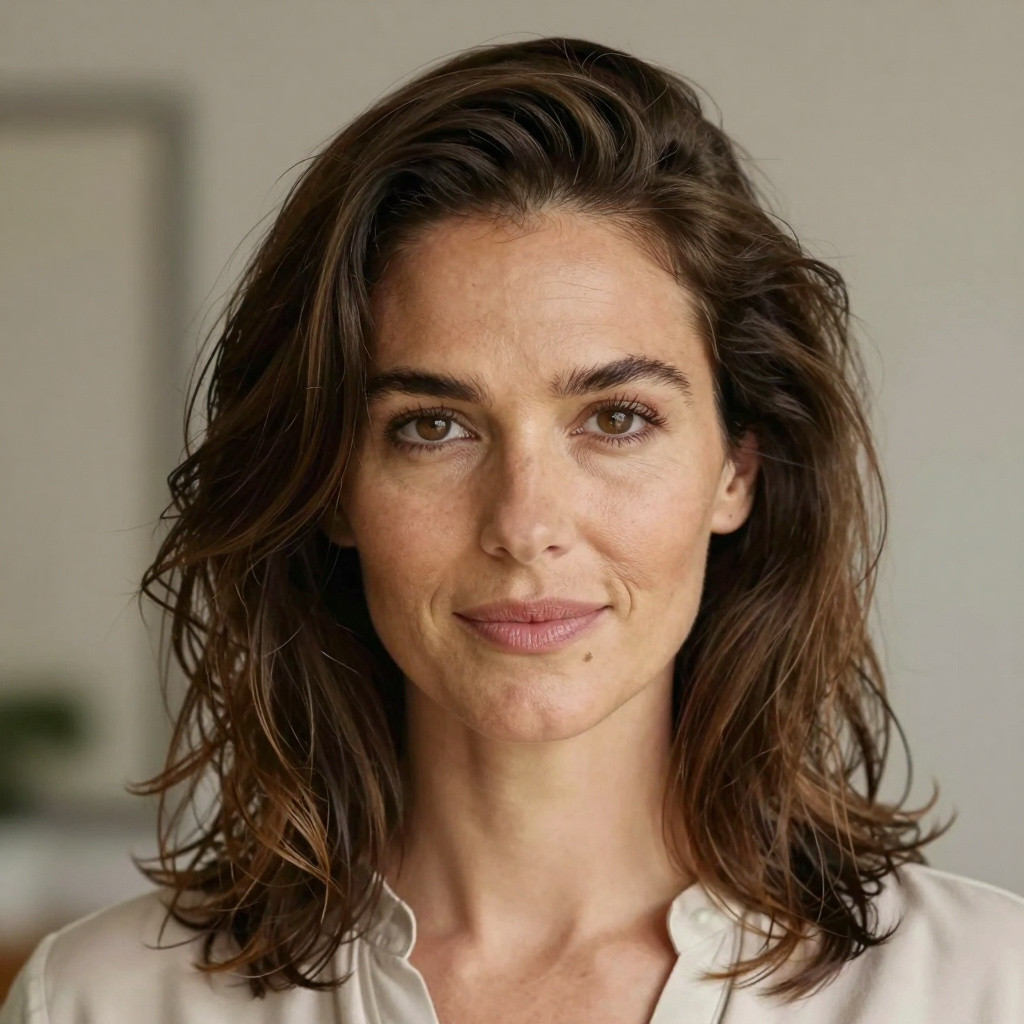
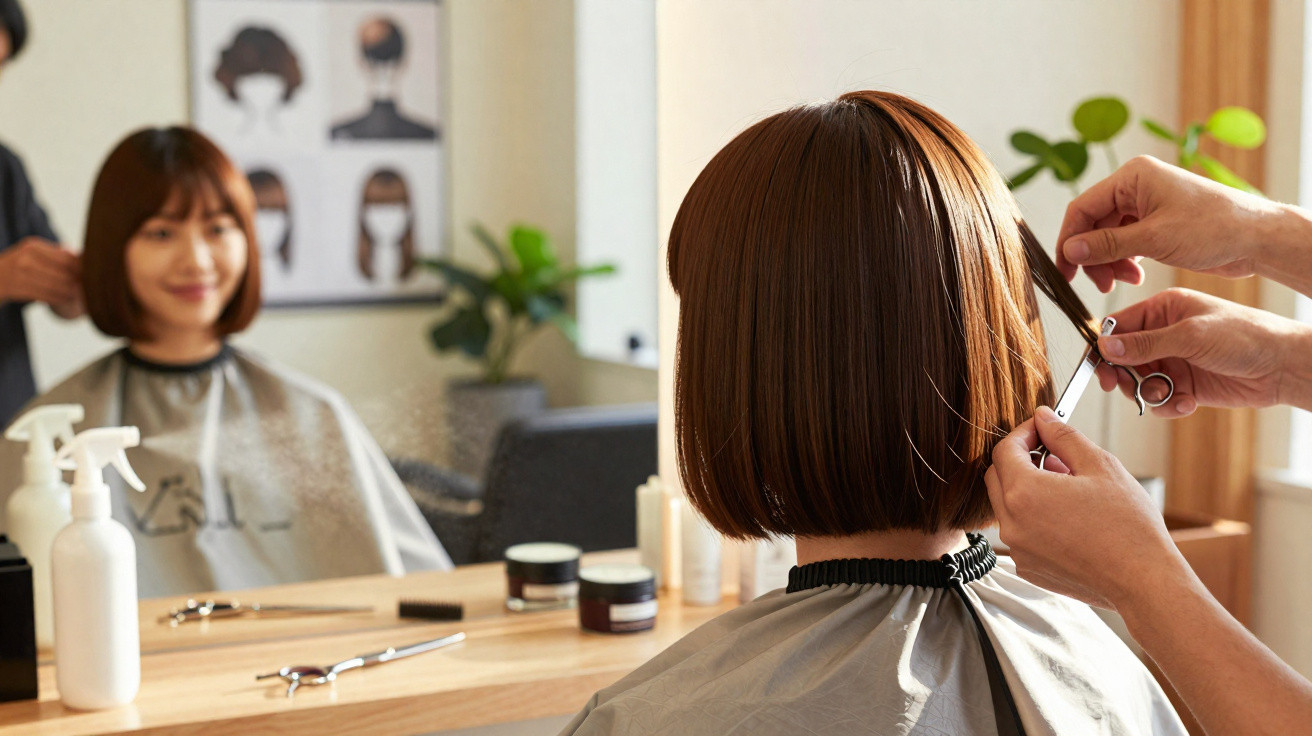
Sometimes known as a “face-lift lob”, this is not a teenage trend. It is designed for faces that have lived. Its length remains feminine and adaptable, but is short enough to reduce visual heaviness around the jaw and neck. Its appeal lies in the layers and movement. Carefully positioned pieces that soften the line around the cheeks and temples can make facial features appear lighter and, almost, more rested.
Many women are surprised by how “neutral” a lob can feel. It is neither girlish nor grandmotherly. It simply looks like you, only slightly more alert. This is why hairdressers continue to suggest it after 50: it acknowledges your age while subtly fooling the eye.
Marc, the Paris-based stylist who worked with Susan, informally followed his clients over a year. Of women over 50 who swapped weighty mid-back hair for a layered lob, almost 7 out of 10 later reported that colleagues had asked whether they had “done something” to their face. One woman was told she looked as if she had enjoyed a week of sleep and a refreshing holiday, when her only real changes were 10 centimetres of hair and a new fringe.
A different client, aged 62, came in with thick hair permanently secured in a low ponytail. She described it as her “I give up” hairstyle. Marc proposed a long, layered bob that just skimmed the collarbones, with soft pieces shaping her cheekbones. The following day, she messaged him: “My grandson asked if I’d had a birthday party without him because I looked different in the school pick-up photos.” That is the understated effect of a well-executed mid-length haircut.
Beyond the figures, the response is frequently emotional. Women over 50 are familiar with creams that promise miracles but provide… hydration. A haircut that genuinely changes how light falls on the face, how the neck appears and how defined the jaw seems can almost feel too good to trust. It is not magic; it is geometry.
Technically, this rejuvenating lob uses lines and volume to its advantage. Severe, straight cuts ending at the jaw can produce a block-like effect that highlights every shadow. Very long hair hanging below the bust draws the eye downwards and may make the face seem tiredly narrow. A mid-length lob works in the other direction: it creates lift.
When the length ends somewhere between the hollow at the base of the neck and the top of the bust, the stylist interrupts that downward-pulling visual effect. Gentle face-framing layers soften firm outlines and diffuse fine lines, rather like a portrait photographer applying soft focus. A delicate side parting may visually raise a drooping eyelid, while a few lighter front strands can add warmth to the complexion.
There is a psychological reason, too. A dramatic hairstyle change at 25 can feel like fun. At 55, it can affect your sense of identity. The lob offers a reassuring middle path: an evolution rather than a betrayal. The hair can still move, be tucked behind the ear and gathered into a loose ponytail. However, the overall shape feels neater and more purposeful. That is what appears youthful: not trying to look 30, but looking vividly current at your actual age.
How to wear a “face-lift lob” after 50 without regrets
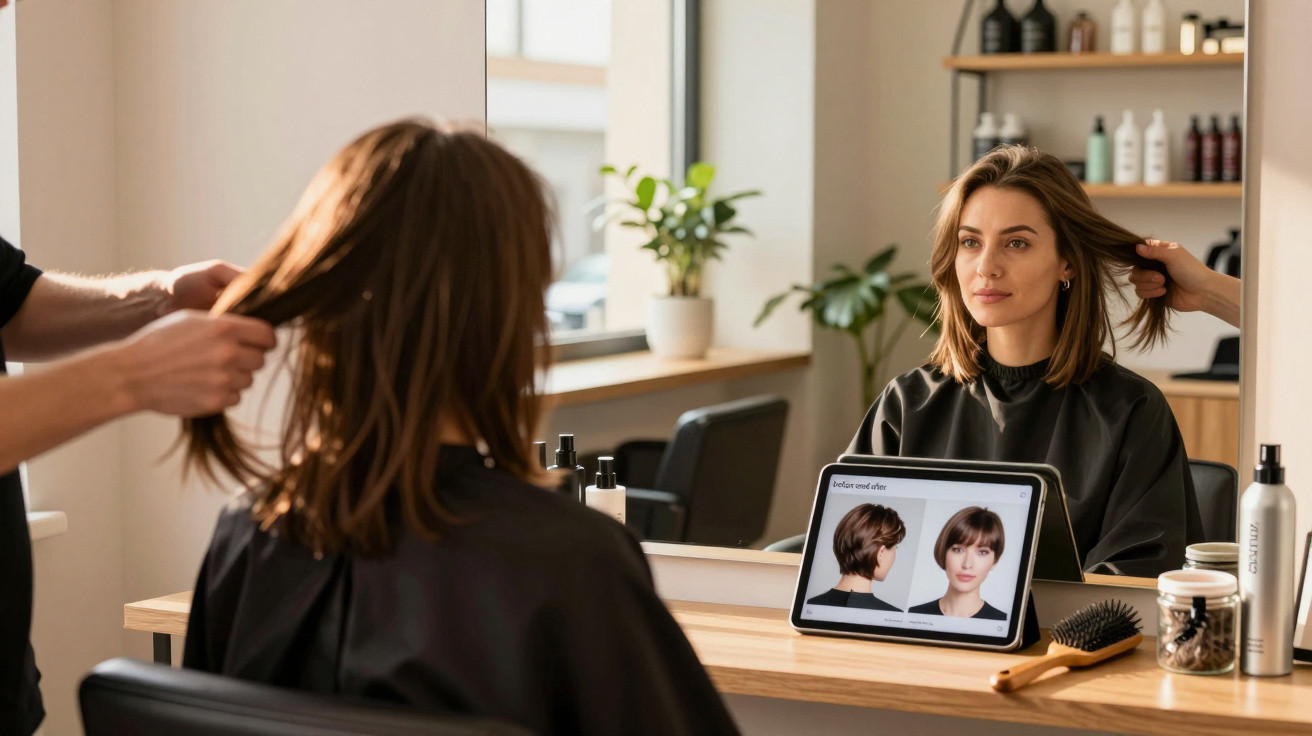
The haircut itself accounts for only half the result. What makes it genuinely rejuvenating is tailoring it to your own face. A skilled hairdresser will assess your jawline and neck before looking at your saved Instagram images. They will probably step back, angle your chin and observe how your hair naturally sits while you speak or laugh.
For a rounder face, a lob commonly falls slightly below the chin, with vertical movement that creates length. On a longer face, it may skim the collarbones and feature more fullness at the sides. Fine hair benefits from almost invisible layers and a blunt outline to preserve the impression of density. Thick hair responds well to internal layers that remove excess bulk without causing the triangular shape many people dread.
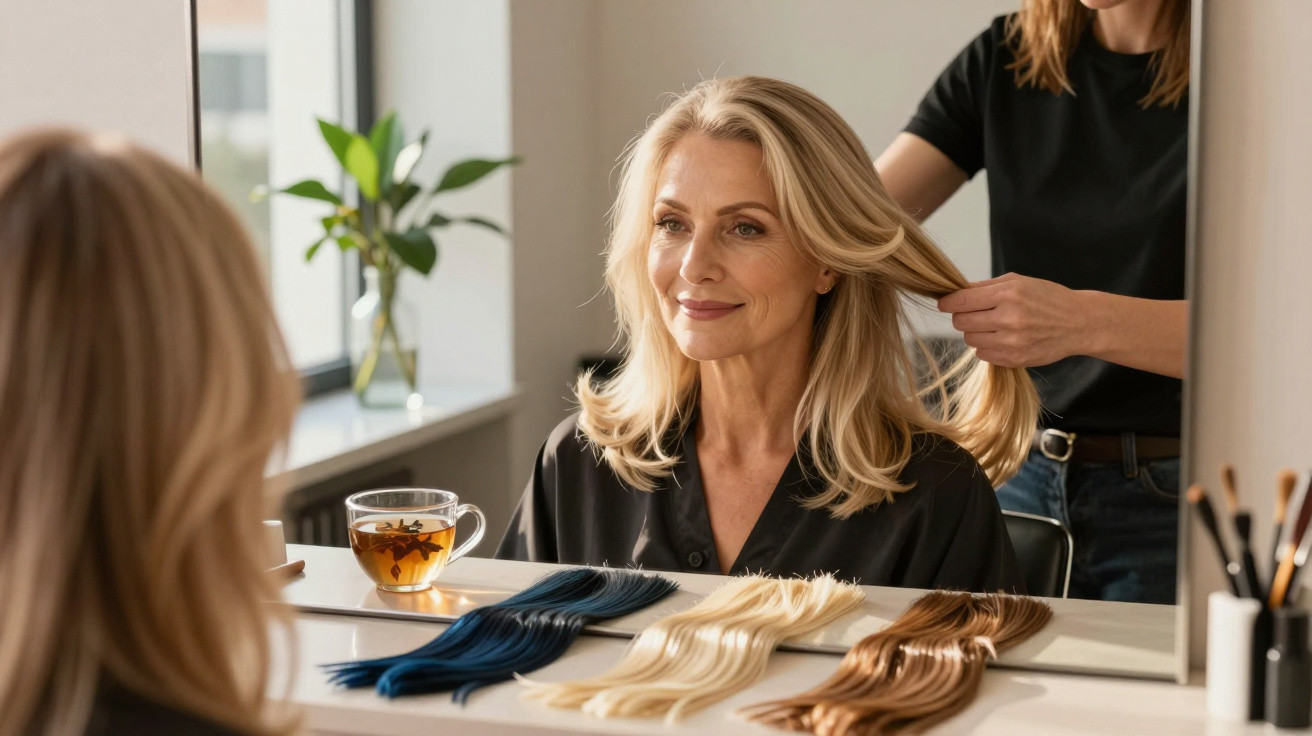
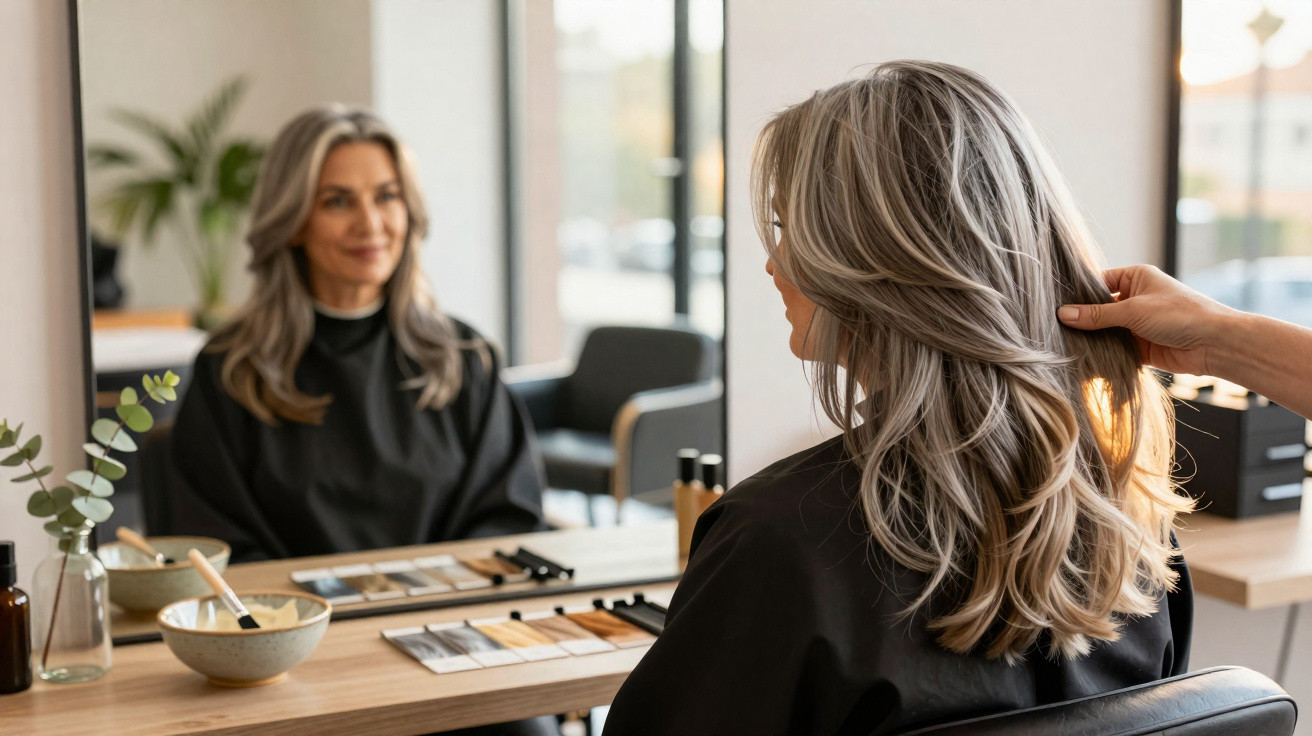
Colour also contributes to this face-lifting effect. After 50, a single dark block of colour around the face can seem heavy. Gently blended highlights at the front, creating a “halo” effect, brighten the skin and give the lob more texture, even if you have simply left it to air-dry before rushing out.
Styling is often where women feel intimidated and then abandon the idea. They imagine spending hours with a round brush and sore shoulders. In reality, it can be much simpler once you accept an imperfect, naturally lived-in result. With a blunt mid-length cut, a rough blow-dry with your head tipped forward can often provide enough root lift. A few swift bends using a medium curling iron on the front sections alone can then create that “effortless” wave which, secretly, does require some effort.
Marc gives his clients a small routine: work a lightweight volumising mousse into towel-dried roots, comb through the remaining hair with a wide-tooth comb, rough-dry it until it is 80% dry, then complete the final 20% with your head upside down. It takes two minutes rather than twenty. Let’s be honest: nobody truly does this every day, but even doing it twice a week can transform the way a lob frames your face.
The chief mistake after 50 is making hair too rigid. Hairspray helmets, overly sleek lengths and stiff outward flicks all add years because they immobilise the hair. A slightly tousled, airy lob with movement looks younger, even when it is grey. This is why accepting a little frizz, a handful of flyaways or your natural wave can be advantageous. The face looks animated rather than held in place.
Naturally, having scissors approach your shoulders comes with an emotional element. For many women over 50, it registers as a solid eight on a scale of one to ten. On a difficult day, it can feel like severing the final physical connection to your younger self. On a good day, it feels freeing. On an ordinary day, it is both. We have all experienced the moment when the hairdresser asks, “How much should we take off?” and every centimetre feels like a memory.
This is why the discussion with your hairdresser matters just as much as the technique.
“A face-lift lob is not about making you look younger at all costs,” insists Marc. “It’s about bringing your hair back in line with the woman you are now. The rejuvenation is a side effect of harmony.”
Before allowing anyone to cut your length, discuss:
- Your everyday energy: the amount of time you genuinely want to spend styling, rather than the idealised version.
- The feature you love most: your cheekbones, eyes or neck - the cut should highlight it.
- Your hair’s real texture, including the sections you normally conceal in a bun.
- Your way of life: glasses, exercise, workplace dress codes and even how frequently you colour your hair.
- Your non-negotiable fears: too short, too layered or too puffy - state them plainly.
More than a haircut: an understated visible reset
What makes this rejuvenating lob especially compelling is not only the photographs afterwards. It is how it quietly appears in ordinary daily encounters. You may suddenly spot yourself in a shop window and, instead of thinking, “I look tired”, think, “Oh, my hair moves nicely when I walk.” That small shift in mindset can spread further than people tend to acknowledge.
For some women, this mid-length style revives overlooked habits: earrings return from drawers, lipstick is tested again and old scarves are tied in new ways. It is not vanity; it is curiosity. A lighter outline around the face can make experimenting feel easier without seeming “too much”. The cut becomes a modest daily reminder that, yes, time has moved on, but style did not leave along with your forties.
Others notice a difference socially, particularly in compliments from other women. A colleague in her twenties asking, “Where did you get your hair done?” is more than a passing remark; it is a bridge. The cut looks contemporary without attempting to look teenage. That is exactly the sort of thing Google Discover likes to feature: images of women over 50 who still look like themselves, merely slightly enhanced by a thoughtful, human choice.
Of course, no hairstyle can replace sleep, good health or kindness towards yourself. A lob cannot solve a hard period, grief or burnout. When chosen with intention, though, it can remove the constant background thought of “I look tired, again” whenever you walk past a mirror. It is one less concern. One element that quietly supports you rather than working against you.
Perhaps this explains why so many hairdressers discuss the cut with such calm certainty. It does not shout about being fashionable. It requires neither a ring light nor a 12-step routine. It is simply a shape that honours your face as it is today while softening what time has etched. For many women after 50, that feels less like a makeover and more like a truce.
| Key point | Detail | Benefit for the reader |
|---|---|---|
| Structured mid-length | A lob falling between the jaw and collarbones, with subtle layers | Discover a rejuvenating cut without going “very short” |
| Softer facial contours | Lighter strands around the cheeks, temples and neck | Understand how strand placement can visually lift facial features |
| A realistic styling routine | Quick upside-down drying, a few soft waves and minimal products | See that a fresh, modern finish is possible without spending hours on it |






Comments
No comments yet. Be the first to comment!
Leave a Comment