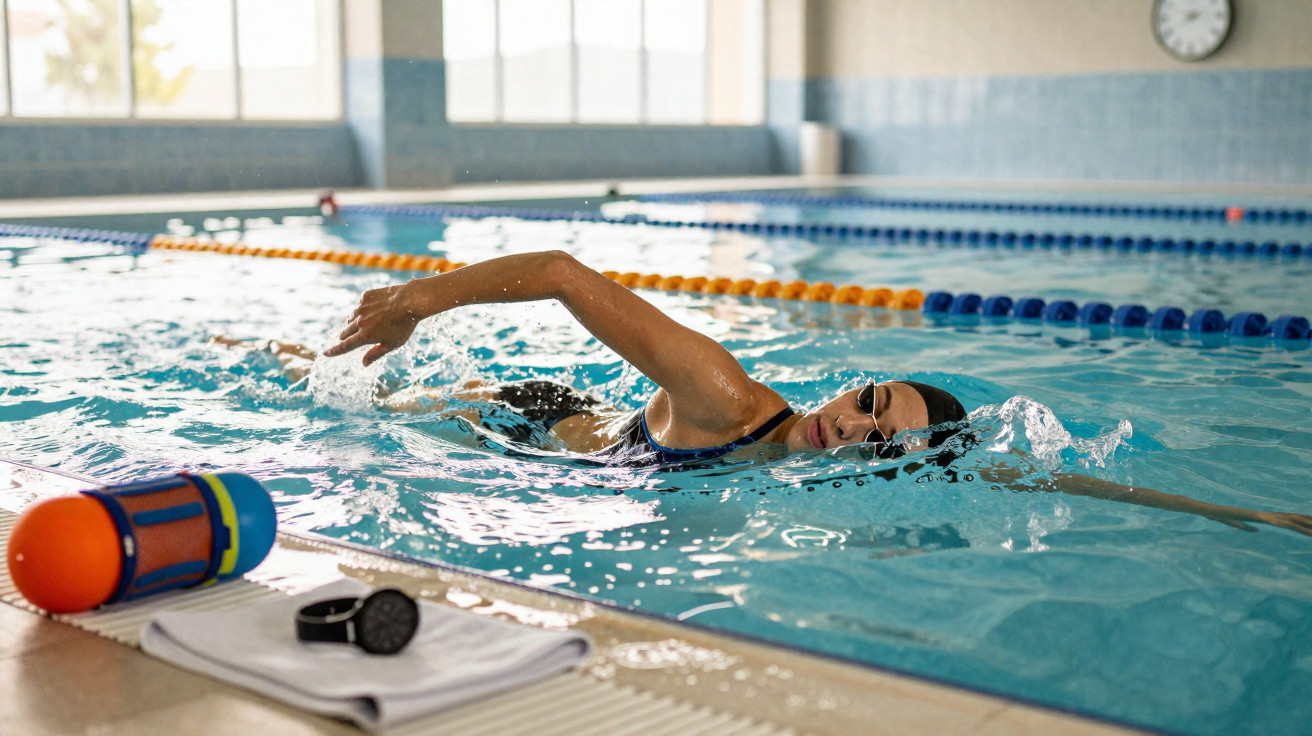
The swimming-pool changing room carried the scent of chlorine mixed with coffee from the vending machine. On a bench, two women in their late 60s compared bruises as teenagers might compare trainers. “I only did three laps today,” one sighed, wrapping a floral towel around her waist. “I’m so slow now.” Her friend shrugged, put on a pink cap and replied, “Three laps more than yesterday. That’s effort at our age.” They laughed, yet the atmosphere seemed to change.
Beside them, a man in his seventies wrestled with his goggles, apparently listening without making it obvious. When he eventually entered the pool, his stroke was awkward, untidy and resolute. He was not pursuing better performance. He was seeking something more understated.
A different kind of effort.
When effort no longer means “pushing like you’re 30”
At around 65, effort takes on a different physical form. Joints creak, naps become essential, and stairs that once went unnoticed suddenly seem to have character. Many people quietly decide, “If I can’t do it like before, I won’t do it at all.” They describe this as “being realistic”.
But another pattern is emerging in the background. Doctors, coaches and psychologists keep making the same point: people who remain active after 65 seldom do so by trying to reproduce their former performance. They remain active because they redefine what effort means.
Less “I must prove I still have it”. More “I want to keep moving in a way that fits who I am now”.
Consider Henri, 72, a retired electrician from Lyon. He once cycled 80 kilometres at weekends, racing buses through traffic simply for enjoyment. Following a minor heart problem and a knee that would not cooperate, he sold his racing bike and spent a year sulking behind drawn curtains. Eventually, his daughter took him to a nearby “gentle gym” class. The routine involved slow squats beside a chair, resistance bands and 80s music played far too loudly.
Initially, he disliked every part of it. “This isn’t sport,” he grumbled. One afternoon, however, he realised he had carried two heavy bags of shopping up four flights of stairs without having to stop on the landing. He sat on his bed, breathless but astonished. His new “record” was not measured in distance or speed any longer. It was the ability to carry his own shopping.
That subtle shift in definition altered everything.
Psychologists refer to “self‑efficacy”: the belief that your actions still make a difference. After 65, that belief can often be shaken. Retirement, health scares, children leaving home and friends dying - suddenly, life’s scoreboard can feel unforgiving. Effort once meant progressing in a career, bringing up children and buying a home. Once those stages have ended, the old measure of “effort equals big visible achievement” no longer applies.
Nevertheless, our brains are still programmed to seek progress, simply on another scale. Walking to the bakery without needing to sit down halfway there. Remembering everyone’s name at the bridge club. Cooking for six even when you live and eat alone. Each is an effort that meets the same deep need: “I still count.”
Redefining effort does not mean lowering the bar. It means placing the bar where it truly matters now.
Turning small moves into powerful effort
One practical way for people over 65 to rebuild confidence is to reduce the size of each effort. Rather than saying, “I will walk 5 kilometres every day”, try, “I will walk to the next bench, then see.” The brain responds well to victories. It is not concerned with kilometres; it responds to completing what you set out to do.
It can also help to link effort to a specific action already built into everyday life. Water plants while standing rather than sitting down. Deliberately go upstairs once a day to collect something you left there. Phone a friend instead of waiting for your children to contact you.
These micro-efforts may appear insignificant on paper. From the inside, they can feel like recovering a small part of your own territory.
The common trap is to measure new efforts against an old peak. “I used to run 10K, now I get tired putting the bins out, what’s the point?” That thought destroys more motivation than any diagnosis. We have all known that moment when the memory of our former self speaks more loudly than our present body.
A kinder method is to compare yourself only with where you were last week. Walked for five minutes without stopping yesterday? Five and a half today is progress. Spoke to one person at the senior centre last time? Speak to two next time, or remain there longer. Tiny increases count when the baseline has changed.
To be honest, no one manages this every day. Some days are for naps and complaints. Confidence develops when those days are treated as pauses rather than failures.
“After my hip surgery, I decided my new sport would be putting my socks on standing up,” laughs Maria, 69. “The nurse told me to sit down. I said, ‘Give me three weeks.’ The first day, I lasted two seconds before wobbling. The third week, I could do both socks. I felt like I’d won the Olympics, just without the stadium.”
- Pick one small challenge that is mildly irritating but manageable: stand while brushing your teeth, stretch during television adverts or walk along the hallway twice.
- Make it a daily ritual, rather than a test. Keep to the same time and the same action, without making a fuss.
- Record your successes in a notebook, on a calendar or on the fridge. One simple tick is sufficient.
- Give yourself a small reward: a phone call, a favourite programme or a sweet treat if your health permits it.
- Adapt the challenge if pain or fatigue becomes too insistent. Effort should feel energising, not punitive.
When effort becomes identity again
Redefining effort after 65 raises another question: who am I if I am no longer the worker, the full-time parent or the relentless achiever? Many people gradually reconstruct their identity around other forms of effort. Emotional effort may involve learning to refuse family demands. Social effort might mean joining a choir despite feeling out of practice. Cognitive effort could be learning enough of a new language to order coffee on a future trip.
What stands out is that confidence seldom comes from ambitious goals. Instead, it comes from the everyday feeling that you still have a part in your own life. You are still moving, choosing, attempting, declining and persisting.
People who describe this stage with a spark in their eyes do not say, “I’ve slowed down.” They say, “I’m choosing where to spend my energy now.” That distinction changes everything.
| Key point | Detail | Value for the reader |
|---|---|---|
| Redefine effort in smaller units | Move away from large goals towards small, repeatable actions connected to everyday life | Makes progress visible again and restores a sense of control |
| Compare only to your recent self | Use last week or last month as your point of reference, rather than your thirties | Reduces discouragement and builds realistic confidence |
| Include emotional and social effort | Treat conversations, boundaries and new experiences as genuine effort | Broadens the meaning of “being active” beyond physical performance |















Comments
No comments yet. Be the first to comment!
Leave a Comment