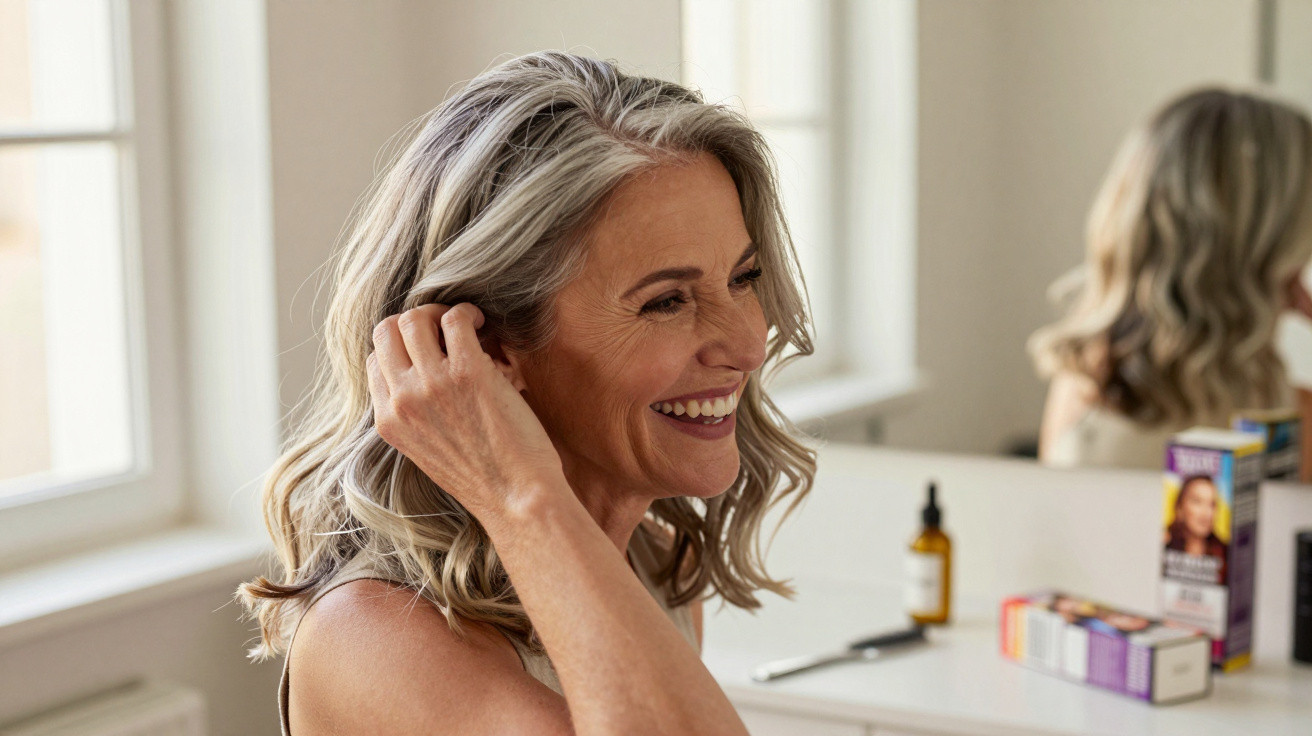
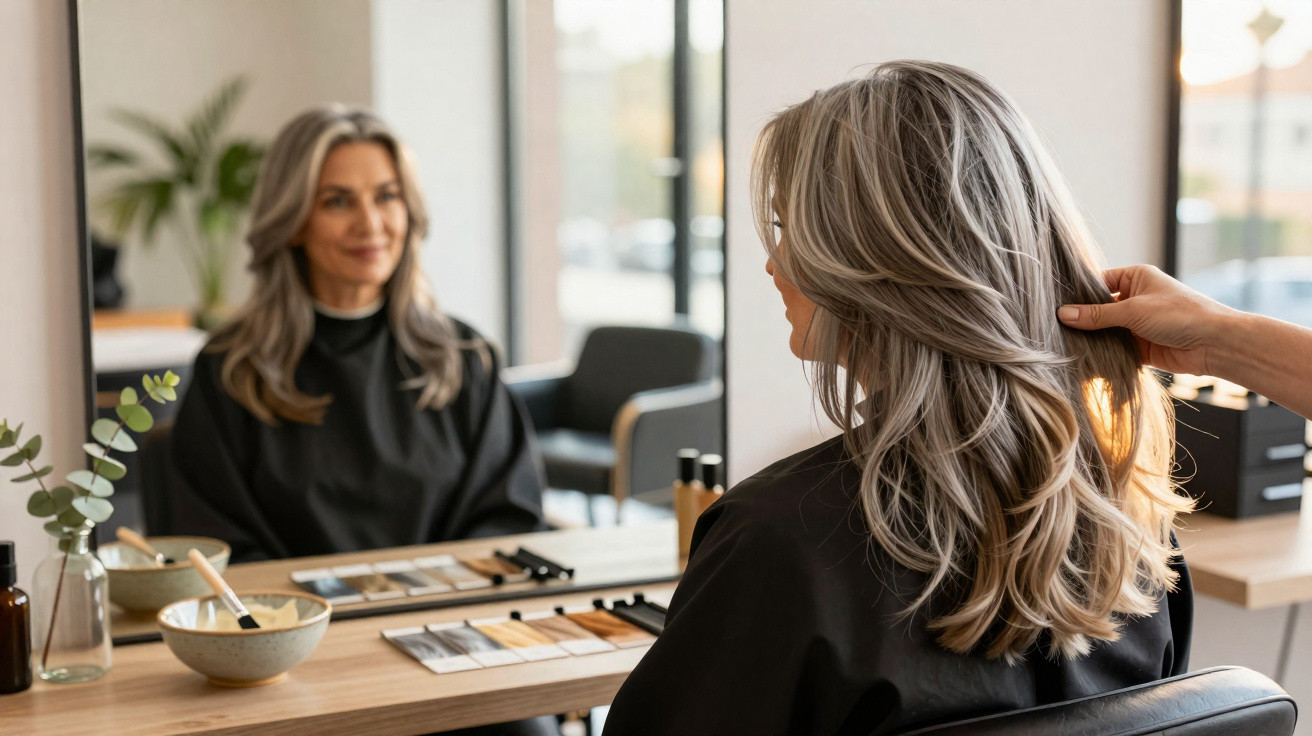
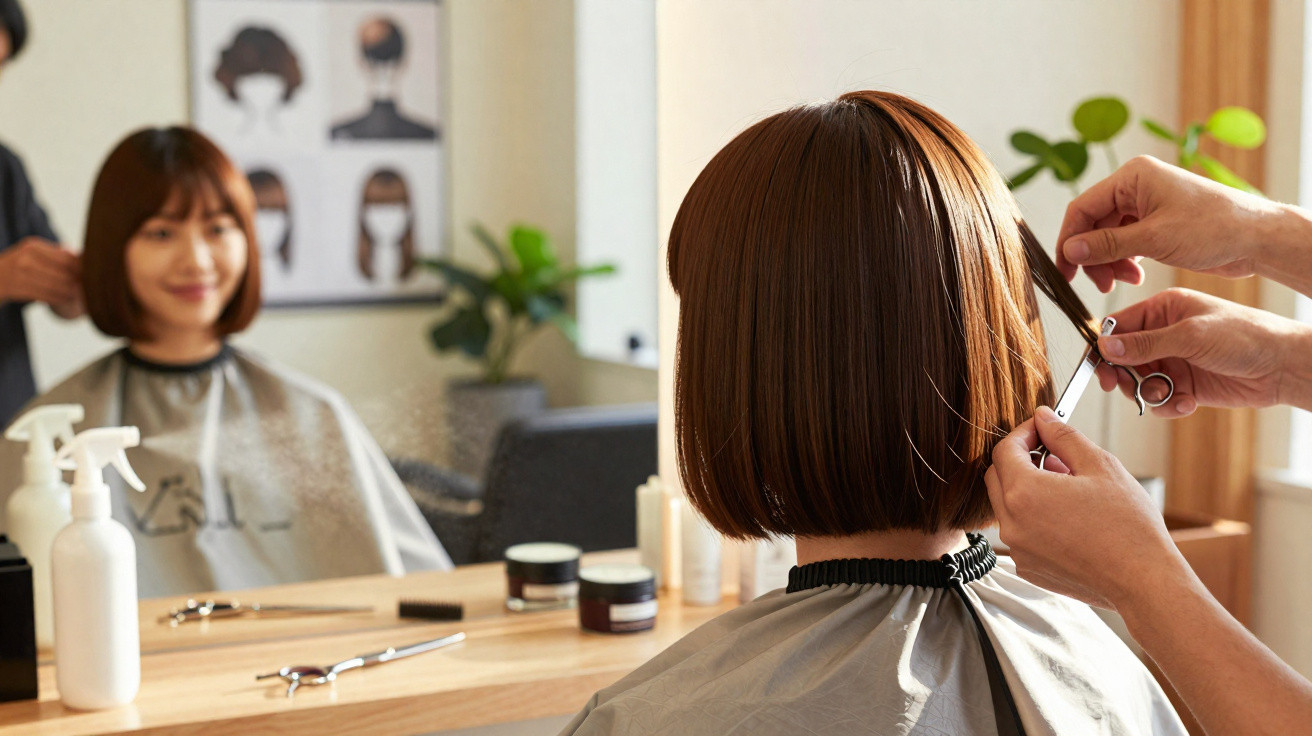
She is perhaps 55, with a striking halo of silver hair and unapologetically red lipstick. Beneath the neon lights of a London salon, other clients leaf through magazines promoting “age-defying” serums and “miracle” injections. She has come for a cut rather than a colour. The stylist raises a gleaming grey lock and murmurs: “This is better than Botox.” She gives a nod that suggests she has known it all along.
Grey hair, once discussed in hushed tones and covered at the first opportunity, is now highly visible. It appears on news presenters, chief executives, influencers and the neighbour walking her dog at 7 a.m. The change may look subtle, but it is seismic: people are doing more than accepting their grey; they are wearing it as a statement of power. Meanwhile, the multi-billion-pound anti-ageing industry is watching the missed colour bookings and unsold “youth in a bottle” sets mount up. Public attitudes to ageing are changing. The real question is who benefits, and who is frightened by it?
Grey hair as a quiet revolution
Take the Tube during rush hour and they stand out straight away: a silver bob beneath an oversized blazer, salt-and-pepper curls teamed with vivid trainers, a long iron-grey ponytail moving like a flag. This is not the neat, apologetic grey hair of earlier years. It is purposeful, styled and almost defiant. The message is not “I have given up”, but “I have arrived”.
The most notable thing is not the shade itself, but the way people carry it. Their shoulders seem more relaxed. They hold eye contact for longer. Their smiles do not appear to be searching for fine lines. Grey hair achieves something a facelift promises but seldom provides: it returns the freedom to occupy your own age without shrinking from it. A facelift pulls the skin taut; grey hair says, softly yet decisively, I’m not hiding anymore.
The figures make the picture clearer still. Worldwide sales of home hair dye remain substantial, but growth has levelled off in many Western markets just as Google searches for “going grey gracefully”, “grey blending” and “silver transition” rise year after year. Hairdressers describe growing numbers of clients arriving with saved Instagram images of silver-haired women and asking, “Can I do this?”
Brands have taken note. Ten years ago, grey hair was unusual in advertising and was generally softened into a polite, airbrushed white. Today, steel-grey pixie cuts sell luxury clothing, salt-and-pepper stubble features in skincare adverts, and entire product ranges are designed to “gloss” or “enhance” natural grey. At the very same time, the anti-ageing machine promotes brighter dyes, more aggressive peels and stronger “correcting” formulas. The contradiction is almost tangible.
What is truly at stake is control. Once grey hair is seen as appealing, intelligent or even aspirational, an entire category of products designed to “fix” it loses its emotional hold. The anxiety driving so many anti-ageing purchases starts to weaken. Grey hair becomes a visible rejection: a calm refusal of the idea that youth is the only form of beauty worth funding. And after saying no through your hair, it becomes easier to reject dozens of other things as well.
How to make grey hair your best feature, not a “problem”
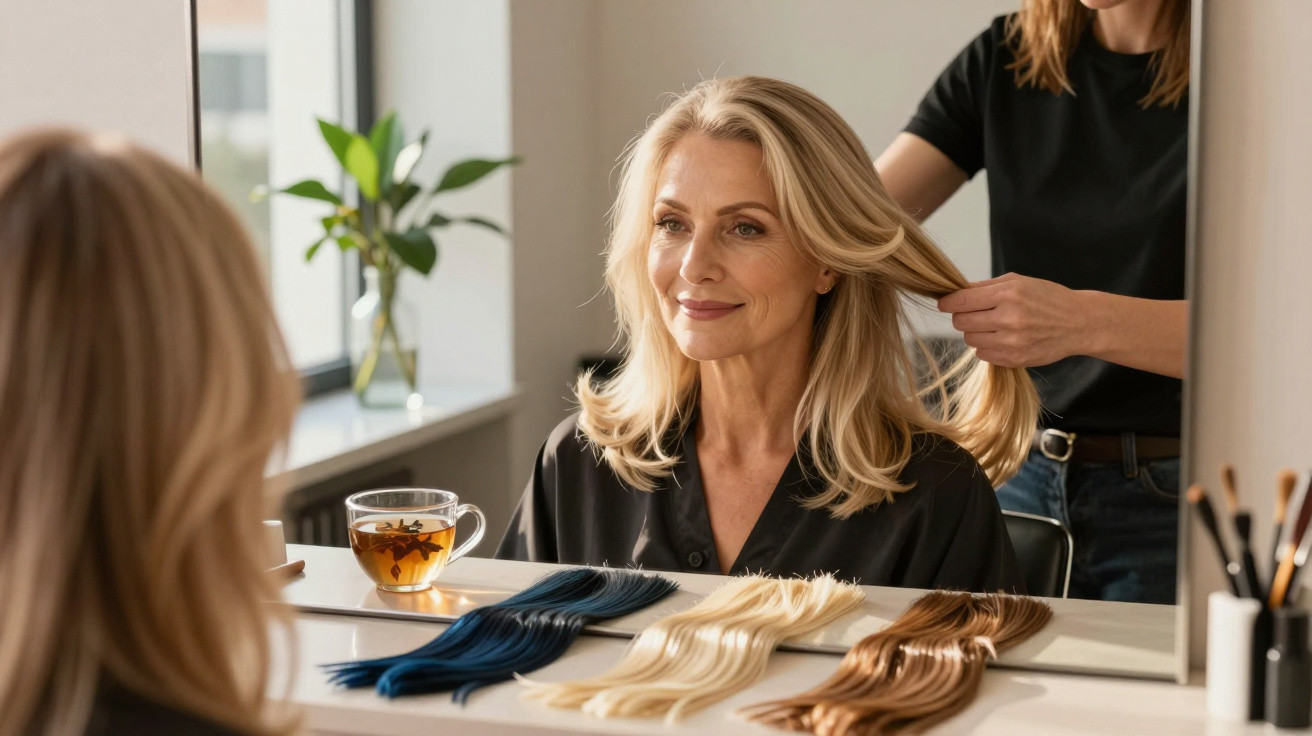
Women and men whose grey hair has the impact of a facelift rarely simply “let it go” and hope everything works out. There is usually some thought behind it. One particularly effective option is a gradual transition, using lowlights, balayage or “grey blending” to soften the stark divide between previous colour and natural roots. This phased method turns an uncomfortable grow-out stage into an intentional style decision.
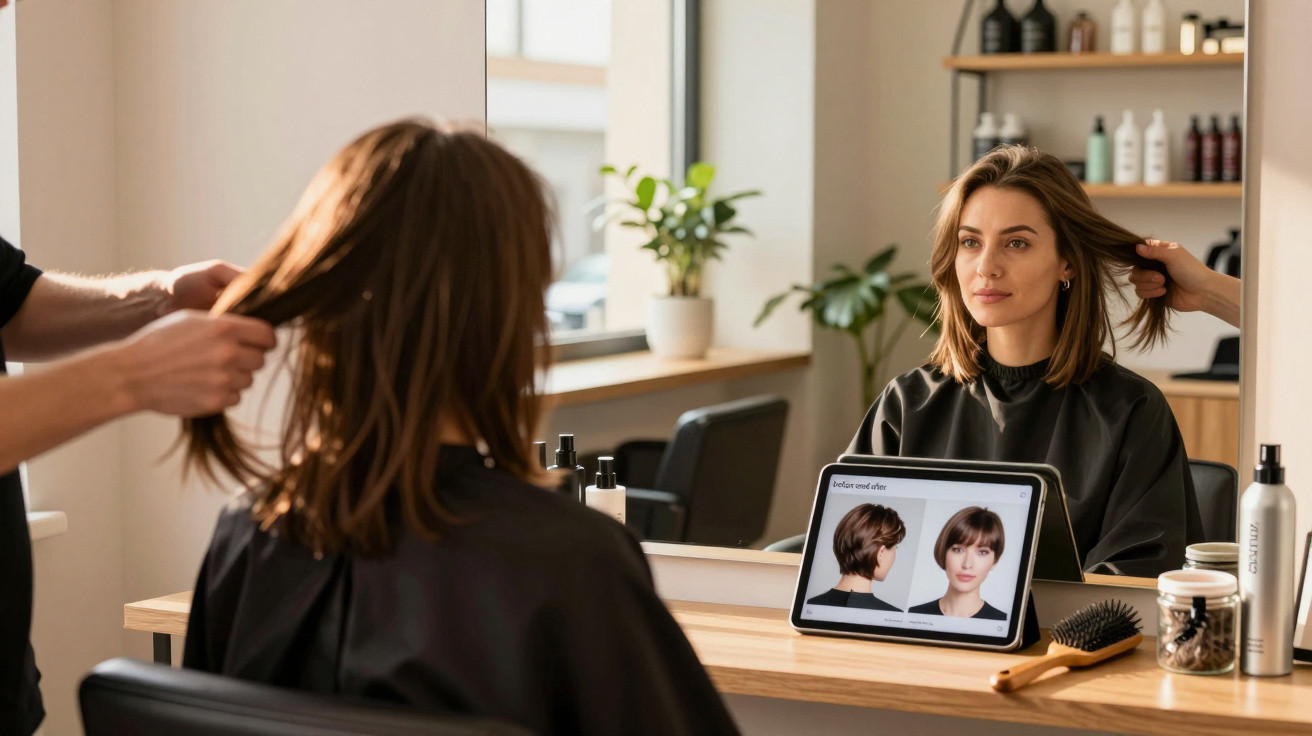
Next comes the cut. Grey hair benefits from shape and structure: a precise bob, a current shag, a short pixie or even lengthy layers with movement. A crisp, purposeful silhouette reads immediately as “style” rather than “neglect”. Products also play a part: purple shampoo once a week can counter yellow tones, a lightweight oil adds gloss, and a texture spray may prevent hair from becoming flat. Small adjustments can produce a major difference.
Practically speaking, several habits can make grey hair appear weary rather than luminous. Washing too often is one of them. Removing its natural oils can leave grey hair brittle and lacklustre. Daily straightening is another. Heat damage shows more clearly on silver strands, which are often naturally drier. Makeup and clothing matter too: sticking with the same shades worn with brunette or blonde hair can suddenly make the complexion seem washed out.
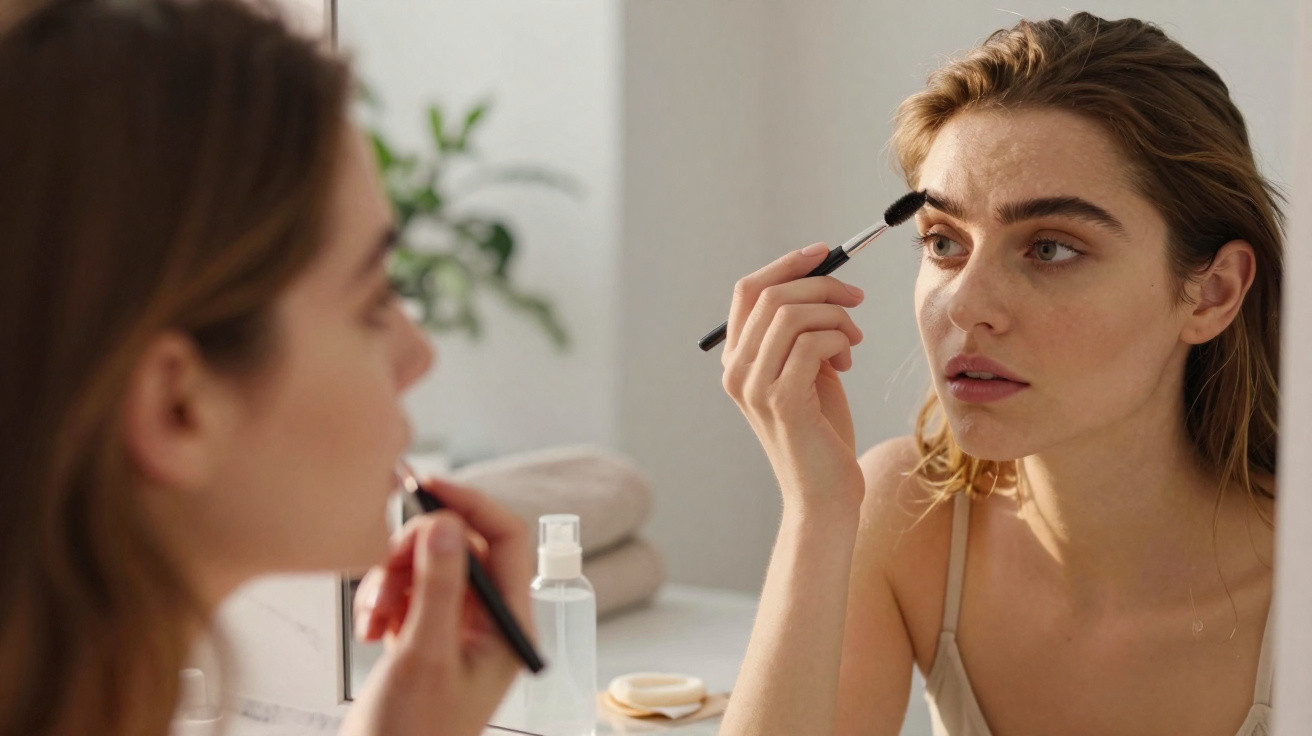
Gentle changes can make a difference. Try a slightly stronger brow pencil, lip colours with more depth, and jewel-toned tops instead of beige that vanishes against the skin. Let’s be honest: nobody really manages all of that every day, but modest, consistent adjustments create a look in which grey feels deliberate rather than accidental. The aim is not perfection; it is vitality.
The emotional side is seldom addressed in beauty advertising, although it can be the most significant part. The first few weeks of growing out grey may feel harsh. Strangers make comments. Friends “recommend” their colourist. Colleagues ask whether you are “tired”. Beneath all of that noise, however, something else is taking place: your face is learning to exist without the filter of dyed hair.
“Grey hair didn’t age me; hiding it did. Once I stopped colouring, I stopped apologising for existing in my forties,” says Laura, 47, who documented her hair transition on social media and accidentally built a community of thousands.
- Prioritise shine over shade: healthy grey always appears fresher than flawlessly coloured but damaged hair.
- Create a straightforward routine that you will genuinely maintain, rather than a 15-step fantasy.
- Allow yourself six months before judging whether grey “suits” you. The awkward stage is not the finished result.
- Fill your surroundings with images of people wearing grey in the way you would like to wear it. Your mind needs fresh reference points.
- Think about the time and money you are reclaiming. That alone can feel like a cosmetic treatment for your diary.
Why the anti-ageing industry is so uneasy about your grey hair
Follow the money and the anxiety becomes understandable. Hair colour is not merely another product; it is a subscription model built on insecurity. Root touch-ups every four weeks, glosses, toners and “emergency” kits between salon appointments all form part of it. The moment someone chooses to go naturally grey, a whole chain of repeat spending can disappear overnight.
Multiply that individual decision by thousands and then millions, and the spreadsheets in beauty boardrooms begin to tremble. The same applies to age-correcting skincare and invasive procedures: when a visible sign of ageing such as grey hair becomes socially neutral, or even desirable, the emotional case for “erasing” other signs of age becomes less convincing. The fear campaign loses some of its soundtrack.
The marketing language therefore evolves. You may notice more references to “refreshing” and “brightening”, rather than openly “fighting” age. Slogans about being “ageless” slip in too: a clever means of selling the same products beneath a gentler, more contemporary-sounding label. Grey-haired models appear in campaigns, but often alongside heavily retouched skin and impeccably polished lifestyles, as though the message is: go silver if you like, provided you still buy everything else required to remain permanently smooth.
Grey hair as the new facelift disrupts that message because it is inexpensive, conspicuous and intensely personal. You make the decision once, then inhabit it every day. There is no upgrade to sell. No loyalty card. Only you, your reflection and the gradual recognition that looking “older” is not the same as looking “worse”. On an ordinary Tuesday morning in the bathroom, that thought alone can feel revolutionary.
What follows is cultural rather than merely cosmetic. When colleagues see a confident silver-haired manager leading a meeting, they may reconsider their own relationship with age. Teenagers raised with role models who age openly may not inherit the same fear of laugh lines. The anti-ageing industry then has to work harder, more intelligently and more kindly to remain relevant.
Not everyone will throw away their serums or swear off hair dye forever. On a difficult day, a brightening cream and a skilful blow-dry can feel like armour. Yet as grey becomes more visible and ordinary, those options feel increasingly voluntary rather than compulsory. That small change in mindset is what keeps executives awake at night.
Grey hair will not magically solve a complicated relationship with your reflection. It cannot erase years of pressure, remarks and comparisons. At first, it may even bring those feelings to the surface, raw and loud. For many people, though, allowing the silver to show becomes the first honest conversation they have had with their own face in decades.
On a busy street, the same woman from the salon steps out with her fresh cut. Her silver hair catches the late-afternoon light. Nobody stops. Nobody gasps. A teenager cycling past calls out, “Cool hair!” without slowing down. The world does not end. Instead, something quieter occurs: the story of what ageing must look like shifts by half a degree.
Those half-degrees count. Over years, and across workplaces, families and group chats, they accumulate. They alter how grandparents appear in photographs, how midlife is shown in advertising and how younger people imagine their own future faces. Grey hair is not a trend, because trends fade. It is closer to a language we are gradually relearning after decades of speaking only “youth or nothing”.
Perhaps that is why it feels both unsettling and right. You stop attempting to turn back time and begin editing the present instead. Less struggle, more finesse. Less panic, more play. The beauty industry will continue selling creams and tricks, because that is what it does. You, however, can choose whether your hair colour is a battle or a banner.
And if you catch sight of yourself one morning in unflattering bathroom light and think, “Wow, I look tired,” that is fine. Everyone has days like that. Just remember: the grey did not cause it. The story surrounding it did. And stories, unlike hair, really can change overnight.
| Key point | Detail | Benefit for the reader |
|---|---|---|
| Grey as a “natural facelift” | Structured cuts, shine and confidence give grey hair a visually lifting effect | Understand how grey can make the face look younger without surgery |
| Transition strategy | Grey blending, new makeup tones and gentler routines | Have a practical method for going grey without a shock |
| Industry pushback | Anti-ageing marketing depends on fear of getting older | Step back from messages that sell anxiety more than products |




Comments
No comments yet. Be the first to comment!
Leave a Comment