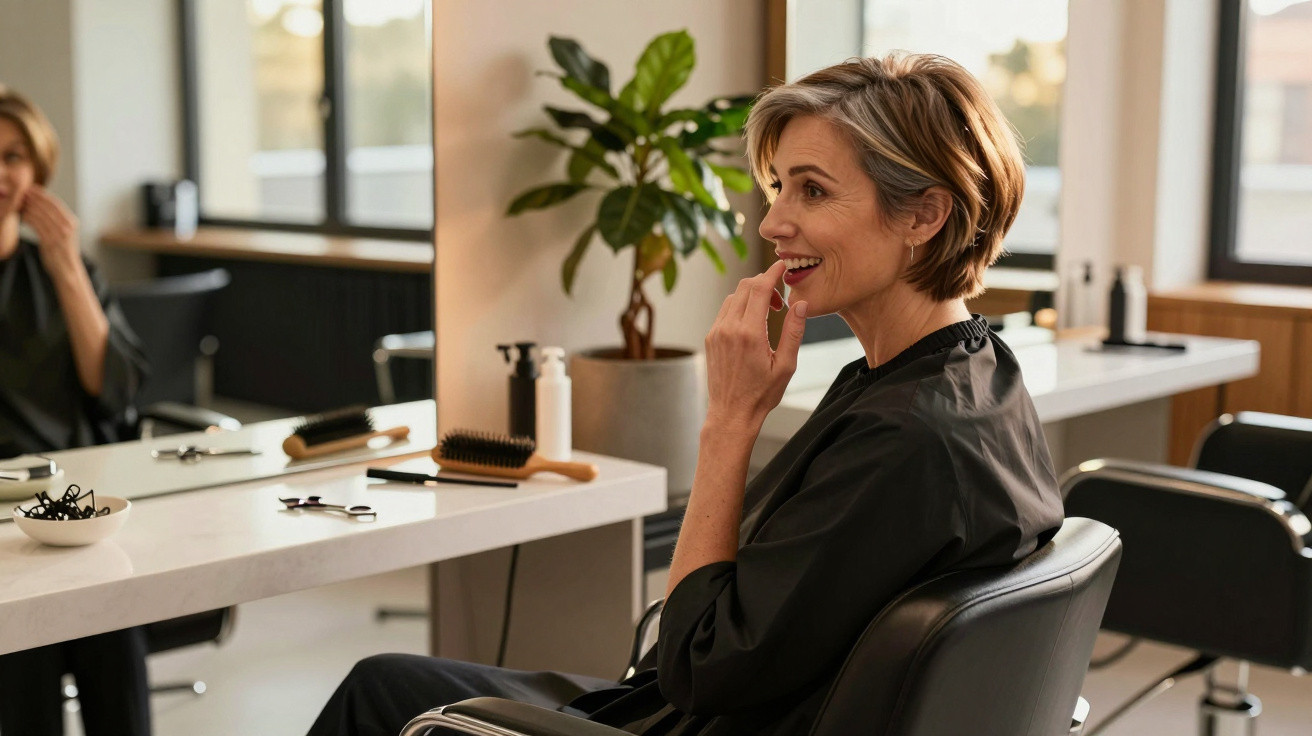
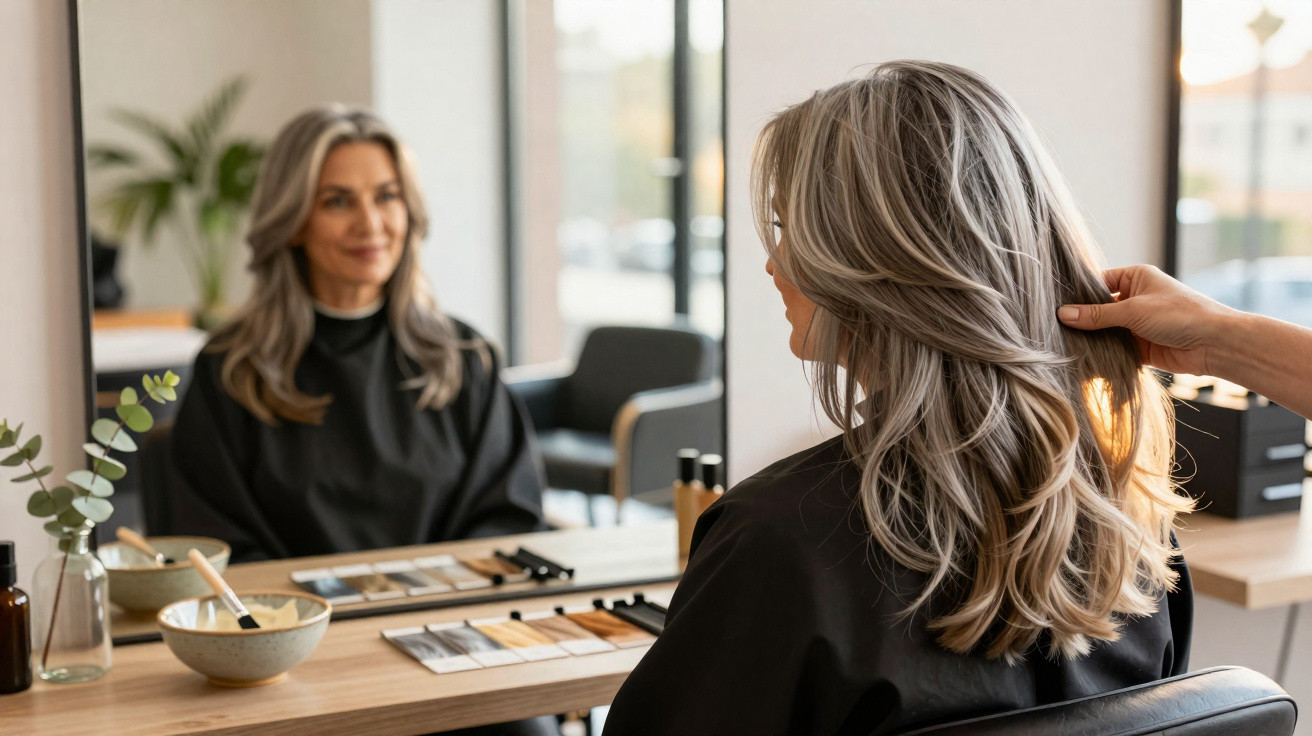
At 9:15 on a Tuesday morning, the salon is already alive with activity.
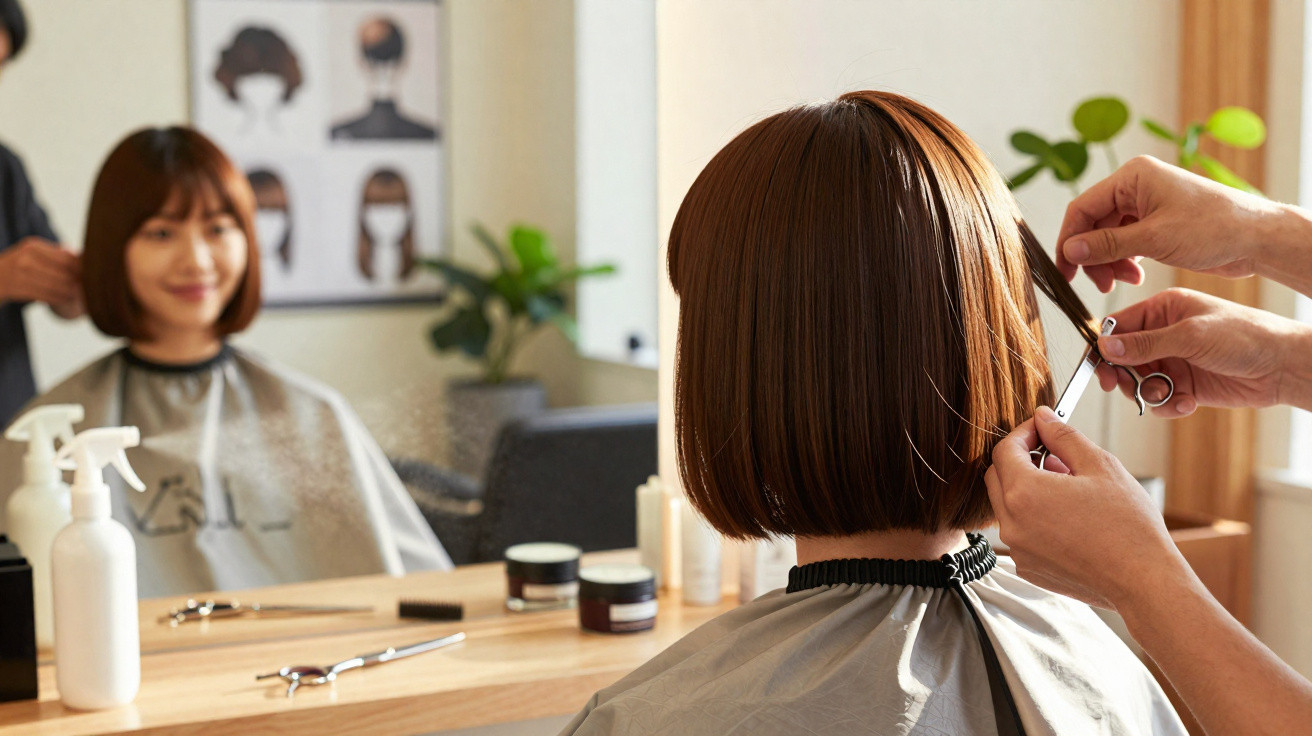
Coffee cups balance on mirrors, hairdryers create a gentle background hum, and women chat quietly about everything and nothing. In the second seat beside the window, a woman in her fifties passes her hand through her shoulder-length bob. In the mirror, her gaze lands on her neck, her jawline and the stubborn strands that never behave. “I just want to look like myself… but fresher,” she tells the stylist, laughing and apologising in equal measure.
The hairdresser smiles and proposes a style she has not worn for years: a grown-out pixie. It is not the dramatic, boyish crop of the 1990s, but a softer, longer and effortless version that works with the shape of her face rather than against it. It does not announce “I’m trying”, yet it subtly removes years of weariness from her features.
An hour later, her eyes seem larger. Her cheekbones have suddenly reappeared. She reaches to touch the back of her neck and gasps. The change is about more than her hair.
Why the grown-out pixie is stealing the show after 50
Step into a contemporary salon and you are likely to see it almost immediately: the in-between short style that is neither quite a bob nor a close-cropped pixie. The grown-out pixie is appearing everywhere, particularly on women over 50 who no longer want to conceal themselves beneath weighty, undefined layers. It brushes the ears, sits gently against the nape and retains a handful of longer, seemingly effortless pieces around the face.
Hairdressers favour it because it can instantly brighten the entire expression. The jawline appears more defined, the eyes look less weary and even posture can seem to change slightly. It offers a mix of softness and edge that longer hair can sometimes obscure on mature faces. Its appeal lies in the impression that it has simply grown into this shape naturally.
For many professionals, it has become the fast route to a fresher-looking face after 50. That is not because it attempts to erase age, but because it reveals the face rather than drawing attention to the haircut. There is lift at the crown, small wisps that fall organically and sufficient length to remain feminine, without enough weight to pull the features downwards.
A London stylist told me that, over the past five years, requests from women over 50 for highly structured bobs have fallen, while demand for “soft short cuts” has risen sharply. Clients arrive with screenshots of older actresses, news presenters and even their stylish yoga-class neighbour. The shared feature is a grown-out pixie with an intentionally undone finish: hair that suggests “I woke up like this” even when every strand has been discreetly shaped by a professional.
There is a reason this shape is catching on so quickly. It suits thinning hair, fine hair that never keeps a curl and mixed grey hair midway through a transition. A well-cut grown-out pixie works with what is already present instead of battling texture or colour. It adds height on top, where hair often becomes flatter with age, while taking away the heavier lengths that can drag the face down, especially around the jaw and neck.
Technically, it is a smart optical illusion. Releasing the neck and shortening the sides naturally directs the eye upwards. Light catches the cheekbones and temples rather than disappearing behind a curtain of hair. This simple rebalance can make a profile appear years younger without an injection or a filter. It is not magic; it is geometry.
How to make a grown-out pixie really work after 50
The key begins not with scissors but with a discussion. Like a well-fitted jacket, a grown-out pixie should be tailored to your face. A stylist will normally assess your profile, the direction of your crown swirl and how your hair sits when left to air-dry. They can then decide where softness should remain: perhaps a longer fringe that skims the eyebrows, a side section to soften a high forehead or a few pieces that sit against the neck if you are not ready to expose it completely.
Think in terms of three areas: the crown, sides and fringe. To create a lifting effect, hairdressers commonly retain a little height at the crown, cut the sides closely enough to show off the cheekbones and shape a fringe that can be swept to one side. The fringe is the cut’s “dimmer switch”: longer for those wanting more cover, shorter for a bolder feel. The intention is to frame the face, not conceal it.
Many women go wrong by attempting to wear a grown-out pixie like the ultra-edgy style of a younger friend. On a mature face, excessive rigidity or extreme asymmetry can soon make the expression look harsher. The grown-out version is at its best when it looks slightly lived-in: a few flyaways, some natural movement and soft edges that say this is real hair on a real day.
In practical terms, women over 50 often have concerns about time. “I don’t want something I have to style for 40 minutes every morning,” is a sentence hairdressers hear all week. Fortunately, a grown-out pixie is designed to require little effort. With a suitable cut and the right products, styling is more about touch than technical skill. Rough-dry it quickly with your fingers, work in a pea-sized amount of styling cream, lift the roots with a shake, and you are already halfway there.
The main pitfall is cutting a bob or longer style down all at once and expecting it to look perfect instantly. There is an adjustment period when the back is shorter, the fringe has not yet found its position and your hands keep reaching for hair that is no longer there. This is entirely normal. Let us be honest: nobody really creates those immaculate blow-dries seen on Instagram every day.
One Paris colourist told me: “The happiest women with short hair are the ones who accept that some days it will just do its own thing.” On those occasions, dry shampoo, a headband or a statement earring can be your best ally.
“A grown-out pixie is like good makeup you can’t see,” says Sofia, 48, a stylist in Madrid. “People don’t say ‘Nice haircut,’ they say ‘You look rested.’ That’s when I know I did my job.”
To keep the style in its ideal range, most hairdressers advise a trim every 6 to 8 weeks. This does not mean a complete restyle, only a tidy-up around the ears, nape and fringe. Think upkeep rather than reinvention. Texture products also matter: overly heavy waxes can flatten fine, mature hair, whereas very strong gels may age the style by making it look stiff.
- Request softness around the edges rather than sharp, razor-clean lines.
- Take photographs of women over 45, not just 25-year-old influencers.
- Discuss your actual routine, not the routine you wish you had.
- Decide on a growing-out plan before having the first cut.
- Combine the cut with subtle highlights to bring light around the face.
The deeper shift hiding behind a “simple” haircut
The grown-out pixie is not merely a hairstyle trend. It reflects a quiet rebellion among women over 50 who are weary of being told that their hair should either remain long and “feminine” or become unnoticed. Short hair was once presented as a compromise, something chosen when you had given up. For many women today, it represents the reverse: a choice to stop carrying five extra years of hair that no longer feels like them.
At a deeper level, there is a reason this style connects with people. It occupies a rarely discussed middle ground: between wanting comfort and wanting style, between avoiding a pursuit of youth and refusing to accept looking tired. On a difficult day, a heavy bob may feel like a curtain to hide behind. A well-executed grown-out pixie can instead feel like stepping out from behind the scenes and seeing your own face properly again.
We have all had the moment of catching our reflection in a lift mirror and wondering, “When did I start looking this tired?” Hair cannot solve everything. However, it can remove visual distraction so that the real you comes back into view. That is what hairdressers mean when they say a cut “rejuvenates” the face. They do not mean a numerical age; they mean energy, clarity and the quick spark in the eyes when you recognise yourself again.
Another understated strength of this cut is its versatility. You can wear it brushed back for a sharper, almost androgynous feel, then bring the fringe forward for dinner to soften the overall look. You can allow grey hair to grow through or experiment with warmer tones that complement your complexion. Unlike very long hair or a rigid bob, it does not confine you to a single identity.
Ask stylists why they continue to recommend the grown-out pixie to women over 50, and “fashion” is rarely their first answer. They mention practicality, a cooler and lighter neck in summer, hair that dries in ten minutes rather than forty, and less breakage in fragile lengths. What clients tend to mention months later, though, is something different: friends commenting, “You look like yourself again.” It is a small thing. It is not.
For many women, leaving the salon with a new short style is a quiet act of bravery. On the first night, there can be a moment of alarm in the bathroom as fingers run through unfamiliar hair. Then, often without warning, one morning arrives when the cut settles into place with almost no effort. That is generally when the text message to the hairdresser is sent: “Okay, you were right. I’m keeping it.” The grown-out pixie has done its job.
Ultimately, the grown-out pixie starts a conversation: with your mirror, your stylist and sometimes even strangers in the supermarket who stop to say, “I love your hair, I wish I dared.” It encourages us to reconsider what “age-appropriate” really means for hair. Who decided that long hair belongs to youth, while short hair signals giving up?
Many women over 50 report the same feeling after making the change: they feel lighter, quicker and more visible to themselves. Not necessarily “younger” in a teenage sense, but more present. The face comes to the foreground, no longer buried beneath styling tools or hidden by colour appointments every three weeks. It is a quiet but radical form of freedom.
Perhaps that is why this cut suits the present moment so well. We are living at a time when age is being renegotiated in real time, both online and in salons. The grown-out pixie does not demand reinvention; it offers a gentle reset, allowing your hairstyle to stop clinging to who you were ten years ago and begin reflecting the woman you are now.
Hair will continue to grow, change, thin and surprise you. Trends will arrive and fade away. Yet this in-between shape, neither too cropped nor too long, appears to strike a chord with women who want ease without becoming invisible. It makes space for grey, laughter lines and real life. And perhaps that is the most rejuvenating quality of all.
| Key point | Detail | Benefit for the reader |
|---|---|---|
| Visual “lifting” effect | Shortened sides and nape, volume at the crown, and a soft fringe framing the eyes | Helps the face look fresher and more defined without cosmetic procedures |
| Manageable maintenance | Trim every 6–8 weeks, quick finger-drying, light styling products | Fits a real-life routine while still looking polished and modern |
| Customisable cut | Adjustable length in the fringe, sides and texture for different hair types and personalities | Makes it easier to adapt the trend to your own features and comfort zone |



Comments
No comments yet. Be the first to comment!
Leave a Comment