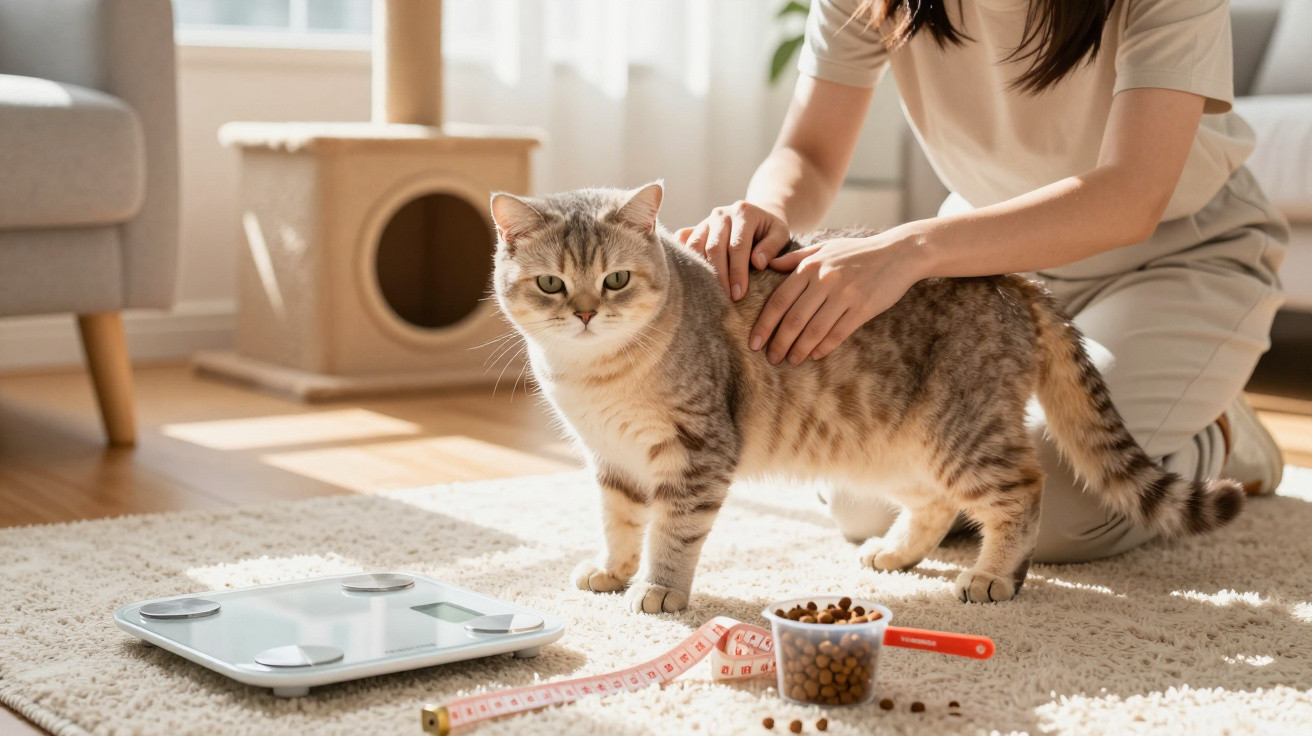
After neutering, many cats gain weight quietly but steadily – often unnoticed for a long time, until the first health problems appear.
Having a cat neutered prevents unwanted litters and can protect against certain illnesses. At the same time, however, its metabolism changes markedly. Many owners only realise late on that their pet is becoming overweight. By then, the joints, heart and organs are often already under strain. A few focused routines can prevent this.
Why neutered cats gain weight so easily
Following neutering, a cat’s energy requirement falls by around 20 to 30 per cent on average. In other words, it burns considerably fewer calories despite looking much the same externally. At the same time, many cats become hungrier, beg more often and lead a more sedentary life.
Neutering changes the hormonal balance: energy use drops while hunger remains – a risky combination for keeping a healthy figure.
Unless the food quantity is adjusted, a calorie surplus can develop very quickly. Just a few extra grams each day can add up over the months to several hundred grams of fat deposits. This gradual change is often only noticed once the abdomen has become visibly rounded.
Early physical signs of being overweight
Checking the ribs by hand
The simplest way to assess body condition is to feel the ribs. With a flat hand, gently stroke along the sides of your cat’s chest.
- Healthy weight: The ribs are easy to feel without pressing hard.
- Early excess weight: The ribs feel padded, and you need to apply a little pressure.
- Clearly overweight: The ribs are difficult or impossible to feel.
This quick check takes only a few seconds and provides a surprisingly reliable indication, even without scales.
Looking from above: does the cat still have a waist?
Stand behind your pet and view its body from above. A healthy cat has a slight inward curve behind the ribcage. If this “waist” has disappeared completely, or the area even bulges outwards, excess fat is usually the cause.
The belly can also reveal a great deal. If a broad, soft-looking pouch swings beneath the body, this is often a sign of fat deposits. A small, fold-like flap of skin can be genetic, but a rounded, heavy abdomen usually is not.
Behaviour: is the cat becoming increasingly sedentary?
Excess weight makes cats less active. Cats that are putting on weight often show some very typical changes:
- they chase toys for much less time, or no longer chase them at all;
- they sleep longer and more frequently;
- the familiar brief “mad dashes” around the home become less common.
If behaviour changes very suddenly or dramatically, a vet should always check whether another illness could be responsible.
Mobility and grooming decline
Another early clue is that the cat seems clumsier. It may no longer jump confidently onto the back of the sofa, misjudge a leap onto the scratching post, or avoid higher furniture that previously posed no difficulty.
Weight gain also becomes apparent during grooming. If the cat can barely reach to lick its back or the area at the base of its tail, it is either very inflexible or too round – and often both. Matted patches or greasy fur in these areas are warning signs.
Regular weighing provides clarity
If you want to be certain, weigh your house cat around once a month. This can be done without visiting the veterinary practice:
- Stand on bathroom scales holding your cat and record the weight.
- Then weigh yourself on your own.
- Subtract the second figure from the first – the result is your cat’s weight.
If the number rises gradually over several months, you should take action. Even an increase of 200 to 300 grams can be significant for a cat weighing five kilograms.
Adjusting food: fewer calories, the same satisfaction
Reduce portions gradually after neutering
When bringing home a newly neutered pet, do not drastically cut its food allowance from one day to the next. Instead, reduce the ration gradually over two to four weeks until it is roughly a quarter lower than the previous amount.
This gives the body time to adapt to the new situation. Sudden, severe restrictions often result in persistent begging, frustration and sometimes even food theft from the kitchen.
Which food is suitable for neutered cats
Food that is high in quality protein while providing a moderate fat content and fewer calories per portion is ideal. Many manufacturers offer dedicated ranges for neutered animals or weight management.
High in protein, moderate in fat and lower in energy – this helps preserve muscle while excess pounds disappear.
Whether dry or wet food is preferable depends on the individual cat. Wet food contains more water, creates a feeling of fullness sooner and may reduce the risk of urinary stones. Dry food is easy to portion and works well in puzzle feeders and toys that encourage movement.
| Aspect | Dry food | Wet food |
|---|---|---|
| Water content | low | high |
| Feeling of fullness | often lower | usually greater |
| Portion control | very easy | through tins/pouches |
| Suitability for food games | very good | limited |
Control portions instead of feeding “by instinct”
Many owners put food into the bowl “by feel” – and it is usually too much. It is better to measure the full daily ration with a measuring cup or kitchen scales, then split it between two or several smaller meals.
The guidance on the packaging is only a starting point. A highly active outdoor cat needs more than a more sedentary indoor tomcat. If food is regularly left behind or your cat gains weight, adjust the quantity.
Treats – use them sparingly and deliberately
Treats add up more quickly than many people realise. A few small bites can contain as many calories as half a main meal. It therefore makes sense to:
- give snacks only as an exception;
- set a fixed maximum limit per day;
- deduct snack calories from the normal daily ration.
If you would like to spoil your cat, use small pieces of cooked chicken or a little unseasoned fish. Serve tiny portions without oil, salt or sauces.
More activity: make everyday life deliberately cat-friendly
Set up the home so movement is worthwhile
Cats do not need to go jogging to stay fit. They do, however, need reasons to move. Here are a few easy ideas:
- provide scratching trees and boards at different heights;
- create window spots with secure viewing platforms;
- offer cardboard boxes, blanket dens and tunnels as hiding places;
- rotate toys so that nothing becomes boring.
As little as ten to fifteen minutes of active play each day – spread across several short sessions – can significantly increase calorie expenditure and strengthen your bond.
Use food as an activity
Rather than serving the entire ration in a bowl, put part of it into treat balls, puzzle toys or simple homemade feeding boards. This means the cat has to work for its food and will naturally move more.
Do not underestimate the health risks of excess weight
Too much weight does not only strain the joints and spine. The risks range from diabetes and high blood pressure to cardiovascular problems. Anaesthetics and operations also become more dangerous when an animal is obese.
Moderate weight loss under veterinary supervision substantially reduces these risks. Crash diets are strictly unsuitable for cats: they can cause severe liver damage. Slow, consistent weight loss is the safe option.
When a vet should definitely take a look
If your cat is extremely tired, breathes heavily, is constantly hungry, or continues gaining weight despite a reduced food allowance, a vet must determine whether illnesses such as thyroid disorders or metabolic problems are behind it.
At the practice, body condition can be assessed professionally, a realistic target weight can be set and a diet plan tailored to the animal’s age, activity level and health status can be created.
Practical everyday tips for owners
- Record weight and food quantities in a small notebook or app.
- Take photographs from above and from the side once a month.
- Schedule play sessions firmly – like an appointment that cannot be missed.
- Inform all family members so that nobody secretly gives extra food.
- Change routines gradually instead of turning everything upside down at once.
Anyone who notices small changes early can spare their cat many health problems. Neutering does not have to mean extra fat rolls – with adjusted food, a little more activity in daily life and a watchful eye, your house cat can remain mobile and healthy for a long time.
















Comments
No comments yet. Be the first to comment!
Leave a Comment