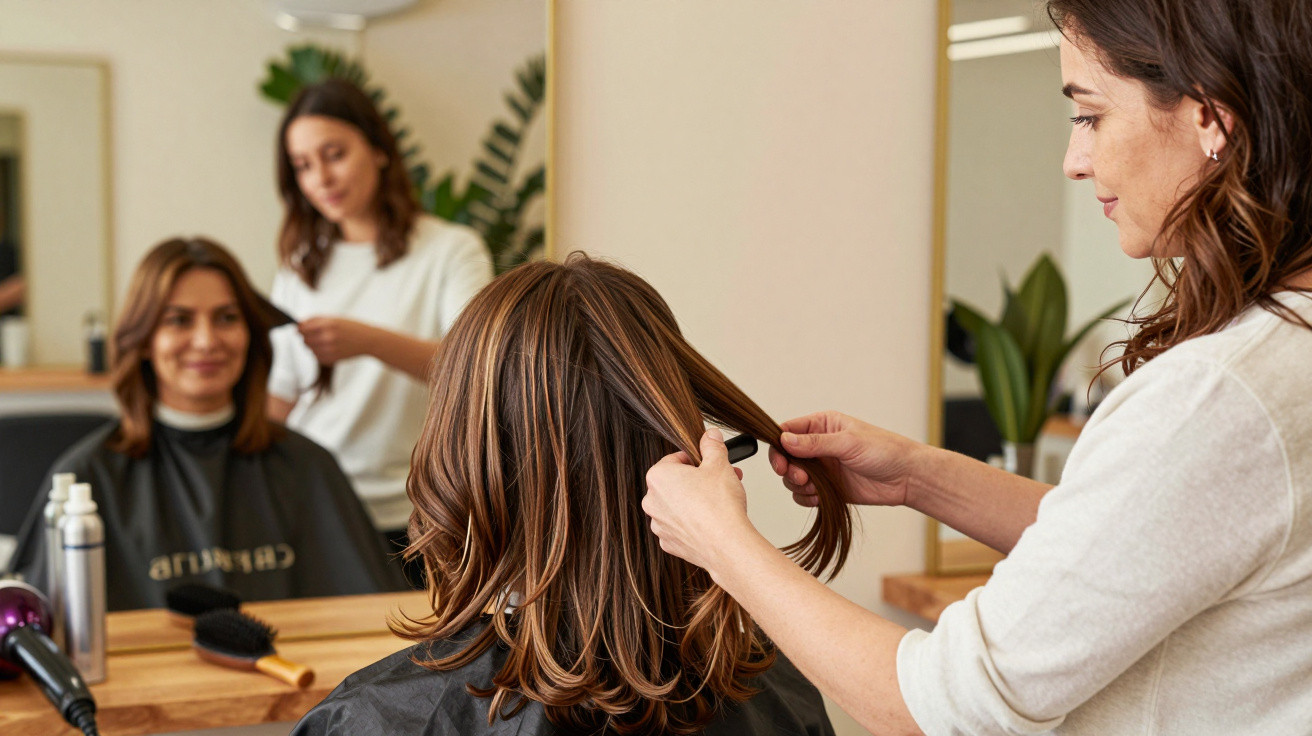
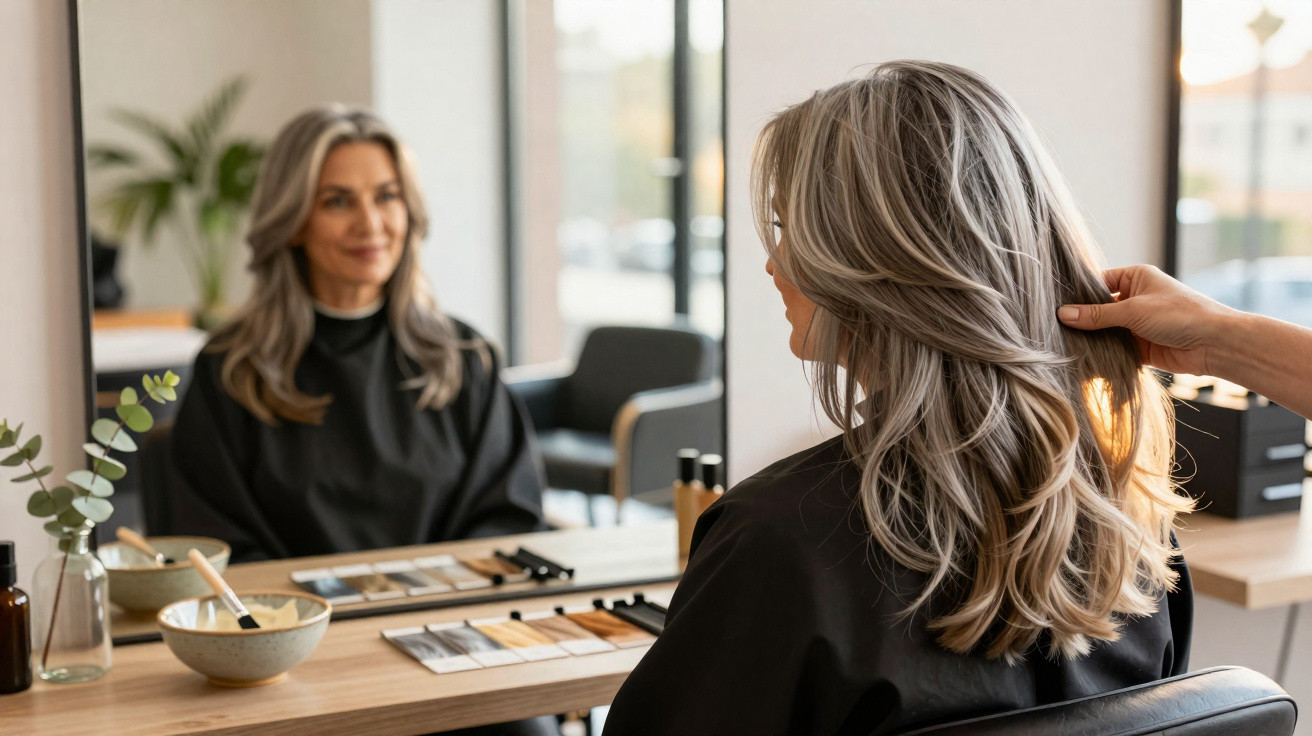
The woman sitting in my chair studied herself in the mirror and murmured, “My hair used to do this thing… it just lifted on its own.”
Now it sat flat, compliant and weary, pressed against her cheeks as though it had simply stopped trying. At 52, she was stylish, with striking glasses and no-nonsense lipstick. Her hair, however, had clearly missed the message.
As I sectioned her fine hair with my comb, I recognised that familiar combination of delicacy and resistance. After 45, fine hair rarely acts as our memories insist it once did. Hormones change, texture shifts, and the dependable bob you once loved can suddenly seem… dispiriting.
So I suggested what has increasingly become my go-to solution for clients like her: a soft shag designed for fine hair, with light layers and easy movement.
She lifted an eyebrow. “Isn’t a shag from the 70s?”
Not the version I mean.
The quiet crisis of flat hair after 45
I watch it unfold gradually in the salon. Women who once wore buoyant bobs or polished lobs reach their late forties or early fifties, and an unseen change takes place. Their cut has not changed, their products are much the same, yet the volume simply… disappears.
They arrive blaming shampoo, pillowcases and even the weather. Usually, the reason lies far deeper: reduced density, finer individual hairs, perhaps a little more visible scalp than there used to be. The haircut that suited them at 38 can suddenly feel weighty, severe and almost unforgiving.
That is where the soft shag comes in, quietly and without fuss, and transforms the whole picture.
Last month, three clients came in one after another with virtually identical words: “My hair used to have bounce. Now it just hangs.” Their careers and lives were different, but their reflection told the same story. One was a teacher, another a lawyer and the third a retired nurse. They were all aged between 47 and 58.
Outwardly, they were self-assured, organised and practical. Privately, though, they were genuinely unsettled by how fast their hair seemed to have let them down. We rarely discuss it, but seeing your hair go limp before lunchtime for the first time can affect you more than expected: on a Zoom call, in a bathroom selfie or beneath unforgiving office lighting.
Each left with her own soft shag: restrained face-framing layers, gentle lift at the crown and ends that did not form a single heavy line. Later, every one of them texted the same word: “Finally.”
The reason this cut suits fine hair after 45 is straightforward. A blunt bob or classic one-length cut concentrates all its weight at the bottom. For fine hair that is already becoming less dense, that weight drags everything downwards. The roots flatten, the face appears pulled down, and instead of you wearing the hair, the hair wears you.
A soft shag spreads that weight more evenly. Feathered layers run through the crown and mid-lengths rather than being roughly chopped in. This creates tiny air pockets between the hairs, and that is where volume exists. The outline becomes softer rather than a hard geometric shape requiring continual styling.
Rather than attempting to create thickness that is no longer there, the cut enhances what remains: texture, movement and lightness. The aim is not to pretend you have huge hair. It is to create convincing volume that looks as if you woke up with it… on a good day.
How I cut a soft shag for fine hair after 45
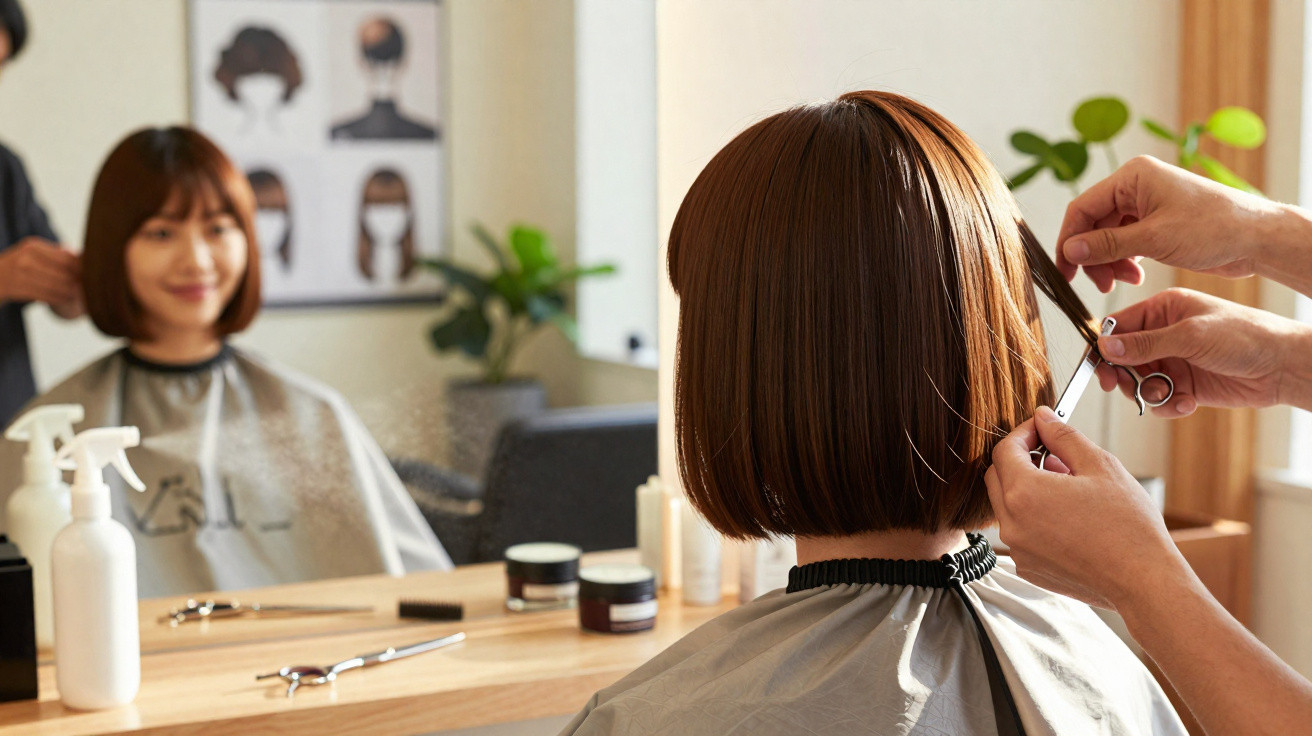
When someone sits in my chair and says, “I want more volume, but I don’t want to look like I’m trying,” I immediately have a clear approach in mind. First, on nearly dry hair and before brushing, I assess how it naturally falls at the roots. The soft shag I favour is not a standardised shape; it is a response to the way each person’s hair naturally wants to move.
I retain a length that feels comfortable for her, usually somewhere between the chin and collarbone, then introduce concealed layers. These are not large, choppy tiers, but fine, merged internal layers that are felt more than seen. Around the face, I soften the perimeter using light pieces that sit close to the cheeks, opening the eyes and visually lifting the jawline.
At the crown, I take out only enough weight to let the roots rise rather than collapse. It is rather like removing a heavy coat from your shoulders.
Many women arrive with celebrity screenshots featuring women in their thirties, but the real skill lies in adapting a shag for everyday life. A regular client of mine, aged 56, came in “for volume” with a photograph of a rock-star shag featuring a full fringe and wild layers. It was beautiful, but entirely unsuitable for her usual routine.
We kept her length just above the shoulders, gave the ends a softly broken outline and added what I call a “shadow fringe”: longer, wispy sections beginning at the cheekbones rather than the brows. She told me she only blow-dries when she truly has to. I therefore cut her hair to dry well naturally, with movement built in that would not punish her on slower mornings.
When she returned six weeks later, she said, part laughing and part serious: “Everyone thinks I’ve started sleeping more. It’s just the haircut.”
For fine hair, the true secret of a soft shag is not the length but moderation. Too many layers make hair appear chewed; too few leave you back with a flat helmet effect. The craft lies in making each transition exceptionally soft. I use slide-cutting and point-cutting to disrupt the line without creating a spiky relic from the 2000s.
Respecting the hairline and natural parting is equally important. When someone has a pronounced natural parting, I work with it rather than against it, building volume slightly away from that line instead of directly on it. Root lift then looks natural rather than forced. Fine hair hates being bullied; it performs better when guided gently.
The finished shape grows out beautifully. There is no harsh “shelf” along the bottom and no triangular silhouette, only a relaxed, soft outline that remains deliberate even in week eight.
Styling a soft shag without losing your mind
I give every client the same advice: the haircut should handle at least 70% of the work. Styling is an extra, not life support. For fine hair with a soft shag, I begin by adjusting one simple habit: the way you dry the roots.
Rather than turning your entire head upside down, which can make fragile hairs too rough, raise sections at the crown with your fingers and direct the hairdryer towards the roots on medium heat. The objective is lift, not sleekness. When the roots are mostly dry, use a round brush only on the final few centimetres of the ends to add a soft curve rather than a tight curl.
Usually, a pea-sized amount of lightweight mousse at the roots plus a volumising spray through the mid-lengths is sufficient. Add anything heavier and fine hair gives up.
The most common mistake I see is applying too many products intended for “thick, luxurious volume”. Women see the advertisement, buy the foam, pile it on and then wonder why their hair looks greasy by midday. Fine hair requires space between the strands, not a sticky embrace.
Another error is preserving length at any price. Long, fine hair after 45 can certainly look beautiful, but when the ends are transparent and the top lies flat, the overall result can appear tired rather than refined. Removing two centimetres can sometimes restore three years of freshness to the face. On a difficult day, the mirror may feel like an enemy. On a good hair day, it feels neutral again, perhaps even kind.
Let’s be honest: nobody genuinely does that every day, the perfect 35-minute blow-dries involving three round brushes and a miracle serum. This is exactly why the cut needs to be forgiving and easy to refresh with a little water and a blast of air.
One client described it perfectly as she looked at her new soft shag in the mirror:
“It’s like my hair finally matches the woman I feel like inside. Not trying to be 25, just not ready to disappear.”
I think about that sentence at almost every appointment. Hair is not merely decoration, particularly after 45. It represents identity and presence: a quiet way of saying “I’m still here” without having to shout.
If you are considering whether this cut might suit you, these quick checks can help:
- Your fine hair becomes flat by midday, even when you use products.
- Your current cut appears heavy at the bottom but limp on top.
- You would like softness around the face instead of a rigid, sharp outline.
- On an ordinary day, you do not want to spend more than 10–15 minutes styling it.
- You are open to light layers but do not want to lose a dramatic amount of overall length.
Living with a soft shag after 45
What I value most about this haircut is the way it fits into everyday life. During the first week, there is often a small, private moment: you glimpse yourself in a shop window or on a video call and think, “Oh. That’s me. That’s better.” It is not an extreme transformation, but a gentle adjustment between how you feel and what the mirror reflects.
At weekends, the hair can dry naturally yet still seem as though you made an effort. On working days, a seven-minute blow-dry delivers understated crown lift and movement at the ends that says awake rather than overstyled. The layers do not demand attention; they simply stop the hair collapsing against your neck and shoulders.
On days after poor sleep or during hot flushes, you can secure it half-up with a soft clip and still have texture instead of limp pieces hanging from a tight hairband.
The more women I see choosing this kind of haircut, the more I recognise that we are collectively redefining what “age-appropriate” even means. Many clients no longer want the severe, stacked bobs seen in early-2000s magazines. They want softness, fluidity and shapes that can adapt to the weather and their mood.
We have all looked at old photographs and thought, “My hair used to be so easy.” The soft shag does not attempt to force you back there. Instead, it works with exactly where you are now: your actual energy, lifestyle and hormones. If the old routine of battling your hair with straighteners and sprays has become exhausting, this cut offers something like a truce.
It is not surrender; it is a sensible compromise.
I see women bring this hairstyle into their lives in quiet, particular ways. One client was divorcing at 49 and arrived saying, “I just want to look like myself again, not like someone who’s trying to look like herself from ten years ago.” Another celebrated turning 60 with shorter, lighter layers that moved when she laughed.
The haircut becomes part of a larger story: one about no longer apologising for living in a face and body that have experienced life. Soft shags on fine hair do not announce “reinvention”. They murmur “continuity”. You, but refined; uncomplicated and easier to notice from across a room.
And whenever someone tells me, “People keep saying I look rested, but nothing in my life has changed, except this,” I simply smile and think: that is exactly the point.
| Key point | Detail | Why it matters to the reader |
|---|---|---|
| Structured soft shag | Subtle, lightweight layers focused around the crown and through the lengths | Understand how a simple cut adjustment can restore believable volume |
| Minimal styling | Targeted root drying, lightweight products and no more than 10–15 minutes | Save time in the morning without giving up the feeling of a good hair day |
| Suited to real life | A tailored version based on length, natural parting and routine | Picture a haircut that works with daily life rather than retouched photographs |



Comments
No comments yet. Be the first to comment!
Leave a Comment