
She was far too occupied with sweeping her fringe aside, angling her head, pushing her glasses up, lowering them again and finally taking them off. However she positioned herself for the camera on her phone, the frames seemed to overwhelm her petite face. Her long, limp hair stuck to her cheeks, and the thick black glasses became the only thing anyone noticed. Everyone at the table was effectively thinking about her haircut, even if nobody said so.
Eventually, she laughed: “I think my glasses are wearing me,” and the hairstylist friend beside her immediately agreed. “You need a textured pixie. Not just any pixie. The kind that fights back against your frames.”
She moved closer. The room fell still. The suggestion lingered like a challenge.
Why textured pixies and glasses work so well together
A textured pixie is more than simply a short hairstyle. It introduces shape and structure when bold frames would otherwise dominate your look. The nape and sides are closely cropped, while the top remains slightly longer and broken up into uneven pieces. Those small sections catch the light, disrupting the outline of the glasses and preventing the frames from appearing like a weighty rectangle in the centre of your face.
The appeal of this particular pixie lies in its contrast. Close, light sides leave the cheekbones unobscured, while soft layers through the top create movement and gentleness. Rather than becoming one large block of dark colour, your glasses sit alongside lines, angles and texture that balance them beautifully. Your eyes become the focus once more.
Consider Ginnifer Goodwin or Michelle Williams during their short-haired periods. Even substantial frames never seemed too dominant on them. The reason was the airy, separated and faintly tousled hair around the forehead and temples. Their textured fringe did not form a helmet-like shape; it lifted to open the face before falling in soft, irregular pieces over the top of the frames.
For glasses wearers, an unsuitable cut can be unforgiving. Dense bobs and extremely straight lobs place a great deal of bulk at precisely the same level as the frames. The resulting horizontal lines can make the face appear broader and shorter. A textured pixie reverses that effect by removing weight from the sides and adding it at the crown, creating an impression of height. Your glasses then become part of a vertical arrangement instead of a severe line across your features.
There is a practical benefit too: short, textured hair is less likely to snag on hinges or become trapped beneath the arms of your glasses. You also avoid the awkward indentations left where the temples rest. When the wind catches it, the untidiness looks purposeful. A well-cut textured pixie welcomes a little disorder, which is why it complements statement eyewear so naturally.
How to ask for - and actually get - the right textured pixie
The most important point is this: do not merely ask your stylist for a “pixie cut” and expect them to fill in the details. Request a textured pixie with gentle, choppy layers on top, a slightly longer fringe and tapered sides that sit clear of your frames. Explain that you wear glasses constantly rather than only for reading. That detail affects how they shape the hair around your ears and temples.
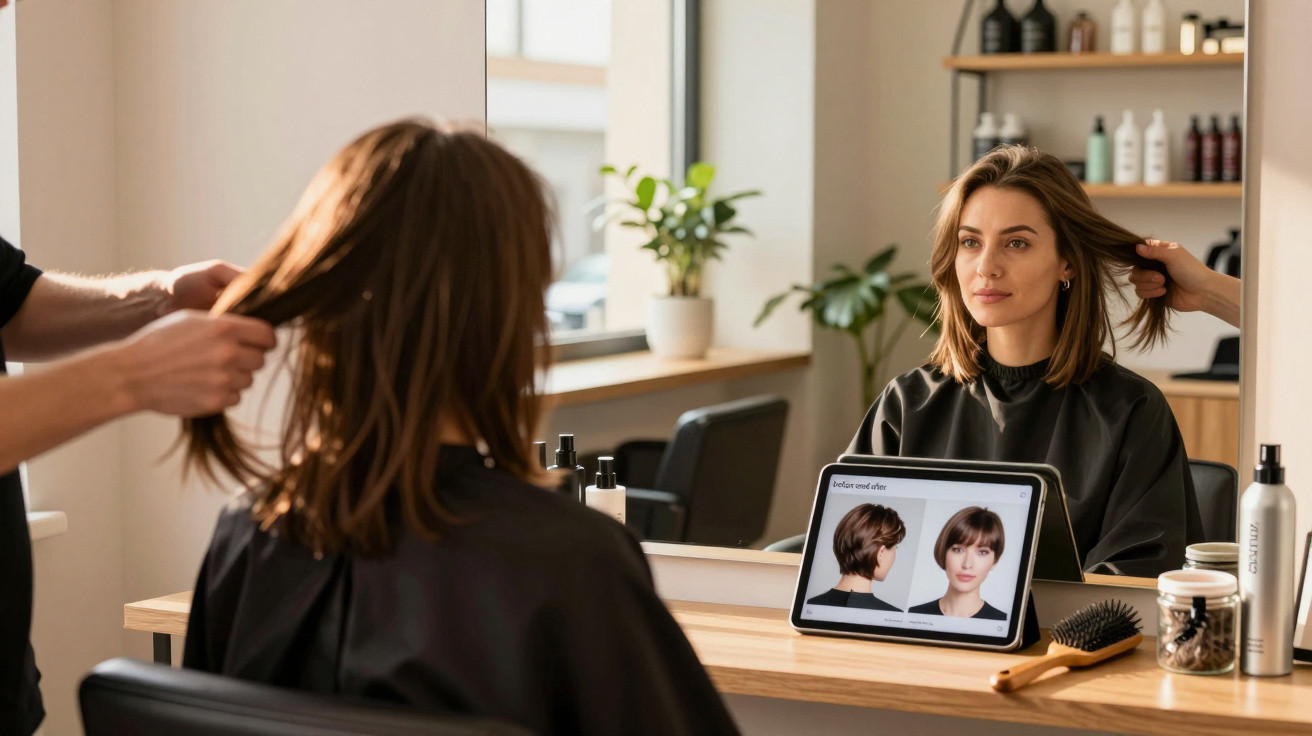
Take reference photos, but select them thoughtfully. Include at least one image of a woman wearing glasses with a short, tousled pixie, as well as one showing texture you love, even if that person is not wearing glasses. Indicate the top and say, “I want this movement.” Then show the sides and add, “But this height and tightness here, so my frames aren’t drowning.” Brief, precise directions give your stylist useful guidance.
In reality, many women enter a salon, quietly say, “Just something that works with my glasses,” and offer nothing more. They later dislike the result and blame their face shape. Usually, though, the issue is the distribution of weight. Hair that is too long over the ears clashes with the temples of the frames, while a single solid fringe produces a hard curtain above the glasses.
A skilfully cut textured pixie relies on thinning shears or point cutting to create small openings in the fringe. Light can travel through the strands, with glimpses of skin showing between them. Instead of one broad horizontal section of hair meeting another horizontal bar of frames, you have layers of intersecting lines. The effect resembles brushstrokes rather than architecture.
The hairline around the ears matters greatly. When it is tidied and cut slightly above the arms of the frames, the jaw and neck appear longer. This is why the cut is frequently suggested for women with petite faces or round cheeks who feel their glasses overwhelm them. The hairstyle quite literally allows the frames some breathing space.
Let us be honest: nobody truly does all this every day. No one gets up and spends 25 minutes styling a pixie as though following a salon tutorial. Your haircut needs to suit ordinary life. Tell your stylist how you genuinely live: “I’ll blow-dry for three minutes, max.” “I will not use a round brush.” “Product is fine, but I don’t want crunchy.” Being truthful about this will determine the type of texture they build into the cut.
Daily styling for a textured pixie with glasses
The simplest daily routine for a textured pixie and glasses is almost ridiculously easy. Towel-dry your hair, then rough-dry it with your fingers to encourage lift away from the scalp. While it remains damp, work a pea-sized amount of matte paste or lightweight wax between your palms until it is no longer visible. Push your fingers into the crown roots and gently pull upwards. Think “pinch and lift”, rather than “comb and smooth”.
Next, use only two fingers to guide sections of fringe away from the middle. Allow a few strands to fall over one side of the frames, while keeping the other side clear. That small imbalance keeps your glasses from looking overly rigid. If you have a cowlick or a stubborn patch, do not force it flat. Use it to bring character to the shorter side instead. Slightly lived-in hair makes bold frames feel less severe.
One major mistake is adding too much shine. Glossy serums and rich creams bounce light directly across the fringe, which may conflict with reflective or metallic frames. They flatten the whole style, leaving you with “helmet with glasses”. Choose products described as “matte”, “gritty” or “texturising”. They provide hold without a wet-looking finish. Begin with less product than you expect to need; you can add more, but saving an overworked pixie before work is nearly impossible.
On washing days, allow your hair to dry almost fully before arranging the fringe. Put your glasses on, face the mirror and only then decide which strands should touch or skim the frame. Styling or cutting without wearing your glasses can create strange gaps or thick clumps along their upper edge. Treat the frames as part of the haircut, rather than something added afterwards.
“When a woman with glasses asks me for a pixie,” confides London hairstylist Mara O’Connor, “I don’t just cut hair. I’m framing around the frames. The goal is that people notice her eyes first, not the plastic or metal sitting on her nose.”
Several recurring mistakes affect almost everyone with short hair and glasses at some stage. One is cutting everything too short at the first appointment. If you have worn longer hair for years, request a “soft pixie transition” with added length on top and a fringe that can be swept in several directions. You can then understand how your hair and glasses work together over a few weeks, before choosing a shorter cut at your next visit if you love it.
- Request textured, choppy layers through the top instead of a blunt cap.
- Keep the sides tapered so they remain clear of the arms of your glasses.
- Opt for matte styling products that encourage natural movement.
- Wear your glasses while styling to balance the fringe and frames.
- Book a follow-up trim within 6–8 weeks to perfect the shape.
Why this cut feels like a small revolution when you wear glasses
Quietly, a textured pixie does more than simply match your glasses. It alters how you occupy your own face. With less hair to hide behind, you begin to see details that may have slipped your mind: the movement of your eyebrows when you laugh, how sunlight reaches your cheekbones behind the lenses and the exact contour of your jaw. At first, that can feel exposing, particularly if long hair has been a comfort blanket for years.
Whether you are on a busy bus, in an office meeting or sharing wine with friends, that cropped style communicates something understated: I chose this. I did not simply give in to practicality, age or thinning hair. I selected a haircut that suits my glasses and my life. There is a restrained confidence in that. Even on a difficult day, you can run your fingers through the top, push your frames up your nose and still see an intentional reflection.
We have all had the more emotional moment of noticing ourselves in a shop window and wondering, “Is that really how I look from the side?” A well-executed textured pixie with glasses transforms that profile. It gives you a neat neckline, slight height at the crown and frames that sit within the overall composition rather than slicing your face in two. The haircut reduces the clinical quality glasses can sometimes have, making them part of your personal style language instead.
Best of all, this version of the pixie is forgiving. If you sleep in, humidity arrives or your fringe decides to rebel, the texture conceals the imperfections. A slightly messy finish appears deliberate, and an uneven parting can look appealing. That is why stylists increasingly guide women with glasses towards it: not because it is fashionable, but because it handles real life gracefully, rather than only looking good for Instagram moments.
| Key point | Detail | Benefit for the reader |
|---|---|---|
| Targeted texturising | Small point-cut sections through the top and fringe | Visually lightens thick frames and brings the eyes forward |
| Clear sides | Tapered sides above the arms of the glasses | Avoids a block-like effect around the face and refines the features |
| Matte products | Lightweight paste or shine-free texturising wax | Maintains pixie volume and spontaneity without weighing it down |


Comments
No comments yet. Be the first to comment!
Leave a Comment