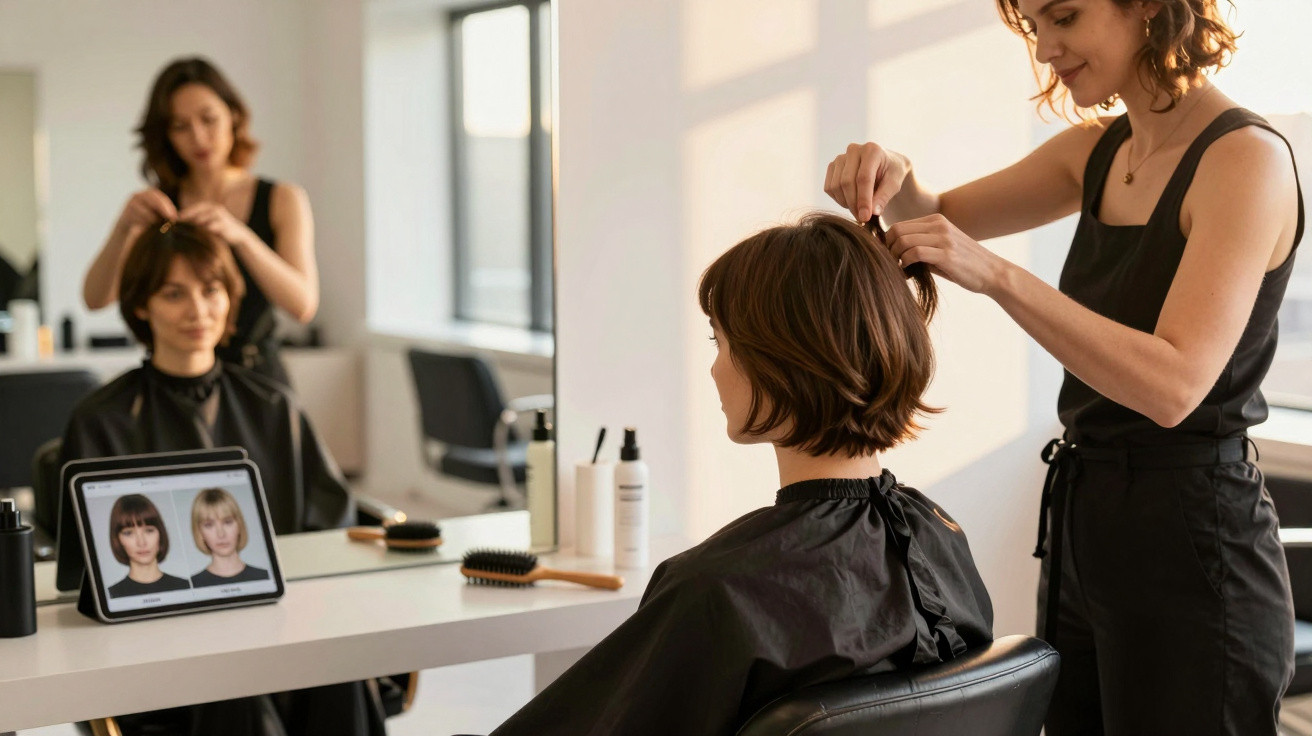
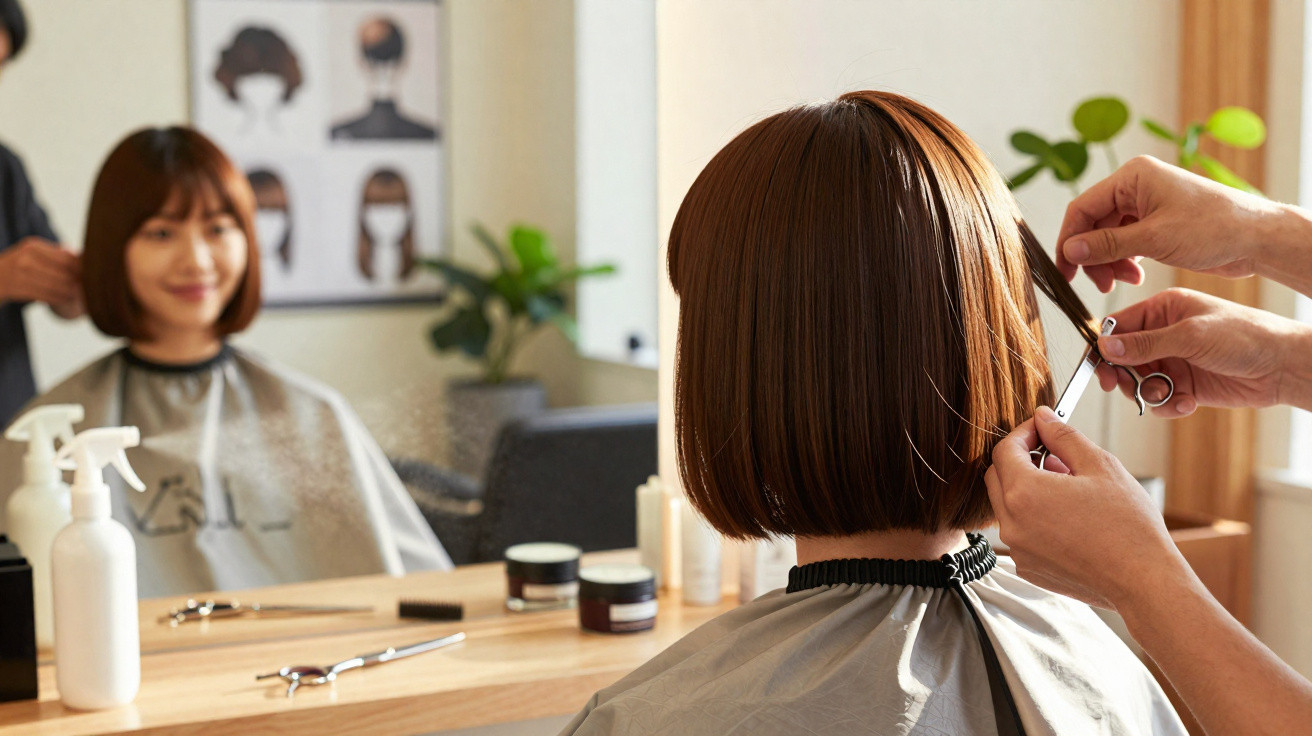
At 8.37 a.m., beneath the flat LED lighting of a city-centre salon, a woman in a navy blazer studies her reflection. Her Pinterest board reads “volume bob”. Her stomach is asking, “What if I leave looking even balder?”
The stylist raises a fine, almost transparent section of hair and winds the comb through it. “We’ll do a short cut,” she says. “It’ll give you so much body.”
Four screenshots sit open on the phone in the client’s lap: the viral “Pixie Puff”, the “French Volume Bob”, the “Rounded Stack” and the “Shaggy Crop”. Each one promises instant fullness. Yet all four are now at the centre of a heated TikTok argument, accused of exposing thinning hair strand by strand.
The cape whispers. The scissors make a single click in the air.
She has three seconds to choose.
The short cut that was meant to solve everything… but didn’t
For years, a short haircut for fine hair has sounded like a magic fix: cut it off, gain immediate lift and leave with the fluffy crown seen in celebrity shoots and advertising campaigns.
Then the salon acoustics disappear, you get home and the bathroom lighting tells a less flattering story. Your roots may suddenly seem thinner. The “volume layer” at the back can perch like a small shelf, making it obvious that the hair beneath it is… not really there.
For many women with fine or thinning hair, the four cuts currently trending run straight into this uncomfortable reality. They claim to create softness and density, but can instead make the scalp more visible.
A London stylist shared a “Pixie Puff” transformation on Instagram, and the clip went viral with a million views. In the salon, it appeared bold: the crown stood up in spikes, while the sides were close and neat.
A week later, that same client stitched the reel on TikTok. It was the same haircut under different light. As she bent forward, the top of her crown looked as see-through as a patchy lawn. Comments poured in. Some people applauded her honesty, others blamed the stylist, and many pointed to the haircut itself.
The French Volume Bob and stacked crops repeatedly produce the same effect. Beneath flash photography or studio lamps, they can look thick and shiny. Under kitchen spotlights at 10 p.m., however, the gaps can tell a different tale.
The explanation is fairly straightforward hair physics presented as glamour. Cutting hair shorter removes weight, allowing it to spring upwards more easily. That part is true.
The problem is that many of these “volume” styles build high layers at the back and leave the top of the shape more open. That can be ideal if you naturally have a thick foundation of hair. It is much less forgiving if your hairline is receding, your crown lacks density or your strands are extremely fine and slippery.
So, the four well-known styles in the present debate - the micro “Pixie Puff”, the heavily layered “French Volume Bob”, the high “Rounded Stack” and the textured “Shaggy Crop” - certainly add movement. But on plenty of real heads, they also pull back the curtain on every sparse area you wanted to conceal.
The 4 “volume” haircuts under fire – and what works better instead
First is the Pixie Puff, the sweet, puffed-up mini style with shorter sides and a fluffed crown. TikTok presents it as the answer to flat hair. On hair that is genuinely thinning, though, the close sides can make your overall “hair territory” look smaller and direct attention to the crown, precisely where density may already be reduced.
Next is the French Volume Bob: blunt at the jawline, with a weighty fringe and concealed airy layers. It can work when the fringe is sufficiently dense. If your hairline is uneven or sparse, however, the fringe can separate and form a dotted line across the forehead.
Then come the Rounded Stack and the shaggy, choppy crop. Both depend on plentiful internal layering. After the salon blow-dry has faded, those layers do not remain lifted. They fall flat, while each short piece points in a different direction and reveals the scalp underneath like a series of small arrows.
We all know that moment: sitting in the car after a “big change” haircut and realising… this is going to need a lot of maintenance.
With fine hair, styling accounts for 50% of the result. Those rounded stacks saved from Instagram? They were dried in sections, raised with a round brush and perhaps enhanced with root spray and some backcombing. They were then photographed from their most flattering angle. They are not a picture of what your hair will look like on Tuesday after a late night and a rushed shower.
A blunt lob with only light layers, skimming the collarbone, may seem uninspiring on a moodboard. On a real person with fine hair, it can often create much more convincing and repeatable fullness than the drama of a stacked bob.
What usually performs better may look slightly unexciting on paper: cuts with a gentle, compact outline; lengths between the cheekbone and collarbone; and soft, blended layers placed only where they are needed, rather than cut throughout the crown.
The feeling behind this debate is not really about haircuts at all. It is about the promise that one cut can remove the panic of noticing more scalp than you did at 25. That promise appears everywhere, from shampoo adverts to “hair botox” offers.
Let’s be realistic: almost nobody completes a six-step root-lifting routine every day. A wiser choice is a cut that acknowledges your true density and works discreetly with it, rather than a viral shape requiring an influencer’s timetable to maintain.
How to request a short cut with volume… without losing confidence
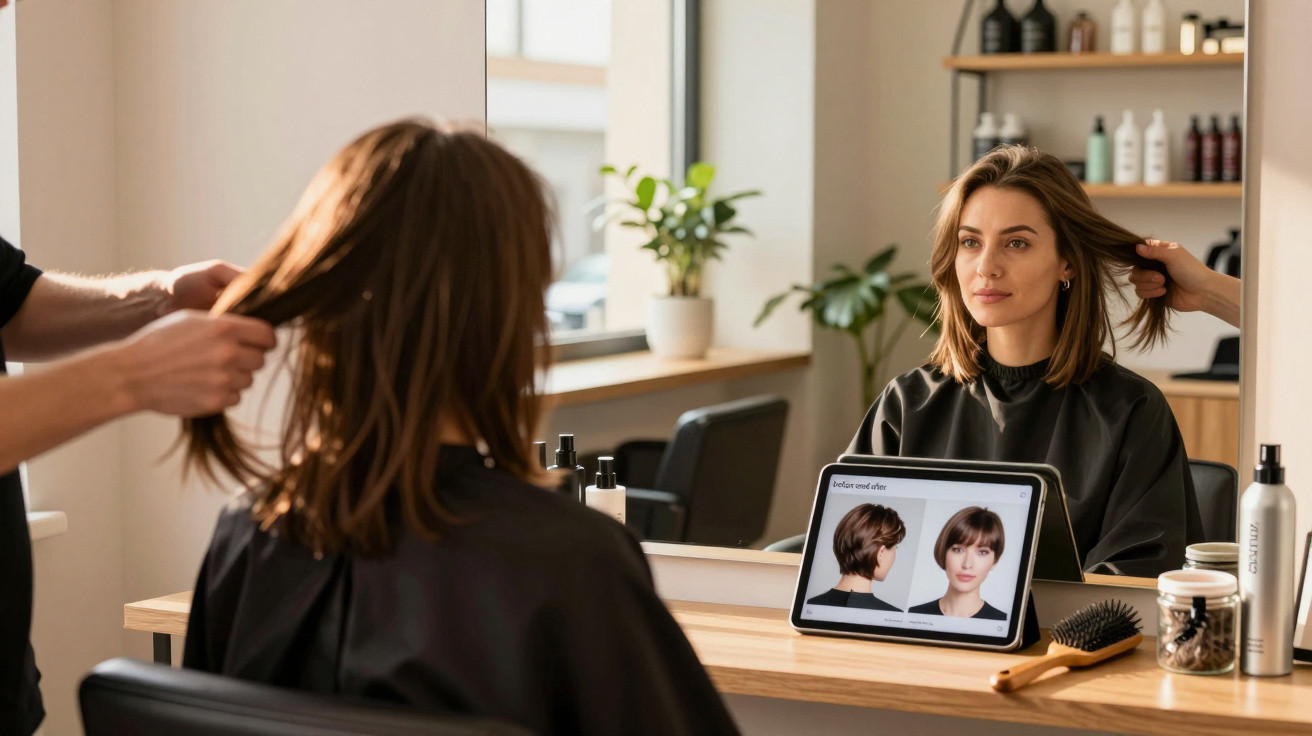
One practical salon approach can change the entire conversation: discuss your scalp, rather than only your length. Rather than saying, “I want the French Volume Bob”, say, “I want more fullness, but my crown and parting are thin and I hate when they show.”
Ask the stylist to preserve a fuller perimeter - the line of hair around the face and at the nape. Ends that are slightly blunt create a visual frame, meaning the eye sees “solid hair” instead of separate strands. Request that any layers begin lower down, around the cheekbone or below the crown, and remain soft rather than choppy.
A useful technique is “invisible graduation”: tiny internal layers concealed within the haircut, rather than obvious shelves. They may not look especially dramatic on camera, but on your head they can help hair settle with a subtle lift instead of a severe step.
For styling, restraint is more effective than drama. Apply a lightweight volumising mousse or spray only to the roots, dry your hair with your head tipped forwards, then lift sections with your fingers rather than a brush. This creates texture without the helmet effect that fine hair can develop when overloaded with product.
The major mistake is excessive thinning for the sake of “texture”. Razors, forceful slide-cutting and endless point-cutting into the ends can make thick hair appear expensive. On fine hair, they can leave behind wispy feathers that will not cooperate.
Chasing volume through colour alone is another pitfall. High-contrast highlights may make individual strands stand out, but they can also place your scalp in high definition. Fine hair is usually flattered more by soft, low-contrast shades and subtle glosses, particularly around the parting.
“Volume isn’t a haircut, it’s a strategy,” says New York hairstylist Ana Ruiz. “On fine or thinning hair, I’m less interested in copying a trending shape and more focused on where the eye lands first. We can’t add strands you don’t have, but we can absolutely control the story your hair tells.”
- Ask for density, not drama
Use terms such as “compact”, “solid ends” and “soft layers”, rather than simply naming a viral cut. - Protect your crown
If thinning is concentrated on top, avoid heavy short layers in that area. Keep this section longer and lighter. - Create volume through direction
A tiny side parting, a subtle curtain fringe or tucking one side behind the ear can suggest more hair without revealing the scalp. - Consider lifestyle, not only the photograph
Be honest with your stylist about how many minutes you will spend on your hair on most mornings. The cut should suit that routine, not the reverse. - Avoid over-texturising
If your hair is naturally fine, ask the stylist to restrict thinning scissors and razors to just a few carefully chosen areas.
Short hair, fine hair, and the freedom to change your mind
The strongest online opinions are often polarised: “Never cut your hair if it’s thinning” at one extreme, and “Go super short, it’s the only answer” at the other. The reality sits somewhere quieter in between.
Some women immediately feel lighter and more powerful in a cropped, boyish style, even where it technically reveals more scalp. Others only feel comfortable when their hair brushes their shoulders and moves as a single piece. Both responses are valid. The problem arises when trend-led “volume cuts” are marketed as universal solutions, rather than what they actually are: striking style choices that can sometimes be unforgiving.
Before your next salon appointment, consider this: which part of your hair are you most worried about others seeing? A wide parting? A thin fringe? A flat back? The best short haircut will not ignore that answer. It will work around it, just as a skilled tailor works around a scar in fabric.
You can experiment with a cut and grow it out again. You can change your parting, replace a fringe with soft face-framing pieces or say, “this stacked bob felt too exposing; I want a softer shape now”. Hair is one of the few features of your appearance that can genuinely change with the seasons. That is an advantage rather than a flaw.
The real question is not whether the four fashionable “volume cuts” are good or bad. It is whether we are finally prepared to choose haircuts based on our actual density and everyday lives, rather than a filtered square on a tiny screen.
| Key point | Detail | Value for the reader |
|---|---|---|
| Trendy “volume” cuts can expose thinning | Pixie Puff, French Volume Bob, Rounded Stack, Shaggy Crop often reveal scalp, especially at the crown and parting | Helps you consider whether viral styles suit your real hair rather than only your feed |
| Ask for shape, not just a name | Explain where you want fullness and where you feel thin; request compact ends and soft, lower layers | Gives you a tailored haircut that flatters your density instead of reproducing a template |
| Styling and lifestyle matter as much as the cut | Lightweight root products, gentle blow-drying and realistic routines support volume without damage | Helps your hair look good on ordinary days, not just immediately after the salon |












Comments
No comments yet. Be the first to comment!
Leave a Comment