
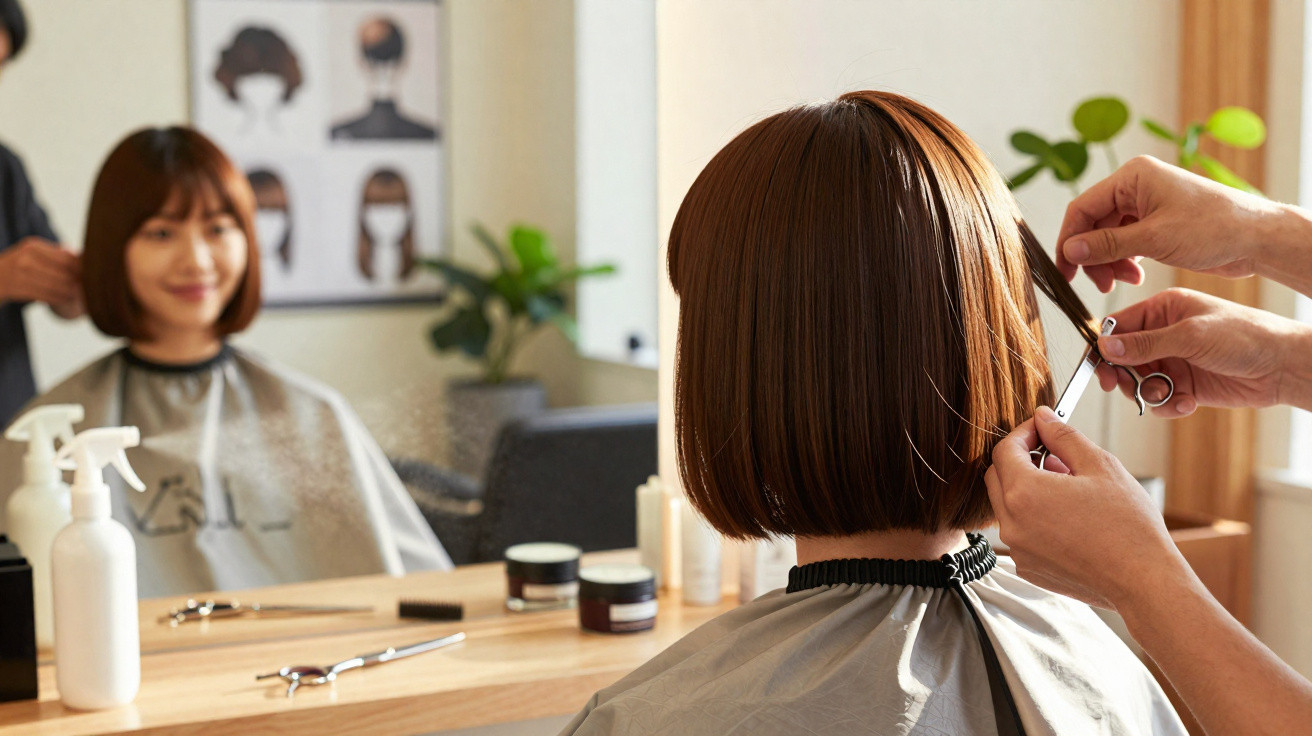
At the salon basin, people tend to expect criticism: dry ends, dull lengths, or “We really ought to give this a treatment”. So when a professional suddenly mentions “salon shine” and asks which expensive brand has been used, it gets attention. This is increasingly happening to people who have drastically simplified their haircare routine and swapped costly conditioners for a familiar household staple.
How a kitchen staple left the hairdresser surprised
After a long winter, hair often looks tired. Scarves, dry central-heating air and cold winds can leave the lengths roughened. Many people respond by reaching for ever-richer conditioners and masks, assuming that a more elaborate product must deliver better results.
That is why it can be such a surprise when a hairdresser says:
The hair structure feels as though it has had an expensive salon treatment – smooth, soft and with mirror-like shine, despite no conditioner being used.
The brush slips through the lengths without tugging, tangles seem to come undone almost on their own, and the hair reflects noticeably more light than usual. Rather than a luxury care range, this result comes from the chilled-food aisle: apple cider vinegar, diluted with water, takes the place of conventional conditioner in this routine.
Why many conditioners can secretly weigh hair down
Many people know the pattern: hair appears fine immediately after washing, but within a day it feels heavy, limp and slightly greasy. Yet the ends remain dry. More care products are then applied, and the cycle begins again.
One reason lies in the formulation of many standard conditioners and masks. They often contain:
- silicones
- petroleum-based film-forming ingredients
- intensely smoothing substances that build up on the hair
These ingredients coat each strand in an extremely fine plastic-like layer. In the short term, this can look impressive: hair feels smoother and softer, and is easier to brush. Over time, however, so-called “build-up” can develop – an invisible layer of residue that increases a little with every wash.
The hair becomes increasingly sealed from the outside – so real moisture and nourishing substances can barely get in.
The result is hair that looks dull and lifeless rather than healthily glossy. Lengths may feel waxy or sticky, roots become greasy more quickly, and ends break more easily. Many people then wash more frequently and use even richer products, which only makes the issue worse.
The forgotten household remedy: why apple cider vinegar works so well
The “game changer” is already found in many kitchens: apple cider vinegar. It has been regarded as a versatile remedy for generations, both internally and externally. It is now enjoying a revival in haircare, particularly among people who want to reduce their routine to the essentials.
Apple cider vinegar is made by fermenting apples. This process produces acetic acid, alongside minerals and trace elements. For hair, this creates an interesting combination:
- gentle clarifying without aggressively “scrubbing” the hair fibre
- a mild anti-limescale effect
- support for the scalp’s naturally slightly acidic pH level
Unlike harsh clarifying shampoos, a diluted vinegar rinse works gently. It removes residue and limescale without irritating the scalp or stripping the hair.
Limescale and the wrong pH: the invisible causes of dull hair
Tap water contains high levels of limescale in many areas. During showering, tiny limescale particles settle on the surface of the hair. They cannot be seen with the naked eye, but they can be felt: hair seems rough and dull, and is harder to style.
Even the best shampoo cannot restore shine when a grey layer of limescale coats the hair.
This is exactly where apple cider vinegar can help. Its mild acidity helps to loosen these limescale deposits. The hair surface becomes smoother again, allowing light to reflect more effectively and restoring shine.
There is also the question of pH. Healthy hair is naturally slightly acidic. Many shampoos and tap water shift this balance towards the alkaline range. When that happens, the hair cuticle opens, the fibre appears rough and frizzy, and hair tangles more easily.
A diluted vinegar solution moves the pH level closer to its natural range again. The cuticle lies flatter, hair feels smoother, shines more strongly and is easier to comb.
How to make an apple cider vinegar rinse: the “1-to-4” recipe
Important: apple cider vinegar should never be applied to hair undiluted. Diluting it protects both the scalp and the nose. A simple, reliable formula is:
- 1 part apple cider vinegar (ideally unfiltered and organic)
- 4 parts cool water
For example, mix 50 millilitres of vinegar with 200 millilitres of water. Use the mixture after shampooing as follows:
- Rinse the shampoo out thoroughly.
- Slowly pour the vinegar-and-water mixture over the scalp and lengths.
- Gently massage it into the scalp with your fingertips.
- Leave it on for 2 minutes.
- Finish by rinsing with clean, preferably cool water.
The cold shock at the end intensifies the smoothing effect – the hair surface becomes even finer and reflects more light.
The vinegar scent puts many people off initially. Once diluted and rinsed out, it leaves no smell in dry hair. Anyone who is unsure can begin with an even weaker mixture and increase the strength gradually.
How often to use it – and who is it suitable for?
For most people, one vinegar rinse per week is enough. Those with significant product build-up or very hard water may benefit from using it twice weekly during the initial phase.
The method is particularly well suited to:
- fine hair that quickly becomes limp
- naturally curly hair that needs more definition and shine
- lengths weighed down by styling products
- greasy or flaky scalps
Anyone with an extremely sensitive scalp or open areas of skin should first test a small amount in the crook of the elbow or dilute the solution further. Coloured hair generally tolerates apple cider vinegar well, and many people even report longer-lasting colour because the cuticle closes more tightly.
Noticeable benefits for your wallet and the environment
Consistently avoiding conventional conditioner can quickly save several plastic bottles over a year. Many people use one bottle of conditioner in around two months – adding up to six bottles a year, not including masks and treatments.
One glass bottle of apple cider vinegar replaces several plastic bottles in the bathroom – and usually costs considerably less than a single professional product.
Because the vinegar is heavily diluted, one bottle lasts for months. At the same time, routines become simpler: fewer tubes lining the bath, fewer disappointing purchases, and fewer half-used products that are eventually thrown away.
Signs that hair has adjusted to the new routine
The change can feel unusual during the first one to two weeks. In particular, if many silicone-containing products were used before, hair needs some time to adjust:
- It may temporarily feel rougher as old layers begin to lift away.
- The true condition of the lengths becomes visible, making split ends more noticeable.
- The scalp readjusts its sebum production, and roots often become greasy less quickly.
After this stage, many people report hair that is noticeably lighter and more movable, stays fresh-looking for longer, tangles less and has a more natural shine – all without a rich conditioner.
What else to consider – and what will not work
A few points help the method reach its full potential:
- Do not use household vinegar with high acidity and added ingredients.
- Always mix apple cider vinegar with water; never apply it directly to the scalp.
- Do not combine it with strongly cleansing shampoos after every wash, as this can cause dryness.
- For very long hair with severely damaged ends, apply a tiny amount of light oil to the damp ends as an additional step.
Anyone hoping for an instant transformation from severely stressed, brittle hair to a “dream mane” will be disappointed. Vinegar cannot “repair” broken ends. However, it can bring out more shine and smoothness in the healthy structure that remains – and help protect it better.
The effect is also interesting when combined with carefully selected shampoos that do not contain strong film-forming ingredients. This creates a straightforward, pared-back haircare routine that feels more like grandmother’s bathroom cabinet than a modern glossy shelf – although the hairdresser is still likely to notice it positively at the next appointment.













Comments
No comments yet. Be the first to comment!
Leave a Comment