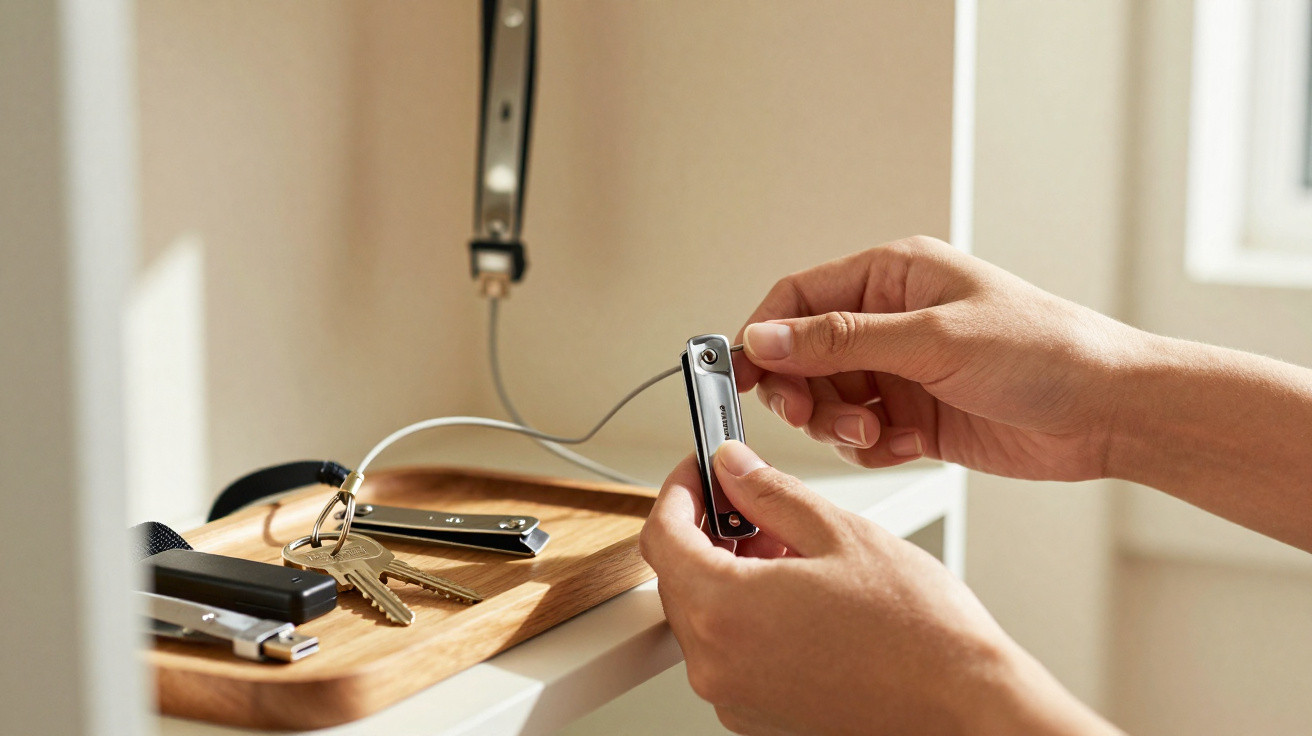
Look carefully and you may notice a small design feature that almost never attracts attention: a round hole at one end of the nail clipper. It can seem ornamental, or even like an oddity from the manufacturing process. In reality, this opening has several useful purposes, making the tool safer, more convenient and much less likely to disappear.
The tiny hole most people never question
Take a look at the nail clipper on your bathroom shelf or beside your keys and you will probably find it: a small perforation in the metal lever or one of the jaws. It is often assumed to be decorative, or perhaps included merely to reduce the amount of metal used.
That small hole is primarily a mounting point, turning a humble nail clipper into a portable, hangable, multi‑purpose tool.
It is included by manufacturers to let the clipper be attached to a keyring, lanyard, chain or basic metal ring. Once secured in this way, it will not roll around loose inside handbags, rucksacks or toiletry bags. For regular travellers, parents and anyone tired of searching a crowded drawer, this minute feature can transform the way the clipper is stored and used.
Keeping nail clippers where you can actually find them
Nail clippers are compact, weighty and remarkably easy to lose in a home. Their built-in hole offers several practical ways to prevent this.
Smart ways to use the hole for storage
Rather than allowing your nail clipper to travel from room to room, give it a permanent “parking spot”. The hole lets you easily:
- attach it to your everyday keyring, so it goes wherever you do
- suspend it from a hook in the bathroom or medicine cabinet
- fasten it to the zip of a toiletry bag when travelling
- secure it to a small carabiner alongside other grooming items
Kept on a visible hook or keyring, a nail clipper turns from a “where did I leave it?” object into a reliable, always‑ready tool.
This small adjustment is especially helpful in shared flats and family households, where clippers can “wander” between rooms or disappear into teenagers’ bedrooms. A dedicated place to hang it makes it clear where everyone should return it.
On-the-go grooming without rummaging
Securing the clipper to your keys or travel pouch is not only useful for staying organised. It can also improve hygiene and convenience. A nail clipper loose in a handbag may collect dust, crumbs and cosmetic residue. When it is fixed to a ring or strap, it remains better aired and is simpler to wipe clean.
For frequent travellers and people working long shifts, being able to deal with a snagged nail within seconds - without emptying a bag - may stop a minor issue developing into a painful tear or infection.
The “hidden” hardware trick: bending cables and wires
That hole has a further, less apparent purpose unrelated to nail care. As it is a small round opening in robust metal, it can work as an improvised tool for shaping thin wire and cable.
Pass fine electrical wire, jewellery wire or a similar material through the opening, then turn the body of the clipper to create a neat and controlled curve instead of a sharp kink. Its metal sides direct the bend and distribute the pressure more evenly.
Used gently, a nail clipper can produce smoother bends in thin wire than fingers alone, especially when you lack professional tools.
It can be useful for occasional tasks at home, including reshaping a wire hook, forming a thin cable for a DIY repair or adjusting a metal tag. It is not a substitute for proper pliers and must not be used with thick wire or live electrical cables, but it can prove unexpectedly useful for light work.
Where that trick has limits
The steel used in a nail clipper is made to cut keratin, not withstand the pressure involved in heavy metalwork. Pushing thick or rigid wire through its hole can harm the clipper, dull its cutting surfaces or bend its lever.
A simple rule of thumb:
| Material | Use with clipper hole? |
|---|---|
| Thin jewellery wire | Generally fine, with gentle pressure |
| Soft electronics leads (non-live) | Possible, but avoid crushing insulation |
| Thick steel wire or coat hangers | Best avoided - use proper pliers |
| Live electrical cables | Never - serious safety risk |
More built-in functions than you’d expect
On closer inspection, many nail clippers have useful features in addition to the hole. Most commonly, there is a folding nail file fitted along the side of the lever. It is useful for smoothing uneven edges after trimming or dealing with a small snag away from home.
Certain versions also include a tiny metal pick or spatula-like end. This individual metal piece is commonly used to:
- remove dirt from beneath fingernails
- carefully push back soft cuticle tissue
- open envelopes or resistant plastic seals
- turn or tighten extremely small screws in spectacles or gadgets
When needed, this tip is also used for light cable stripping or cracking soft nutshells, although doing so may bend or blunt it. The wider point is straightforward: an apparently simple nail cutter can often function as a compact multi-tool.
Why proper use of a nail clipper matters for health
The nail clipper in roughly its modern design dates from the late 19th century. It was created to trim nails more accurately than knives or scissors, which frequently produced uneven shapes and jagged edges.
Correct clipping technique lowers the chance of ingrown nails, painful tears and long‑term deformation of fingers and toes.
Experts usually advise cutting fingernails in a rounded or mildly curved shape that follows their natural line. For toenails, many podiatrists recommend a straighter edge with corners gently softened, helping to reduce the likelihood of the nail growing into nearby skin.
What research says about decorated and stressed nails
Recent scientific research has examined the response of nails to chemicals and decorative treatments. One study in the journal Physical Biology considered how added coatings, extensions and aggressive shaping influence the forces within the nail plate.
The researchers cautioned that harsh chemicals and extreme nail shapes may harm nail structure and eventually affect the health of hands and feet. They advised against excessively pointed or exaggerated edges, instead recommending straight or parabolic (gently curved) trimming.
The research noted that residual stresses can accumulate when the balance is disrupted between forces of nail growth and how the nail adheres to its nail bed. Such stresses can alter over time, potentially causing splitting, deformation or painful problems including ingrown nails.
Using a clipper or nipper that delivers clean, controlled shaping can limit these concealed stresses compared with biting or tearing nails, or using blunt cutting edges that crush them instead of cutting cleanly.
Practical scenarios: using the hole to build better habits
Viewing the small hole as an intentional design element rather than a quirk can promote more considered nail-care habits.
For instance, a family might fit a small hook inside the bathroom cabinet specifically for a nail clipper, attached to a ring through its hole. Checking nails weekly then becomes part of a Sunday evening routine. As the clipper remains visible and always stays in one place, no one has to ask where it has gone, while nails can be cut before they snap or catch.
In another example, a regular business traveller attaches a lightweight nail clipper to the zip of a toiletry bag. The same tool travels from one hotel to the next, making it less tempting to bite off a damaged nail when one occurs during a meeting or flight.
Risks, hygiene and small details that matter
Keeping the clipper visible through use of its hole can also make it more likely to be cleaned. A tool left at the bottom of a drawer is seldom wiped; one hanging at eye level is easier to check for nail dust, grime or rust.
Cleaning it regularly with a small amount of alcohol or hot soapy water, then drying it completely, helps restrict the spread of bacteria and fungi - particularly when several people share the clipper. Replacing or sharpening a worn nail clipper is another commonly missed task: a dull edge crushes rather than cuts the nail, leaving rough areas where microbes may settle and stresses can gather.
From this perspective, the tiny hole is not merely convenient. When used carefully, it contributes to better storage, cleaner tools, neater nails and fewer preventable issues. A detail that is barely noticed can ultimately support a considerable amount of everyday care.






Comments
No comments yet. Be the first to comment!
Leave a Comment