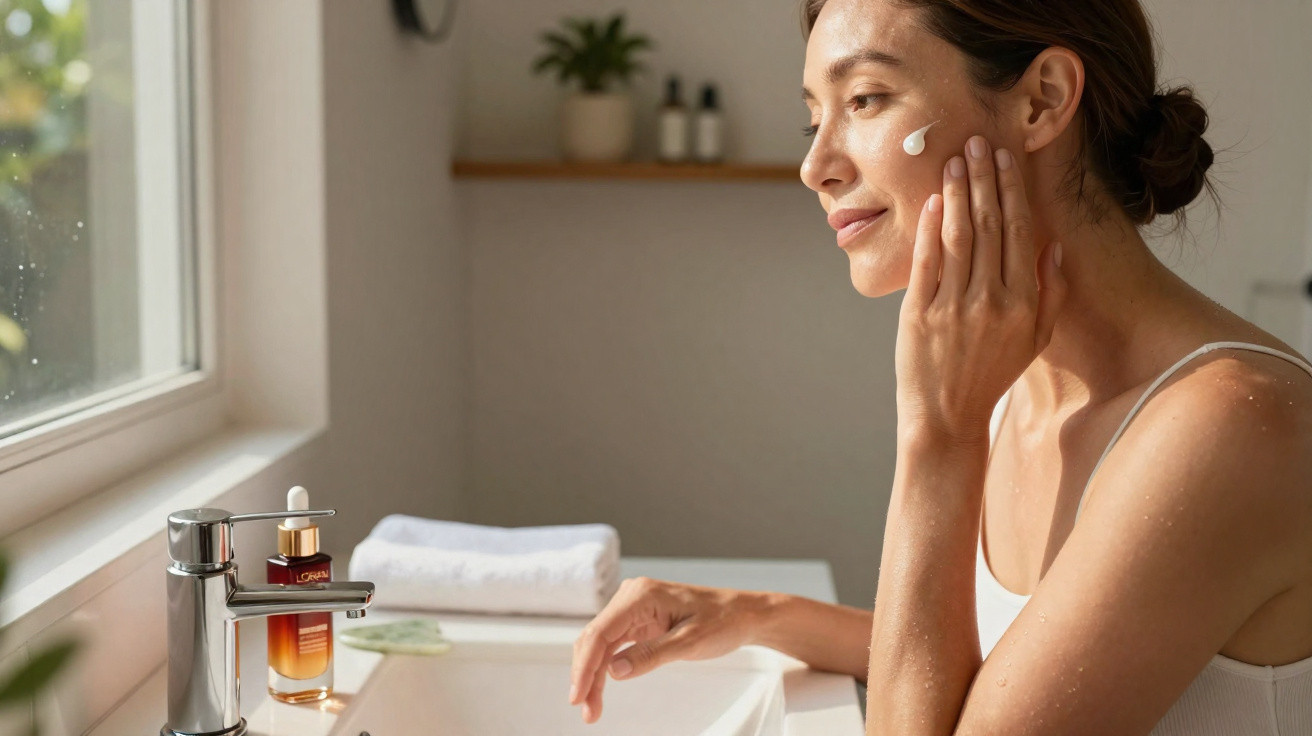
Laser rather than cream has long been seen as the gold standard for tackling wrinkles and pigmentation marks. Now L’Oréal Paris has introduced a product designed to occupy precisely this space: Revitalift Laser Serum-Cream promises visible results within seven days and promotes technology inspired by dermatological treatments.
What is behind the new L’Oréal serum?
The concept is straightforward: a skincare product intended to target three common signs of ageing at once – wrinkles, dark marks and a dull complexion. This is where Revitalift Laser Serum-Cream comes in. The brand combines a highly concentrated formula with an unusual texture that sits between a serum and a cream.
The product is designed to smooth the skin, even out its tone and restore radiance – all after just seven days of daily use.
According to the manufacturer, it offers a triple action:
- Reducing fine lines and wrinkles
- Brightening and diminishing dark marks
- Increasing radiance and giving the skin a fresher overall appearance
For people who do not want, or cannot have, invasive treatments, this sounds like an appealing proposition. But what does the formula contain, and how realistic are these results?
The key role of Melasyl: what the new molecule technology can do
At the heart of the formula is an active ingredient developed in L’Oréal laboratories over many years: Melasyl™, a molecule designed to work specifically against hyperpigmentation. The company says 18 years of research went into developing this active ingredient.
Hyperpigmentation occurs when the skin produces too much melanin and distributes it unevenly. It can appear as age spots, sun damage or an uneven complexion. Melasyl is intended to act at this point: the substance is designed to capture excess melanin precursors before they develop into visible marks.
Melasyl is intended to interrupt the process that forms dark marks and gradually fade existing discolouration.
For users, this means that regular use of the active ingredient may offer the prospect of a more even-looking complexion over time – provided sunscreen is used consistently as well. Without protection from UV radiation, skincare is continually working against a fresh wave of pigmentation damage.
Vitamin C and niacinamide: proven anti-ageing stars working together
The formula does not rely on Melasyl alone. Two other familiar active ingredients also play an important part:
- Vitamin C: works as an antioxidant, helps protect against free radicals and may brighten the complexion. Many users report more “glow” and a skin tone that looks more awake.
- Niacinamide (vitamin B3): a favourite in modern facial skincare. It can help refine skin texture, make pores appear smaller and reduce the appearance of pigmentation marks.
Together, these three active ingredients are intended to work on different levels: protecting against oxidative stress, correcting marks and improving skin texture. This creates a broad anti-ageing approach that goes beyond wrinkle care alone.
Serum-and-cream hybrid texture: how the product feels
One notable feature is the texture. Rather than offering a separate serum and cream, L’Oréal combines both in a single step. Its consistency falls between a light fluid and a classic moisturising cream.
The serum-cream is designed to combine the concentration of a serum with the comfort of a rich cream – with hydration lasting up to 100 hours, according to the manufacturer.
In practical terms, the texture absorbs quickly without feeling watery. It is intended not to leave a greasy film, but instead to give the skin a soft, lightly cushioned finish. For anyone short on time in the morning, this can sound like a useful shortcut in their routine.
The formula can be used:
- In the morning on cleansed skin, followed by sunscreen
- In the evening after cleansing, underneath an additional moisturiser if needed
Those with very dry skin are more likely to reach for an additional cream, while normal or slightly oily skin types may often find the product sufficient on its own.
Who is the serum suitable for, according to the manufacturer?
L’Oréal positions the product deliberately broadly. The serum-cream is said to suit all skin types and skin tones – an important point when it comes to pigmentation concerns, which affect both light and dark skin alike.
Even so, it is worth considering individual skincare needs more closely:
| Skin type / concern | How the serum may help |
|---|---|
| First fine lines, dull complexion | Vitamin C and niacinamide add radiance and provide light smoothing. |
| Pronounced pigmentation marks | Melasyl targets melanin production, with effects building over weeks. |
| Dry, tight-feeling skin | The cream texture offers hydration and is often ideal alongside a rich night cream. |
| Sensitive skin | Said to be suitable according to the manufacturer, but it should still be tested on a small area first. |
Can a serum replace laser treatments?
The message from L’Oréal’s laboratories is clearly qualified: a skincare product cannot achieve the intensity of a laser treatment carried out by a dermatologist. Lasers specifically reach deeper layers of the skin, using heat or pulses of light, and can have a much stronger effect on pigmentation irregularities or wrinkles.
The serum is intended more as an everyday alternative inspired by the results of professional treatments – not as their exact replacement.
Those who have already undergone laser treatment can try using the serum-cream to help maintain its effects for longer. Anyone who does not want a clinic appointment can use it as an accessible option for addressing several areas of concern at the same time.
When do the first results appear?
In its claims, L’Oréal refers to visible effects after seven days. These primarily concern:
- A smoother-looking skin surface
- More radiance
- Fine lines appearing less noticeable
More obvious changes to darker marks generally take longer. Several weeks to months of daily application is more realistic here, especially when combined with consistent sun protection; otherwise, new discolouration may develop.
How to incorporate Revitalift Laser Serum-Cream into your routine
Anyone wishing to try the product should begin with a simple, clearly structured routine. Nothing more is needed at the outset:
- Cleanse the face thoroughly using a gentle cleanser and lukewarm water.
- Optionally apply toner, if this is already part of your routine.
- Apply a thin layer of Revitalift Laser Serum-Cream to the face and neck.
- Always apply sunscreen with a high SPF over it in the morning.
Anyone already using other active ingredients, such as retinol or strong acids, should introduce the combination gradually. In these cases, it is sensible initially to use the serum-cream only every other evening and check how the skin responds.
How sensitive skin can start cautiously
Products containing several active ingredients can cause irritation, even when they are described as “suitable for all skin types”. People with very sensitive skin or skin prone to redness should therefore proceed gradually:
- First carry out a patch test in the crook of the arm or on an inconspicuous area of the face.
- Use it only once a day during the first week.
- Stop using it if burning, severe itching or visible irritation occurs, and seek medical advice if necessary.
Many dermatologists advise against introducing too many new active ingredients at the same time. Introduce the serum first, test it for several weeks, then add other products if appropriate. This makes it easier to identify what the skin tolerates and what it does not.
How realistic is the promise of “younger” skin?
Good formulations can visibly influence wrinkles and pigmentation marks, but skincare products cannot make them disappear completely. Anyone choosing a serum like this should begin with realistic expectations: fine lines may look smoother, the complexion may appear fresher and marks may fade – but this formula cannot stop biological ageing either.
It is notable that technologies from dermatology are increasingly appearing in high-street skincare. Active ingredients such as niacinamide, high-strength vitamin C and specialist pigmentation inhibitors were, only a few years ago, found mainly in pharmacy or clinical products. They are now moving into the mass market at prices considerably lower than a dermatologist appointment.
For anyone seriously looking to address wrinkles and dark marks, the best long-term approach is a combination of daily sun protection, considered skincare with effective active ingredients and, where appropriate, targeted professional treatments. Revitalift Laser Serum-Cream can be one component of that approach – convenient and practical for everyday use, but not magic.












Comments
No comments yet. Be the first to comment!
Leave a Comment