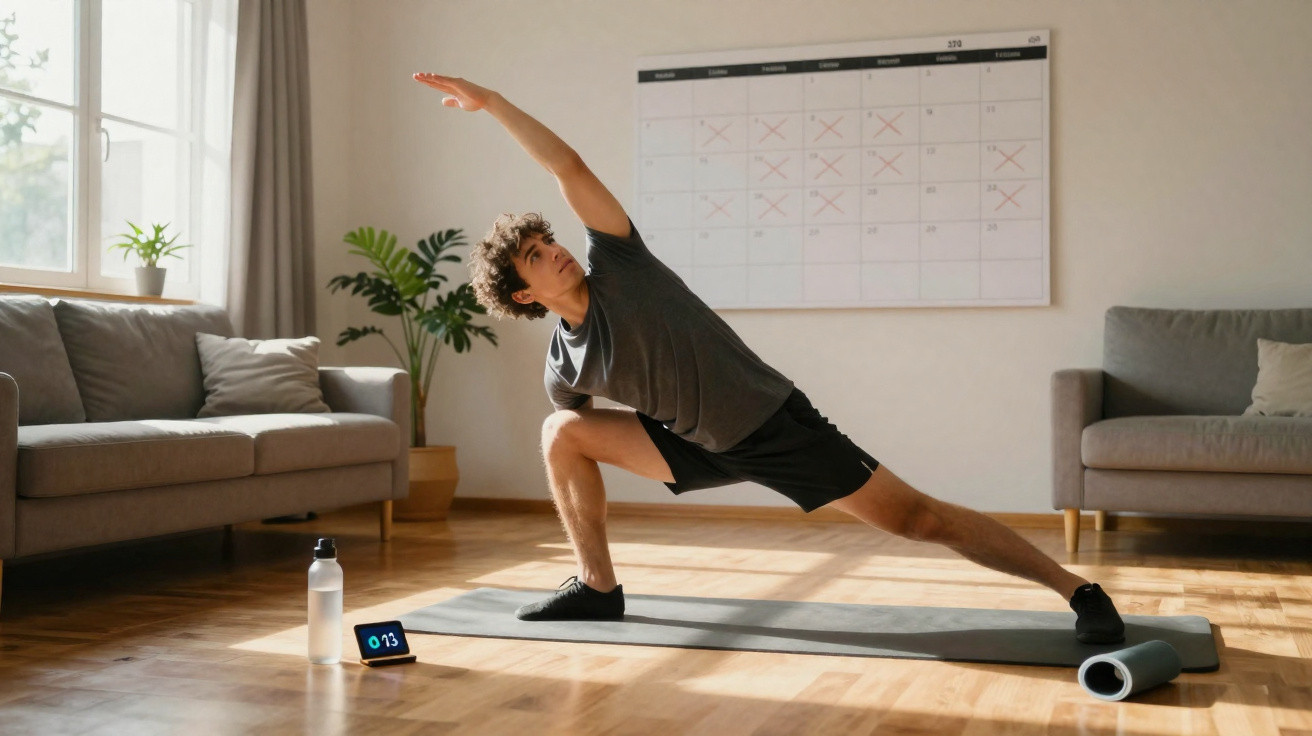
With a well-planned mini programme at home, you can notice a real difference in just one month.
The costly gym membership is still running, while motivation has disappeared somewhere between overtime and the laundry basket – a situation many people will recognise. At times like these, your body can suddenly feel heavy, your back starts complaining and every flight of stairs becomes a nuisance. The good news is that getting back into shape requires neither equipment nor a wall of mirrors. A focused 30-day plan featuring ten straightforward full-body exercises is enough to wake up your muscles, raise your heart rate and help you feel athletic again.
Why living-room training can work better than the gym
Working out at home removes several obstacles at once: there is no journey, no search for parking and no need to pack a gym bag. More importantly, it eliminates the biggest excuse: “I don't have time to get to the gym today.”
“Consistency beats every high-intensity session. Four 20-minute workouts in the living room are better than one 90-minute gym session a month.”
The key advantage is that you can schedule exercise around your everyday life – straight after getting up, during your home-working lunch break or in the evening once the children are in bed. Keep it short, but stay consistent.
20 minutes to get your body moving again
Even a brief, focused routine can get your metabolism, circulation and muscles going. Three things matter most:
- Consistency: train briefly and often rather than rarely and for a long time
- Quality of movement: prioritise controlled form over frantic movement
- Full-body focus: include legs, core, back and cardiovascular work in every session
This can significantly ease common desk-work complaints, including tight shoulders, a stiff neck and aching lower back.
A one-month reset: what 30 days of consistent exercise can achieve
The body adapts more quickly than many people expect. Give yourself a deliberate month and you will experience more than a little muscle soreness.
Week one: shaking off the rust
During the first few days, much of it may feel awkward. Your muscles make themselves known, and your pulse seems to shoot up with every squat. That is entirely normal. Your body is switching from energy-saving mode into working mode.
At this stage, slow down, learn the technique and avoid comparisons – especially with the version of yourself from your gym-going days.
Weeks two to four: building a routine and regaining body awareness
Those who keep going usually notice clear changes after two or three weeks:
- Climbing stairs becomes easier, and breathing settles more quickly.
- Sleep becomes deeper, so you wake feeling more refreshed.
- Your posture at the desk improves, and your back feels less tight.
- Your body looks firmer, even if the scales barely change.
“After 30 days, not everything is ‘perfect’, but movement no longer feels alien; it feels like a normal part of the day.”
The 10 essential exercises for your 30-day programme
The following set of ten exercises works your legs, glutes, back, abdominals, shoulders and cardiovascular system. You train without equipment, using only your own body weight.
Legs and endurance: the foundation
The leg muscles are the body’s largest “consumer group”. Using them purposefully gets your circulation working properly.
- Squats: Stand with your feet roughly hip- to shoulder-width apart and keep your heels firmly on the floor. Push your hips backwards as though you were sitting down on an invisible stool. Keep your back upright and look ahead.
- Reverse lunges: Step backwards and lower your rear knee towards the floor. Keep the front knee above the foot. Push firmly through the front heel to return to standing.
- High knees on the spot: While standing, alternately drive your knees forwards as high as possible. Use your arms actively as well. Land softly on the balls of your feet.
- Jumping jacks: The classic star jump: jump your feet apart while bringing your hands together above your head, then jump again to close them. Ideal for warming up.
- Lateral “skater jump”: Jump sideways from one leg to the other with a slight forward lean through the upper body. The movement resembles speed skating and develops balance and hip stability.
Core and back: protection for the spine
A strong core reduces strain on your back and shoulders – particularly if you spend a lot of time at a screen.
- Forearm plank: Place your forearms on the floor, with your elbows beneath your shoulders. Your body should form one line from heels to head. Tighten your abdominals and glutes, and do not let your lower back arch.
- Press-ups: Feel free to start on your knees. Position your hands slightly wider than shoulder-width, with your elbows pointing gently backwards. Lower your chest with control, then press powerfully back up.
- Mountain climbers: Begin in a press-up position, then alternately draw your knees towards your chest. The pace can be brisk, but should remain controlled.
- Superman: Lie face down with your arms extended forwards. Lift your upper body and legs slightly at the same time, hold briefly, then lower them again. This strengthens the lower back muscles.
- Glute bridge for the buttocks and lower back: Lie on your back with your feet close to your buttocks. Drive your pelvis upwards until your upper body and thighs form a line. Squeeze your glutes firmly at the top.
How to turn it into a short, effective 30-day programme
These ten exercises can form a simple four-week plan – without an obsession with tables or fitness apps.
Example structure for your training sessions
| Phase | Duration | Content |
|---|---|---|
| Warm-up | 3–5 minutes | Jumping jacks, high knees, relaxed shoulder circles |
| Main section | 12–15 minutes | Alternate between the 10 exercises, doing each for 30–40 seconds with a short break in between |
| Cool-down | 3–5 minutes | Gentle stretches for the legs, hips, back and shoulders |
For example, begin with three sessions each week. If you feel fitter after ten days, increase this to four or five sessions and shorten the rest periods.
Adjusting your training: making it easier or progressing deliberately
No two days are the same. The skill is to adapt your programme spontaneously to how you feel and to your joints:
- Easier versions: do press-ups against a wall or sofa, use a smaller range of motion for squats and lunges, and slow down your mountain climbers.
- Harder versions: lower extra slowly during squats and lunges, reduce the breaks between exercises, and hold the forearm plank for longer.
“Train so that you finish the session challenged, but not destroyed. Pain in the joints is always a warning sign.”
Your mindset matters: motivation, setbacks and small everyday wins
The biggest barrier is rarely the body; it is the inner voice that resists getting started. There will be evenings when even five minutes of exercise feels like too much.
The “five-minute rule” for stressful days
Instead of cancelling completely, use a simple trick: commit to exercising for only five minutes – perhaps a few squats, a brief glute bridge and some stretching. Often, you will carry on because you have already overcome the hardest part: starting. If you do not, you have still done something.
These small wins add up. Almost without noticing, you may find that you:
- can carry heavy shopping bags more comfortably,
- no longer get out of breath as quickly when playing with children or your dog,
- do not get out of bed feeling as stiff in the morning.
Additional guidance: what to bear in mind
Common mistakes with home workouts
Three issues frequently lead to frustration or pain:
- Progressing too quickly: anyone who starts at full speed can easily overload their knees, shoulders or back.
- Not taking breaks: muscles need recovery, particularly at the start. At least one rest day a week is beneficial.
- Not checking technique: practise in front of a mirror or film yourself briefly on your phone to spot obvious posture errors.
How to supplement home training intelligently
The 30-day plan can be ideally combined with simple everyday strategies: walk more often, take short stretching breaks at work and get up regularly after extended periods of sitting. If you want to, add easy cycling, walking or gentle jogging on rest days – this increases calorie expenditure while also clearing your head.
Step by step, this creates an active daily routine that needs no gym at all. Two square metres of free space, a little floor room and a firm decision are enough to help you move through life feeling noticeably fitter, more alert and more stable within a month.














Comments
No comments yet. Be the first to comment!
Leave a Comment