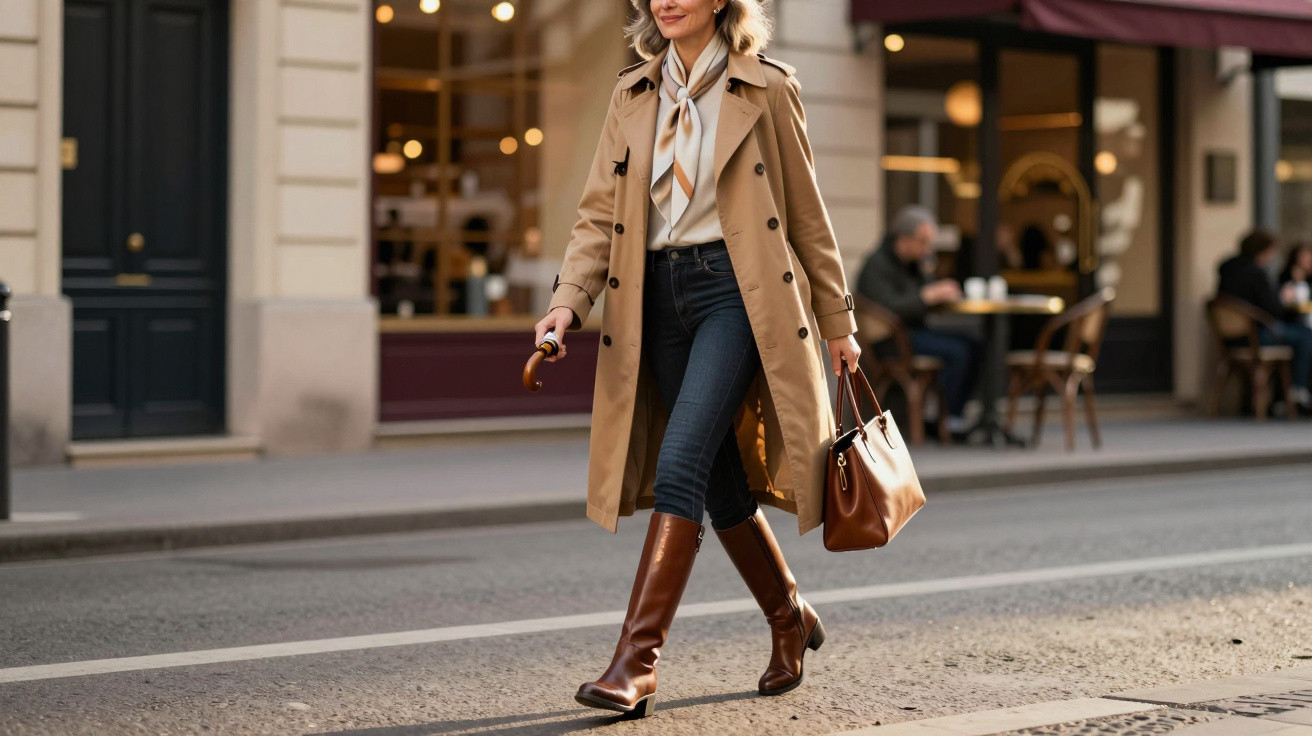
From the age of 50 onwards, choosing shoes can become more complicated: feet need comfort, the outfit should still look contemporary, and the weather is increasingly unpredictable. Trainers may be comfortable but can soon appear too casual, while traditional ankle boots often feel severe or dated. Now, a familiar style is returning to fashion and solves all of these issues with remarkable ease – even on rainy days.
Why riding boots are suddenly a fashion favourite
The classic leather riding boot originally comes from equestrian sport, yet it has been appearing more frequently in everyday wardrobes for some time. There is no glitter, no towering heel and no loud detailing; instead, it creates a clean, elongated line along the leg. That is precisely what makes it so appealing, especially for women over 50.
“Riding boots combine protection from the weather, comfort and a slimmer silhouette – a rare combination on the shoe rack.”
Their tall shaft covers the lower leg up to just below the knee, creating a calm vertical line. This can make the leg appear longer and the overall posture seem more upright. Unlike chunky boots or substantial trainers, the result immediately looks more polished and put together.
Rain protection: leather rather than a wellington boot look
On days when the rain forecast competes with sunshine, shoes need to do more than simply look good. Leather riding boots with a treated finish perform particularly well here.
In many designs, the leather is finished to absorb less water. Raindrops bead off more easily, the surface stays dry for longer and the boot retains its shape. That is entirely sufficient for short walks through drizzle or light showers – without arriving at the office looking as though you have just been for a walk in the woods.
- Treated leather: Absorbs less moisture and dries more quickly.
- Tall shaft: Protects the calf and ankle from splashes.
- Close fit around the leg: No flapping and less dirt getting inside.
Unlike wellington boots, leather riding boots never look like a temporary fix. They work in town, at the office and in a café, while saving trouser hems and tights from the next puddle.
A slimmer silhouette: how riding boots create the effect
Fashion advisers repeatedly point to the same principle: an uninterrupted, continuous line lengthens the figure. A tall leather boot delivers exactly that almost automatically.
The boot sits close to the leg without restricting it. The eye travels upwards without being interrupted by buckles, thick soles or bold colours. This creates calmer proportions – particularly at a height of around 1.60 metres, the difference can be clearly visible in the mirror.
“A simple knee-high boot can do more for proportions than a high heel.”
While chunky trainers can quickly make the lower half of the body appear shorter, riding boots look calmer and more elegant. They lend poise without seeming strict. This explains why many stylists recommend them specifically to women over 50 who want to feel younger without feeling “dressed up”.
How to wear riding boots over 50 for everyday life
With jeans
The classic option is a slim, straight-cut pair of jeans tucked into the boots. A smooth leg without creases is important. Those with fuller calves should choose a style with a slightly wider shaft or elasticated side panel.
With a skirt or dress
Riding boots are especially flattering with skirts and dresses ending just above the knee. The small strip of skin between them adds further length. With long, flowing dresses, they create a modern, almost bohemian look that feels assured rather than overly girlish.
With leggings or slim tailored trousers
Anyone who does not like jeans can opt for black leggings or slim tailored trousers. They disappear into the shaft and extend the line of the leg. A longer jumper or tunic can ease concerns around the stomach and hips, while the boots make the outfit look intentionally styled.
What women over 50 should consider when buying
| Aspect | What to look for |
|---|---|
| Material | Real leather, ideally with a water-repellent treatment |
| Shaft width | Enough room for the calf and trousers, without gaping |
| Heel height | 2–4 cm, with a stable block heel for everyday wear |
| Colour | Black, dark brown or cognac for maximum versatility |
| Interior | Lightly cushioned sole, possibly with a removable insole |
Anyone with sensitive feet or who wears orthotic insoles should always try boots on in the afternoon, when feet are slightly wider. This is when it becomes clear whether the fit will still work on long days spent standing and walking.
Why riding boots look younger than many trainers
Many women become used to wearing almost exclusively sports shoes. They are comfortable, without question, but the overall effect can soon become overly casual and a little indistinct. A well-fitting leather boot gives the very same jeans and jacket much more structure.
“The look does not become more rigid, but clearer – and that can often make the face appear fresher.”
Riding boots are also regarded as timeless. They are barely affected by trend cycles that can quickly start to look wrong over time. Instead, they quietly signal that someone has considered their outfit without chasing the latest craze.
Care tips to keep boots looking new for longer
Leather reacts to rain, dirt and road salt. With a little routine, however, boots can remain presentable for years.
- Treat them with waterproofing spray before wearing them for the first time.
- Allow damp boots to dry slowly at room temperature, never on a radiator.
- Remove light marks with a soft cloth; let heavier dirt dry first, then brush it away.
- Use colourless or matching shoe cream regularly to keep the leather supple.
- Store them with boot shapers so they retain their form.
Those who follow these basics will not need to buy a new pair every year. This keeps riding boots attractive over the long term despite their usually slightly higher initial price.
Who benefits most from this trend
Riding boots show their strengths wherever everyday life, the weather and a certain amount of polish come together: commuting to the office, shopping in town or spending a weekend in the countryside. For women over 50 who want to dress stylishly without looking severe, they offer an uncomplicated solution.
Especially during the in-between seasons, when light jackets and scarves are worn alternately, they visually bridge the gap between winter boots and sandals. They remove the uncertainty that changeable weather can bring to an outfit and, in return, create a more upright, younger overall appearance with very little effort.














Comments
No comments yet. Be the first to comment!
Leave a Comment