
A glossy bob, a blunt fringe, cheekbones seemingly sculpted by a divine editor. A few swipes later, you have booked a salon appointment and are imagining your new life with that cut. Then comes the mirror: the same hair, the same style… yet something feels wrong. Your jaw seems more severe, your cheeks appear broader and your neck looks shorter. The photograph promised “effortless chic”. Your reflection asks, “why doesn’t this work on me?”
Your hair has not let you down. Your face shape simply was not invited to the conversation.
Magazine trends offer the same fantasy to everybody. Your cheekbones, forehead and chin, however, are indifferent to trends. They respond to proportion, light and angles. That is where the real transformation lies.
This is where the understated power of face shape begins.
Why your face shape matters more than any magazine trend
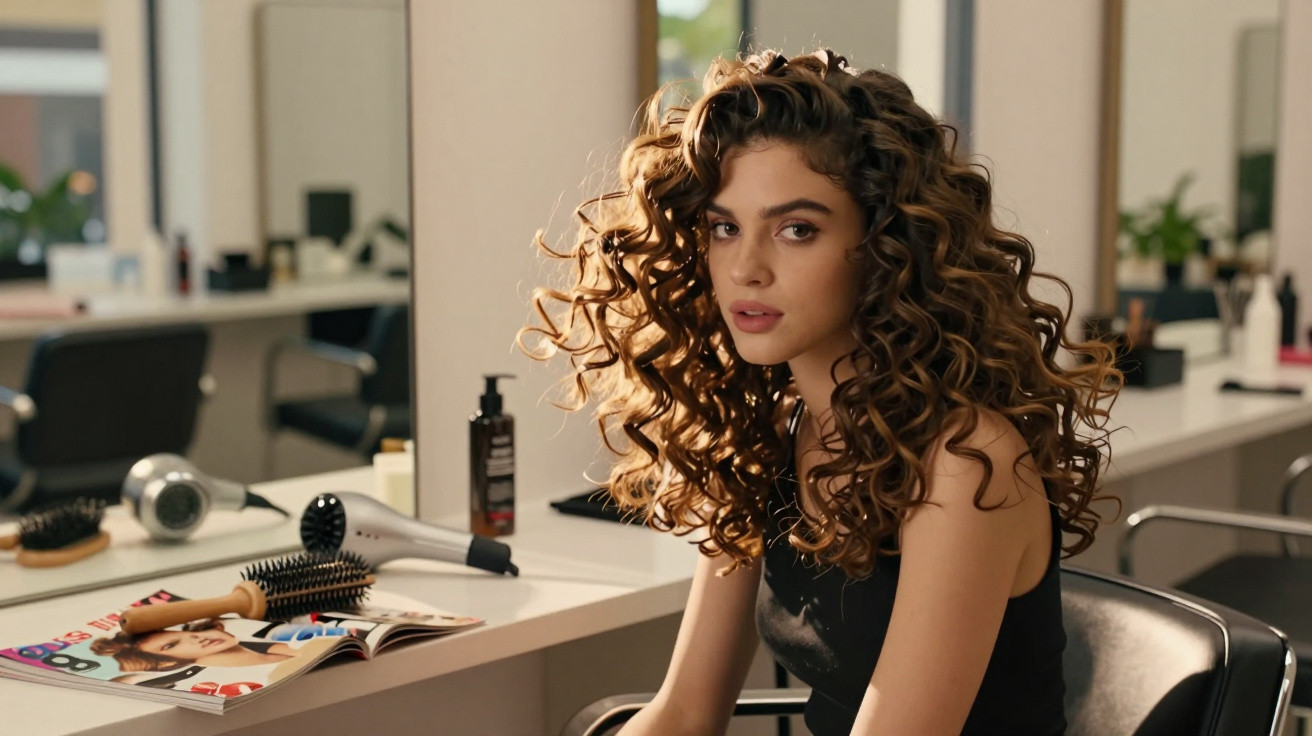
Step into a packed salon on a Saturday and the same scene plays out repeatedly. Clients hold up screenshots of a celebrity lob, a shag cut or a razor bob fit for a perfume campaign. Their faces could not be more different. The reference pictures, meanwhile, are almost identical.
Trends work like uniforms. A striking image gets promoted everywhere until it appears to be the only correct choice. But your face is not a uniform. A high forehead, rounded cheeks, a defined jaw or a small chin do not show up in those carefully styled magazine images. This is why one “it” haircut can transform your friend’s look… while leaving you distinctly disappointed.
At a shoot I went to last year, a make-up artist quietly said to a hairstylist as they refined a model’s fringe: “We’re not cutting hair, we’re editing her face.” That is the true purpose of a haircut. Hair surrounds your features in the same way that the right frame enhances a painting. If the frame clashes with the picture, no trend can rescue it. A square face with a pronounced jaw will respond to a blunt bob very differently from a long, slim face. Long before any hashtag, your face shape sets the terms.
There is also an unspoken figure that stylists discuss away from glossy editorials. Some believe that around 70% of haircut disappointments have nothing to do with technical ability. They come down to a mismatch: the cut failed to account for the client’s face shape. Consider the friend who chose curtain bangs after a magazine described them as “universally flattering”, then clipped them back for six months. Or the man who copied a footballer’s skin fade and immediately looked sterner and older.
This is not about vanity; it is about geometry. A round face benefits from vertical lines and gentle height so it does not appear fuller. A long face is flattered when the hair creates width at the sides. A heart-shaped face often suits some fullness around the jaw, which counterbalances the forehead. The simple principle ignored by headline-grabbing haircuts is this: your cut should create balance, not merely attention. Start with your bone structure rather than an influencer’s, and your hair will work with your face instead of against it.
How to choose haircuts for your face shape
You do not need a 20-step beauty quiz to work out your face shape. Stand before a mirror in natural light with your hair pulled back. Consider three areas: your forehead, cheekbones and jawline. Which one is widest? Is your chin pointed or rounded? Is your face noticeably longer than it is wide, or nearer to circular?
Broadly speaking, you will probably fall near oval, round, square, heart or long/rectangular. Do not become fixated on the category. Treat it as a guide rather than a restriction. A square face with a strong jaw often looks its best with soft, layered cuts that diffuse angular lines. A round face usually benefits from pieces falling beneath the chin and a little lift at the crown. Heart shapes can look particularly striking with side-swept fringes that soften a broader forehead.
Once you recognise your own structure, magazine trends stop sounding like instructions and become more like a buffet. You can start asking: where does this style add weight, and where does it take it away? A razor bob ending at the jaw may make a square face appear sharper, while bringing refinement and focus to a softer oval face. One cut, two completely different outcomes. Your face shape provides the script; the haircut is only the costume.
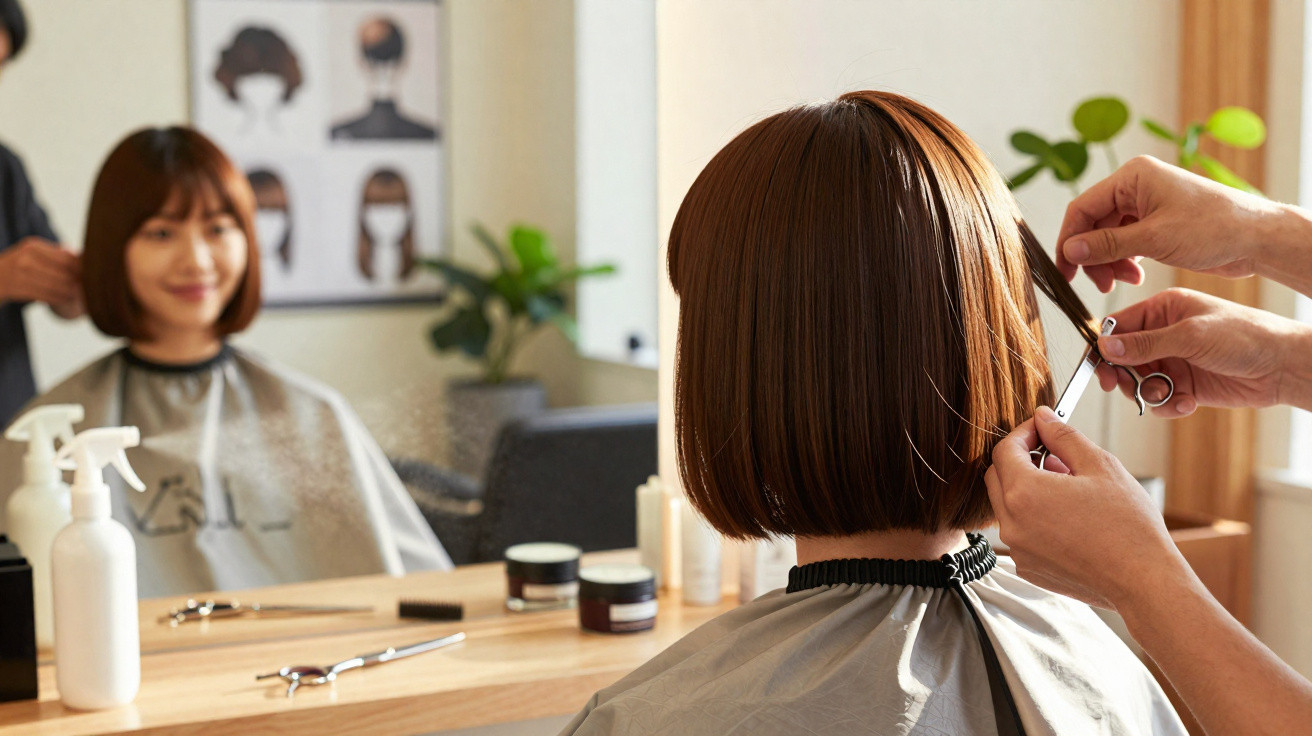
On one grey Tuesday morning, I watched a woman enter a small London salon carrying three magazine pages. Each showed the same style: an ultra-blunt bob, centre parting and hair cut to one uncompromising length. She had a beautifully round face, soft cheeks and a short neck. The stylist listened, agreed, then carefully suggested an adjustment: retain the bob, but introduce light layers and a subtle angle that fell lower at the front.
Initially, she was unconvinced. That blunt bob was all over social media, and wanting it seemed like the “right” choice. Still, she trusted the process. Half an hour later, the atmosphere had changed. The angled bob brushed below her jaw and visually lengthened her neck. Light layering reduced the side bulk, making her cheeks look sculpted rather than fuller. It was the same trend, redesigned for her face shape.
Looking into the mirror, she said something I have heard countless times: “Why doesn’t it ever look like this when I copy photos online?” The reply was visible in the reflection. Everyone has a face, but nobody else has hers. Trend photographs are made around another person’s proportions, lighting and often retouching. They are not exactly deceptive; they simply leave out much of the story. Your stylist, with your actual head in front of them, does not have to.
There is another consideration that magazine spreads seldom acknowledge: trend fatigue. Keeping up with every new haircut trend is tiring. Your hair endures continual dramatic changes – micro bangs one season, shaggy layers the next, then a pixie in between – and your face becomes the casualty. Eventually, you may believe there is something “wrong” with your appearance, when the problem is really the gap between your features and the styles you have chosen.
A face-shape-first approach reverses this. Rather than reinventing your head every three months, you establish a core “family” of cuts that consistently suit your structure. You can then update the details through trends: a different fringe here, new texture there or a small shift in length. It is like owning clothes tailored to your body instead of squeezing into whatever happens to be on this week’s mannequin. Your face shape remains the constant; trends become the seasonal accessories.
Practical ways to use your face shape at the salon without a degree in geometry
One straightforward habit can make a major difference: photograph yourself, rather than relying only on celebrities. Pull your hair firmly back and take a straight-on photo of your face in good light. Next, gather a few images of past haircuts you loved, as well as several you disliked. Put them next to one another on your phone.
Examine what is happening around your jawline, cheeks and forehead in each picture. In the successful photos, is there more volume at the sides, or is the height concentrated on top? Does the hair partly cover your forehead or expose it? Where does the length sit around your jaw? Even if you have never used labels such as “round” or “square” face, repeated patterns will begin to emerge.
Bring those photographs to your stylist and describe them in everyday terms: “My face looks harsh when hair ends directly at my jaw,” or “My cheeks look fuller when my hair is too short.” This is face shape applied in real life. No diagrams required, just honest observation of cause and effect.
Online discussions of face shape can become oddly rigid. Someone reads one graphic, then decides, “I have a round face, so I can never have a bob” or “My face is long, so fringes are banned”. That kind of inflexibility stifles creativity and, frankly, encourages insecurity. Your head is not a mathematical puzzle to be solved; it is your real face, one that laughs, cries, ages and changes alongside you.
A more human approach is this: let face shape guide you, then adapt the guidance. If you have a round face and have always wanted a bob, you can absolutely wear one – choose a length beneath the chin with soft layers instead of a heavy block that hugs the chin. If your face is long and sleek, straight hair appeals to you, restore balance by adding a little width at the sides or experimenting with a gentler fringe.
Let us be honest: nobody truly follows the “perfect” routines described beneath an Instagram hairstyle every day. Real life means putting your hair into a messy bun at 7 a.m. because your train is running late. That is another reason to begin with face shape. A cut that supports your natural structure will still look presentable on hurried days, rather than only when it is styled precisely as the magazine instructed.
One stylist I spoke with expressed it with disarming clarity:
“Trends last six weeks on your feed. Your face will be with you in every mirror for the rest of your life. Whose side do you want your haircut to be on?”
That landed more powerfully than any product launch or glossy campaign. We speak often about “self-acceptance”, yet still raise our phones in the hope of borrowing someone else’s head. Working with your face shape does not mean abandoning trends; it means you are no longer at their mercy.
- If your jaw seems too sharp in photographs, request soft face-framing layers to interrupt hard lines.
- If your face appears wider than you would like, experiment with length below the chin and understated height at the crown.
- If your forehead concerns you, consider a side-swept fringe rather than a heavy straight version – it is more forgiving and grows out elegantly.
The quiet confidence of hair that belongs on your face, not somebody else’s
A subtle change occurs when your haircut finally works with your face shape. People may not be able to explain it. They simply say, “You look… fresh,” or “You, but more you.” The haircut no longer arrives before you do. Your eyes take the lead. So does your smile. Your jawline appears defined without looking severe, while your cheeks look soft without seeming childish.
You notice it in unremarkable moments: while waiting for the kettle to boil, catching yourself in a shop window or switching on your camera for a work call you did not want to attend. Your hair will still have imperfections – a stray patch of frizz, a wave that refuses to cooperate – but your face feels at ease within its frame. More deeply, there is relief in no longer battling yourself in every mirror.
We have all experienced a trend that made our real, unedited face seem like a problem needing correction. Face-shape-aware cuts quietly challenge that idea. They say: this is the bone structure you have. Let us work with it rather than against it. Trends will continue to turn: wolf cuts, butterfly layers, micro-bobs and wet-look lobs. You can still try them, but now it happens on your terms, shaping them around your features instead of reshaping your features for them.
Perhaps that is why conversations about “the perfect haircut” have changed recently. People are less captivated by the most dramatic transformation and more drawn to a cut that feels oddly inevitable – as though it had always belonged on that face. The next time a magazine calls a fringe or bob “universally flattering”, you will know better. Universes are vast; your face is specific. Within that specificity is the kind of beauty that genuinely endures.
| Key point | Detail | Benefit for the reader |
|---|---|---|
| Face shape first | Consider the width of the forehead, cheeks and jaw before selecting a cut | Helps avoid trend-led cuts that do not work with your face |
| Adapt a trend rather than copy it | Adjust a magazine haircut’s length, volume and fringe to suit your proportions | Lets you enjoy trends while still looking your best |
| Photos of yourself, not only stars | Compare previous haircuts that worked or failed to identify recurring patterns | Provides practical language for speaking to your hairstylist and achieving a better result |














Comments
No comments yet. Be the first to comment!
Leave a Comment