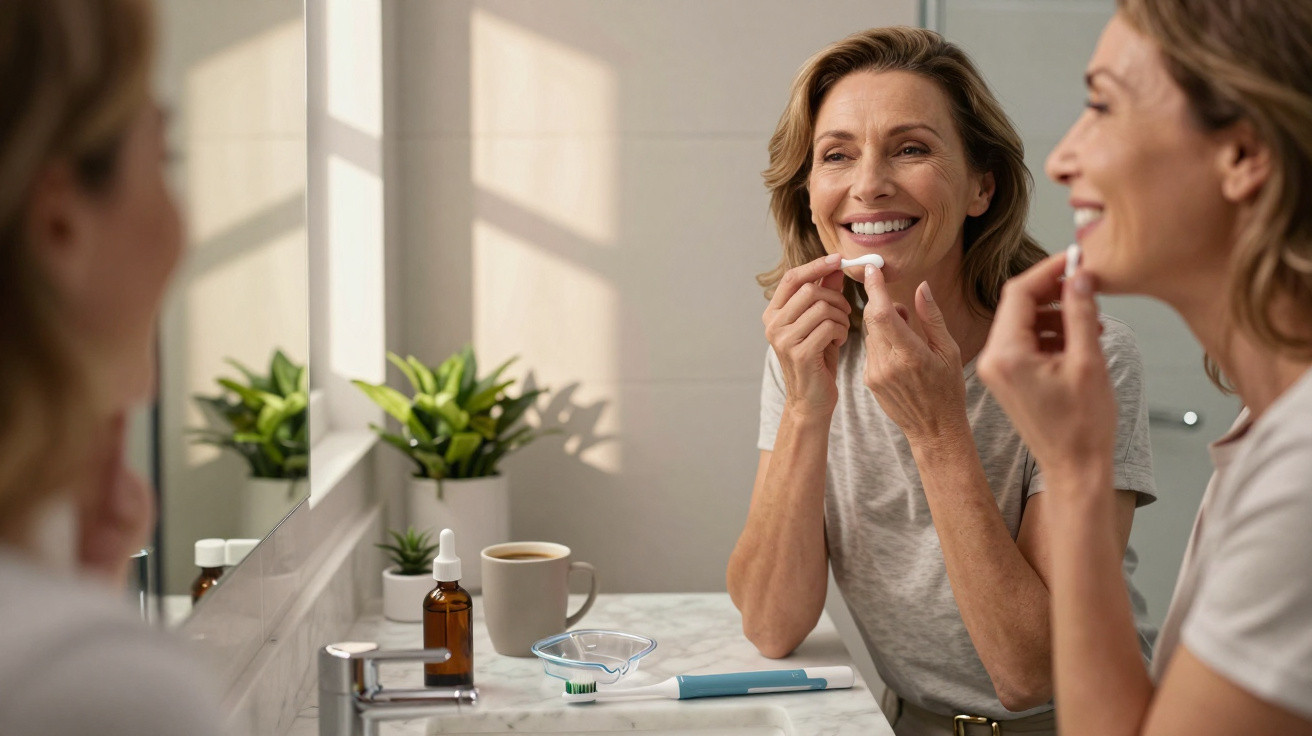
The years pass, smiles remain – only teeth change quietly.
Then, suddenly, everything looks a little darker than it once did.
From their mid-40s onwards, many people notice a subtle yellow tint in the mirror that was not there before. It is not dramatic, but it can be bothersome, especially in photographs or on video calls. There is plenty of discussion about what is normal, what people can do themselves and when professional support makes sense – often based on incomplete knowledge. Here is a look at the facts, options and limitations.
Why teeth become yellower with age
Dentists do not regard yellowing teeth in later life as an illness, but as a typical part of ageing. Several influences come together.
- Thinning tooth enamel: The outer, slightly translucent layer gradually wears away.
- More dentine: The tooth’s inner layer is naturally more yellow and becomes thicker over the years.
- Pigments build up: Coffee, tea, red wine, nicotine and spices can leave traces in the enamel.
- Medicines and medical conditions: Certain treatments or metabolic disorders may affect tooth colour.
Yellowing teeth with age do not automatically mean poor oral hygiene – above all, they show how fully a set of teeth has been lived in.
People who brush frequently and forcefully may even wear away enamel more quickly. This can make teeth sensitive while also allowing more of the dentine beneath to show through. The tooth can therefore appear darker despite being clean.
Everyday habits that help prevent new staining
Before considering bleaching or trays, it is worth looking at daily habits. Many measures cost nothing; they simply require a little awareness.
Keep an eye on the main sources of staining
Certain foods and drinks are considered stain-causing. There is no need to eliminate all of them, but it helps to consume them more consciously.
- Coffee, black tea, green tea
- Red wine, cola, dark fruit juices
- Soy sauce, balsamic vinegar, curry, turmeric
- Tobacco smoke – substances can also cling to teeth from e-cigarettes
Drinking a glass of water after these drinks reduces the time pigments remain in contact with the tooth surface. Sugar-free chewing gum can also encourage saliva production, which cleans naturally.
The right brushing technique after 40
Many people brush with excessive pressure and overly vigorous scrubbing motions. It may feel thorough at first, but it damages enamel.
Gentle circular movements with a soft brush clean more effectively while protecting the surface – the foundation for brighter teeth.
Recommended habits include:
- Brush for two minutes twice a day
- Use a soft or medium toothbrush, manual or electric
- Use floss or interdental brushes daily to remove plaque between teeth
- Choose fluoride toothpaste to strengthen enamel
Anyone who often drinks acidic beverages such as fizzy drinks or fruit juice should not brush immediately afterwards. Acid temporarily softens the enamel. It is better to wait 30 minutes, rinse the mouth with water and then brush.
Gentle home remedies: what may help and what can harm
Social media is full of suggestions: baking powder, turmeric, lemon juice and activated charcoal. They promise rapid whitening, but often at the expense of the teeth.
| Method | Effect | Risk |
|---|---|---|
| Baking powder / bicarbonate of soda | Abrades surface deposits | Can roughen enamel and increase tooth sensitivity |
| Lemon juice | Corrosive acid dissolves deposits | Attacks enamel severely; permanent damage is possible |
| Activated charcoal | Mechanical cleaning of the surface | Abrasive effect, with limited evidence on long-term consequences |
| Oil pulling | May slightly reduce deposits | Little or no whitening effect; does not replace toothbrushing |
Substances that abrade or corrode can make teeth appear lighter in the short term, but weaken them over time. If enamel remains thin and rough, it will discolour more quickly again.
When whitening toothpaste is useful
Whitening toothpastes generally work in two ways: through slightly increased abrasion and optical effects, such as blue pigments that reflect light differently. They may reduce fresh deposits, but they are not a substitute for proper bleaching.
Whitening toothpaste keeps everyday staining more subdued, but it does not alter the tooth’s natural base colour.
Anyone using it every day should choose one with low abrasivity to avoid placing unnecessary strain on enamel. A consultation at the dental practice can clarify which product suits an individual set of teeth.
Professional bleaching: trays, gel and light
Those seeking a more noticeable colour change are unlikely to avoid professional treatments. Dentists essentially distinguish between two methods.
In-office bleaching: brighter in one appointment
With in-office bleaching, the dental practice applies a high-concentration whitening gel. The product penetrates the tooth and breaks down coloured molecules.
- Usually 1–2 appointments lasting 60–90 minutes
- A visible improvement by several shades is possible
- The gums are covered beforehand to prevent irritation
Some practices also use a special lamp or laser system to activate the gel. Available evidence indicates that light can sometimes enhance the outcome, but the crucial factors remain the right concentration and contact time.
Home bleaching with a custom tray
The second option requires more patience: the dentist takes an impression, makes a precisely fitted tray and provides a milder whitening gel for use at home.
The tray is worn each day for a specified period over several days or weeks. Teeth brighten gradually and in a controlled way, often producing a very natural-looking result. It is important to use only as much gel as the tray holds. Gel that spills over can irritate the gums.
Whether it is a quick appointment at the practice or gentle home bleaching, the preliminary examination determines whether the teeth are stable enough.
Before any bleaching, decay, leaking fillings and inflammation should be treated. Otherwise, the gel may cause pain or enter parts of the tooth where it does not belong.
What cannot all be bleached: fillings, crowns and veneers
One detail surprises many people: artificial materials do not change colour along with the teeth. Composite fillings, ceramic crowns and veneers remain the shade they were when originally made.
Anyone who significantly whitens their natural teeth risks obvious colour differences. A front tooth with an old yellowish filling can stand out sharply beside freshly bleached neighbouring teeth.
For patients planning both bleaching and new dental restorations, the following order is advisable:
- Bleach the natural teeth first
- Then wait several weeks for the colour to stabilise
- Afterwards, have fillings, crowns or veneers made to match the shade
This creates a harmonious overall appearance, which is particularly important in the visible front-tooth area.
Risks and side effects: what can realistically occur
When professionally carried out, bleaching is considered safe, but it has potential side effects that should be understood.
- Temperature sensitivity: Many people react more strongly to cold or heat during the first few days. This usually passes quickly.
- Gum irritation: Excess gel or leaking trays can cause redness.
- Uneven results: Areas that are heavily stained or damaged may sometimes brighten less effectively.
Anyone expecting an unrealistic Hollywood white risks disappointment – natural shades often look better than a glaring smile.
People with pronounced enamel cracks, exposed tooth necks or untreated periodontal disease should only choose bleaching after a detailed consultation. In some cases, the dental practice may recommend a gentler cosmetic alternative instead.
How long the result lasts – and how to protect it
Whitened teeth do not stay that bright forever. On average, dental practices cite one to three years, depending on lifestyle and care.
Those who drink a great deal of coffee, smoke or regularly enjoy red wine will see staining return sooner. Professional cleaning once or twice a year removes newly formed deposits and visibly refreshes the effect.
Some practices offer so-called “touch-up” treatments: shorter, milder bleaching sessions that gently boost the result every few years. This keeps the effect visible without having to start from scratch each time.
When an optical illusion can make a major difference
Not everyone needs chemical whitening. Sometimes changing the contrast is enough. Darker lipstick with a blue undertone can make teeth look brighter. Even clothing choices – for instance, avoiding a brilliant white top – can alter the impression in photographs.
A straightforward professional clean can also achieve more than many people expect. Once coffee and smoking deposits have been removed, a lighter natural shade that seemed long forgotten often becomes visible.
Terms that are often confused
Technical terms regularly arise in consultations and can easily be mixed up.
- Bleaching: Chemical whitening of tooth structure with hydrogen peroxide or related substances.
- Polishing: Mechanical smoothing and cleaning of the surface, for example during preventive care.
- Veneers: Thin ceramic shells fitted to the front of teeth, permanently changing their colour and shape.
- Internal bleaching: Special whitening from inside a single root-treated tooth.
Understanding these differences helps people ask more focused questions at the dental practice – and better recognise which option truly suits their own aims.
Realistic scenarios: from video-call stress to a later-life wedding
One typical situation is a person in their mid-50s returning to work after years away, only to find that video conferences suddenly shape everyday life. The face is constantly framed on screen, and every small detail becomes noticeable. Mild bleaching combined with professional cleaning is often enough to improve confidence in front of the camera significantly.
Another example is a couple in their 70s planning a later-life wedding. In this case, tooth colour is not the only consideration; stability also matters: loose teeth, old bridges and long-standing fillings all play a part. The dental practice will then often develop a combination of limited bleaching, new restorations in visible areas and thorough preventive care – creating a fresher appearance without overburdening the teeth.
All of these cases show that the aim is not youthful perfection, but a smile that suits a person’s own life story – simply a little brighter than yesterday.







Comments
No comments yet. Be the first to comment!
Leave a Comment