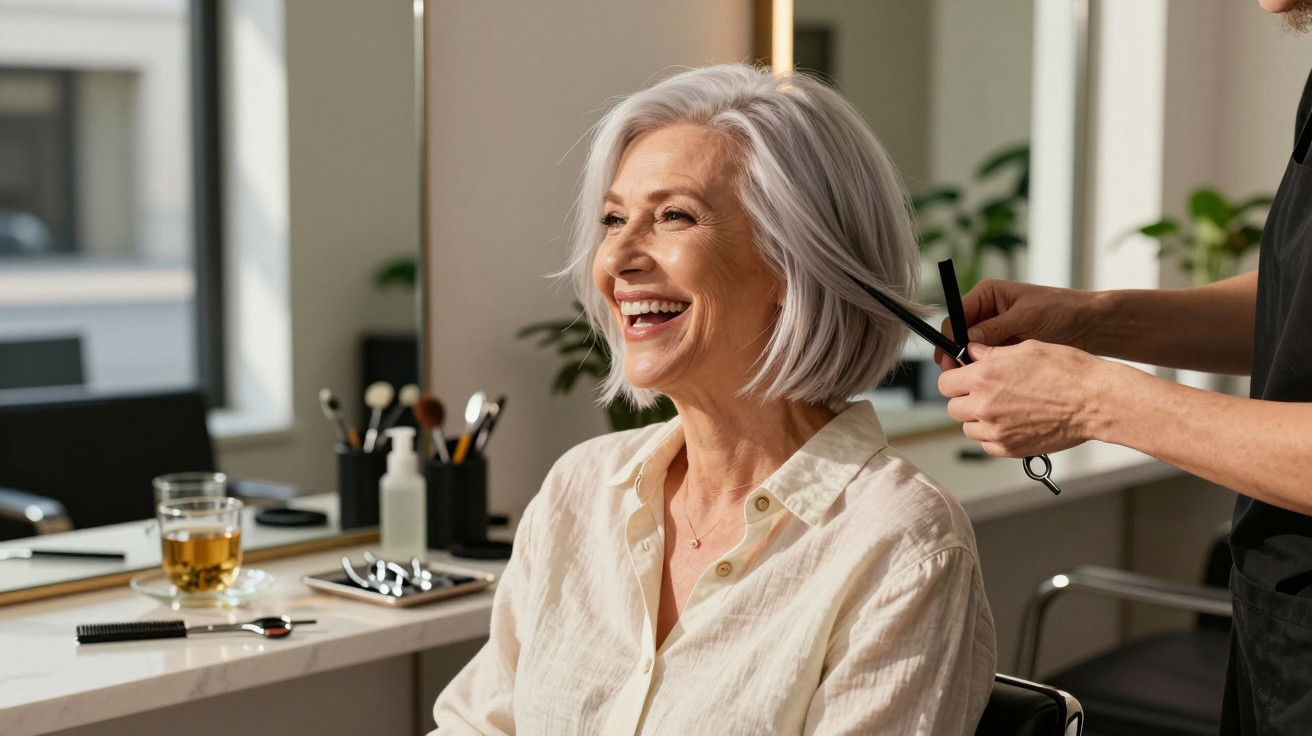
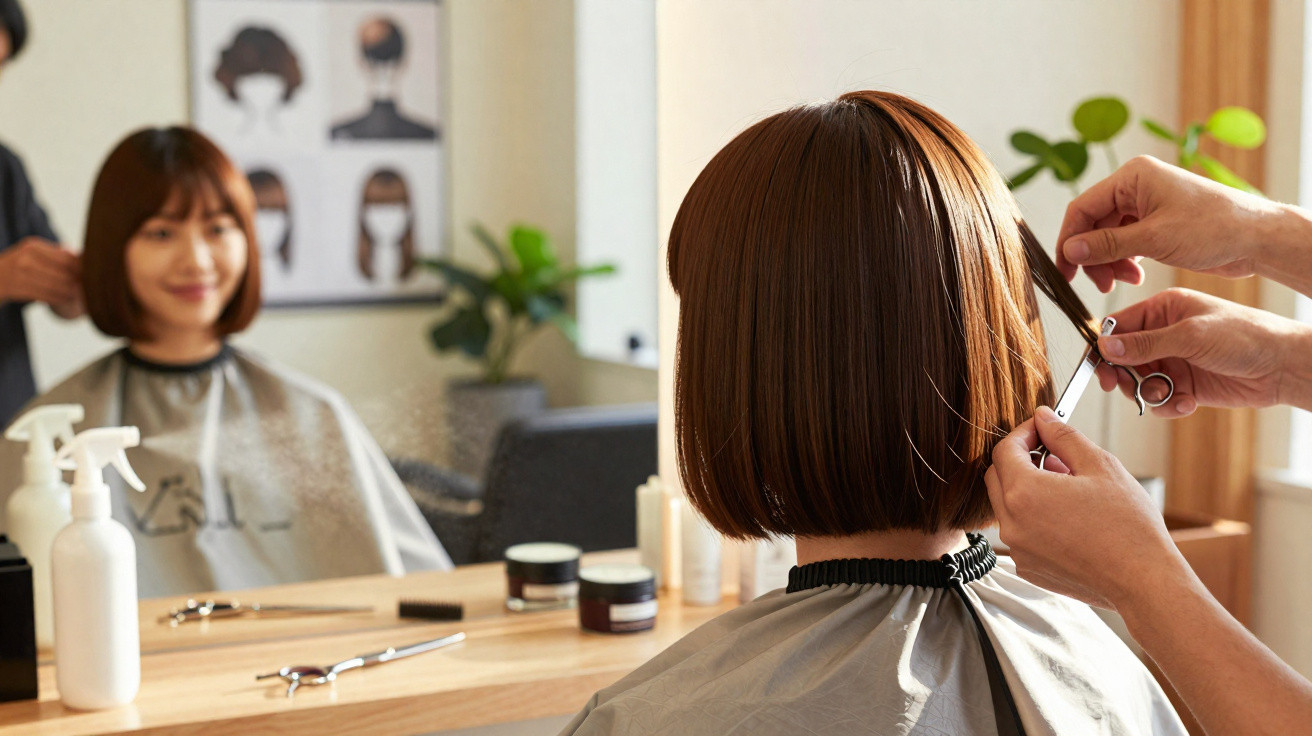
The woman in the salon chair was 67, wearing a cashmere cardigan and pearl earrings of the sort that never date. She held herself upright, her hands tightly clasped in her lap, staring into the mirror as though it could expose her. “Just the usual,” she said to the hairstylist. “Short, neat, nothing fancy. I don’t want to look like I’m trying too hard.”
The stylist paused, with her scissors suspended in mid-air.
A photograph sat on the small tray beside them, partly covered by a magazine. It showed a textured silver shag with a long, sweeping fringe: contemporary, spirited and daring.
She had liked the image enough to print it out.
Yet she had still said: “Just the usual.”
The stylist smiled, then asked quietly: “Are you sure?”
Why “respectable” hair after 60 is often rooted in fear, not elegance
Spend an afternoon in a lively city salon and you will hear women over 60 repeat the same phrase: “I don’t want anything too crazy.”
Usually, they mean: do not make it too short, do not leave it too long, do not add too much texture, and do not allow even one strand to sit out of place. They gesture towards a dependable rounded bob or a neatly controlled mass of curls, using words such as “classy” and “age appropriate” in hushed tones.
Speak to the professionals once those clients have left, however, and another picture emerges. Many supposedly conservative haircuts have little to do with enduring style. They are about concealment.
A London hairstylist called Nina often speaks about one client she has looked after for 20 years. The woman first came to her in her early fifties with a shoulder-length blow-dry that would not have looked out of place in any corporate boardroom in 1998.
Immaculately sleek. Immaculately beige-brown. Immaculately unmemorable.
At 72, she was still asking Nina to “keep it like always.” Then, following a lengthy silence one day, Nina asked her, “If no one from your old office ever saw you again, what would you ask me for?”
The woman breathed out, and in that instant seemed ten years younger. Timidly, she took out her phone to reveal a saved image: a chin-length, layered salt-and-pepper crop with an untidy fringe. She had taken a screenshot months before, but had not found the courage to voice what she wanted.
Hairdressers encounter this pattern every day. The “classic” haircut can become a comfort blanket, much like dark, formless clothing that some people refuse to give up.
Outwardly, it can seem refined, understated and even stylish. Beneath that surface, though, there is often a muted anxiety: a fear of looking “mutton dressed as lamb”, of remarks from other women, or of attracting attention for the wrong reasons.
The plain truth is that many women use conservative hair as camouflage. They are not necessarily trying to look better; they are trying to disappear in a culture that idolises youth. When a stylist carefully proposes a more liberated look, the first response is seldom “I don’t like it.”
More often, it is: “What will people think?”
The modern silver shag: the bold cut changing attitudes after 60
Ask experienced hairstylists which style demonstrates that hair after 60 can be adventurous while remaining exceptionally chic, and one answer repeatedly comes up: the modern silver shag.
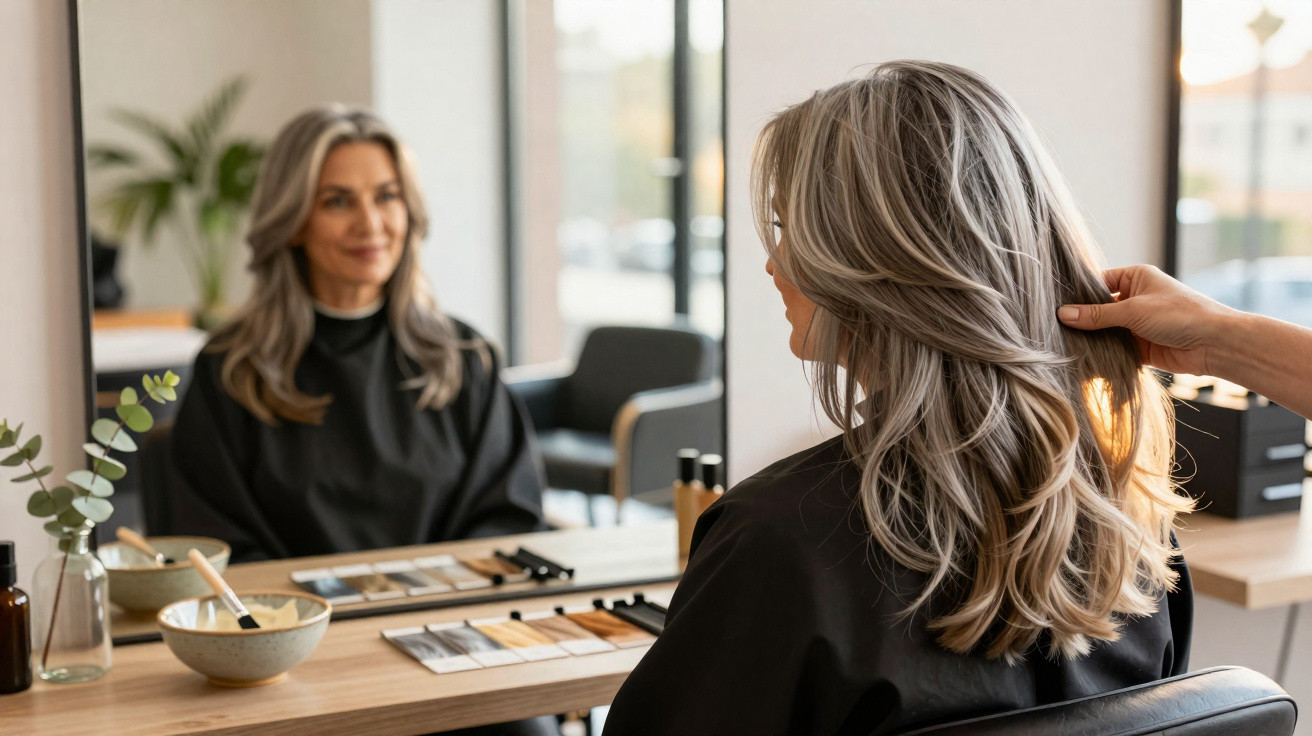
This is not the old-fashioned feathered shag of the 1970s. The current version centres on movement, gentle layers and texture that embraces natural grey rather than battling it. Often finished with a lengthy curtain fringe or side-swept fringe, it frames the face while drawing attention to the cheekbones and eyes.
Its deliberately slightly undone shape is the complete opposite of a rigid blow-dry. That contrast is precisely what makes it look so current on a mature face.
Imagine a retired teacher of 64 arriving at a neighbourhood salon with shoulder-length, box-dyed brown hair and the firm side parting she has worn since 1992. Her request is straightforward: “I’m tired.”
Her colour is dull, the ends are damaged, and every effort to “hide the grey” only makes her regrowth stand out more.
Her stylist recommends a silver shag. The old dye is lifted gradually, her naturally white strands are blended with a few cool highlights, and long layers are cut to sit around the jawline and collarbone. The fringe is soft and a little tousled, repeatedly skimming her lashes.
When she leaves the salon, strangers do not think “great cut for her age.”
They simply think: great cut, period.
Why is this look so effective after 60? Above all, it works with the hair’s natural tendencies rather than resisting them. Grey and white hair is often drier, lighter and rich in its own texture. Instead of trying to force it into place through continual blow-drying and hairspray, the silver shag makes the most of that airy quality.
The layers also visually disrupt any helmet-like effect, preventing the face from appearing weighed down. A fringe softens forehead lines without concealing them. The finish looks modern without seeming like an effort to imitate a 25-year-old influencer.
There is also a subtle psychological change. This type of cut says, “I’m here, I take space, I’m allowed to be seen.” It conveys something very different from the politely restrained bob that does not shift in the breeze.
How to request a bold post-60 haircut without feeling silly
The first step happens before you sit in the salon chair: it begins in front of your bathroom mirror. Look at your hair as it is and ask yourself, “If I wasn’t worried about judgement, what would I secretly like to try?”
You do not need a fully formed answer. It could be “shorter than this”, “let the grey show”, or “something with more fringe”. Start with that small desire, then search Pinterest or Instagram for photographs of real women rather than celebrities. Save 3–5 pictures of styles with a shared mood, even if their exact shapes differ.
Take those images to your stylist and offer the candid sentence most professionals hope to hear: “This is the feeling I want. Can you adapt it to my hair and my face?”
One major mistake women over 60 make is feeling they must apologise for wanting something different. They take their seat by listing everything they dislike, often alongside harsh self-judgement: “I know my hair is awful, I know my face is sagging, just do whatever is least noticeable.”
Stylists are not magicians; they are collaborators. They can do their best work when they understand your everyday life. Do you blow-dry weekly or hardly ever? Do you wear glasses? Do you put your hair up for cooking, gardening or looking after grandchildren?
In truth, nobody gives themselves a salon-standard blow-dry every day. Tell your stylist what your routine is really like, and they can create a striking cut that dries well naturally while still looking considered.
One afternoon, a senior Paris colourist put it succinctly while trimming a further silver fringe for a 70-year-old client:
“Class is not about having boring hair,” she said. “Class is about choosing on purpose, instead of letting fear choose for you.”
She then shared the short checklist she uses with every woman over 60 ready to try a contemporary shag or another statement style:
- Does the cut move when you move, or is it frozen in place?
- Can you style it in under 10 minutes on a normal day?
- Does it make your eyes the star of the show?
- Does it work with your natural color and texture, not against them?
- When you look in the mirror, do you see yourself, or a careful disguise?
One yes provides a starting point. Five yeses generally mean you have found the ideal balance between boldness and true ease.
Rethinking “age-appropriate” hair: what if joy is the real rule?
Spend time with women who have wholeheartedly embraced their hair after 60 and something surprising becomes clear. The conversation moves away from “is this OK for my age?” and towards “does this feel like me right now?”
The silver shag is only one possibility. For some women, the brave option is an ultra-short crop that highlights the neck and jawline. For others, it means growing their hair longer than it has been since their thirties, with relaxed waves and a natural silver ombré. Some intentionally choose bright white hair and wear it as though it were the room’s most stylish accessory.
They are not united by length or colour. What they have in common is their refusal to let the word “respectable” become a prison.
Reclaiming your hair does not require walking into a salon and demanding an extreme transformation. At times, the boldest question is simply: “What would you do if I gave you permission to ignore my old rules?”
It might mean retaining your beloved bob while softening its outline, relaxing the blow-dry and introducing texture, so that you look less “news anchor” and more “French film director.” It could mean finally accepting the fringe you have wanted since you were 19.
The meaningful change takes place within you: the day you stop styling yourself to avoid upsetting anybody and start doing it to feel alive when you see your reflection. That is when a conservative hairstyle ceases to be armour and becomes a choice once more.
That kind of understated courage is what others notice, well before they realise it is “just” a different hairstyle.
| Key point | Detail | Value for the reader |
|---|---|---|
| Conservative cuts often conceal insecurity | Many “classic” bobs and stiff blow-dries come from a fear of judgement rather than individual preference | Helps you consider whether your present style genuinely represents who you are today |
| The modern silver shag complements real grey hair | Soft layers, movement and a fringe work with natural colour and texture instead of opposing them | Provides a specific, stylish style to raise with a hairstylist after 60 |
| Honest discussions with your stylist change everything | Explaining your lifestyle, limitations and inspirational images produces bolder but still practical haircuts | Makes salon appointments less daunting and results more personal, wearable and practical |






Comments
No comments yet. Be the first to comment!
Leave a Comment