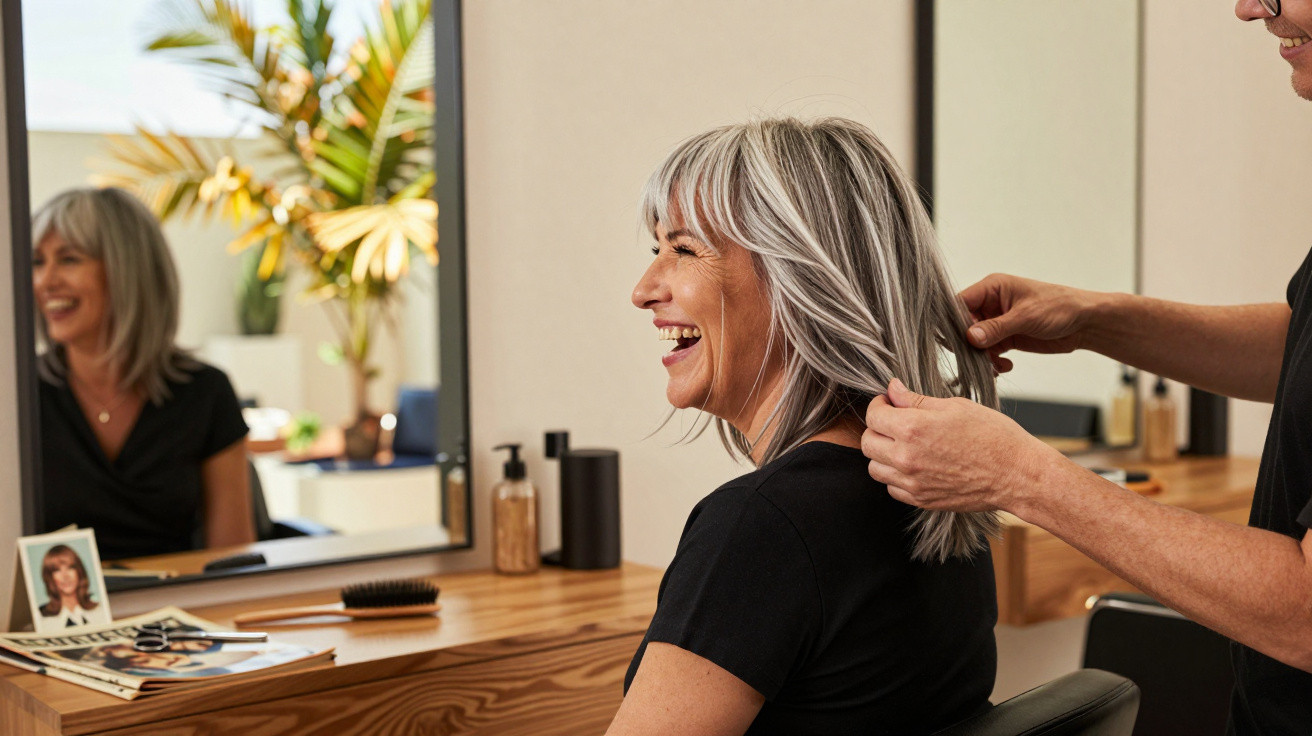
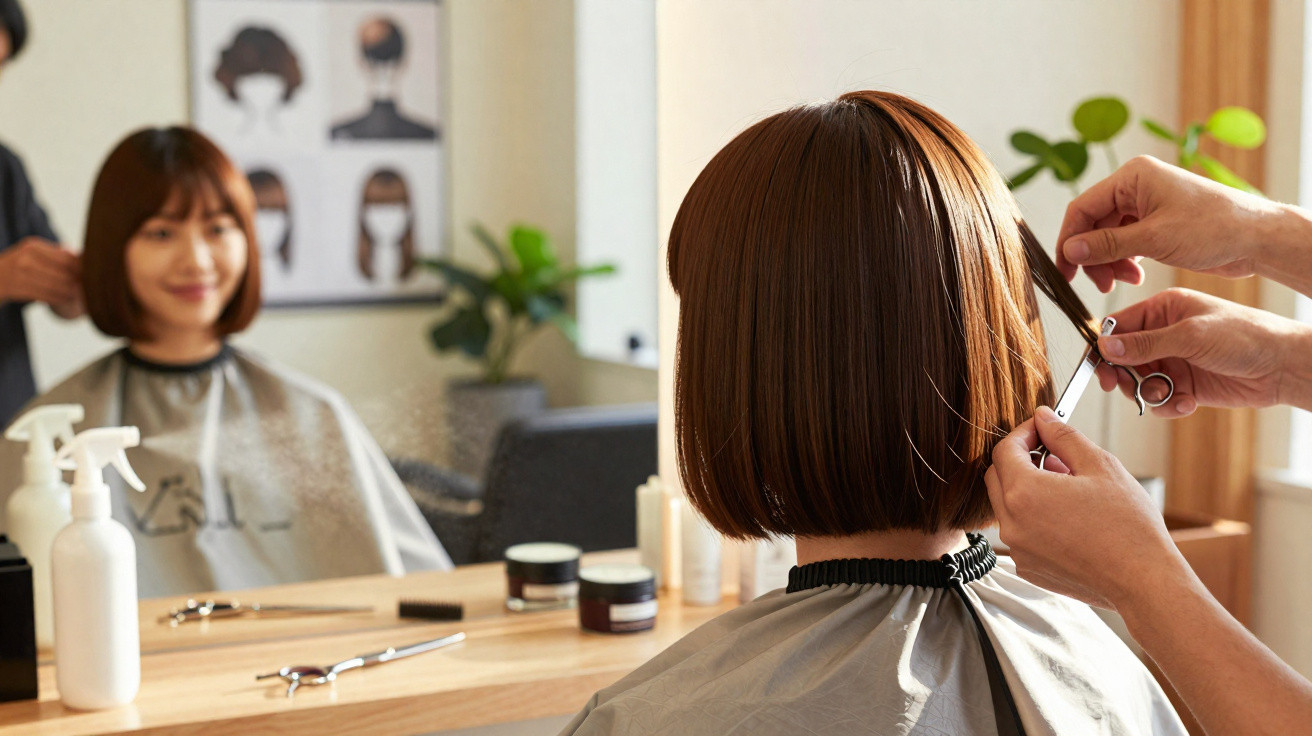
The woman looking back from the mirror pauses for a moment too long. Her lipstick has just been applied and she has chosen her blouse with care, yet her attention keeps returning to one thing: her hair. At 52, she has experimented with the “anti-ageing” bob, a heavy fringe and the short layered style her friend enthusiastically recommends. Nothing feels truly like her. In the salon, magazines urge her to “dare” a pixie cut or choose an ultra-sleek contemporary look. Her hairdresser, however, proposes something she has not worn since the 1990s: a style she associates with mums in old family photographs and retro television programmes.
She dismisses the suggestion with a laugh. Then she sees the finished cut.
All at once, that “old-fashioned” hairstyle appears to be the most current look in the room.
The hairstyle hairdressers secretly love after 50
The cut your hairdresser may be discreetly reviving for clients over 50 is the classic layered shag.
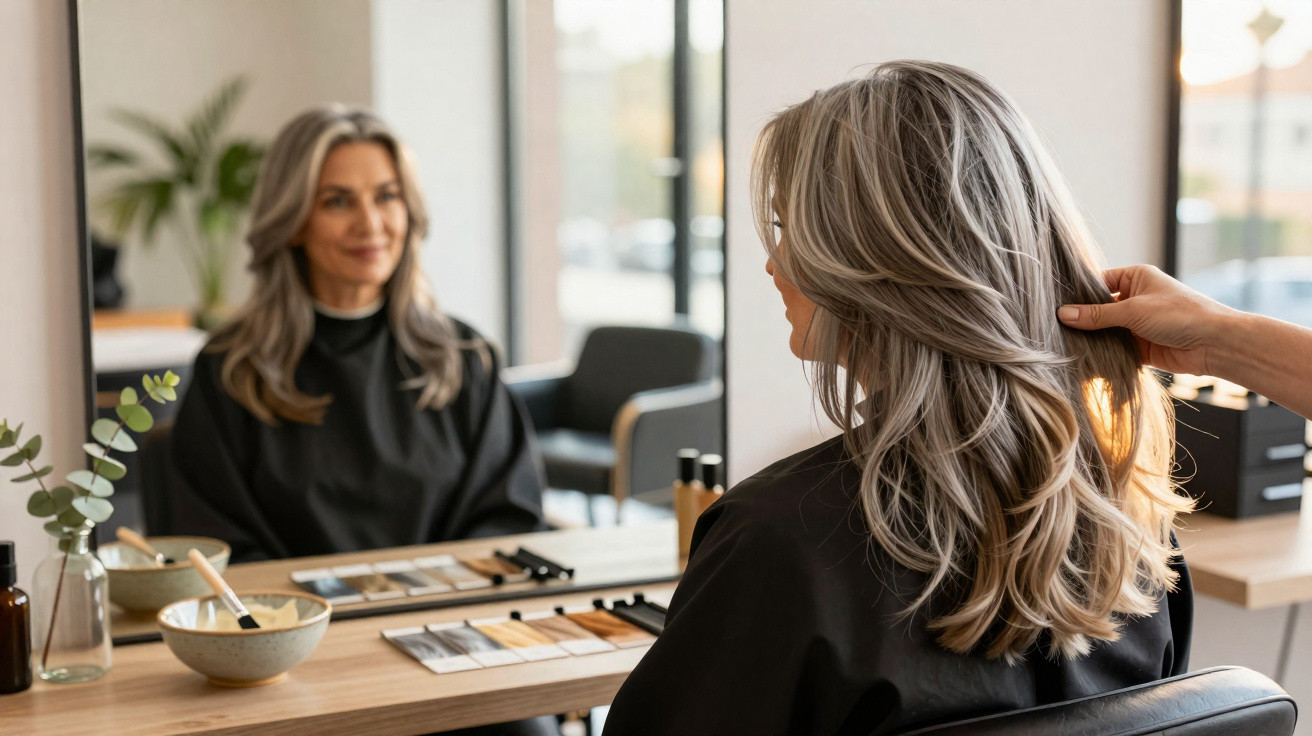
This is not the untamed, rock-star version of the 1970s. Today’s shag is gentler and more polished, built with delicate blended layers and movement around the face. It is the sort of hairstyle that seems as though you woke up with it naturally… even if you most certainly did not.
For a long time, the style was written off as outdated, overly messy or insufficiently “polished” for professional women. But mention it to stylists who regularly work with clients in their fifties and sixties, and their enthusiasm is clear. The modern shag rescues more salon appointments than most people would imagine.
One London hairdresser told me that nearly half of her clients over 50 eventually choose a layered shag. Some arrive requesting a bob, while others want to “go short” immediately. Many bring in celebrity photographs featuring perfectly smooth, full hair that bears little resemblance to everyday reality. Once she softly proposes a shag - with subtle layers and either a wispy fringe or curtain bangs - they visibly relax. It feels simpler, more forgiving and more genuine.
A few weeks afterwards, they return with the same comment: “People say I look fresher, but they can’t tell what changed.” That understated transformation is precisely why stylists continue to suggest it.
There is a straightforward reason for the style’s return. Beyond 50, hair often loses fullness, lustre and the easy volume we once took for granted. Sleek, blunt cuts can reveal every sparse area and gap. A structured bob may also make features appear harsher and the jawline more angular than we feel on the inside.
A layered shag has the reverse effect. Its soft texture brings gentleness around the face, while its layers introduce movement to hair that has become flat or weighed down.
Rather than battling against age, this cut works alongside it. It follows the hair’s natural fall instead of forcing every strand into place. That is why so many hairdressers subtly steer clients towards this “old” hairstyle: it is forgiving, adaptable and changes gracefully over the months.
How to wear the modern shag after 50 without feeling stuck in the past
For a shag to look contemporary after 50, the finer details matter most. Ask your hairdresser for soft, almost invisible layers that merge into one another instead of obvious, choppy tiers. You want movement rather than disorder. Leave sufficient length on top to prevent a “helmet” shape, and allow the sides to softly contour the cheekbones.
A delicate curtain fringe can be particularly effective if lines on the forehead are not something you wish to draw attention to every day. It opens up the eyes rather than closing in the face. The back may be kept slightly longer, brushing the nape, for a feminine and light silhouette. Think effortless French actress rather than a nostalgic rock group.
Many women are wary of layers because of disappointing past cuts: hair thinned too aggressively, styling that became impossible, or lengths that grew out in every direction. This is why talking clearly with your stylist matters more than following the trend itself.
Discuss your lifestyle, rather than only the image you would like to achieve. Do you let your hair dry naturally? Do you dislike blow-drying? Do you work out every day or often tie your hair back?
A good shag after 50 needs to withstand everyday life. Let’s be honest: nobody really creates that flawless advertising-style blow-dry every single day. If the cut only works on the day you leave the salon, it is not really your haircut - it is merely a costume.
Hairdressers often admit that this hairstyle acts as a kind of “reset button” for clients over 50 who feel caught between wanting to appear younger and wanting to remain recognisably themselves.
“When I give a woman in her fifties a soft shag,” says Marie, stylist in Paris, “I’m not trying to make her look 30. I’m trying to make her hair match her personality again. The age follows, naturally.”
Keep this short checklist in mind before your next appointment:
- Take 2–3 reference photographs, rather than 15.
- Be honest about how much time you spend on your hair each morning.
- Explain what you dislike about your present cut in one sentence.
- Ask where the layers will begin and how they are likely to grow out.
- Arrange a quick trim in 8–10 weeks to maintain the shape.
Why this “old” cut suddenly feels like the most modern choice
A subtle shift is taking place in salons around the world. Women over 50 are gradually rejecting the idea that they must either cut their hair extremely short to be “sensible” or wear it long and straightened flat to look “younger”. The layered shag sits neatly between those two clichés.
It does not demand attention, nor does it claim to erase the passing years. It has movement, it has air, and it leaves space for personality.
We all recognise the moment of looking at an old photograph and realising that we were never “too old” - our hairstyle simply did not suit the person we were becoming. The modern shag often addresses that very regret, not by reversing time but by bringing the outside into line with the inside, in the present moment.
The more closely you look, the more often you notice this supposedly “old-fashioned” cut in updated forms. You see it on news presenters who avoid rigid blow-dries, actresses who allow a little grey to show through their fringe, and women in cafés whose hair moves as they laugh rather than remaining fixed in place. The real secret is not the trend itself but the freedom it offers.
A shag lets you miss a wash, apply a little dry shampoo at the roots, scrunch the ends with a small amount of cream and head out. On some mornings, that small simplification can feel like self-respect. It is not about giving up; it is about preserving your energy for what genuinely matters to you.
This hairstyle also encourages a different conversation about ageing. Instead of concealing every visible change, it incorporates those changes. A lighter strand at the front can soften a shadow; extra lift at the crown can balance cheeks that are slightly more hollow. The purpose is not perfection but harmony.
For many women over 50, choosing this style has less to do with hair than identity. It is a way of saying: “I’ve moved on from who I was at 25, but I haven’t retired from looking like myself.”
In this way, the “old-fashioned” shag becomes quietly radical. It is not the hairstyle of someone attempting to keep pace with a trend. It belongs to someone ready to create her own.
| Key point | Detail | Benefit for the reader |
|---|---|---|
| Modern shag cut | Soft layers, movement around the face, light fringe | Provides a flattering, easy-to-manage option after 50 |
| Styling reality | Works with natural texture, with minimal blow-drying required | Suits a busy life without needing salon-standard effort every day |
| Emotional impact | Makes hair reflect personality and stage of life | Helps you feel more like “yourself” instead of pursuing youth |


Comments
No comments yet. Be the first to comment!
Leave a Comment