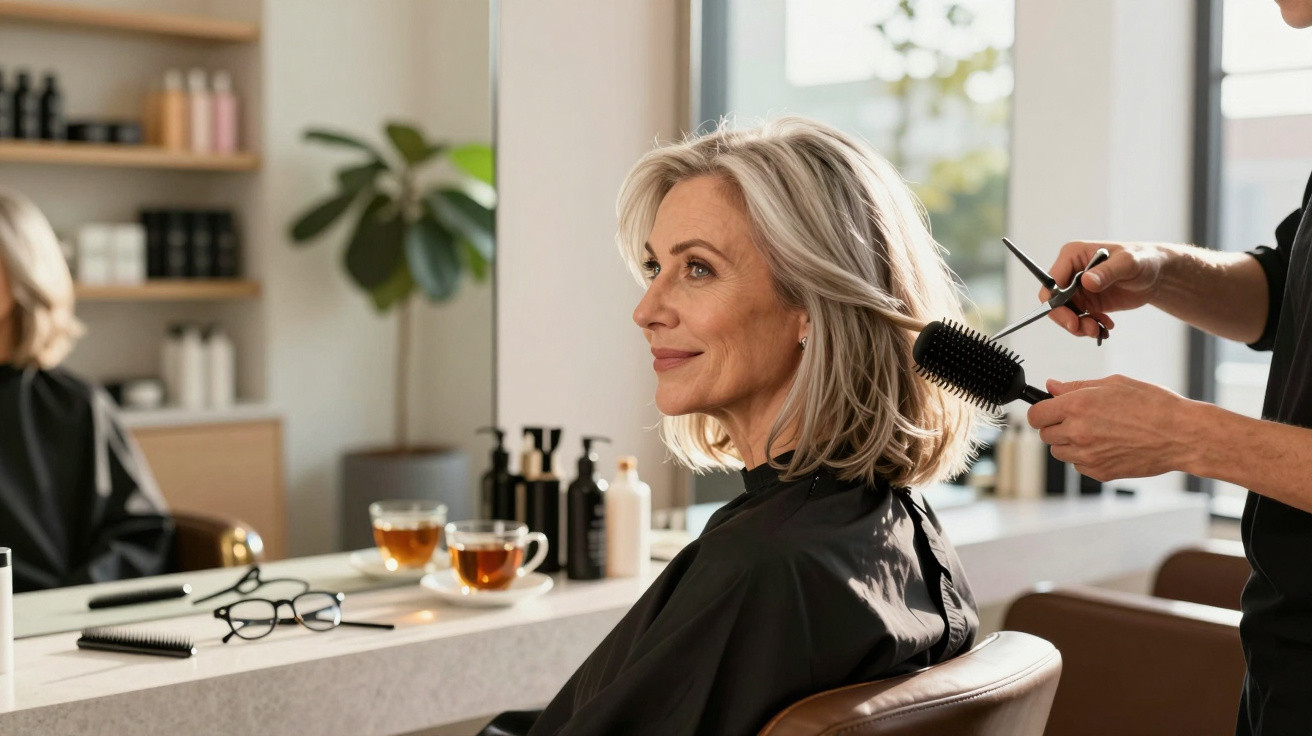
The woman staring back from the mirror did not quite look like the person Claire remembered. The face was unmistakably hers, with the same smile and playful eyes… but her hair? It had become a rigid, dated helmet that had somehow added another ten years. At 63, Claire was still wearing the cut she had chosen for her son’s christening. He is 37 now.
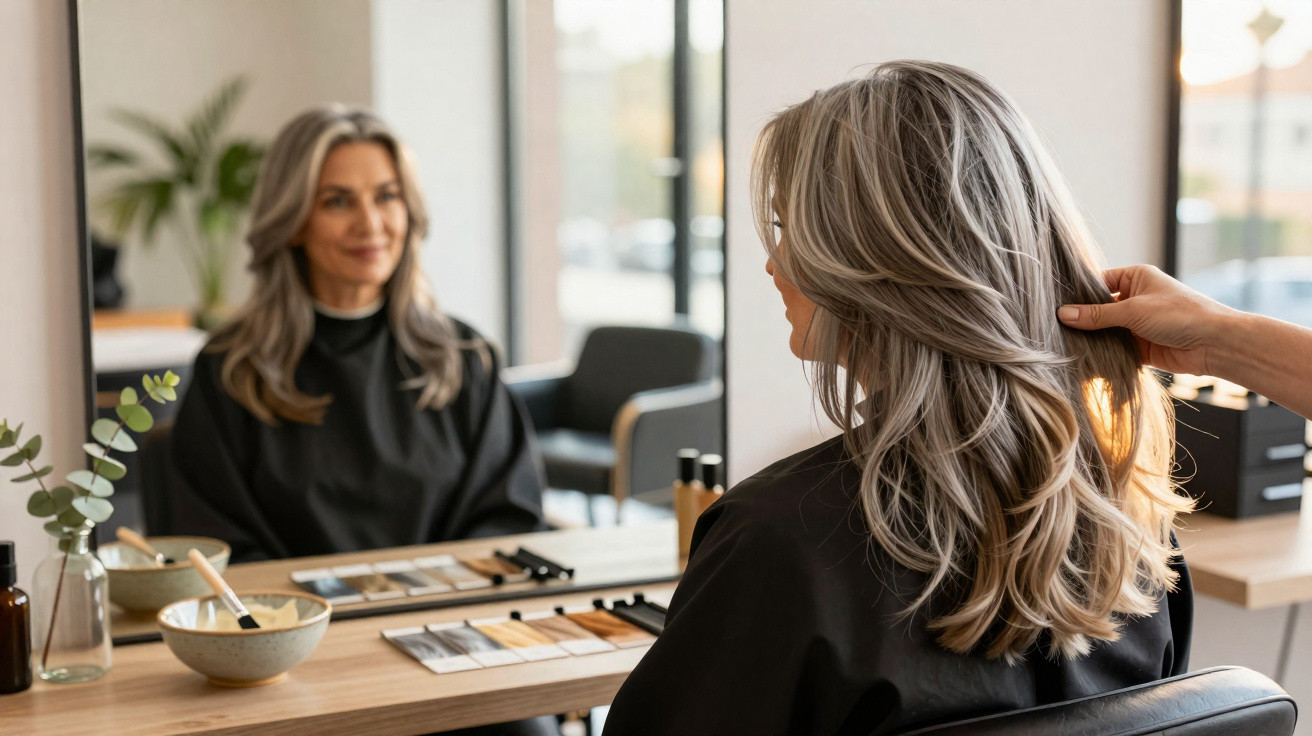
She lowered herself into the salon chair feeling a little nervous, then murmured to the hairdresser: “I don’t want to look like I’m trying to be 20. I just don’t want to look tired.” The stylist smiled and said, “You don’t need to look younger. We just need to let people see you again.”
Fifteen minutes later, Claire had a gentler new shape that brushed her jawline, and her entire face appeared more lifted. The transformation was not simply down to the scissors. It came from one particular style of cut.
The haircut that erases years without pretending
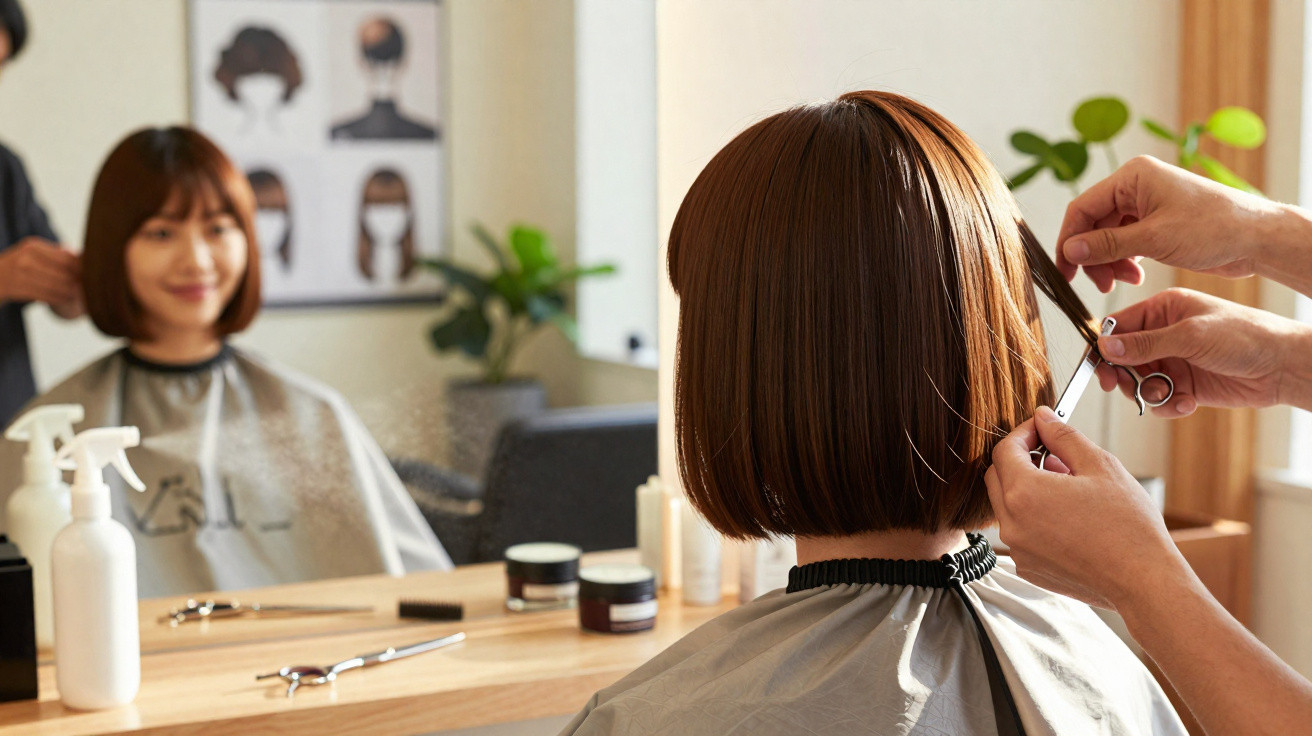
Ask seasoned hairdressers and most will give a similar answer: after 60, one of the most rejuvenating hairstyles is a contemporary, airy layered bob that falls just above the shoulders. This is not the fixed, 1980s “helmet bob”, but an easy, soft shape with natural movement.
This cut reveals the neckline, softens the outline of the face and creates a delicate frame around it. Its length usually lands at, or slightly below, the jaw, producing a subtle lifting effect without any pulling. Hair appears lighter, the eyes seem more open and the whole expression looks awake again.
You do not leave the salon looking like somebody else. You leave looking more like yourself, only with the volume turned up.
A hairdresser I spoke to described her regular client Marie, 68, who had requested the same very short, rounded style every month since her working days in an office. It was convenient, but also rather harsh and almost severe. “I feel like a retired bank manager,” Marie would joke, half-laughing and half-resigned.
One visit, her stylist proposed a layered bob with a slightly longer front, brushing the collarbones and paired with a light, airy fringe. Marie was unsure at first, before saying, “Let’s try. Worst case, it grows back.”
When she looked in the mirror afterwards, she immediately laughed. “I look like I sleep!” she said. She did not look artificially younger; she simply seemed less burdened, less square and less like someone who had “given up.”
There is a straightforward reason this hairstyle is so effective after 60. Faces evolve: cheeks can become a little more hollow, jawlines soften and the neck starts telling its stories before we may be ready for it. A dense block of hair or old-fashioned layers can draw attention to every one of those changes.
A medium-length layered bob, with understated movement and softness around the face, has the opposite effect. It restores balance to the proportions, guides attention towards the eyes and cheekbones, and makes the neck appear longer rather than shorter. Instead of piling volume on top, the hairdresser uses graduation and lightness.
The result is not “anti-age” as much as “pro-face”. Your genuine features return to focus, without drama or gimmicks.
How to ask for – and live with – this rejuvenating cut
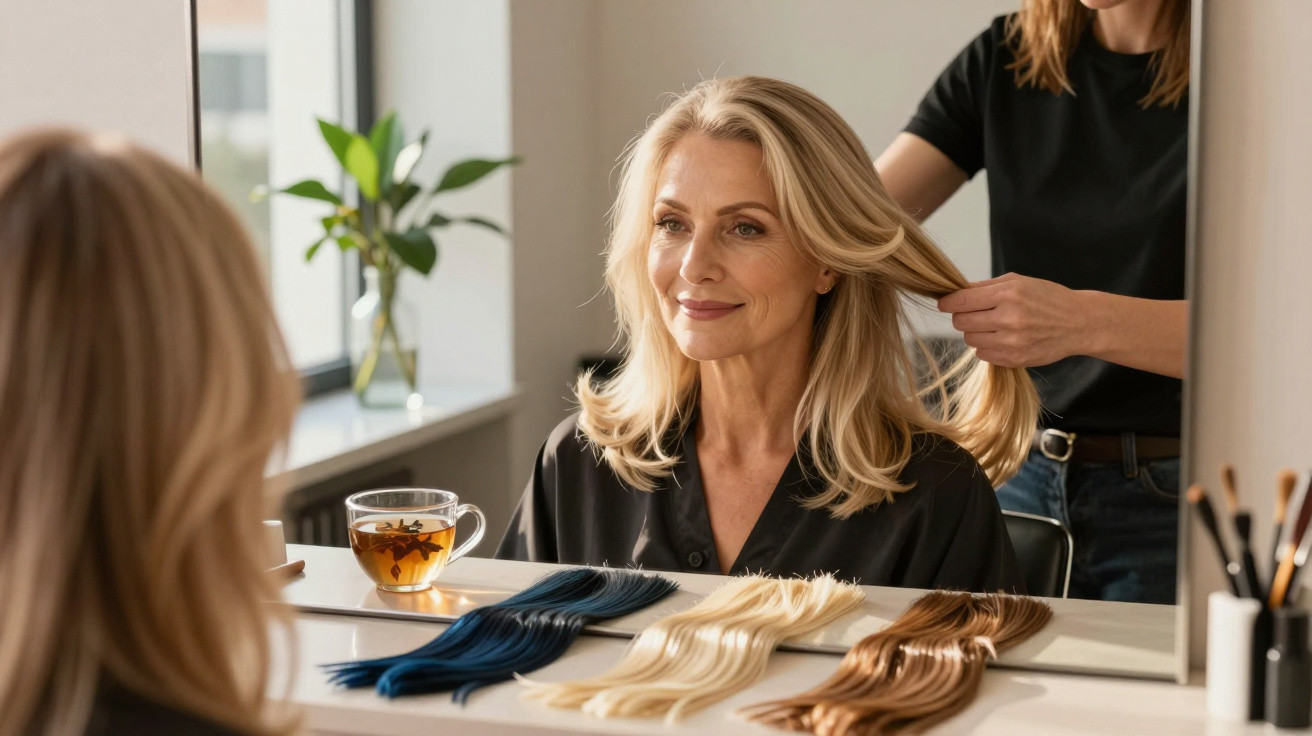
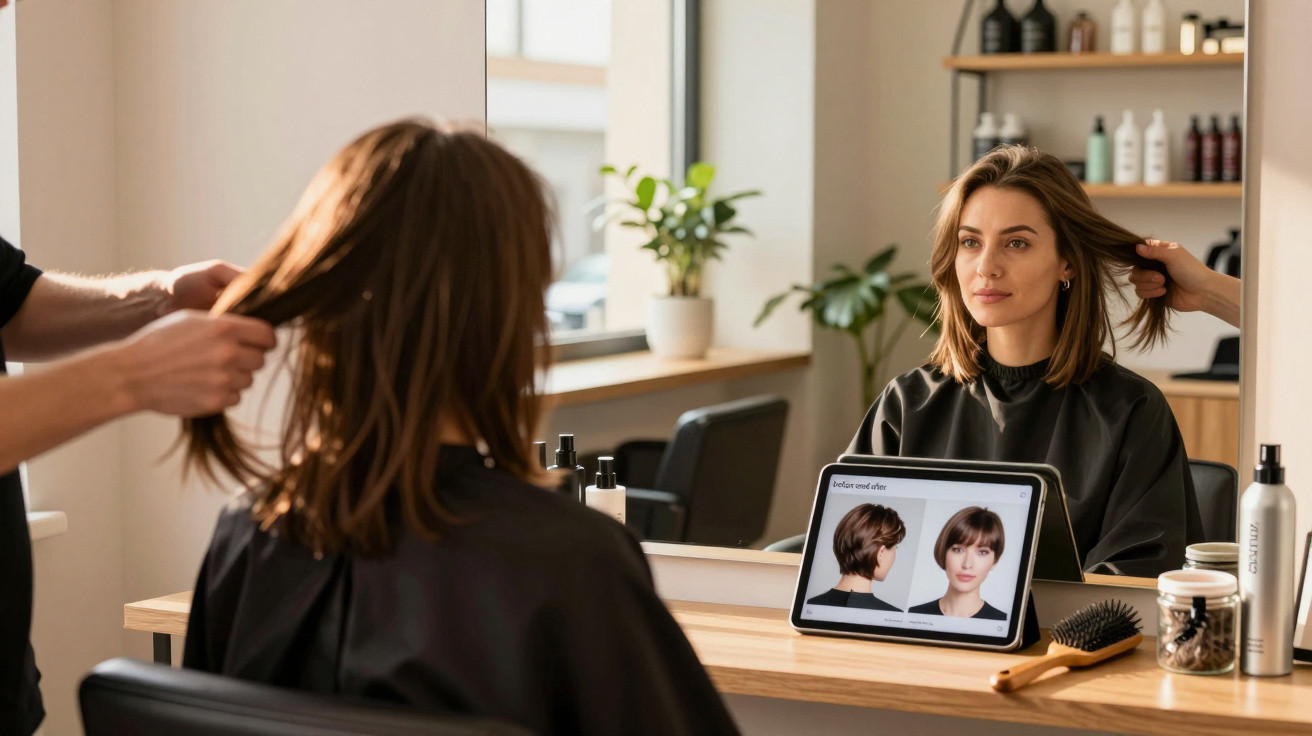
The main secret is not arriving with a photograph of a 25-year-old influencer. Instead, say: “I want a light, layered bob that moves, sits around my jawline, and softens my face.” Then let your hairdresser see how you genuinely style it on an ordinary morning.
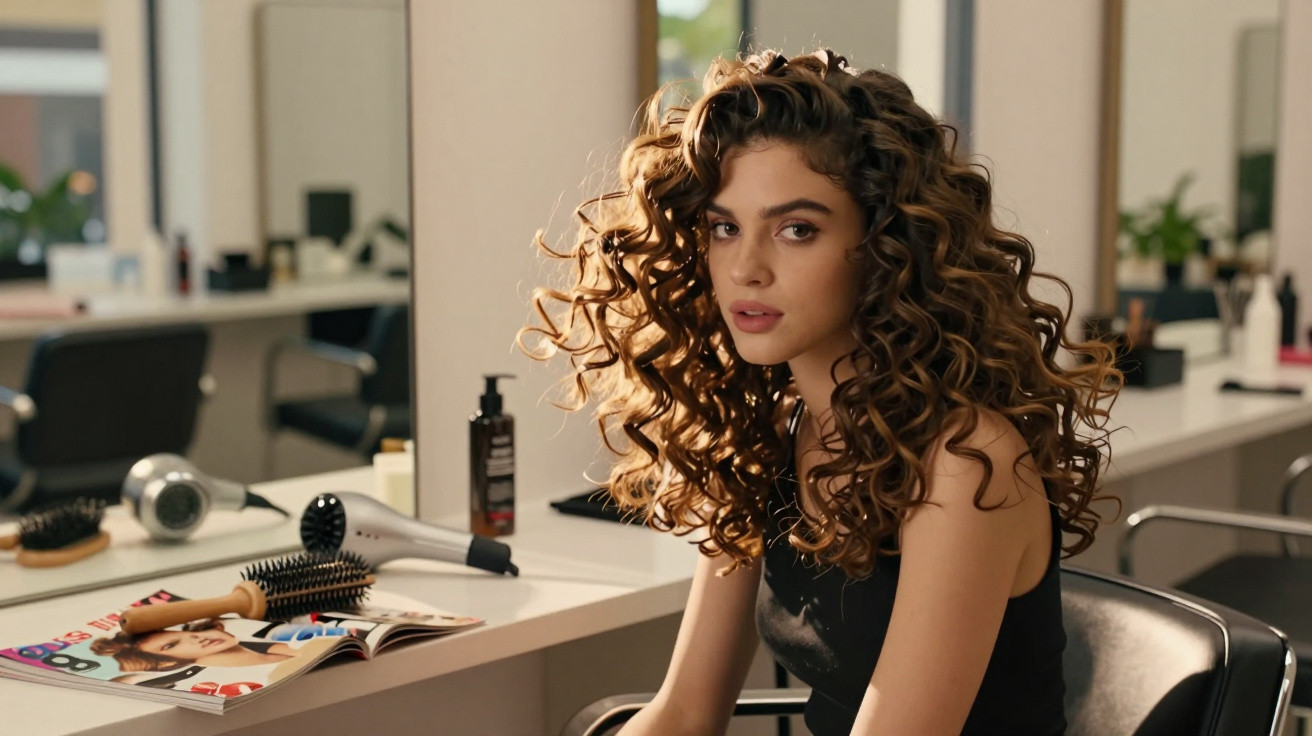
They can tailor the length to suit your neck, jaw, glasses and hair texture. Fine hair benefits from gentle layers and a blunt baseline to retain density. Thick hair may need more internal layers to take out excess weight. For natural waves, ask for a few face-framing layers that work with the curl pattern rather than against it.
Request movement around the temples and cheekbones instead of weighty layers at the crown that fall flat after one wash. The aim is a style you can tousle with your fingers while still looking deliberately styled.
In the salon chair, many women over 60 admit the same fears: “I’m scared of going too short” or “I’m scared of leaving it too long.” Caught between them, they remain in the same familiar shape year after year. We have all experienced that moment of realising our hairstyle has not changed since our children’s secondary-school photographs.
The reassuring part is that this modern bob sits precisely in that comfortable middle ground. It is neither “mum-short” nor teenager-long. It is an in-between length that looks polished with a blazer and equally good with a T-shirt.
Honestly, hardly anyone gives their hair a flawless blow-dry every day. A rejuvenating haircut after 60 should forgive those mornings when you wash it, scrunch in a little product and head straight out.
“After 60, the worst enemy of the face is not gray hair,” says Sophie, a stylist with 20 years’ experience. “It’s cuts that are too stiff, too set. Hair needs to move. Movement makes people read ‘energy’ instead of ‘age’.”
- Ask for softness, not volume. Steer clear of large round blow-dries that make hair sit on the head like a helmet. Delicate layers and relaxed, slightly undone styling look fresher.
- Choose the right length. The most flattering length often falls between the middle of the neck and the tops of the shoulders. Anything shorter may look sharper, while extra length can pull the face downwards.
- Play with fringes. A soft, lightly separated fringe can soften forehead lines and draw attention to the eyes without making you “hide” behind your hair.
- Respect your texture. Whether your hair is curly, wavy or straight, the cut should follow how it naturally falls rather than create a daily battle.
- Forget perfect symmetry. A slightly longer front section or side parting can add a modern detail and prevent the style from feeling too severe or old-fashioned.
Beyond the scissors: what your new cut says about you
After 60, what takes place in the salon chair is more than an alteration to your silhouette. It can be a conversation with your identity: the woman you were at 40, the woman you are today and the woman you still wish to become. Hair lies at the meeting point of all three.
The layered bob recommended by so many hairdressers at this stage of life is less a fashion instruction than a statement. It says: “I’m not trying to disappear behind my hair, and I’m not clinging to what used to be. I’m adapting.” It represents a quiet kind of style maturity.
Once some women make the change, they begin experimenting with small new gestures: tucking one side behind an ear, adding a soft wave or changing their parting for the first time in decades. Nothing is radical, yet everything feels different.
| Key point | Detail | Value for the reader |
|---|---|---|
| Modern layered bob | Length from the jaw to the shoulders, with soft edges and light movement | Visually lifts facial features and refreshes the overall look without a drastic change |
| Respect natural texture | A cut suited to fine, thick, straight or wavy hair, as well as realistic styling routines | Simple everyday upkeep and a style that still works on “lazy” days |
| Soft framing and fringe | Subtle layers around the cheekbones, with an optional light fringe | Brings attention to the eyes, softens lines and reduces the “tired” effect |






Comments
No comments yet. Be the first to comment!
Leave a Comment