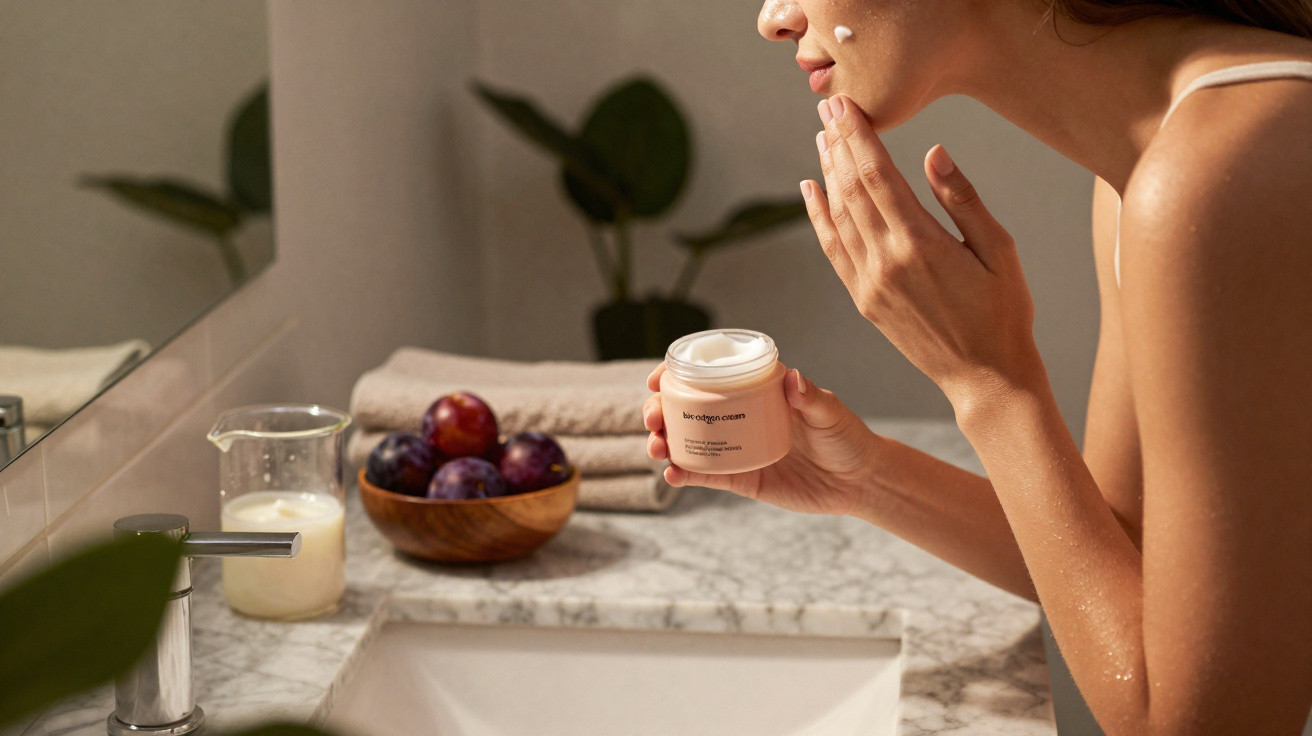
A small jar on the shelf, a nature-focused promise on its label – yet this anti-ageing cream is reportedly sold every minute. Its popularity is not driven by social media alone, but chiefly by one distinguishing feature: it uses a plant-based pro-collagen complex, is certified organic, receives top marks from a strict rating app and claims to visibly soften wrinkles. But what is really behind it – and who is this trend worth trying?
Why collagen matters from the age of 30
By around the age of 30, measurable changes begin to occur in the skin. The body produces less collagen, the structural protein that supports skin from within. Dermatologists believe collagen production starts declining from the mid-twenties and falls by roughly one per cent each year after 30.
For many people, the effects are familiar in the mirror:
- finer lines around the eyes and mouth
- the first noticeable wrinkles on the forehead and around the nasolabial area
- reduced firmness, making the face look more tired
- a complexion that appears less radiant
This is precisely the stage targeted by the much-talked-about organic cream sold in pharmacies. Rather than merely plumping the skin at the surface, it aims to boost the skin’s own collagen production while strengthening the skin barrier.
The organic collagen cream becoming a pharmacy bestseller
The anti-ageing cream is made by the natural skincare brand Krème and is stocked by countless pharmacies across France. There, it is regarded as the number-one certified organic anti-ageing product. Each jar contains 50 millilitres and is intended for use morning and evening for approximately three months.
“The cream uses ingredients of 100 per cent natural origin, is certified organic and achieves Yuka’s maximum score of 100 out of 100 points.”
The brand’s premise is complete ingredient transparency, with no controversial preservatives, mineral oils or silicones. This particularly appeals to people seeking anti-ageing benefits while avoiding formulations they consider questionable.
Its texture is also notable: it is concentrated and nourishing without leaving a greasy film. It is designed to provide intensive care while still working well under make-up. Many users say foundation does not slide over it or settle after several hours – an area in which rich anti-wrinkle creams often fall short.
What the Krème cream contains: pro-collagen, plum butter and probiotics
Rather than using animal collagen, Krème relies on a three per cent active plant-derived pro-collagen complex. The principle is to encourage the skin to produce its own collagen more effectively, instead of simply leaving a layer of marine or animal collagen on its surface.
Pro-collagen: stimulating rather than masking
Pro-collagen actives belong to a generation of anti-ageing ingredients that work more like “skin trainers”. They are intended to:
- visibly smooth fine lines
- make the skin look plumper
- give tissue a firmer appearance
While conventional collagen creams often provide only a temporary plumping effect, this organic cream takes a more in-depth approach. With consistent use, it is intended to offer more lasting support for the skin’s structure.
Plum butter for comfort and radiance
Another key ingredient is a butter extract derived from plums. It provides lipids that soften dry skin and ease feelings of tightness. The result is skin that feels more comfortable, looks less dull and gains a subtle glow without appearing shiny.
Probiotics for a resilient skin barrier
Added probiotics are especially interesting for sensitive skin. They are intended to support the skin microbiome – the natural balance of microorganisms on the skin’s surface.
This may offer several benefits:
- less redness on irritated skin
- improved tolerance of anti-ageing actives
- a stronger skin barrier and less moisture loss
The brand describes the formula as hypoallergenic and dermatologically tested; it is even approved for use during pregnancy and breastfeeding. However, whether it is suitable in individual cases should be discussed with a doctor or midwife if in doubt, particularly for very sensitive skin.
What results the brand promises
Krème refers to internal tests in which the cream is said to have delivered measurable effects after around four weeks. The stated results are:
- up to 27 per cent less pronounced wrinkles
- around 25 per cent more “rebound effect”, meaning greater elasticity
- noticeably improved comfort and hydration within the first few days
“Anyone who massages the cream into their face and neck morning and evening should see plumper skin and less visible fine lines after about a month.”
Naturally, figures like these should always be viewed with caution: they are manufacturer claims, usually based on relatively small test groups. At the same time, the high demand in pharmacies suggests that many users are seeing personal results – otherwise, the excitement would be unlikely to last for months.
Who is the cream genuinely suited to?
Ideal for normal to dry, sensitive skin
The formulation is primarily aimed at normal to dry skin types prone to tightness, slight flaking or a lacklustre complexion. Combining plant-based fats with probiotics addresses two concerns at once: dehydration and a compromised barrier.
Sensitive skin may benefit from the gentle, low-fragrance formula. Those who often react to traditional anti-ageing products containing fragrance or strong acids may find this a milder alternative.
Less suitable for very oily or acne-prone skin
People with very oily or acne-prone skin should proceed carefully. A richer butter base may be too much for these skin types and could worsen blemishes. In this case, it is worth considering lighter fluids or gel textures with niacinamide, zinc or salicylic acid-based actives first.
In French pharmacies, many teams recommend more targeted application for combination skin or an oily T-zone: use it only on dry areas such as the cheeks and neck, rather than on the nose and forehead.
At what age does the cream make sense?
The brand positions the cream for use from approximately age 30. This is when the first fine lines emerge, collagen reserves begin to decline and the skin looks less fresh. The organic cream is intended to help preserve existing collagen potential more effectively before deeper wrinkles develop.
Later, in the forties and fifties, it can be used alongside more intensive actives. At this stage, loss of firmness is more frequently the focus, and the facial contour can appear softer. Here, the cream can act as a nourishing, soothing layer combined with active serums containing retinol or peptides.
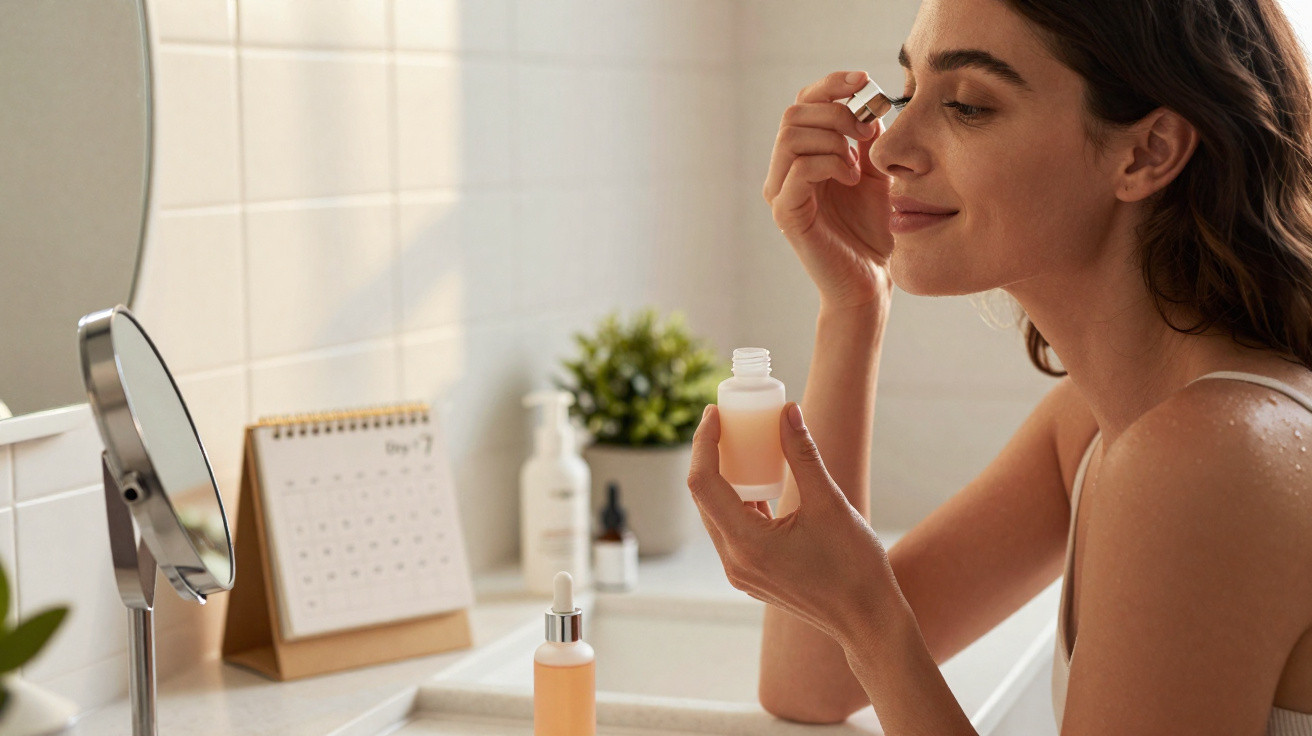
How to incorporate the cream effectively into a routine
| Routine step | Morning | Evening |
|---|---|---|
| Cleansing | gentle gel or foam | oil-based cleanser plus gel/foam when wearing make-up |
| Targeted care | hydrating serum with hyaluronic acid | mild retinol or peptide serum if well tolerated |
| Krème collagen cream | massage a thin layer into face and neck | apply a slightly richer layer, particularly on dry areas |
| Extras | broad-spectrum SPF 30–50 sunscreen | facial oil, if needed, applied only to very dry patches |
Important: without daily sunscreen, every anti-ageing routine loses much of its benefit. UV radiation remains the biggest ageing factor for skin – considerably more significant than natural collagen loss.
What the hype reveals about modern anti-ageing trends
The success of this organic collagen cream reflects a shift in skincare habits. Many customers are no longer focused solely on the strongest possible efficacy claims, but now scrutinise the INCI list carefully. Rating apps such as Yuka reinforce this development by presenting ingredients in an accessible way and rewarding “clean” formulations.
At the same time, interest is growing in concepts such as probiotics, plant-based alternatives to retinol and gentle but effective peptides. Anti-ageing skincare is no longer expected to sting, peel or irritate; instead, it is intended to support skin health over the long term.
For everyday use, this leads to a practical approach: anyone dealing with their first lines from 30 does not have to reach immediately for harsh chemical treatments. An organic cream with a well-designed formula and collagen-supporting actives, used consistently alongside sunscreen and, where appropriate, a mild active serum, can be a realistically effective way to help skin look smooth and plump for longer.




Comments
No comments yet. Be the first to comment!
Leave a Comment