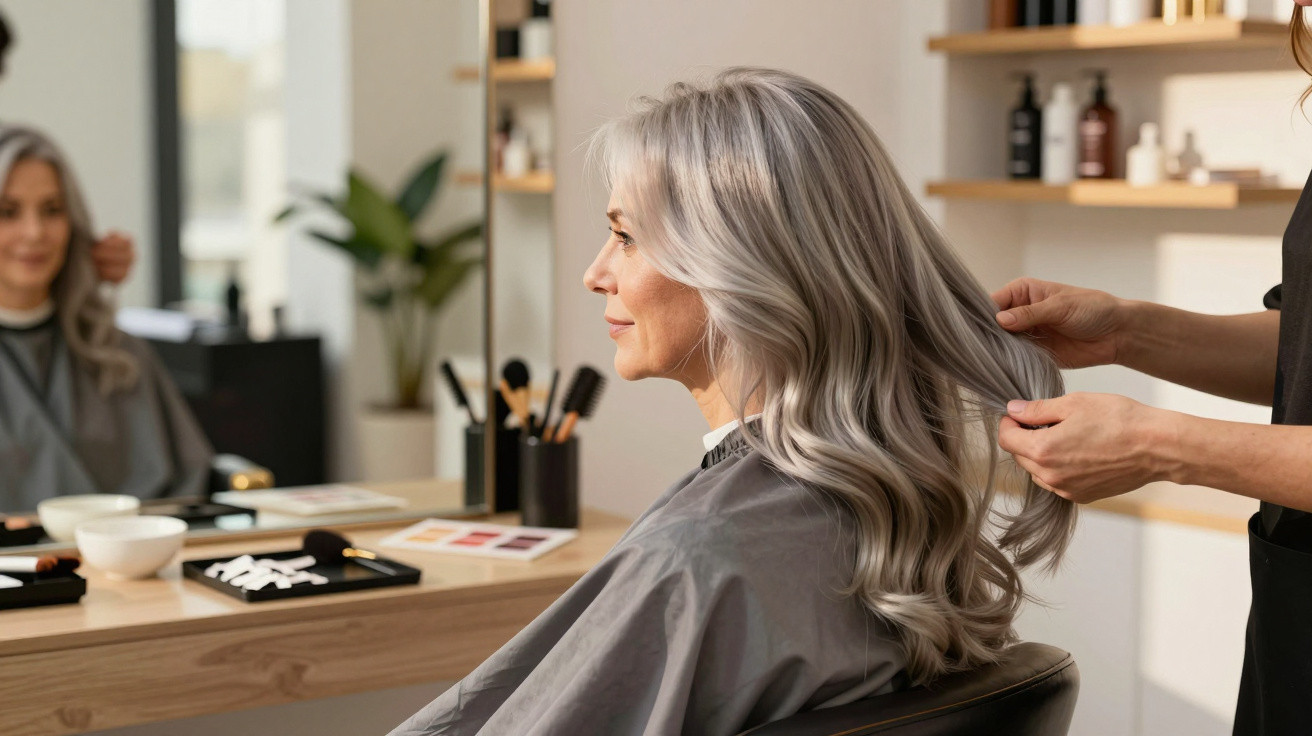
The answer lies in a particular balayage technique.
Anyone who has ruthlessly coloured over every white strand for years eventually faces a choice: keep fighting it or let their natural colour return? The prospect of suddenly living with clearly visible roots puts many people off. This is exactly where a modern balayage look comes in, softening the transition to grey hair so effectively that the dreaded colour line at the roots virtually disappears.
Why transitioning to grey hair can feel daunting
At a certain age, it is no longer just the occasional pale strand that appears; entire sections begin to turn grey. Many women see this as a break from the identity they have known until now. Traditional all-over colour also creates a distinct divide between dyed hair and regrowing natural colour. After no more than three weeks, a lighter band shows at the roots again – and the pressure to book another hair appointment starts all over.
Those who want to step off this treadmill often look for an option that appears natural without seeming unkempt. That is precisely why the so-called Greige balayage look was created: a technique that incorporates grey hair rather than concealing it.
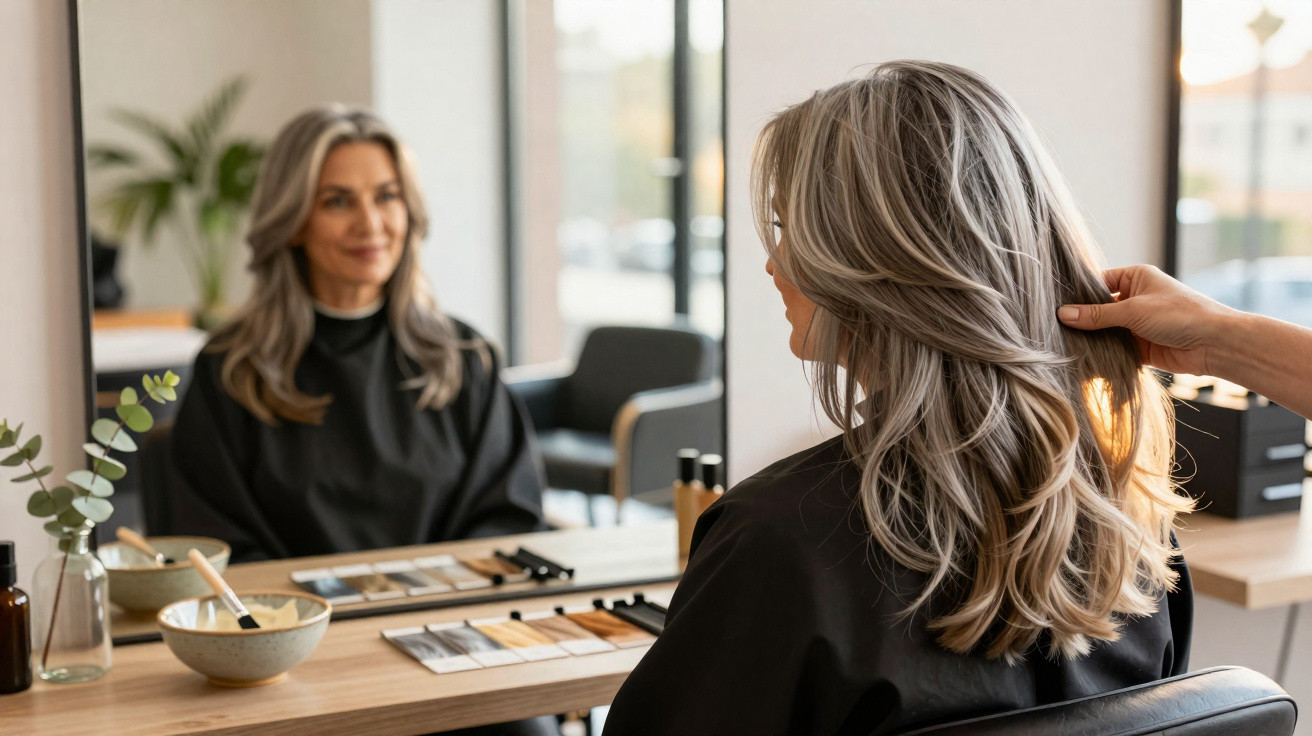
Greige creates a softly blended transition zone between previous artificial colour and new, naturally grey hair – without a harsh root line.
Greige balayage: the trend for grey hair explained
Greige is a blend of grey and beige, meaning it is neither distinctly warm nor overtly cool. It uses exceptionally fine neutral shades worked through the lengths. Rather than applying a rigid, opaque colour over the entire head, the hairdresser introduces soft veils of colour that merge with the natural grey strands.
How the Greige balayage look works in practice
- Ultra-fine sections are added in beige-grey shades.
- The emphasis is on the mid-lengths and ends rather than directly at the roots.
- Warm and cool pigments are combined until a natural, neutral tone is achieved.
- Grey hairs are not covered up; they are incorporated into the new colour blend.
The result is that natural colour can grow through without stress, while the boundary between old colour residue and new grey becomes blurred. Hair looks full of life rather than flat and one-dimensional.
Who Greige suits particularly well
Greige shows its strengths especially clearly on blonde or light brown hair. Initial silver strands almost disappear visually into the overall blend, looking more like intentional highlights. The look can also work on medium-brown and darker hair, although it will be slightly richer and have more depth.
Greige should look as though the colour naturally belongs with the face and complexion – not like a “filter” over the hair.
What to tell your hairdresser
The salon consultation is key. Anyone who simply says, “I want to go grey” risks being misunderstood. A clear brief helps to prevent unpleasant surprises.
Useful wording for light hair
If you are blonde or light brown, you could begin with statements such as:
- “I would like a very fine balayage look in neutral beige-grey shades that blends in my grey hair rather than covering it.”
- “Please concentrate the sections mainly through the lengths and ends so my natural colour can grow in softly at the roots.”
- “The shade should be neither too warm nor too ashy, but should make my complexion look fresh.”
Making the transition work for brunettes
Women with brown hair do not need to lighten everything straight away. The hairdresser can add deeper Greige tones running from the middle of the lengths down to the ends. This takes away the starkness of the white hairs in between, making them resemble deliberately placed light-reflecting strands instead.
The important request here is: do not lighten too dramatically, avoid blocky stripes, and use fine, multi-dimensional colour nuances. The aim is elegant and natural, not “suddenly blonde”.
Greige is achieved in stages, not one appointment
Many salon professionals stress that anyone who has been colouring their hair all over for years cannot switch their hair “to grey” in a single visit. The old artificial colour sits deeply within the hair, particularly at the ends. A natural-looking transition takes patience.
A gradual approach is realistic:
- First appointment: break up harsh lines and add the first Greige strands.
- Second appointment: adjust the tone and introduce more grey-beige nuances.
- Third appointment: fade remaining colour from previous dyes further, while allowing the roots to become increasingly natural.
With every stage, the result moves closer to your own natural grey – but in a far more flattering, contemporary way than abruptly stopping all colouring.
The right haircut: the difference between polished and unkempt
Colour alone is not enough. Grey and Greige shades in particular need a precise cut; otherwise, the look can quickly start to appear tired.
Short, mid-length or long: what works best after 50?
Essentially, every length is possible, provided there is structure:
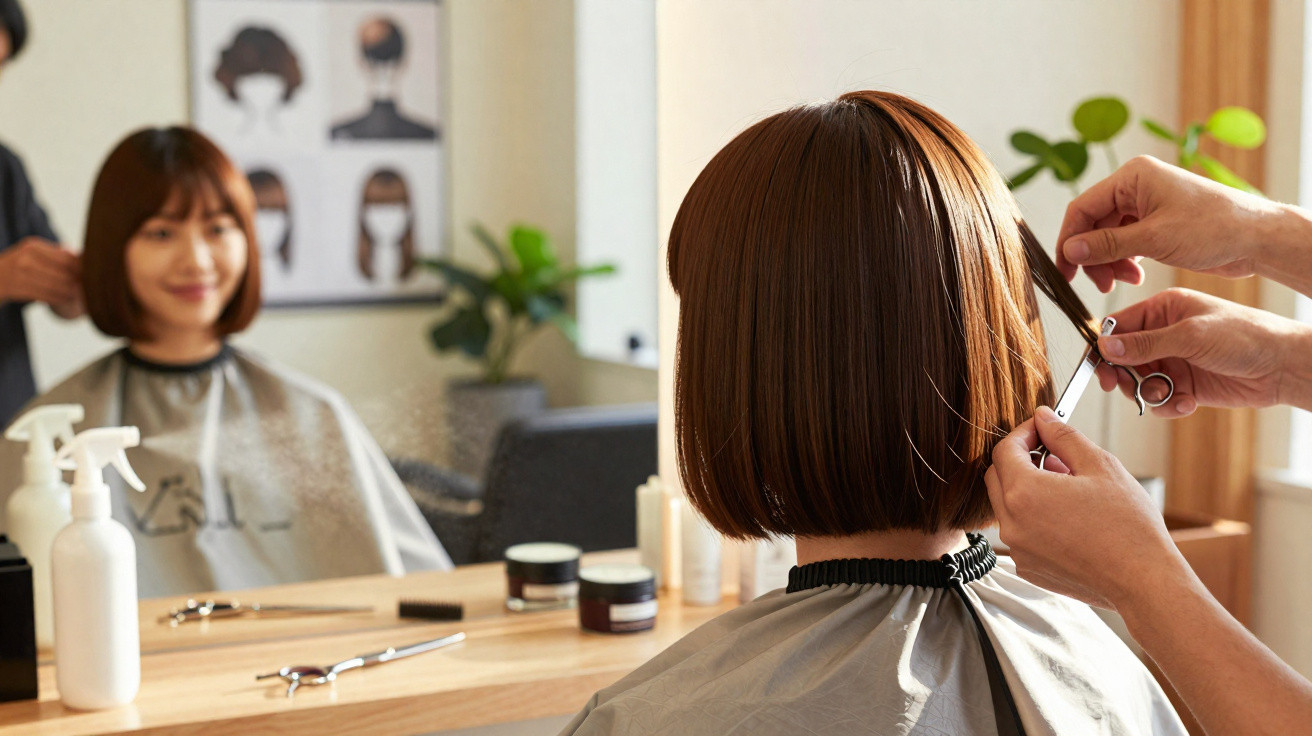
- Short haircut: A bold cropped style, a rounded shape or a graphic bob gives grey hair character. The overall effect looks intentional and fashionable.
- Mid-length bob: Ideal for anyone who does not want to lose too much length. Soft layers create movement, allowing Greige strands to shimmer particularly beautifully.
- Long hair: Yes, it can work – but not as a heavy, unlayered mass. A well-planned layered cut removes excess weight and makes the colour appear more vibrant.
Long grey hair can look incredibly elegant when it is well layered, trimmed regularly and cared for properly.
Styling and care: keeping grey hair glossy rather than dull
Grey hair changes in texture. It often becomes thicker while feeling drier at the same time, and it is more likely to stick out stubbornly. The right routine can keep this well under control.
Everyday styling: minimal effort, noticeable results
No one needs to create a blow-dried style every day. However, even a basic routine makes a major difference:
- Give hair a quick brush each morning to revive its shape and shine.
- Lift individual sections slightly with a round brush or your fingers so the style does not look flat.
- If needed, apply a touch of styling cream or lightweight oil to the ends to tame frizz.
Haircare products grey hair responds well to
Because grey hair tends to be dry, it benefits from richer products:
- Leave-in care for the lengths and ends to keep them soft.
- Regular moisture masks for added shine and suppleness.
- Depending on the shade, an occasional gentle silver shampoo to neutralise yellow tones – but not with every wash, otherwise the hair colour can become too cool.
Balayage on grey hair: a fresh lift instead of all-over colour
Those who are already almost completely grey can add extra shine with a subtle balayage effect. A few strategically placed lighter strands, for instance in cool beige or silver, make the overall colour look livelier. The outcome is greater depth and reflection, without forcing the hair back into a colour cycle with constantly visible roots.
Maintenance remains manageable. Since the strands are placed subtly and there is no solid blanket of colour, regrowth is barely noticeable. A refresh appointment at long intervals is usually enough to keep the look current.
What Greige does for the face – and what to consider
Perhaps the greatest advantage of this colour direction lies in its effect on the complexion. Pure, stark grey can drain colour from some faces. Greige softens this effect because its neutral, lightly beige undertones restore warmth without looking yellow. Fine lines appear less harsh, while the overall impression remains soft yet defined.
Very fair skin generally suits cooler Greige shades with a higher proportion of silver. Those with warm or Mediterranean skin tones tend to look more vibrant with a little more beige in the blend. A good colourist will therefore assess the skin and eye colour first, then mix the shades to suit them.
Anyone who also enjoys wearing make-up can enhance the effect further: a fresh lipstick or a little blusher brings even more out of the understated hair colour – and makes one thing clear: grey is not a compromise, but a conscious style choice.











Comments
No comments yet. Be the first to comment!
Leave a Comment